
Schedly resources
Auto Service Scheduling: Save Time With Seamless Shop Appointments

Auto shops lose thousands of dollars every year to no-shows, manual booking chaos, and missed appointment slots. When customers can't book online or see real-time availability, they go elsewhere.
At Schedly, we've seen firsthand how auto service scheduling transforms shop operations. The right system cuts no-shows, fills your calendar, and frees your staff from phone tag.
The Real Cost of Outdated Booking Systems
Phone Lines Become Revenue Killers
Manual appointment booking drains thousands of dollars from auto shops every year. When customers call during business hours and encounter a busy signal, they don't wait-they call a competitor instead. Yet many shops still rely on pen-and-paper systems or basic spreadsheets. A technician answering phones instead of working on vehicles costs money twice over: once in lost labor hours and again in missed repair revenue. When your staff spends 20–30% of their time managing appointment updates and rescheduling requests through phone calls, that productive time vanishes. Shops that continue manual booking face a hard truth: customer expectations have shifted. Modern consumers expect to book appointments online at midnight, not just between 9 a.m. and 5 p.m. When your shop doesn't offer this, customers perceive you as outdated, even if your actual repair quality is excellent.
No-Shows Drain Your Bottom Line
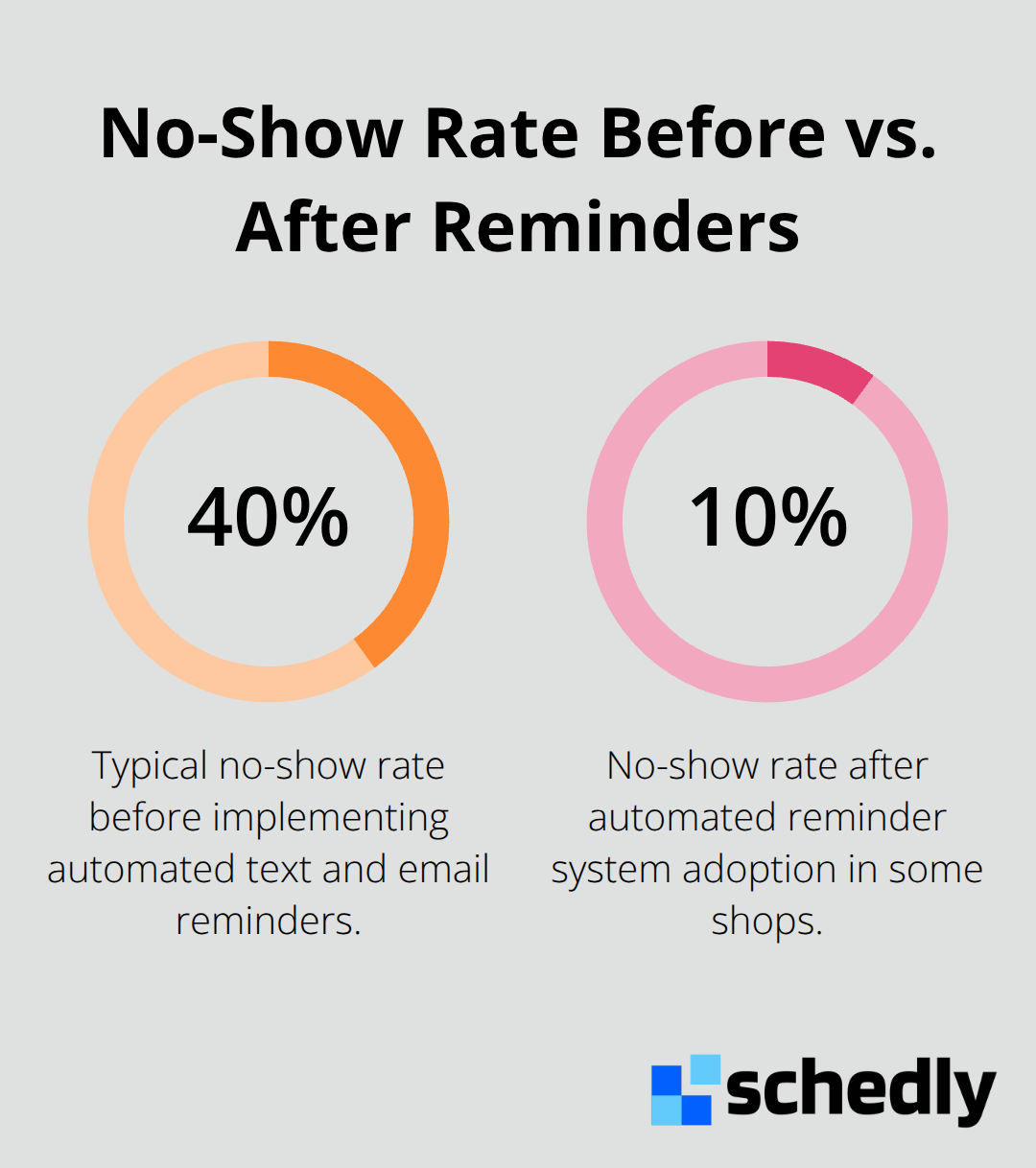
No-shows represent another silent killer of shop profitability. Shops without automated reminders typically lose 15-20% no-show rate for appointments, leaving bays empty and technicians idle. Automated text and email reminders cut no-show rates dramatically-some shops report dropping from 40% to under 10% after implementation. The math is straightforward: if you average 20 appointments per week and lose 8 to no-shows, that amounts to 416 lost appointment slots annually. At an average service value of $150 per appointment, that equals $62,400 in annual revenue walking out the door. AI-powered scheduling systems are revolutionizing auto repair shops by enhancing efficiency, reducing no-shows, and significantly boosting revenue.
Peak Hours Expose Your Biggest Weakness
Peak hours between 8 a.m. and 11:30 a.m. are where most shops struggle most-customers call simultaneously, lines overflow, and calls get dropped. An automated system handles unlimited concurrent booking requests during these windows, capturing customers who would otherwise hang up and call someone else. Real-time availability prevents the frustration of overbooking, which damages customer trust and forces staff to rush repairs or turn customers away. These peak-hour bottlenecks reveal why shops need a system that works 24/7, not just when someone answers the phone.
How Modern Scheduling Software Transforms Auto Shops
Automated Reminders Eliminate No-Shows
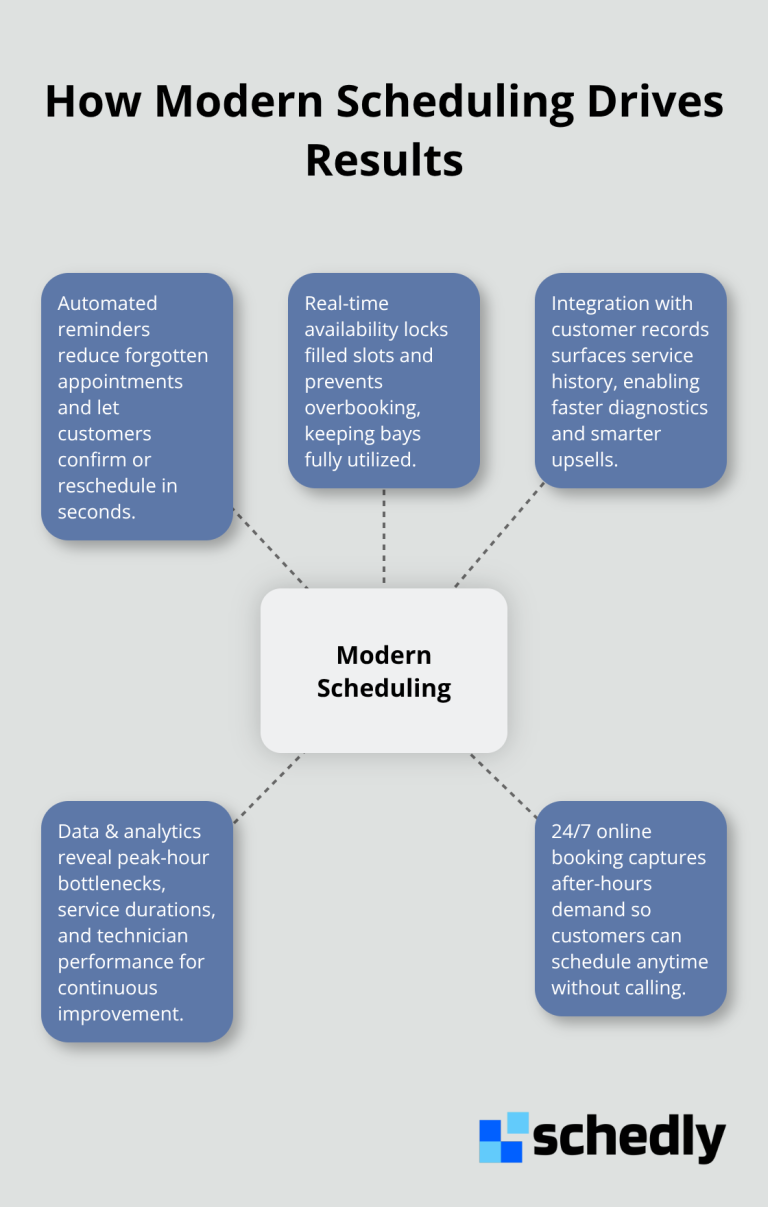
Automated reminders eliminate no-shows by email or SMS keep customers from forgetting their appointment. When shops implement text and email confirmations, no-show rates plummet. Customers receive a reminder 24 hours before their appointment and again on the morning of service. They can confirm with a single click or reschedule instantly without calling. This removes friction entirely.
Real-Time Availability Prevents Overbooking
Real-time availability prevents overbooking because the system locks slots once they fill. When your scheduling system shows customers exactly which time slots are open, they book immediately instead of calling to hear that nothing is available today or tomorrow. Staff stops fielding complaints about double-booked technicians or surprise appointments that arrive without notice. Overbooking becomes impossible, keeping your service bays full and boosting efficiency.
Integration Connects Your Entire Operation
Integration with customer management systems transforms scheduling from an isolated tool into a nerve center for your entire operation. When scheduling connects to your customer database, technicians see full service history before customers arrive, enabling faster diagnostics and smarter upsells. Automating routine tasks like scheduling and follow-ups frees up time for more critical tasks. Marketing campaigns trigger based on service intervals, so customers receive reminders about their next maintenance before they forget about you.
Data Reveals Hidden Inefficiencies
Peak-hour capacity becomes manageable because the system distributes appointments across available slots rather than clustering them in morning hours. Data reveals which time slots drive the most bookings, which services take longer than expected, and which technicians deliver the fastest turnaround. This integration eliminates the chaos of manual coordination. Your front desk no longer juggles phone calls, repair orders, and customer updates across three different systems. Everything flows through one platform. That consolidation alone frees staff to focus on customer experience instead of administrative busywork.
The foundation is now in place-your shop runs smoother, your customers experience less friction, and your revenue climbs. But implementation matters just as much as the tool itself. The next chapter covers the specific practices that separate shops that merely adopt scheduling software from shops that actually master it.
Making Scheduling Work in Practice
The difference between shops that implement scheduling software and shops that actually profit from it comes down to execution. A system sitting idle in your back office generates zero revenue. You need a deliberate approach that addresses how your team works, when customers want to book, and where your operation bleeds efficiency.
Match Service Categories to Your Actual Workflow
Start with service categories that match how you actually bill customers. If you offer oil changes, brake service, transmission work, and diagnostics, create distinct categories in your scheduling system with realistic time allocations for each. Don't guess at how long a brake service takes-track your actual repair times for two weeks and use that data to set slot durations. Shops that overestimate repair time protect themselves from scheduling chaos, but they also leave slots empty when work finishes early. The sweet spot is accuracy. When your categories reflect reality, customers see available slots that actually exist, and your technicians aren't forced to rush or wait.
Capture After-Hours Appointments With 24/7 Online Booking
Enable online booking immediately. This isn't optional for shops that want to compete. Customers finishing work at 6 p.m. won't call you back during business hours-they'll book online while sitting in traffic or at home after dinner. Online scheduling has evolved into a game-changer for auto repair shops, revolutionizing the way they interact with customers and manage their operations. The system handles the booking; your team handles the repair.
Post the booking link everywhere: your Google Business Profile, Facebook, email signature, voicemail greeting, and on printed invoices when customers pick up their vehicles. Make it friction-free. One more critical move: send a text blast to your existing customer database announcing the new booking option. Customers who've been calling you for years need permission to change their behavior. Tell them online scheduling is faster and available anytime.
Use Data to Redistribute Demand Across Your Schedule
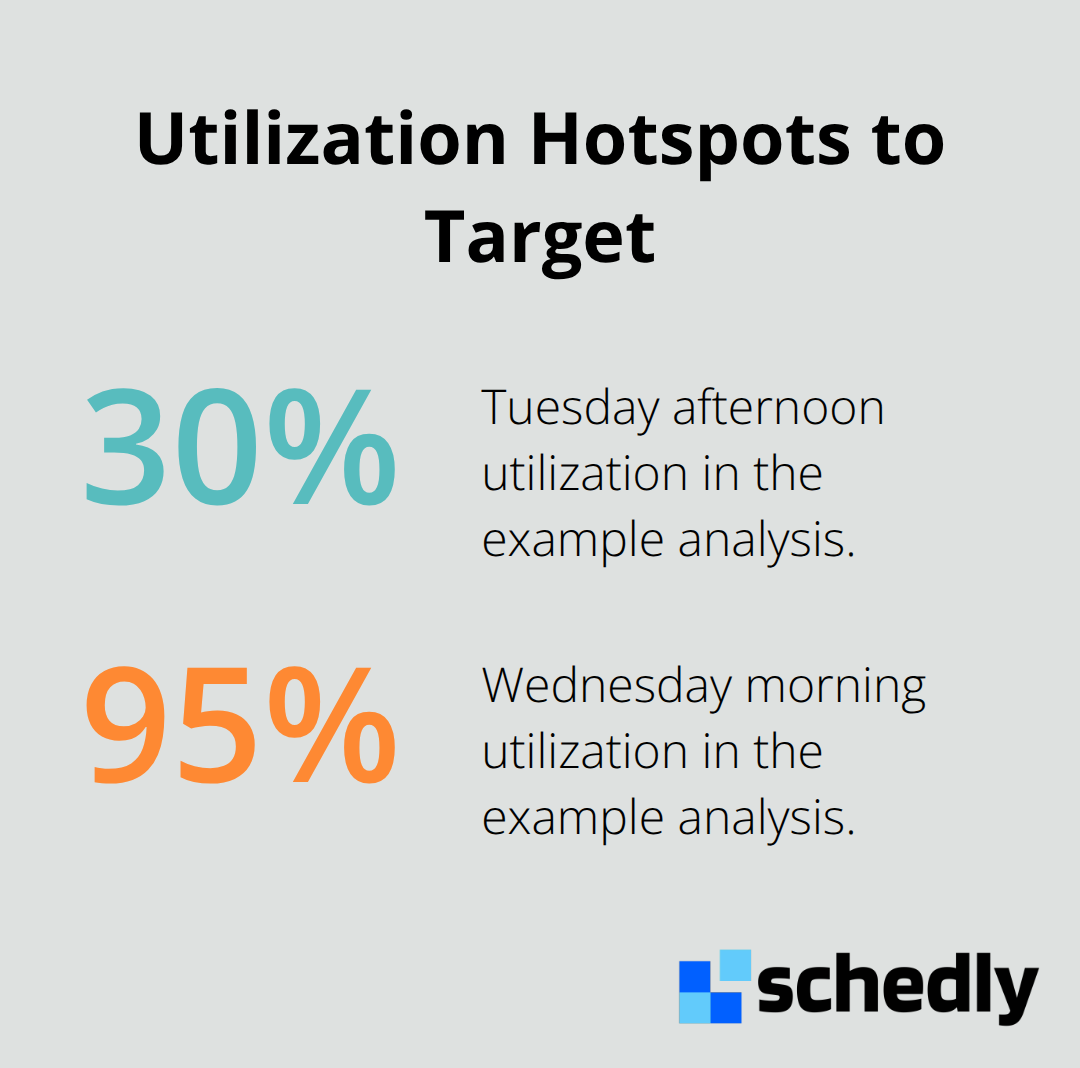
Analytics reveal where most shops fail at optimization. Your system should show which time slots fill fastest, which services take the longest, and which hours sit empty. Many shops cluster appointments in the 8–10 a.m. window because that's when customers call, not because those are the only times work can happen. Use your data to redistribute capacity. If Tuesday afternoons show 30% utilization while Wednesday mornings hit 95%, send targeted reminders to customers about Tuesday afternoon availability during their next visit or follow-up email. Some shops use text campaigns offering a 10% discount for afternoon appointments, shifting demand away from peak hours without losing revenue.
Track no-show patterns too. Online bookers tend to be more committed because they took action themselves. Use your analytics dashboard monthly to spot trends. If average repair time creeps up, your scheduling will break. If a particular technician consistently finishes faster, adjust their slot allocation to match.
Measure, Adjust, and Repeat Every Month
The analytics dashboard gives you visibility into appointment volume, new versus returning customers, and booking sources so you can see exactly which channels drive your best customers. The shops winning right now treat scheduling data like a diagnostic tool. They measure, adjust, and measure again. Your competitors are still answering phones.
Final Thoughts
Auto service scheduling has shifted from a nice-to-have feature to a competitive requirement. Shops that implement automated reminders see no-show rates plummet from 40% to under 10%, while shops capturing after-hours bookings fill slots that would otherwise sit empty. A small shop that executes auto service scheduling properly recovers $47,000 in six months through reduced no-shows and faster repairs alone.
Start with online booking immediately-post your scheduling link on Google, Facebook, email, and invoices, then send a text blast to existing customers announcing the change. Track your data monthly to identify which time slots fill fastest and which services take longer than expected, then adjust your service categories based on what actually happens in your shop. Schedly handles 24/7 online booking, automated reminders, secure payments, and an analytics dashboard that reveals exactly where your inefficiencies hide.
Your competitors are still answering phones.