
Schedly resources
Automate Appointment Scheduling To Save Time And Resources
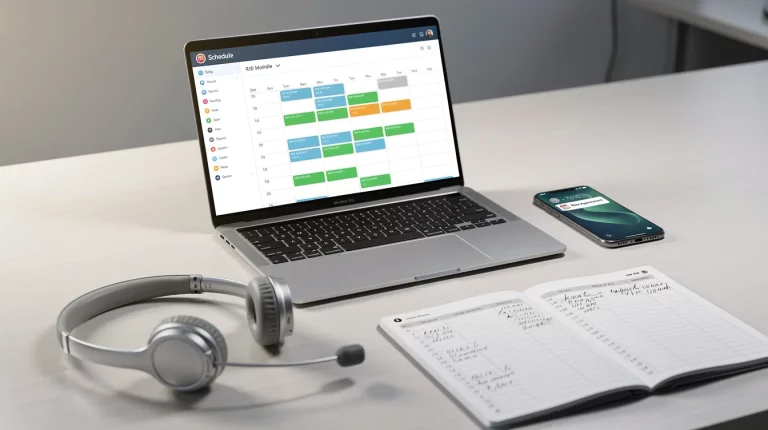
Your administrative team is probably spending hours each week on appointment scheduling. At Schedly, we've seen firsthand how much time gets wasted on back-and-forth emails, double bookings, and customers who can't reach you outside business hours.
When you automate appointment scheduling, everything changes. Your staff gets their time back, your customers book faster, and your no-show rates drop significantly.
The Real Cost of Manual Appointment Scheduling
Your staff wastes enormous amounts of time on scheduling work. According to research by Woodcock et al. published in the Journal of Medical Internet Research in 2022, administrative labor for appointment scheduling remains one of the largest operational costs for service-based businesses. Phone calls, emails, and spreadsheets consume significant time from your team. That's not a minor inconvenience-it's a massive drain on productivity. Your administrative staff could handle customer service, follow up on leads, or support your core business instead of managing conflicting appointments.
Double bookings and scheduling mistakes cost real money
Double bookings and scheduling mistakes damage your bottom line. When two clients arrive for the same appointment slot, you lose revenue, damage customer relationships, and frustrate your staff. No-shows create the same problem from the opposite direction-empty appointment slots that could have been filled by someone else. Research shows that automated appointment scheduling can reduce no-show rates significantly when paired with automated reminders via SMS or email. These improvements directly impact your bottom line through recovered revenue and reduced wasted capacity.
Customers book outside your business hours
Your business closes at 5 PM, but potential customers need appointments at 5:01 PM. Research shows that customers actively want to book when it's convenient for them. If your booking process requires a phone call between 9 AM and 5 PM, you automatically lose customers to competitors who offer 24/7 online booking. This isn't a minor preference-it's a fundamental shift in how customers expect to interact with service businesses. When customers can't book on their schedule, they simply move to someone who lets them.
The solution isn't complicated. Automated scheduling systems eliminate these problems entirely, and the next section shows exactly how they work.
How Scheduling Automation Actually Works
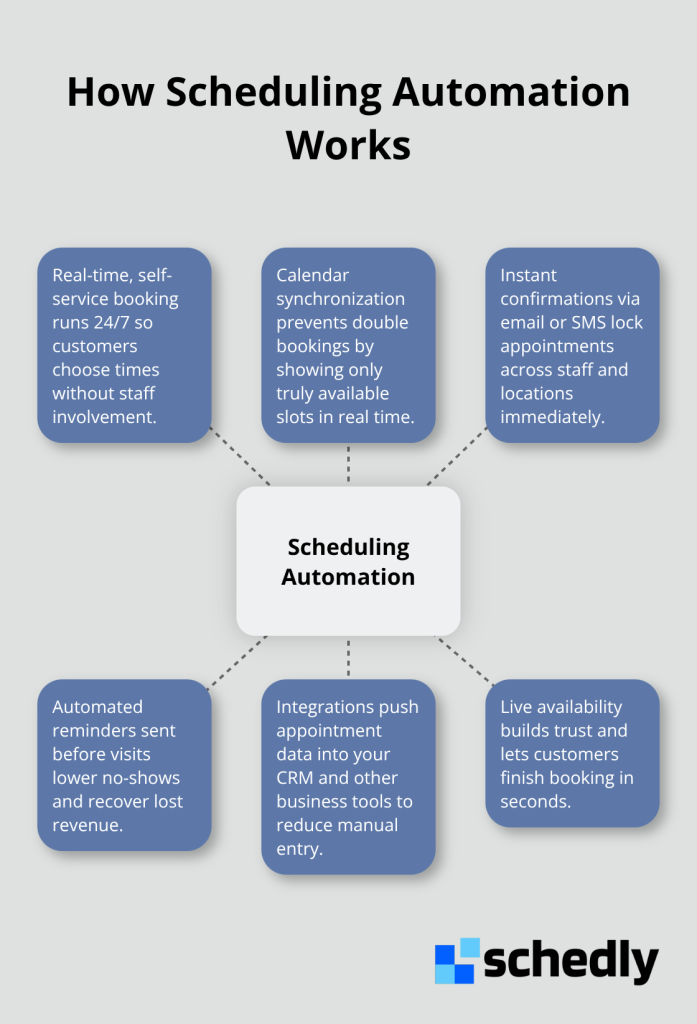
Automated scheduling systems replace manual processes with real-time, self-service booking that operates around the clock. When you implement scheduling automation, customers access your availability instantly through a branded booking page or mobile interface and select their preferred time slot without contacting your staff. This eliminates the back-and-forth email chains and phone tag that consume hours each week. Research shows that self-scheduled appointments frequently occur outside regular business hours, with a substantial share of bookings happening after 5 PM or on weekends. This means your business captures customers who would otherwise move to competitors with 24/7 booking options. The system syncs with your calendar in real time, preventing double bookings by showing only genuinely available slots. When a customer books through the automated system, they immediately receive a confirmation email or SMS, and the appointment locks into your calendar instantly across all staff members and locations.
Reminders cut no-shows without staff involvement
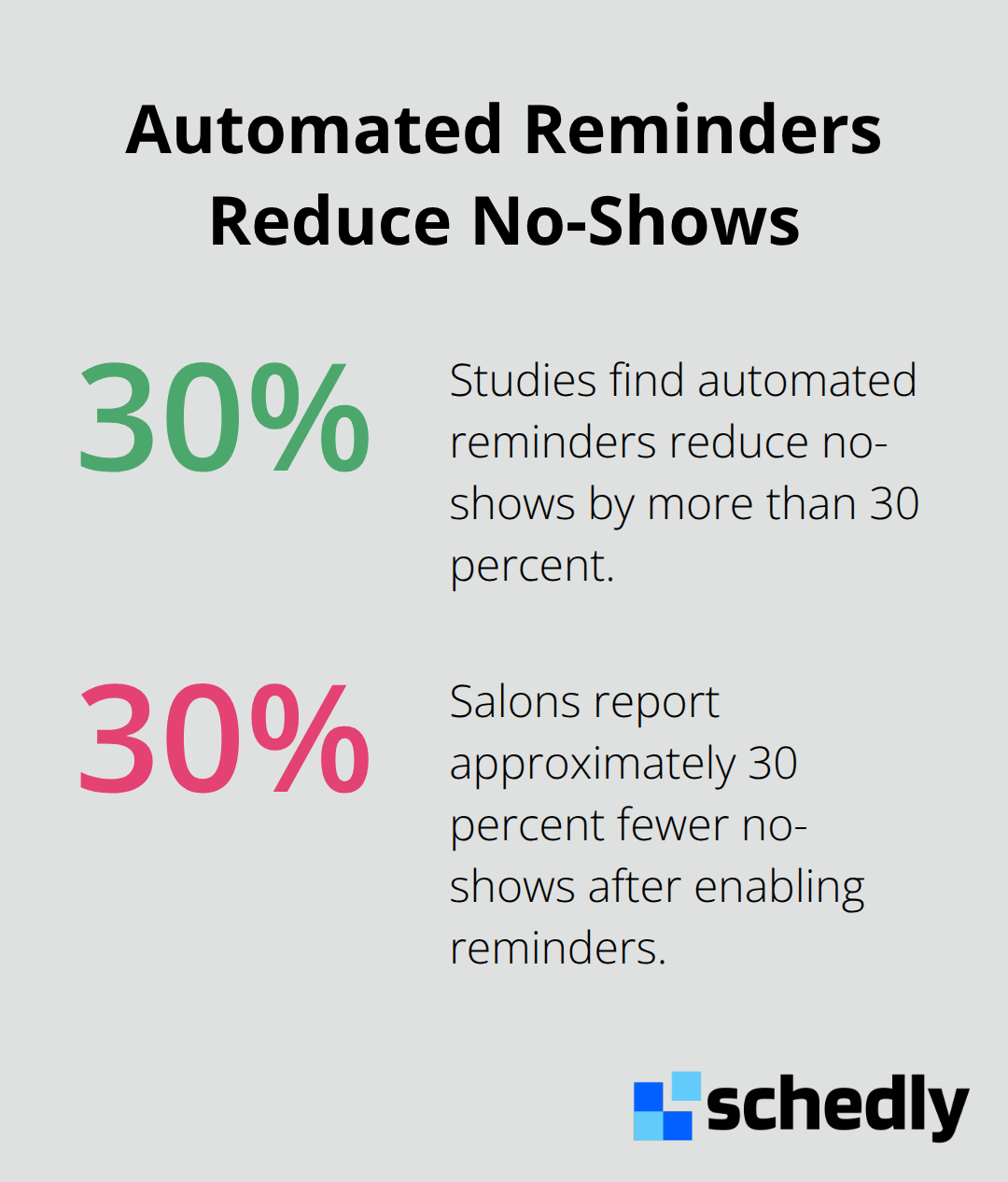
Automated reminders deliver measurable financial impact that manual scheduling cannot match. When customers receive SMS or email reminders 24 hours before their appointment, no-show rates drop significantly. Studies show that automated reminders reduce no-shows by more than 30 percent, directly recovering lost revenue from empty appointment slots. Platforms send these reminders automatically without requiring your staff to manually contact each customer. If a customer cancels, the system can automatically notify people on your waitlist, filling that slot within minutes. This automation transforms your calendar from a source of frustration into a revenue-protection tool that operates continuously without human intervention.
Integration prevents the scheduling chaos that destroys efficiency
Calendar integration is non-negotiable for scheduling automation to work properly. Your system must sync with Google Calendar and Outlook so that personal events, time blocks, and team commitments appear in real time. Without integration, staff members could still double-book by accepting appointments through the automated system while simultaneously scheduling personal tasks in their separate calendar. Platforms that integrate directly with your existing systems eliminate manual data entry, reduce errors, and ensure that appointment information flows seamlessly into your CRM and other business tools. This integration prevents the scheduling conflicts that frustrate customers and create operational bottlenecks.
Real-time availability transforms customer expectations
Customers now expect to see your actual availability the moment they visit your booking page. Real-time availability updates (powered by calendar synchronization) show customers exactly which time slots remain open, eliminating the frustration of booking an appointment only to receive a follow-up email saying that slot was already taken. This transparency builds trust and reduces the back-and-forth communication that plagues manual scheduling. When your system reflects true availability instantly, customers complete their bookings in seconds rather than waiting for staff confirmation.
The financial impact becomes clear when you examine what happens next: these automated bookings, reminders, and integrations combine to free your staff from scheduling work entirely. The next section shows exactly how much time and money this recovery means for real businesses.
What Real Businesses Gain From Scheduling Automation
Salons recover thousands annually through reduced no-shows
Salons that implement automated reminders see no-show rates plummet by approximately 30 percent. A single no-show in a salon costs real money-an empty 60-minute slot at $80 per hour represents $80 in lost revenue plus the staff member's idle time. When a salon books 15 appointments per week and eliminates even 2 no-shows through automated SMS reminders sent 24 hours before the appointment, that amounts to $160 recovered weekly or roughly $8,320 annually per staff member. These reminders require zero manual effort from your team, making the financial return immediate and substantial.
Healthcare practices free up significant administrative capacity
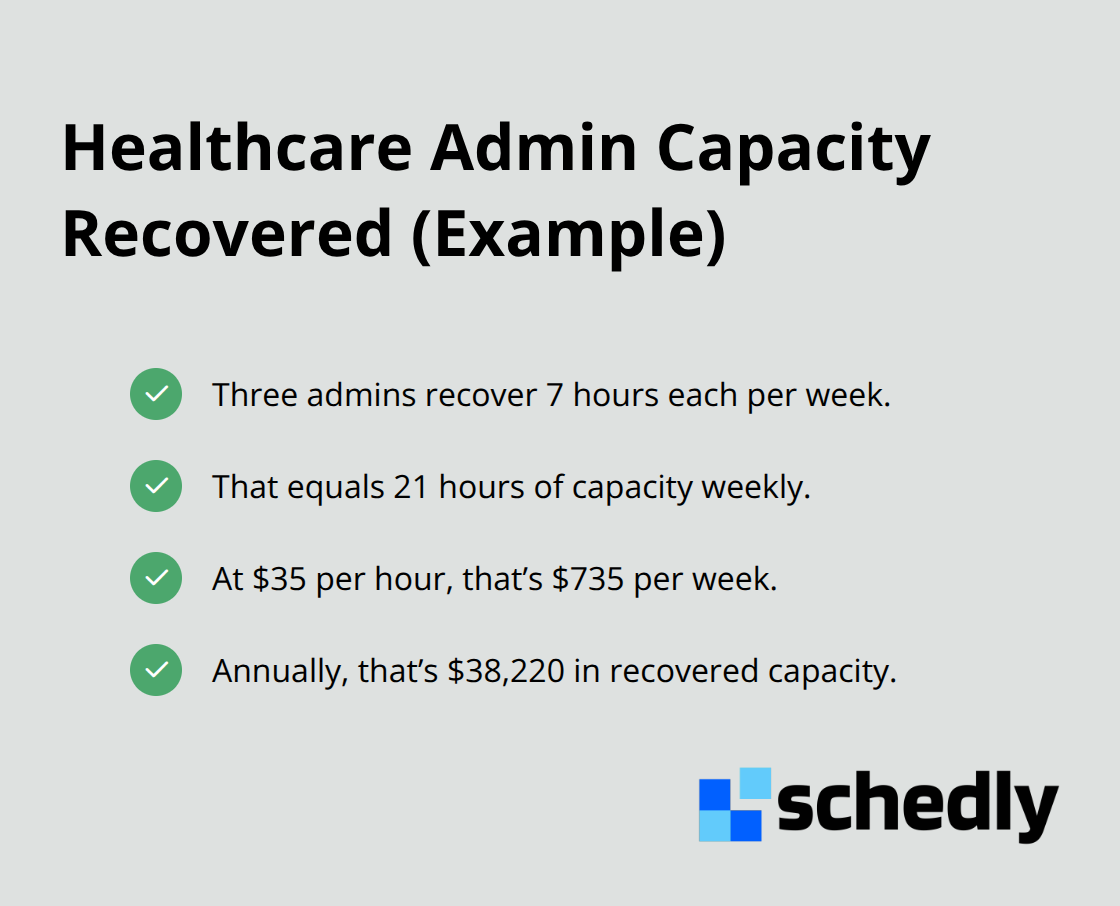
Healthcare practices report freeing up significant administrative capacity after implementing scheduling automation. This recovery comes from eliminating phone calls, email back-and-forth, and manual calendar management. A practice with three administrative staff members recovering 7 hours weekly each gains 21 hours per week to redirect toward patient care, insurance verification, or revenue cycle management. At a fully-loaded cost of approximately $35 per hour for administrative work, that equals $735 per week or $38,220 annually in recovered capacity.
Online availability drives a measurable booking increase
Service businesses consistently report a booking increase when they shift from phone-only or email-only scheduling to 24/7 online availability. This increase happens because customers who previously abandoned their booking attempt at 6 PM now complete it at 10 PM from their phone. Contractors, consultants, and fitness facilities experience this boost immediately because they remove the friction that prevented customers from booking outside traditional business hours.
Customer satisfaction strengthens through frictionless experiences
Businesses that automate scheduling report higher customer satisfaction because the booking experience becomes frictionless. Customers no longer wait for callbacks or check their email for confirmation-they receive instant confirmation and reminders automatically. Your staff stops managing scheduling entirely, which eliminates the frustration and errors that damage customer relationships. A dental practice implementing automated scheduling transforms the customer experience from annoying to effortless. These results compound over time because satisfied customers who had a smooth booking experience return more frequently and refer friends more often.
The financial impact scales across any business size
The financial case for automation isn't marginal-it's substantial enough to impact your annual budget significantly. Whether you operate a salon with 5 staff members or a healthcare practice with 50, the recovery of administrative time and the increase in bookings create measurable financial impact that extends well beyond the cost of the scheduling platform itself.
Final Thoughts
Scheduling automation transforms what was once a time-consuming administrative burden into a genuine competitive advantage. Your business no longer loses customers to competitors with 24/7 booking, no longer wastes staff hours on phone calls and email chains, and no longer accepts no-show rates that drain revenue. The businesses winning in their markets right now automated appointment scheduling years ago and already captured the customers who demand online booking.
Your staff's time represents your most valuable resource, and automation reclaims hours each week that your team currently spends managing calendars, confirming appointments, and chasing down no-shows. A salon owner who no longer spends 8 hours weekly on scheduling can focus on client relationships and staff training instead. A healthcare practice that eliminates manual booking redirects administrative capacity toward patient care and revenue cycle management, transforming operations entirely.
The market has already decided that automated scheduling is standard, not optional-customers expect to book online at any hour and receive confirmation messages and reminders automatically. When you automate appointment scheduling with Schedly, you capture the customers you're currently losing and reclaim the time your staff wastes on manual processes. Start today and watch your business operate with the efficiency your competitors already built.