
Schedly resources
Automated Appointment Scheduling for Effortless Booking
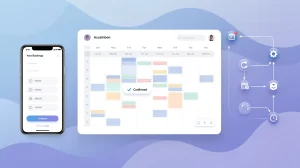
Your booking system is costing you money. Double bookings, no-shows, and staff drowning in scheduling tasks drain your revenue every single day.
Automated appointment scheduling fixes this. At Schedly, we've seen businesses eliminate these problems entirely-and the results speak for themselves. Salons cut cancellations by 30 percent. Healthcare practices slash administrative time in half. Legal firms manage multiple locations without chaos.
Where Your Scheduling Actually Fails
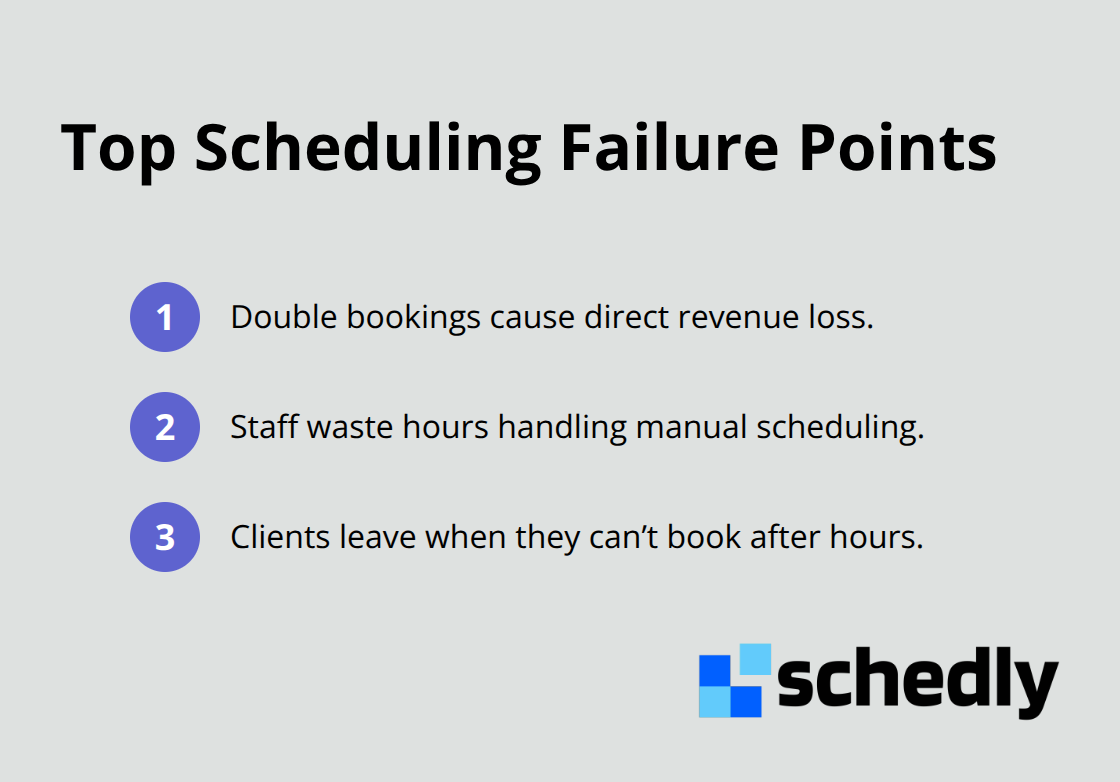
Double Bookings Drain Your Revenue
Manual scheduling creates a cascade of problems that ripple through your entire operation. When staff members manage bookings through email, phone calls, and spreadsheets, conflicts become inevitable. A client books a 2 PM slot that your team already assigned to someone else. Your therapist gets double-booked for back-to-back appointments with only 10 minutes between them. These aren't rare mistakes-they're the default outcome of manual systems.
Administrative Staff Waste Hours on Scheduling Tasks
Your administrative team spends an astonishing amount of time on scheduling tasks that could be automated entirely. Nurses in healthcare settings spend up to 40% of their workday managing appointments rather than caring for patients. Office managers in legal firms juggle calendar conflicts across multiple attorneys and paralegals, manually checking availability before confirming anything. Salon owners answer phone calls during peak hours just to book appointments, when they should be serving clients. This wasted labor represents real opportunity cost-time your team could spend on revenue-generating activities instead goes to administrative busywork.
Clients Book Elsewhere When You're Closed
The problem worsens when clients can only book during your business hours. A potential customer tries to book at 9 PM on a Sunday and finds your business closed. They move to a competitor who offers 24/7 online booking. You lose that revenue entirely because your system couldn't accommodate an outside-hours request. Automated solutions that operate around the clock have become essential for staying competitive.
What Automated Scheduling Actually Changes
Reminders Stop No-Shows Before They Happen
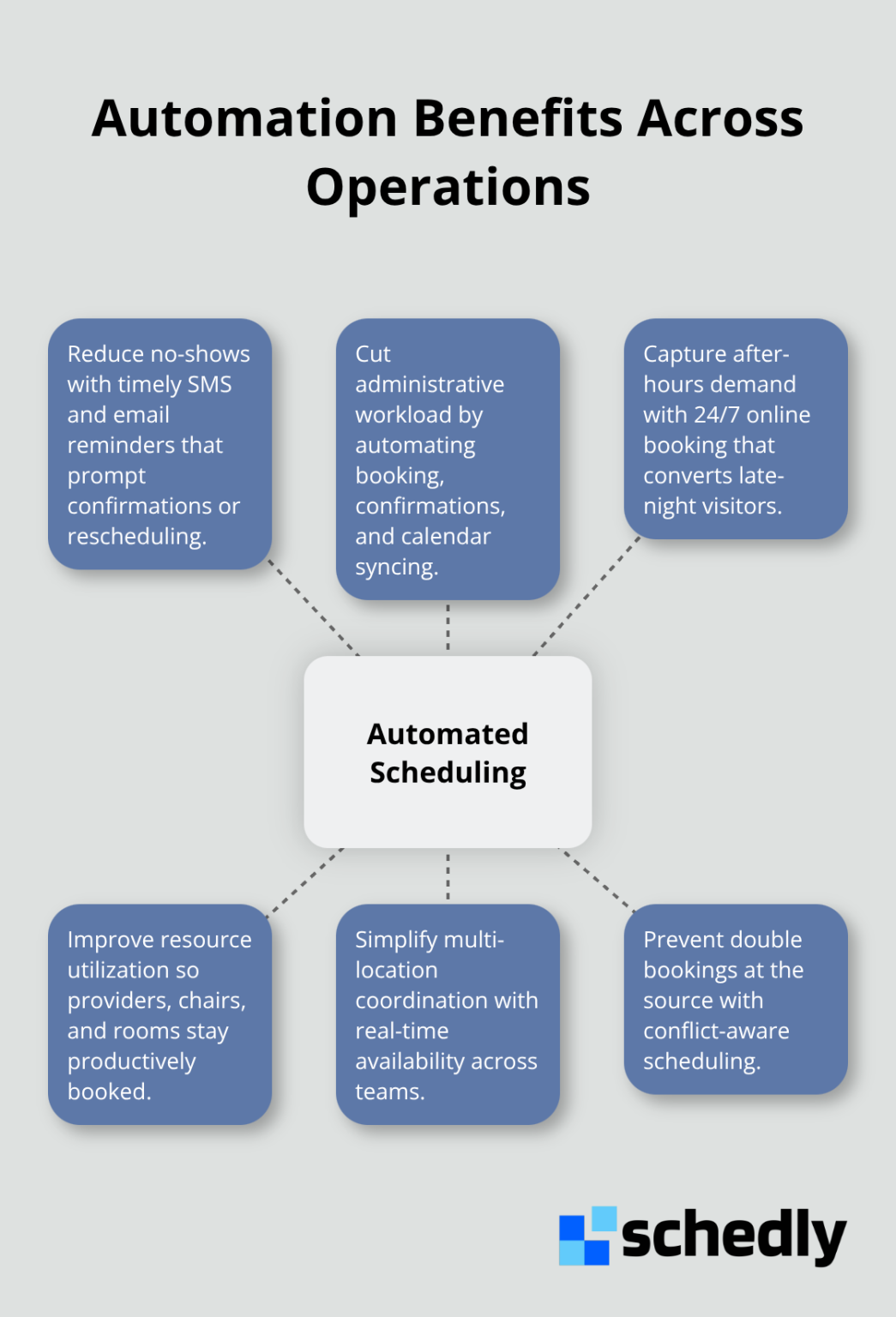
Automated reminders work because they address the core reason no-shows happen: people forget. Research shows that AI scheduling reduces no-shows by up to 30 percent through automated reminders and confirmations via SMS and email. For independent healthcare practices, this translates directly to revenue recovery. A clinic with 50 appointments per week at a 19 percent no-show rate loses roughly $1,900 weekly. Cut no-shows by 30 percent and you recover $570 per week, or nearly $30,000 annually.
The reminder system must be two-way, not one-directional. Patients confirm their appointment or reschedule through the same message, eliminating the back-and-forth that slows everything down. Your team knows immediately who is coming and who needs to reschedule. Staff can then adjust schedules on the fly rather than discovering no-shows halfway through the day.
Your Staff Stops Managing Calendars
When appointment booking moves online, your staff stops answering phones about scheduling. Healthcare practices report up to 40 percent fewer support calls after implementing automated scheduling. That reduction means nurses spend less time on phone tag and more time with patients.
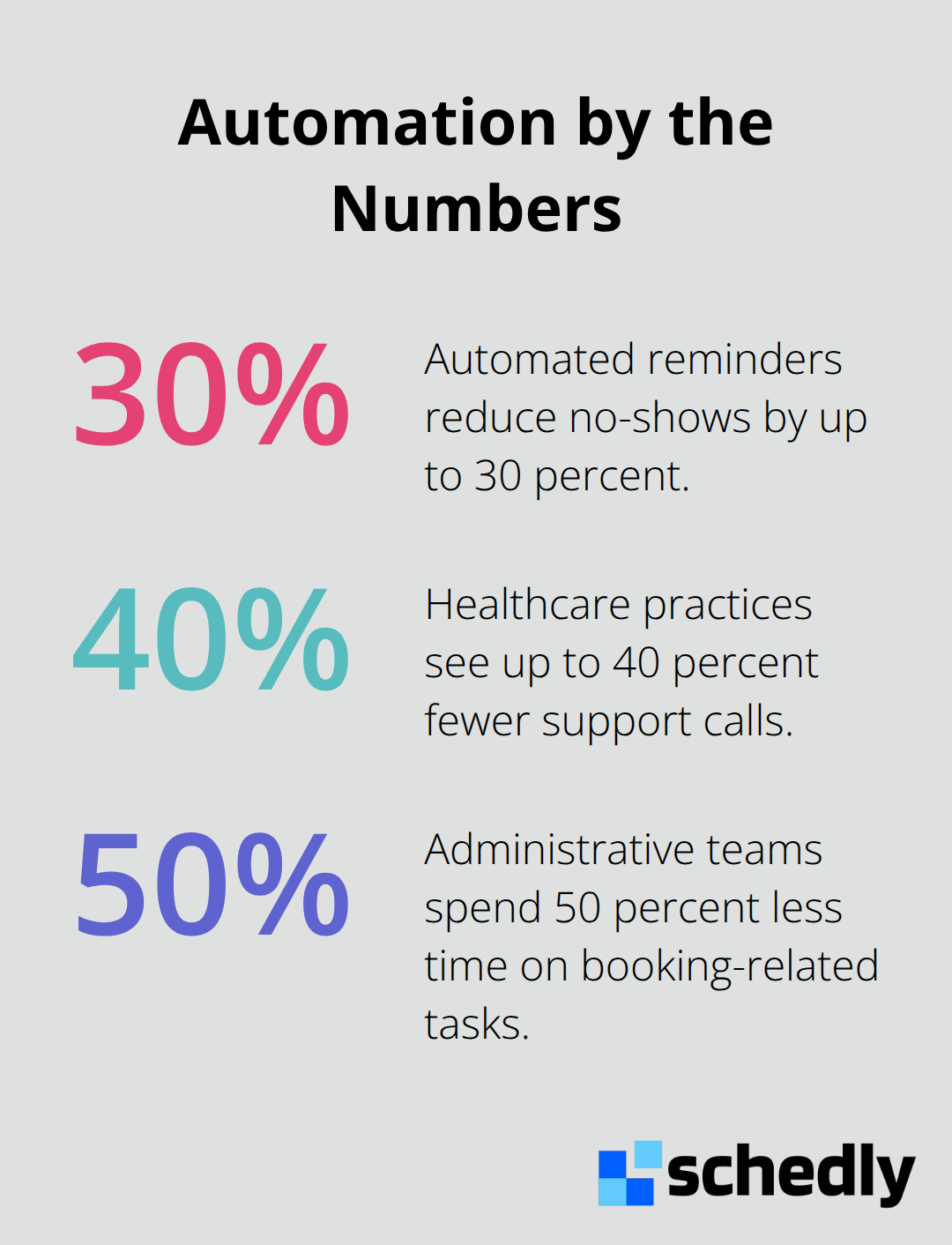
24/7 online booking captures revenue during closed-door hours. Clients book at midnight on a Tuesday and your team discovers the appointment the next morning, ready to serve. This shift from reactive to passive booking changes your entire operation.
Better Resource Utilization Compounds Your Returns
Staff focuses on delivering service rather than managing the calendar. The financial return compounds because higher patient throughput combined with fewer scheduling errors means better resource utilization across your entire team. Your therapists see more clients. Your salon chairs stay booked. Your legal team handles more cases without administrative friction. The scheduling system handles what humans used to do manually, and your business captures the efficiency gains immediately. These improvements create the foundation for the real-world results that businesses across industries now report.
Real-World Results from Automated Scheduling
Salons Recover Lost Revenue Through Cancellation Reduction
Salons that implement automated scheduling cut cancellation rates by roughly 30 percent within the first month. The system sends appointment reminders via SMS and email, and clients confirm or reschedule directly through those messages. A salon with 40 appointments per week at a typical 25 percent cancellation rate loses 10 bookings weekly. Reduce cancellations by 30 percent and you recover three appointments per week, translating to approximately $600 monthly in recovered revenue for a salon charging $50 per service. The financial impact accelerates across multiple locations. A chain managing five locations captures $3,000 in additional monthly revenue from cancellation reduction alone.
Healthcare Practices Slash Administrative Workload
Healthcare practices experience even more dramatic gains when they implement automated scheduling. Administrative staff report spending 50 percent less time on booking-related tasks. Nurses shift from phone-based scheduling to patient care, and front desk staff handle client inquiries instead of calendar management. One independent physical therapy practice reduced scheduling-related administrative work from 20 hours per week to 10 hours, freeing their office manager to focus on billing and insurance verification. That time savings compounds into better cash flow because invoicing gets processed faster when staff isn't drowning in scheduling tasks.
Legal Firms Manage Multiple Locations Without Friction
Legal firms managing multiple locations face unique scheduling complexity because attorneys, paralegals, and support staff operate across different time zones and office locations. Automated scheduling eliminates the manual coordination that consumed hours of administrative time. A mid-sized firm with three locations found that their office managers previously spent roughly 15 hours weekly verifying attorney availability across multiple calendars, checking for conflicts, and confirming client meetings. After implementing a system that syncs all calendars in real-time and allows clients to book available slots directly, that coordination work dropped to less than two hours weekly. The firm gained capacity to handle 20 percent more client meetings without hiring additional administrative staff. More importantly, scheduling errors that previously created client frustration virtually disappeared. Conflicts that used to require apologetic phone calls and rescheduling friction became impossible because the system prevented double-bookings at the source.
The Pattern Repeats Across Every Industry
These results translate across industries because automated scheduling addresses the same fundamental problems everywhere: staff time wasted on administrative tasks, revenue lost to no-shows and cancellations, and clients frustrated by limited availability. The businesses seeing the biggest gains aren't waiting for perfect conditions to implement these systems. They recognize that the cost of staying manual now exceeds the cost of switching to automation.
Final Thoughts
Your competition already captures the revenue you lose to no-shows and cancellations. They freed their staff to focus on delivering exceptional service, and they book clients at midnight on a Sunday because their system never closes. The gap between manual and automated operations widens every month you wait, and staying behind costs you more than switching forward ever will.
Modern scheduling platforms integrate seamlessly with your existing tools-your calendar, payment processor, and CRM all work together without requiring a complete business overhaul. Schedly handles automated appointment scheduling across industries because the core problem remains universal: businesses need to book clients efficiently, reduce no-shows, and free staff from administrative burden. Real-time calendar syncing, 24/7 online booking, secure payments, and workflow automation transform how your business operates.
Your next client tries to book right now. Make sure your system captures that revenue.