
Schedly resources
Automated Booking Workflows To Save Time
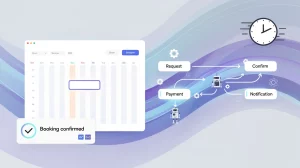
Businesses lose thousands of dollars every year to no-shows, manual scheduling errors, and staff drowning in administrative work. Automated booking workflows eliminate these problems by handling confirmations, reminders, and calendar management without human intervention.
At Schedly, we've seen firsthand how automation transforms booking operations. When you remove manual data entry and scheduling conflicts, your team suddenly has time to focus on what actually matters: delivering great customer service.
How Automated Booking Workflows Actually Save Time
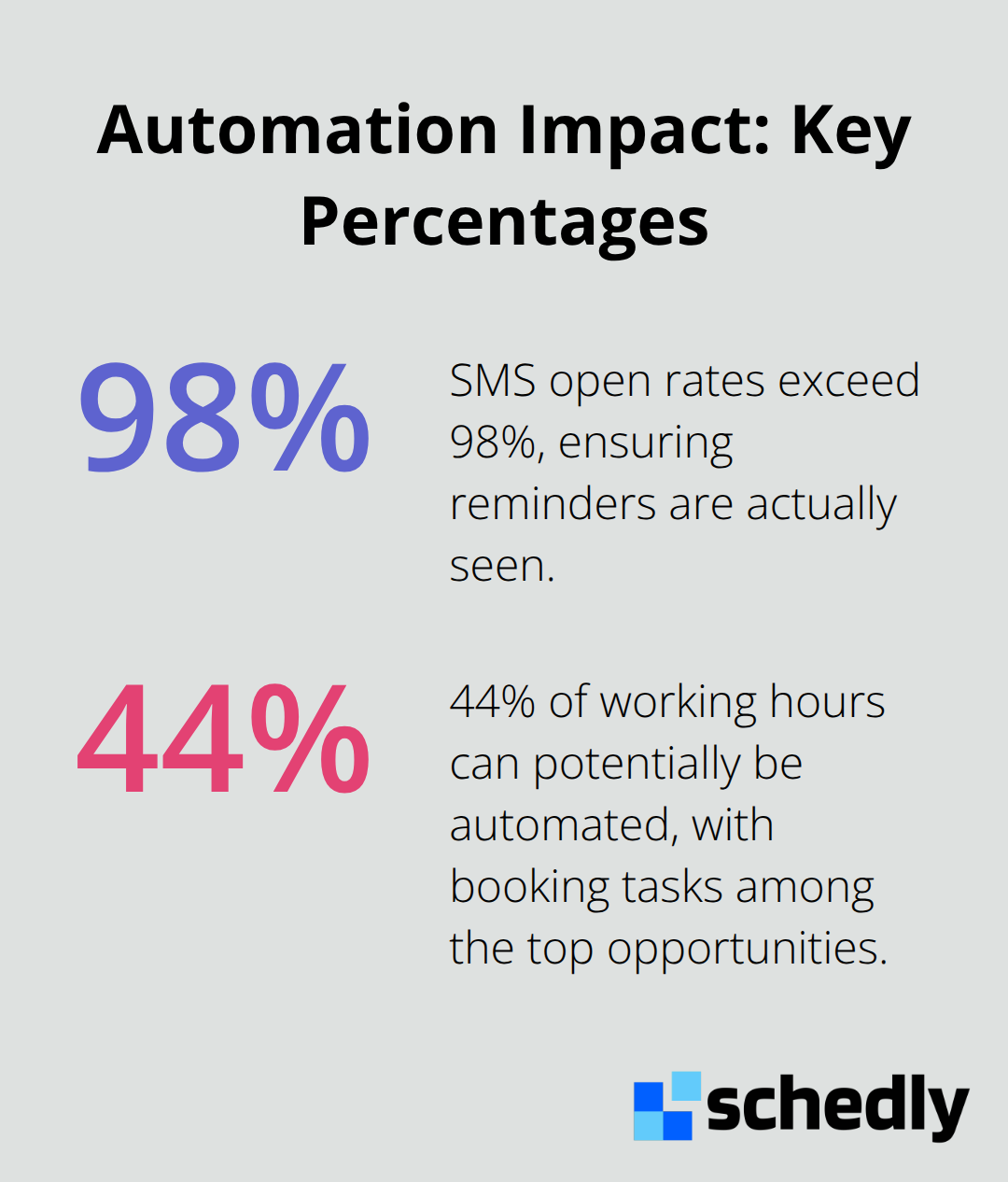
Manual data entry consumes hours every week that your team will never get back. Staff members spend time typing client information into multiple systems, confirming appointments through email chains, and updating calendars by hand-work that pulls them away from customers. Automated booking workflows eliminate this friction entirely. Real-time calendar synchronization with Google Calendar, Outlook, and iCloud prevents double-bookings and keeps availability accurate across all platforms without human intervention. Confirmations and reminders send automatically via email or SMS, with SMS open rates exceeding 98% according to industry data. This means fewer clients show up unprepared or forget their appointments altogether. Research from Accenture found that 44% of working hours can potentially be automated, with booking tasks among the highest-impact opportunities.
The No-Show Crisis Stops Here
No-shows drain revenue and waste appointment slots that paying customers could fill. Automated reminders at strategic intervals dramatically reduce this problem. Businesses implementing these cadences report measurable improvements in attendance rates. When clients receive timely notifications, they show up, and your staff avoids scrambling to fill empty time slots or chase down cancellations. The financial impact compounds quickly: a single no-show in healthcare, consulting, or salon services represents lost revenue that automation prevents. Real-time two-way calendar syncing also eliminates the confusion that leads to cancellations. Clients see accurate availability, book with confidence, and your team avoids the back-and-forth that creates frustration.
Staff Finally Has Time to Deliver Better Service
When your team stops managing spreadsheets and email confirmations, they focus on what actually builds client relationships. Queue management with virtual waitlists and precise wait-time estimations helps balance demand and reduces in-person congestion. Staff can then dedicate attention to personalized service, problem-solving, and client retention. Integrated online payments and upfront deposits also streamline revenue collection, removing another administrative burden. Your front desk no longer chases invoices or processes payments manually-the system handles it. This shift from administrative work to customer-focused work is the real win of automation.
What Modern Booking Systems Actually Do
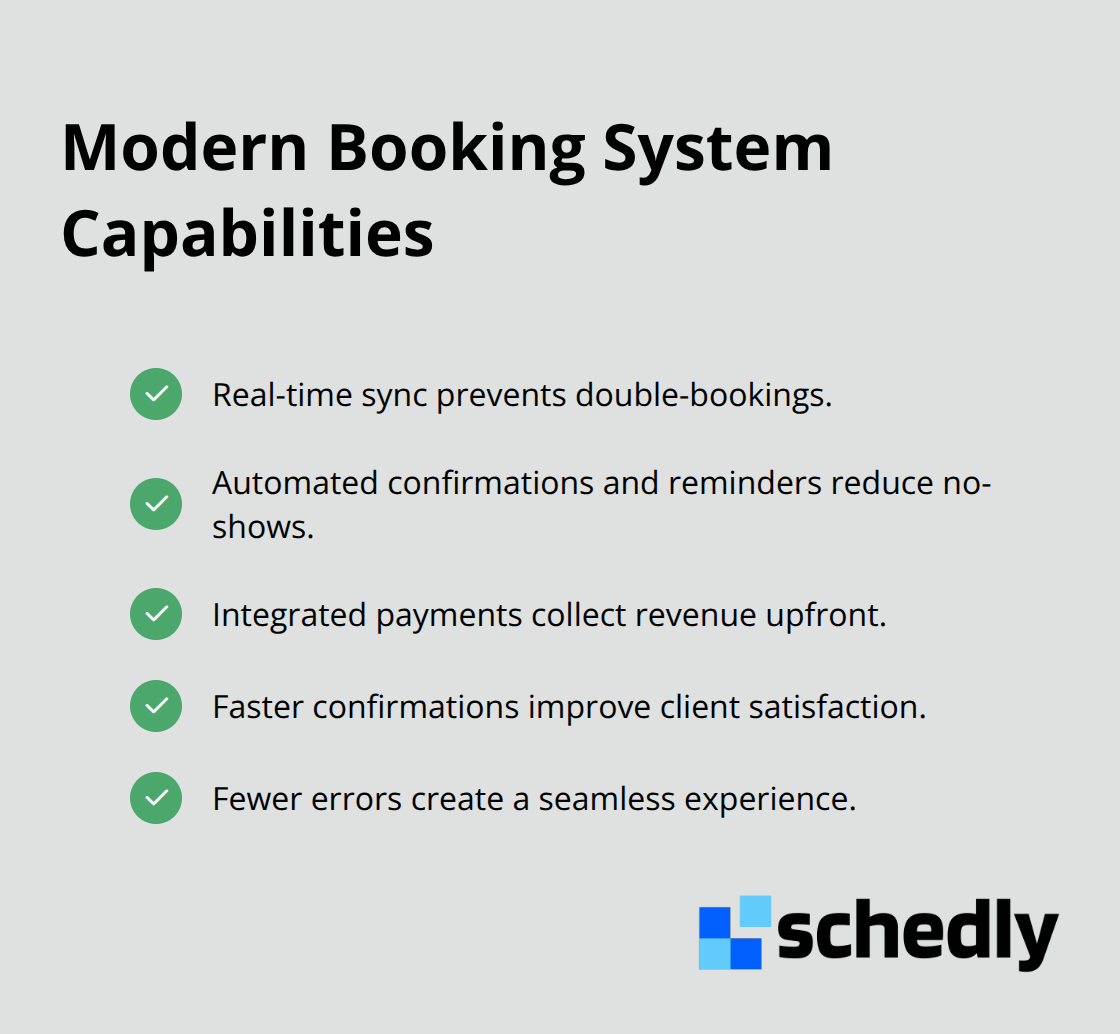
Real-time calendar synchronization prevents double-bookings across teams and locations. Automated confirmations arrive instantly, and reminders follow a proven cadence that reduces no-shows significantly. Integrated payment processing (through gateways like Stripe and PayPal) collects revenue upfront without manual intervention. These features work together to create a seamless experience for both your team and your clients.
What Makes Modern Booking Systems Actually Work
Calendar Synchronization: Your Single Source of Truth
Calendar synchronization across Google Calendar, Outlook, and iCloud prevents double-bookings and keeps your team operating from a single source of truth. When availability updates in real time across all platforms, clients see accurate open slots, and your staff avoids the chaos of conflicting appointments. Two-way syncing means changes made in one system instantly reflect everywhere else, eliminating the lag time that creates booking errors. This matters most in multi-location operations where different team members manage schedules independently. Without real-time synchronization, you run on outdated information, and mistakes compound quickly.
Payment Processing That Eliminates Invoice Chasing
Your payment processing should integrate directly into the booking flow, not as a separate step. Integrated payment processing with Stripe and PayPal embedded in your scheduling platform means clients pay upfront during booking, eliminating invoice chasing and payment delays. Upfront deposits also reduce no-show rates because clients have skin in the game. Automated confirmations arrive instantly after booking, and reminders follow a strategic cadence-research shows SMS reminders sent seven days before, two days before, and two hours before an appointment significantly reduce cancellations and no-shows. With SMS open rates exceeding 98%, these notifications actually reach people. Your team stops manually sending confirmation emails and chasing down payment receipts, reclaiming hours every week for genuine customer interaction.
Intelligent Routing and Resource Allocation
Intelligent scheduling goes beyond simply blocking time slots. The system learns which resources, staff members, or rooms work best for specific service types and automatically routes bookings accordingly. When a client books, the platform suggests the right team member or location based on availability, expertise, and past performance. This reduces back-and-forth conversations and speeds up the booking process. Queue management with virtual waitlists and wait-time estimations helps balance demand during peak hours, preventing bottlenecks that frustrate clients and overwhelm staff.
Data-Driven Decisions Through Advanced Analytics
Advanced analytics track which time slots fill fastest, which services generate the most revenue, and which team members perform best, giving you data to optimize staffing and pricing. These insights turn appointment data into actionable intelligence for your business decisions. The combination of real-time syncing, integrated payments, and intelligent routing eliminates friction at every stage of the booking journey-from the moment a client searches for availability to the moment they complete payment and receive their confirmation. This foundation of seamless operations sets the stage for understanding which industries benefit most from these capabilities.
Industries That Benefit Most from Booking Automation
Healthcare Practices: Recovering Hours for Patient Care
Healthcare practices face relentless scheduling pressure. Medical offices handle dozens of daily appointments across multiple providers, treatment rooms, and administrative staff. No-shows cost healthcare practices an average of $200 per missed appointment, and a typical practice loses $40,000 annually to no-shows alone. Automated reminders reduce no-show rates significantly. Real-time calendar synchronization across provider schedules prevents the double-bookings that waste both staff time and patient frustration.
Payment processing integrated into the booking workflow means upfront deposits lower no-show rates further because patients have financial commitment. Administrative time recovery in medical practices allows staff to shift focus directly to patient care, clinical documentation, or staff breaks that prevent burnout.
Salons and Fitness Centers: Maximizing Capacity Utilization
Salons and fitness centers operate on razor-thin margins where capacity utilization determines profitability. A salon with 10 stylists working 48 weeks per year loses $96,000 in revenue from a 5% no-show rate. Fitness studios with group classes face similar economics: one cancelled spin class represents lost revenue that automation prevents. Virtual waitlists and queue management reduce in-person congestion during peak hours, which improves client experience and allows staff to handle more bookings without hiring additional people.
Real Estate and Consulting: Eliminating Scheduling Friction
Real estate agents and consulting firms benefit from a different angle: these professionals spend substantial time managing back-and-forth email chains to schedule viewings or client meetings. Intelligent routing automatically directs prospects to available agents based on expertise and location, eliminating the administrative overhead that slows deal velocity. Consulting firms report faster client onboarding when scheduling no longer requires manual coordination.
Multi-Location Operations: Exponential Advantages at Scale
Multi-location operations across healthcare networks, salon chains, or real estate agencies gain exponential advantages because centralized booking prevents the scheduling chaos that emerges when multiple offices operate independently. The payoff scales with operational complexity: the more locations and staff members involved, the greater the time recovery and error reduction. Centralized systems eliminate duplicate bookings, conflicting schedules, and the miscommunication that slows operations when teams work in silos.
Final Thoughts
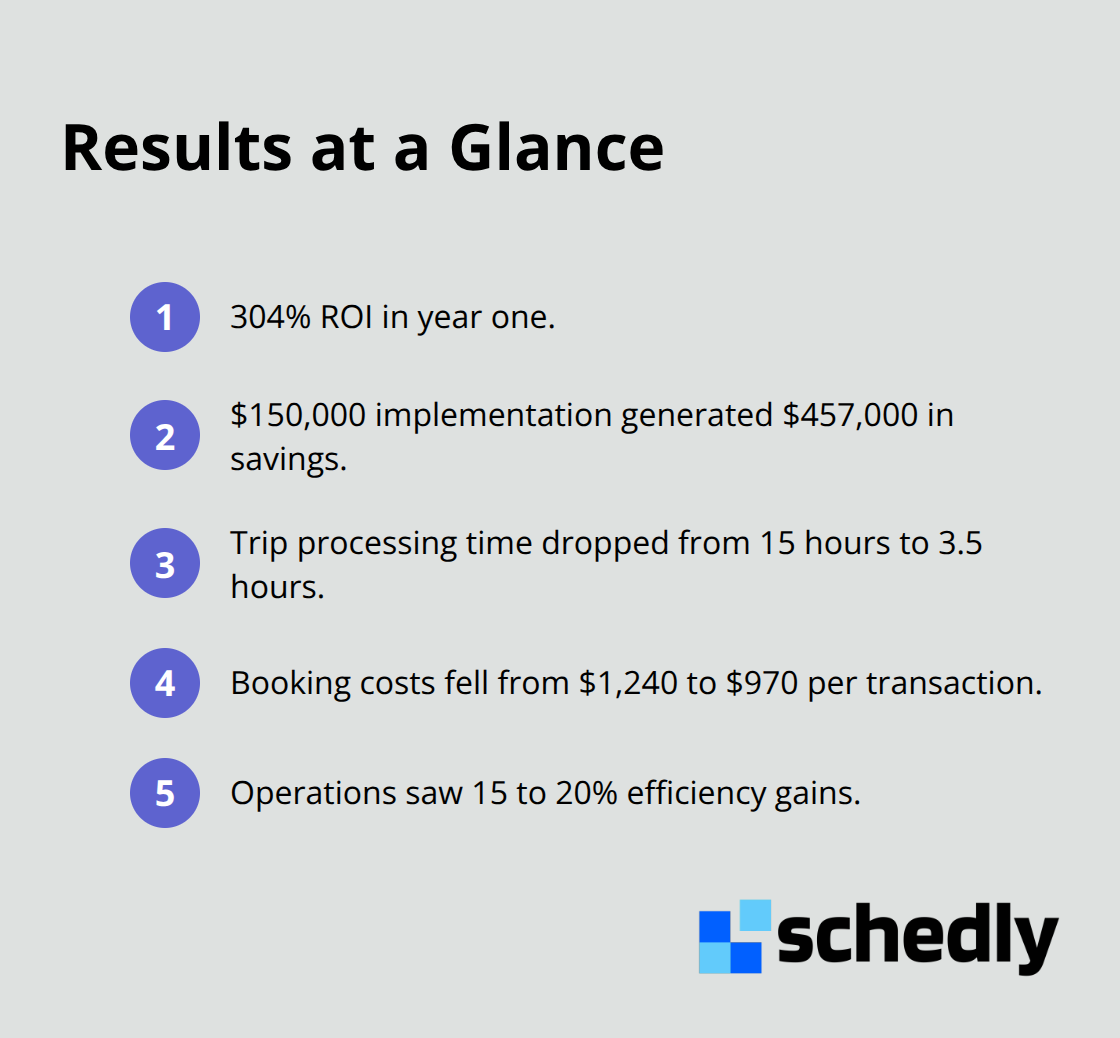
Automated booking workflows deliver measurable financial returns that justify implementation costs quickly. A small-to-medium enterprise case study showed a 304% ROI in year one, with implementation costs of $150,000 generating $457,000 in savings. Trip processing time dropped from 15 hours to 3.5 hours, and booking costs fell from $1,240 to $970 per transaction.
When staff stops managing spreadsheets and email confirmations, they deliver better customer service, which builds loyalty and increases revenue per client. Businesses implementing automation at scale report 15 to 20% efficiency gains in operations. Your team recovers hours every week that translate directly into improved client interactions, faster problem-solving, and reduced burnout.
Start with your highest-friction points first-map your current booking process to uncover exactly where time disappears, then prioritize the three biggest bottlenecks for automation. Schedly handles branded scheduling pages, 24/7 online booking, secure payment processing, and workflow automation across industries from healthcare to real estate to fitness. The businesses winning today are those that automate routine tasks and redirect human effort toward relationships and strategy.