
Schedly resources
Automated Followup Reminders: Turn Abandoned Spots Into Bookings
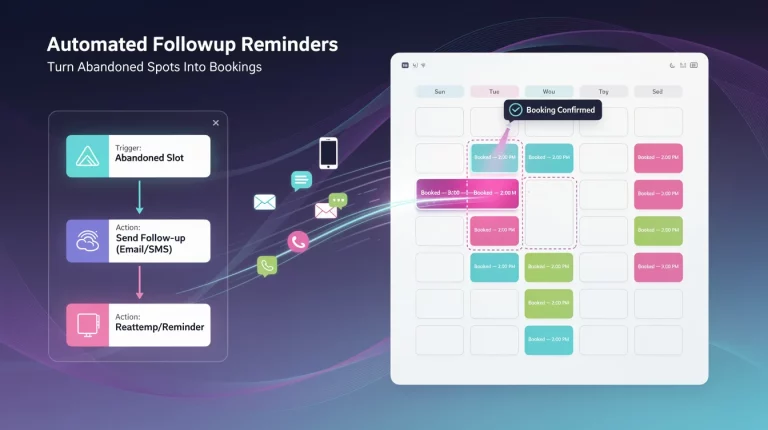
No-shows and cancellations drain revenue from your business every single week. When customers book appointments but don't show up, you lose income and waste staff time on empty slots.
Automated followup reminders change this. At Schedly, we've seen how timely notifications before appointments dramatically reduce no-shows and keep customers committed to their bookings.
What Really Happens When Customers Abandon Their Bookings
Forgetfulness Drives Most No-Shows
Forgetfulness is the number one reason appointments go unfilled. A healthcare study found that 67,000 no-shows cost the system approximately 7 million dollars, and the vast majority of these missed appointments stemmed from patients simply forgetting about their scheduled time. Your business faces the same problem across every industry. When someone books an appointment weeks in advance, they move on with their life. The booking sits in their email, forgotten until they miss the slot entirely. This isn't a customer service failure on your part-it's human nature. Without a reminder, people lose track of dates, times, and commitments they made with genuine intent.
The Financial Damage Compounds Quickly
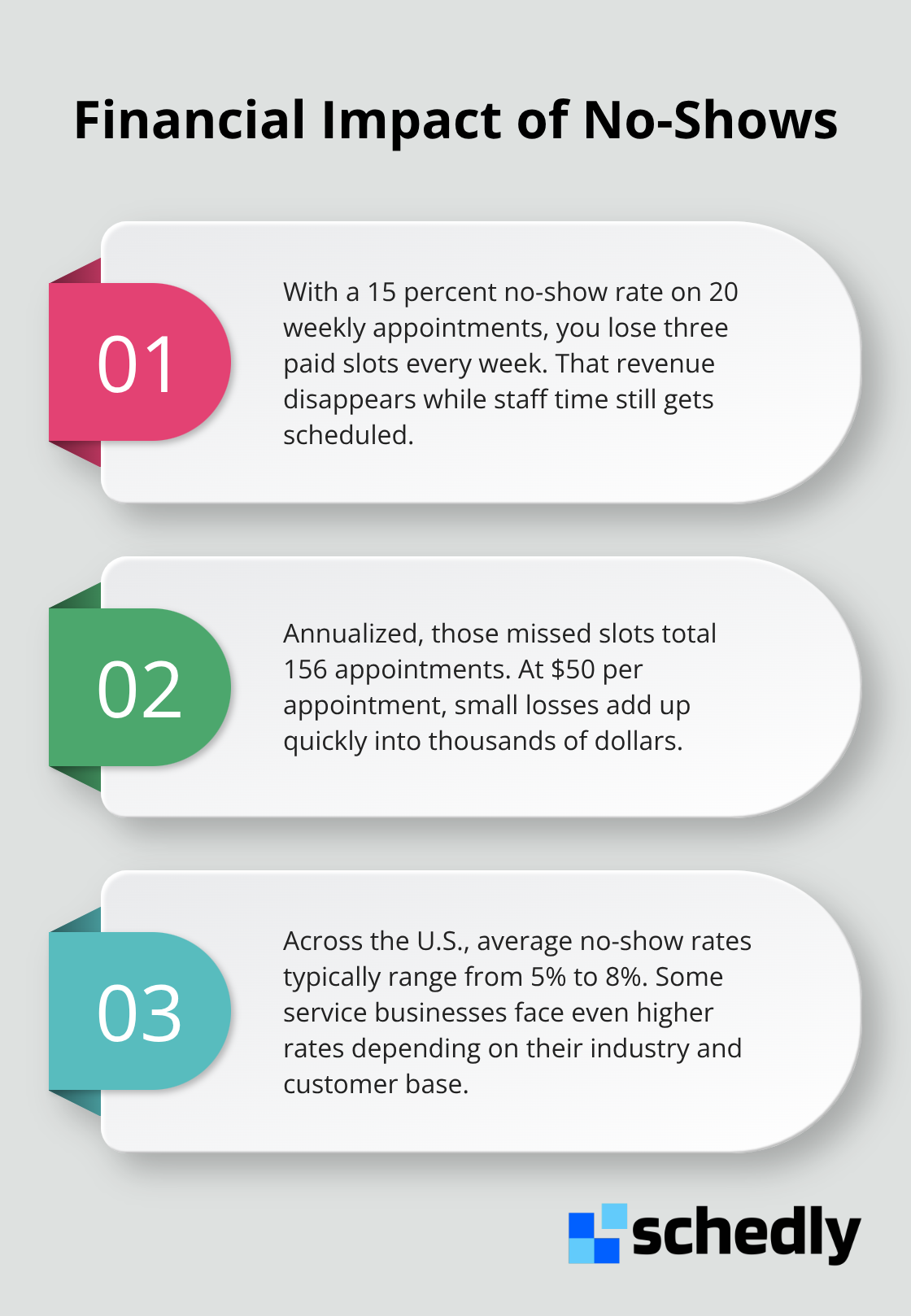
The revenue impact hits hard and fast. If you run a salon with 20 appointments per week and just 15 percent no-show, you lose 3 slots weekly. Over a year, that's 156 lost appointments. At 50 dollars per appointment, you're looking at nearly 8,000 dollars in vanished revenue annually, and that's a conservative estimate.
Last-Minute Cancellations Create Operational Chaos
Last-minute cancellations create an entirely different problem because they happen too late to fill the slot through normal channels. A customer cancels 2 hours before their appointment, leaving you scrambling to reach other clients or accept that the time will sit empty. Your staff is already scheduled, your materials are prepared, and your revenue is gone. This is where the real operational damage happens. You can't instantly call every person on your waitlist and offer them a same-day slot. You can't manually reach out fast enough. The gap remains empty, your team has downtime, and you've lost income that's impossible to recover retroactively.
Poor Communication Amplifies Both Problems
Poor communication before appointments amplifies both problems. When customers don't receive reminders, they have no prompt to check their calendar or adjust their plans. They might want to reschedule but have no easy way to do it, so they simply don't show up. They might have forgotten the time entirely. They might have conflicting plans they could have worked around if someone had reminded them. The absence of touchpoints in the days and hours before an appointment is a critical failure point. Customers need multiple reminders at the right moments, delivered through channels they actually use, to maintain their commitment and give them the opportunity to reschedule if needed. This is where automated systems step in to solve what manual processes cannot handle.
How Automated Reminders Transform Abandoned Bookings Into Confirmed Revenue
The Timing Window That Recaptures Intent
Automated reminders work because they interrupt the forgetting cycle at precisely the right moments. Research shows that reminders sent within one to three hours of an abandoned booking convert significantly better than delayed messages. If a customer starts booking but abandons the process, a reminder within that window recaptures their intent while the decision is still fresh. A proven reminder cadence includes touchpoints one week before, 48 to 72 hours before, 24 hours before, and on the day of the appointment. This frequency keeps your business top-of-mind without overwhelming customers.
Text Messages Drive the Highest Engagement
Text reminders generate the highest engagement rates among all channels, making SMS a non-negotiable component of any reminder strategy. When you combine SMS with email reminders, you reach customers through their preferred communication methods and dramatically increase confirmation rates. The channel matters as much as the message itself. Customers check text messages within minutes; they check email far less frequently. A two-channel approach ensures your reminder reaches them where they actually look.
Two-Way Communication Transforms Dialogue
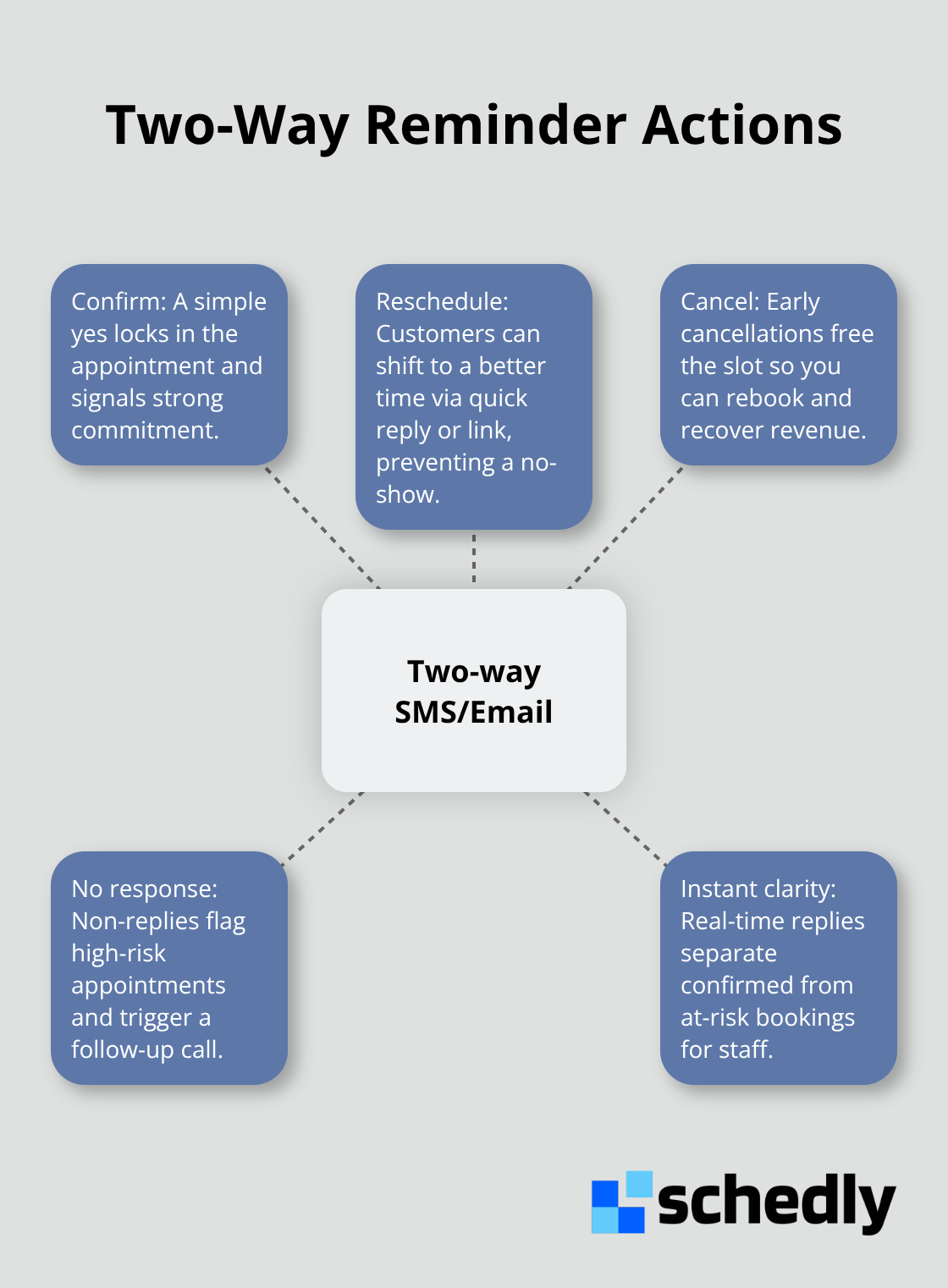
Two-way communication transforms reminders from one-directional announcements into genuine dialogue. When customers receive a reminder, they should be able to confirm, reschedule, or cancel with a simple reply. This removes friction and gives you immediate clarity on which appointments are truly confirmed versus at risk.
Personalization and Multi-Step Sequences Multiply Results
Personalization dramatically amplifies conversion rates. Include the customer's name, exact appointment date and time, location details, and the service they booked. When reminders feel tailored rather than generic, customers take them seriously and respond accordingly. Multi-step automation sequences work better than single reminders. Send an initial reminder within one hour of abandonment, then follow up with a softer message 24 hours later if the first didn't convert. This approach respects customer preferences while maintaining persistence. The combination of personalization and strategic timing (rather than random frequency) transforms reminders into a revenue recovery tool that actually works.
Building a Reminder System That Actually Works
Timing Determines Whether Reminders Convert or Get Ignored
The difference between a reminder system that recovers bookings and one that gets ignored comes down to three tactical decisions: when you send messages, what you say in them, and which channels you use. Most businesses get at least one of these wrong, which is why their reminders fail to move the needle on no-shows. Timing is non-negotiable. A reminder sent one week before an appointment sits in the inbox and gets forgotten again. A reminder sent 24 hours before lands when customers are actually planning their day and can confirm or reschedule. The most effective cadence mirrors real human planning: send a reminder 48 hours before the appointment when people check their calendars, another at 24 hours when they mentally prepare, and a final touch a few hours before when they leave. This three-point approach catches customers at different decision moments without overwhelming them. Skip the week-out reminder entirely-it's noise. Focus your automation on the 48-hour, 24-hour, and same-day windows where actual behavioral change happens.
Personalization and Direct Action Links Drive Confirmations
Personalization isn't optional if you want strong conversion rates. Generic reminders get deleted. Reminders that include the customer's name, exact appointment time, location, and the specific service they booked get acted on. A customer sees their name and recognizes this message is for them, not a batch broadcast. Include a direct link to reschedule or confirm with a single click-don't force them to call or navigate your website. This removes friction and transforms a passive notification into an active conversion opportunity. Customers who can act immediately respond at higher rates than those who must take additional steps.
SMS Anchors Your Strategy; Email Provides Backup
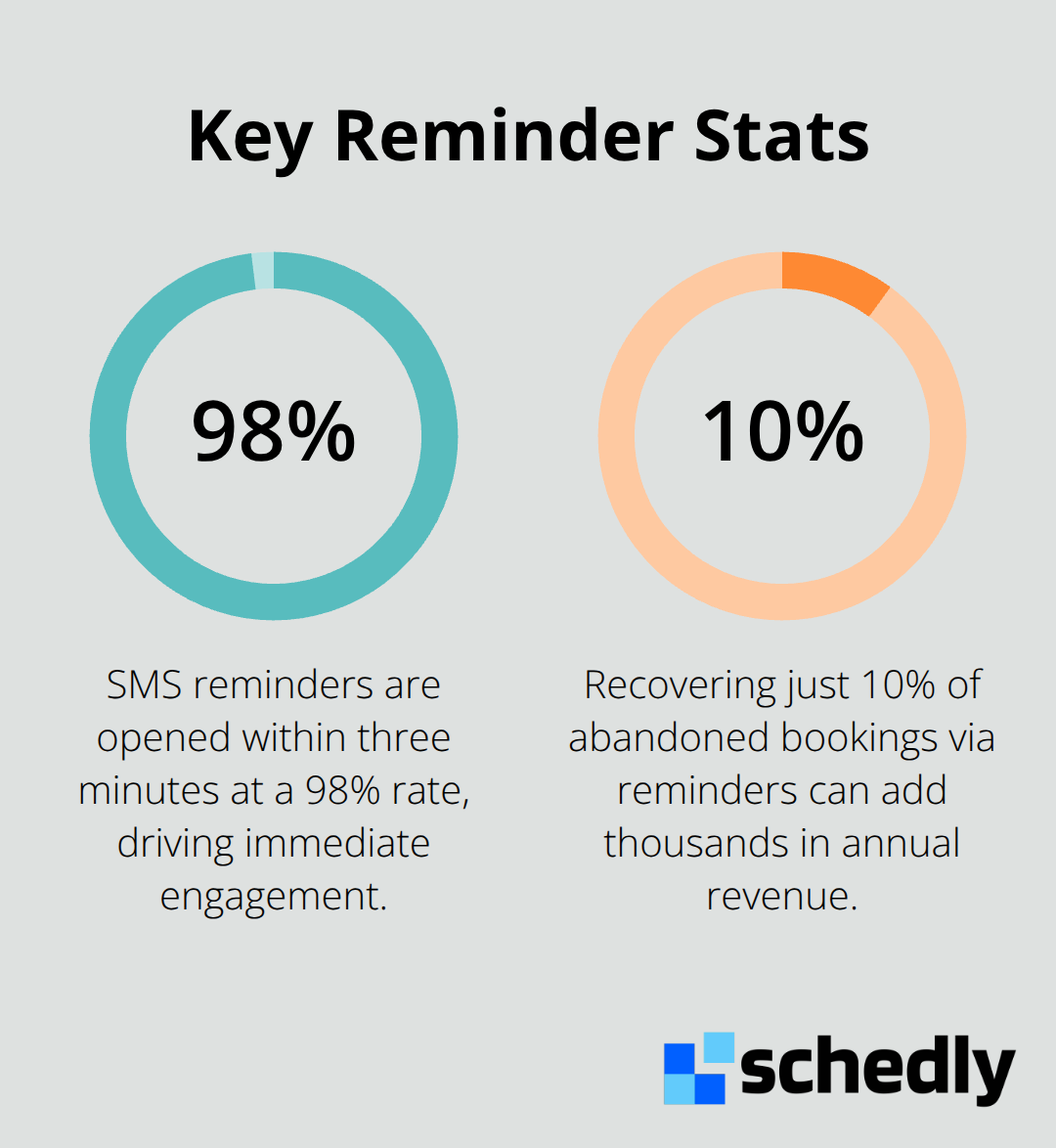
Text messages must anchor your strategy because they sit at 98 percent open rates within three minutes of delivery, while emails take hours or days to get opened. SMS is where the actual confirmations happen. Email works as a secondary channel for customers who prefer written documentation or need to see the full appointment details. A two-channel approach means one message reaches them immediately (SMS) and another provides a backup record (email). This dual-channel method ensures your reminder reaches customers through their preferred communication methods and dramatically increases confirmation rates.
Two-Way Messaging Eliminates Back-and-Forth Friction
Two-way messaging transforms reminders from one-directional announcements into genuine dialogue. When a customer can reply with a simple yes, no, or reschedule request, you get immediate feedback on appointment risk and eliminate the back-and-forth of phone calls. Customers who actively confirm are genuinely committed; customers who don't respond within 24 hours need a follow-up call from staff because they're statistically high-risk for no-shows. Mandatory confirmations create accountability. Asking customers to actively confirm rather than just receive information identifies high-risk appointments before they become no-shows. This real-time feedback loop transforms your reminder system from a broadcast tool into a risk management system that flags problems early.
Final Thoughts
Automated followup reminders stop the bleeding by recovering revenue that would otherwise vanish and transforming customers who forgot into customers who show up. If you recover just 10 percent of abandoned bookings through reminders, you'll see thousands of dollars in incremental annual revenue. Your staff stops wasting time on no-shows, your schedule fills more consistently, and your business runs with predictable revenue instead of constant gaps.
The implementation path is simpler than most businesses assume. Start with SMS as your primary channel because text messages reach customers where they actually look, then layer in email as a secondary touchpoint for customers who prefer written confirmation. Time your reminders for the 48-hour, 24-hour, and same-day windows where customers actually make decisions, include the customer's name and exact appointment details with a direct link to confirm or reschedule, and enable two-way messaging so customers can respond immediately instead of calling.
We at Schedly built our platform specifically to automate this entire workflow across SMS and email, track confirmations in real time, and integrate with your calendar and payment systems so nothing falls through the cracks. The businesses winning right now use automated systems that catch customers at the right moment, through the right channel, with the right message-and Schedly makes that happen automatically.