
Schedly resources
Automotive Service Scheduling: Keep Cars In The Shop And Clients In The Loop

Automotive service shops lose thousands in revenue every month because customers don't show up or cancel last-minute. Without proper scheduling systems, your team wastes time on manual bookings while customers stay in the dark about their appointment status.
At Schedly, we've seen how the right scheduling software transforms this chaos into smooth operations. Automated booking, real-time updates, and smart reminders don't just keep your shop full-they build customer loyalty and cut no-shows dramatically.
The Real Cost of Broken Scheduling
No-shows and last-minute cancellations drain your shop's revenue every single month. Studies show that automotive service businesses lose significant revenue monthly due to missed appointments. When a customer books a service slot and fails to arrive, your technician sits idle, parts remain unused, and the bay stays empty. A single missed oil change appointment costs you the service fee plus the opportunity to sell related maintenance like filter replacements or fluid checks. Across dozens of appointments each month, you're looking at thousands in lost income. The problem intensifies when customers cancel hours before their scheduled time-your team has already allocated resources, ordered parts, and adjusted the day's workflow. Without a system that confirms appointments and sends timely reminders, shops operate with significant uncertainty about who will actually show up.
Customer Expectations Have Shifted Dramatically
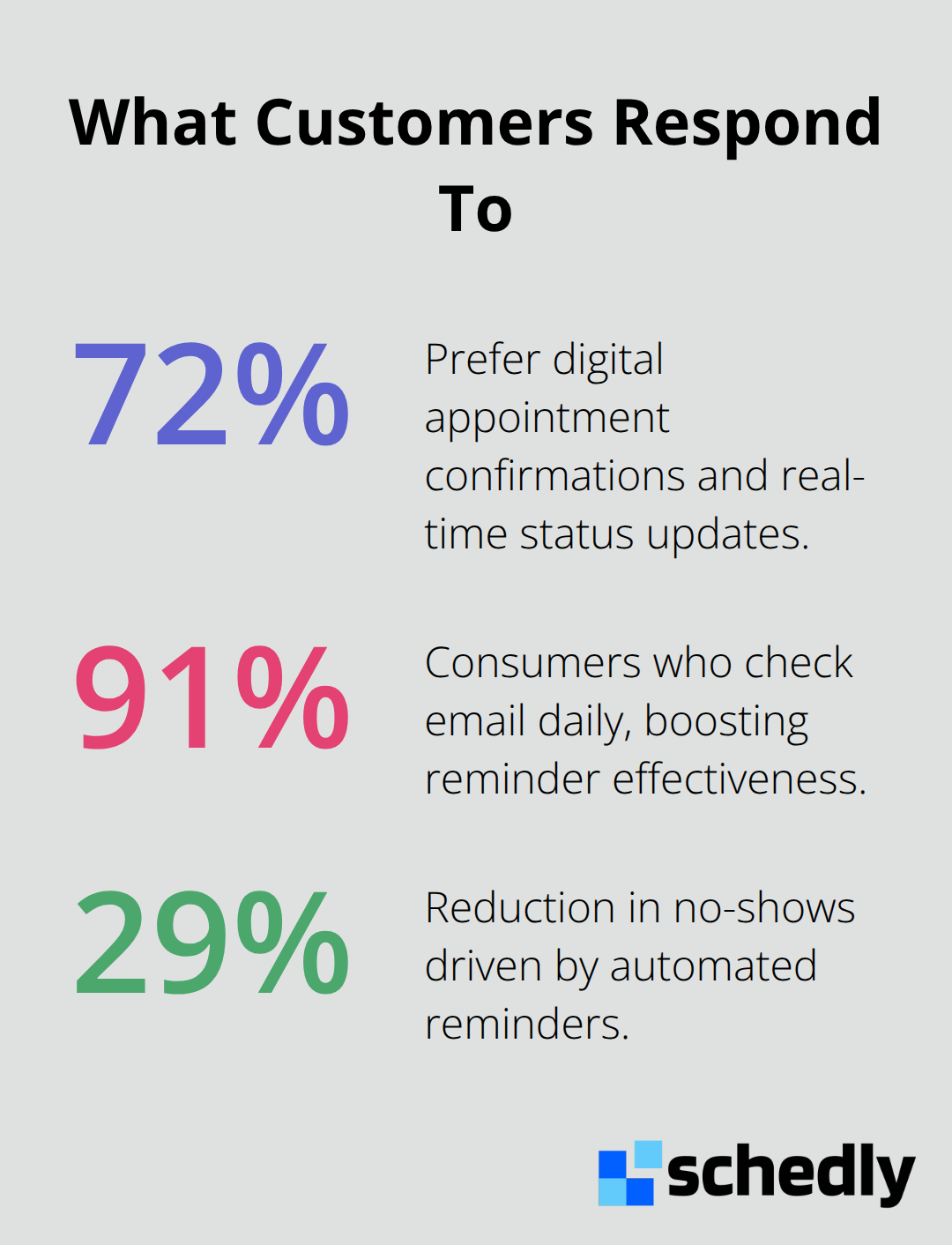
Your customers now expect to book service online at midnight, receive text updates about their repair progress, and know exactly when their car will be ready. They've experienced frictionless booking with ride-sharing apps and online retailers-and they judge your shop against those standards.
Manual Scheduling Creates Bottlenecks and Wasted Hours
Your team spends time answering phones, writing down appointment details, updating calendars, and calling customers to confirm. These administrative tasks pull technicians away from billable work and front-desk staff away from other responsibilities. Without visibility into technician availability and skill sets, you overbook some days and leave gaps on others. A technician skilled in transmission repair sits idle while another handles routine maintenance, when that work could have been distributed better. Parts availability creates another scheduling headache-your team books appointments without checking whether required components are in stock, leading to delays and customer frustration. Modern scheduling software eliminates these inefficiencies. Digital systems automatically confirm bookings, send reminders, track technician availability, and sync with your parts inventory. Staff reclaim hours every week that they redirect toward customer service and revenue-generating work. The difference between managing schedules manually and using modern software often determines whether a shop stays competitive or falls behind.
This operational chaos-lost revenue, frustrated customers, and wasted staff hours-doesn't have to be your reality. The right scheduling solution transforms how you operate, and understanding what modern software can do is the first step toward fixing these problems.
How Modern Scheduling Software Transforms Service Operations
Eliminate Administrative Overhead with Digital Booking
Switching from phone-based scheduling to digital booking systems removes the administrative drain that plagues most shops. When a customer books online at 11 PM, the system automatically confirms the appointment, syncs it with your technician calendar, and flags any conflicts without a single staff member lifting a finger. Your front desk no longer spends hours each week answering calls, writing down details, or managing overlapping bookings. That reclaimed time flows directly into customer service and revenue-generating activities.
Payment processing integrates seamlessly into the booking flow, so customers can pay deposits or full amounts during appointment creation rather than fumbling through transactions at check-in. Schedly processes payments through secure gateways such as Stripe and PayPal, reducing friction and speeding up the entire transaction cycle. Real-time visibility into technician schedules and skill sets prevents the chaos of overbooking and skill mismatches. Your team sees exactly who has capacity, what type of work they specialize in, and when bays are available.
Keep Customers Informed at Every Stage
Real-time customer communication in service scheduling transforms how customers experience your shop. The moment you assign a technician to their vehicle, they receive an automated notification. When diagnostics uncover additional work, you send a photo and explanation through the same platform, eliminating the back-and-forth phone tag that frustrates customers and delays decisions. Automated reminders sent 24 hours and 2 hours before appointments reduce no-shows significantly.
Multi-channel communication matters too. Customers expect updates via text, email, or in-app notifications depending on their preference. A good scheduling system delivers messages across channels from a single interface, so your team stays consistent and customers stay informed. When repair work extends beyond the original estimate, proactive communication prevents cancellations and builds trust. Customers appreciate honesty about delays far more than silence followed by a surprise phone call.
Connect Your Systems to Prevent Information Silos
System integration for automotive service operations matters more than you might think. Your scheduling system should connect with your parts inventory system so technicians see real-time stock levels during booking. Connection to your CRM ensures customer history follows them through every interaction. Link your accounting software so service revenue flows directly into financial records without manual entry. These integrations eliminate the data silos that slow down operations and introduce errors.
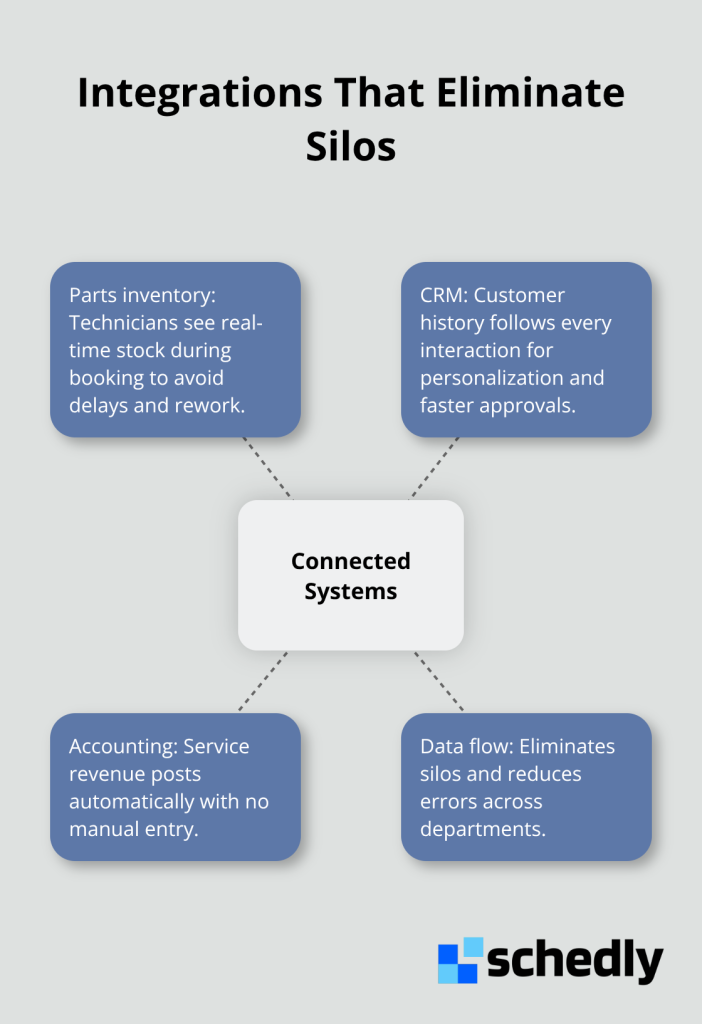
Shops that invest in connected systems see faster job completion, fewer scheduling conflicts, and higher customer satisfaction because information flows seamlessly across departments. The right platform removes the friction that comes from managing multiple disconnected tools. Your team stops wasting time transferring data between systems and starts focusing on what matters: serving customers and generating revenue.
This transformation from chaos to clarity sets the stage for the next critical step: implementing best practices that maximize the efficiency gains your new software provides.
Maximizing Scheduling Efficiency Through Smart Resource Management
Match Work to Technician Skills
Technician allocation makes or breaks your scheduling efficiency. Most shops assign work based on whoever is available next, but this approach wastes specialized skills and creates bottlenecks. Instead, map your technicians by skill level and expertise-transmission specialists, electrical diagnosticians, general maintenance techs-then match incoming work to the right person. A technician trained in complex diagnostics shouldn't spend hours on routine oil changes when another team member can handle that work. This skill-based allocation cuts job completion time significantly and prevents the frustration of overqualified staff doing basic tasks.
Real-time visibility into technician workload prevents the chaos of uneven distribution. One tech finishes early while another faces a backlog because nobody tracked capacity in real time. Digital scheduling systems show you exactly who has open slots and what type of work they're equipped to handle. Your team sees capacity constraints before they become problems.
Customize Time Slots to Match Service Duration
Time slot optimization matters equally. Avoid the trap of offering uniform 30-minute or one-hour slots for all services. An oil change takes 20 minutes, but a transmission flush needs two hours. Customize your time slots to match actual service duration, and you'll fit more jobs into each day while reducing the pressure on technicians to rush.
Buffer time between appointments prevents cascade delays. When one job runs long, it shouldn't domino through your entire schedule. Most shops need 10-15 minutes between appointments for cleanup, parts gathering, and handoffs. Build that buffer into your system, and you'll see higher on-time completion rates.
Use Customer History to Predict Service Needs
Customer data transforms scheduling from reactive to predictive. Track what services each customer received, when they last visited, and what maintenance their vehicle model typically needs at specific mileage intervals. A customer who had an oil change six months ago is likely due for a tire rotation soon. Their vehicle history tells you exactly what they'll need before they call. This predictive approach fills your schedule with planned maintenance rather than waiting for customers to realize something needs attention.
Studies show that 91 percent of consumers check email daily, making automated maintenance reminders incredibly effective. Send customers personalized messages about upcoming service intervals based on their vehicle and history, and you'll see appointment bookings increase.
Reduce No-Shows with Strategic Reminders
Automated reminders reduce no-shows by 29%. Two-hour reminders work even better for capturing customers who forgot or need to reschedule. The key is using multiple channels-text, email, and in-app notifications-because different customers prefer different communication methods.
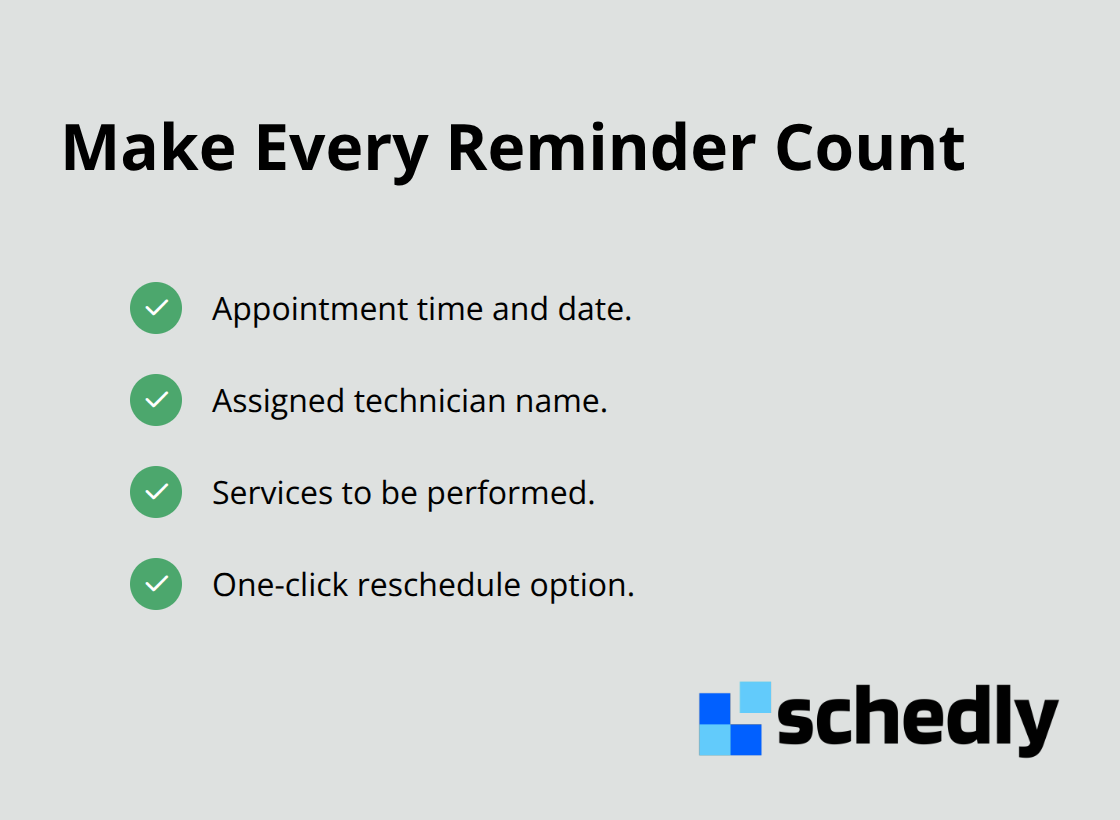
A customer who booked via text expects their reminder via text, not email. Multi-channel reminder systems ensure your message reaches them in their preferred format. Configure your reminders to be helpful rather than pushy. Include the appointment time, technician name, what work they're receiving, and an easy way to reschedule if needed.
Final Thoughts
Automotive service scheduling separates thriving shops from struggling ones. The shops winning right now have eliminated manual booking chaos, kept customers informed at every step, and matched work to the right technicians. That combination drives revenue, reduces no-shows, and builds loyalty that keeps customers coming back month after month.
Technology adoption creates the operational clarity that transforms how your team works. Real-time visibility into technician capacity, automated reminders that reduce no-shows by 29 percent, and customer data that predicts service needs before customers call-these tools let you operate at full potential. Your customers expect digital booking and real-time updates because they've experienced that standard everywhere else, and meeting those expectations keeps you relevant in a competitive market.
If you're ready to move beyond phone-based scheduling and manual calendars, Schedly offers a scheduling platform built for automotive service operations. It handles 24/7 online booking, secure payment processing, workflow automation, and integrations with your existing tools so your team gets the visibility and efficiency gains that matter.