
Schedly resources
Automotive Service Scheduling: Streamline Car Care Appointments
Automotive service shops lose thousands of dollars every month to no-shows, double bookings, and staff drowning in administrative work. Phone calls pile up, emails get lost, and customers can't book appointments outside business hours.
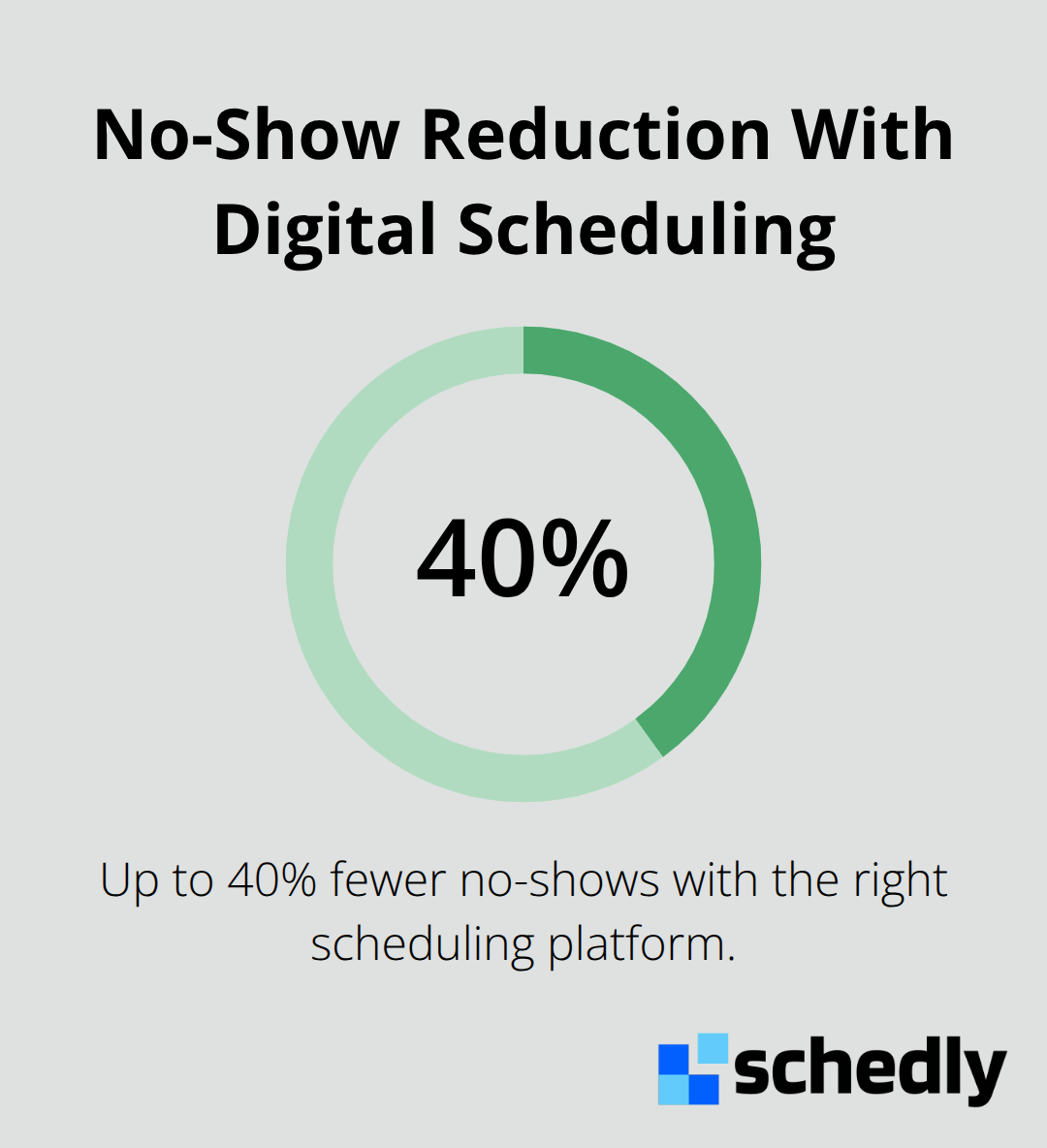
At Schedly, we've seen how automotive service scheduling software transforms this chaos into smooth operations. The right platform eliminates friction, cuts no-shows by up to 40 percent, and frees your team to focus on what they do best-fixing cars.
Why Manual Scheduling Drains Your Shop's Profitability
Front Desk Staff Waste Hours on Administrative Work
Your front desk staff spends roughly 30 to 40 percent of their time on appointment calls and emails instead of preparing customer vehicles or handling check-ins. Every phone call ties up a technician or advisor for 5 to 10 minutes, and customers calling during peak hours often encounter a busy signal or voicemail. Administrative tasks consume significant service center staff capacity, directly cutting into revenue-generating work. When customers cannot reach you during business hours, they call competitors who answer immediately. When they cannot book outside business hours, they book elsewhere too.
Phone-Based Scheduling Creates Cascading Errors
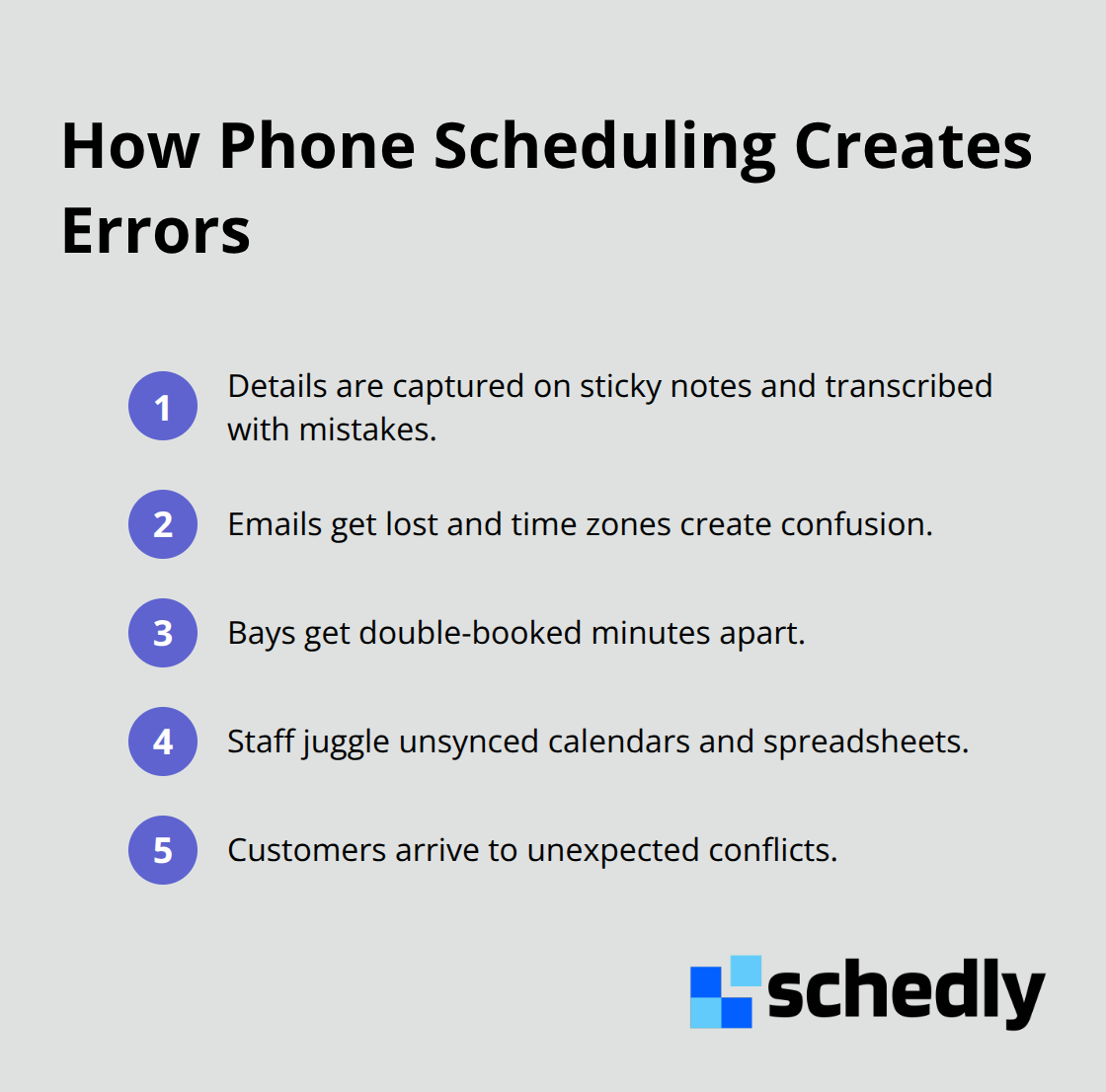
Phone-based scheduling creates a cascade of problems that compounds throughout your operation. Advisors write appointment details on sticky notes, transfer them to calendars with errors, and scramble to verify technician availability. Email coordination makes this worse because confirmations get lost, time zones create confusion, and there's no central source of truth. One advisor books a bay at 2 p.m. while another schedules a different customer for the same bay at 2:15 p.m., and nobody realizes the conflict until both customers arrive.
No-Shows and Lost Revenue Compound Quickly
No-shows cost automotive shops significant daily revenue according to industry service data. Manual reminder systems fail because staff send text reminders hours late or forget entirely. Customers who don't receive confirmations assume their appointments are cancelled or simply forget. When a no-show happens, your bays sit empty, technicians have no work, and that lost slot never fills again. A single shop losing 2 to 3 no-shows per day loses roughly 40 to 60 appointments monthly, translating to thousands in lost service revenue. Your staff then wastes time calling no-show customers, rescheduling, and manually updating records instead of serving the customers who actually showed up.
These operational failures don't just cost money-they frustrate your team and push customers toward shops with better systems. Digital scheduling software addresses each of these problems directly.
How Digital Scheduling Eliminates Booking Friction
Customers Book Around the Clock Without Phone Calls
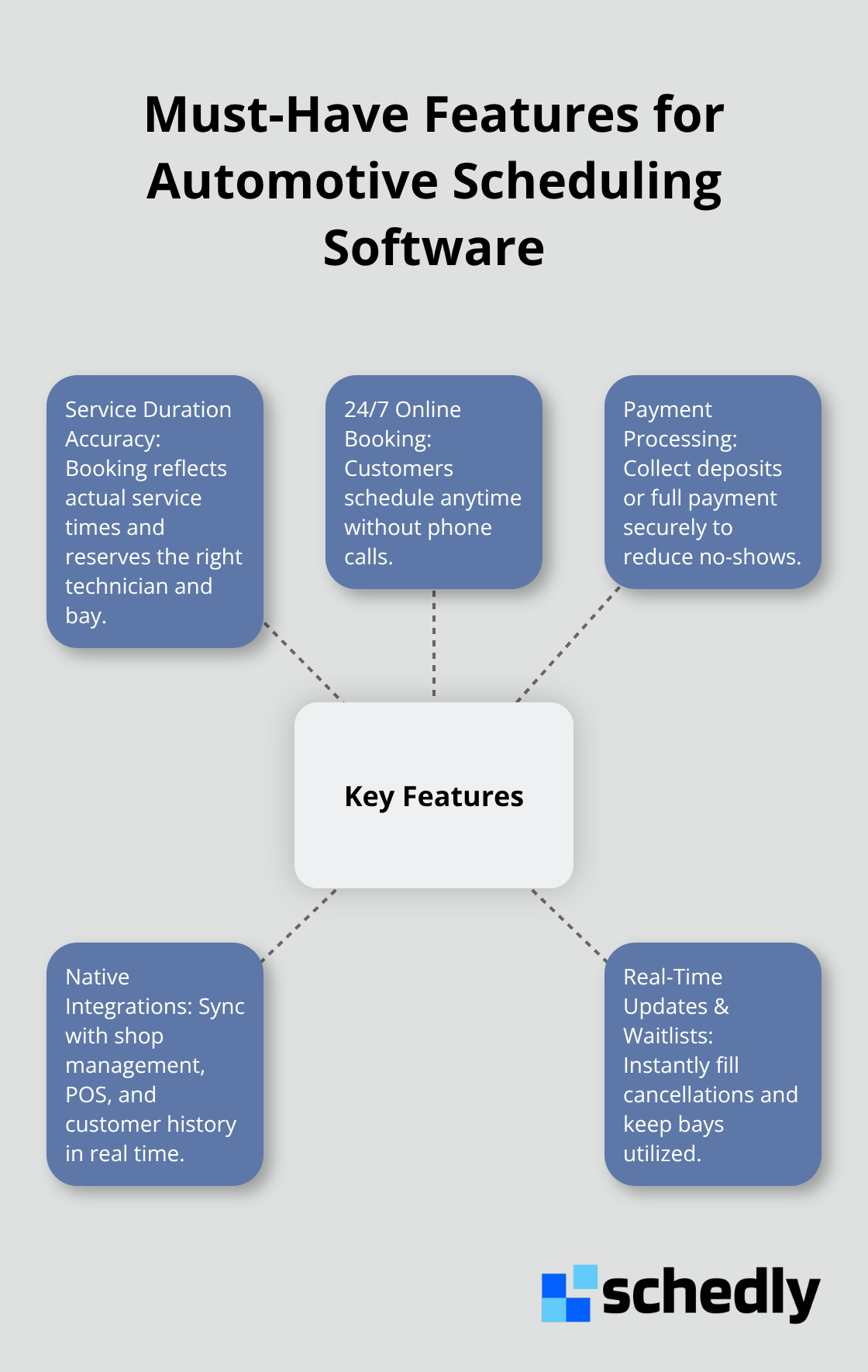
Digital scheduling software solves the core problem that manual systems cannot: customers book appointments whenever they want, and your shop operates efficiently without phone tag. When customers access a 24/7 online booking system, they select their service type, choose an available time slot, and confirm in seconds. No more calling during business hours only to reach a busy line. No more leaving voicemails and waiting for callbacks.
Shops using digital scheduling see appointment requests flow in outside business hours-early mornings, evenings, weekends-filling slots that would otherwise sit empty. A customer who needs an oil change at 10 p.m. on a Tuesday can book it then instead of calling Wednesday morning and potentially booking at a competitor. This shift alone increases appointment volume because you capture demand that manual systems miss entirely.
Real-Time Availability Prevents Double Bookings
The booking interface shows real-time availability, so customers never book a time slot that's actually full. Real-time availability prevents overlapping reservations automatically. Your staff no longer spends time on the phone verifying availability, transferring details to calendars, or correcting conflicts. They focus on actual customer service instead of administrative coordination.
Automated Reminders Cut No-Shows and Recover Revenue
Automated reminders transform your no-show rates and technician efficiency simultaneously. When a customer books an appointment, the system sends an initial confirmation immediately, then follows up with reminders via text or email 24 hours before and again 2 hours before the appointment. Studies show that automated reminders reduce no-shows, which means a shop losing 2 no-shows daily could recover 40 to 60 appointments monthly. That translates to tens of thousands in recovered service revenue annually.
Technicians Receive Real-Time Updates and Optimized Workload
Technicians receive real-time updates as appointments are booked, modified, or cancelled, so they know their exact workload and can prepare accordingly. A technician doesn't waste time waiting for an appointment that won't show up or scrambling to find work because a cancellation wasn't communicated. The system distributes work based on technician availability, skill level, and current capacity, ensuring bays stay full and labor remains optimized.
When a cancellation happens, the software flags the open slot immediately, and your staff can contact customers on the waitlist or adjust the schedule to prevent idle time. This real-time visibility eliminates the lag between when something changes and when your team finds out. With these operational improvements in place, your shop needs the right software features to maximize efficiency and customer satisfaction.
What Software Features Actually Matter for Automotive Scheduling
The scheduling software you choose determines whether your shop captures every booking opportunity or continues losing revenue to manual inefficiencies. Generic scheduling tools built for restaurants or salons fall short because automotive service has specific demands that generic platforms ignore. Your shop needs software that understands service duration variability, handles multiple technician skill levels, manages equipment availability, and integrates with existing shop systems where customer history and vehicle records live.
Online Booking Must Reflect Real Service Complexity
A basic online calendar that shows empty time slots fails automotive shops because service durations vary dramatically. An oil change takes 30 minutes, a transmission flush takes 2 hours, and a diagnostic can run anywhere from 45 minutes to 3 hours depending on what technicians find. Software that locks customers into fixed time slots or doesn't account for service type creates scheduling conflicts and frustrated customers. The booking interface needs to display available appointment lengths based on the specific service selected, then automatically reserve the correct technician and bay for that duration. When a customer selects a brake inspection versus a full suspension diagnostic, the system should show different availability windows because those services demand different time allocations. This accuracy prevents the cascade of delays where a 30-minute appointment gets booked in a 45-minute slot, then the next customer arrives 15 minutes early to an unprepared bay. Your software must also allow customers to add notes about vehicle symptoms or special requests during booking so technicians prepare in advance rather than discovering issues after the appointment starts.
Payment Processing Captures Revenue Before the Appointment
Collecting deposits upfront eliminates the no-show problem entirely because customers with money on the line show up. Payment processing integration in scheduling software lets customers pay a deposit or full service amount immediately after selecting their appointment time. Shops using upfront payment collection see no-show rates drop because customers committed financially. The payment system needs to support multiple gateways like Stripe and PayPal so customers use their preferred method, and it must be secure and PCI-compliant to protect customer data. When payment fails during booking, the system should offer alternative payment methods rather than abandoning the transaction. Offering flexible payment options increases conversion rates because customers complete bookings instead of leaving to find another shop. Some shops charge a small deposit for services under $100 and full payment for larger jobs, which recovers money while respecting customer preferences. The software should generate invoices automatically after payment, and for shops that want to offer payment plans, the system should support that flexibility too.
Integration With Shop Systems Eliminates Data Duplication
Your scheduling software must connect with your existing shop management system, point-of-sale software, and customer database so information flows automatically without manual data entry. When a customer books through the online portal, their appointment details sync instantly to your shop management system, technician work orders populate automatically, and customer history appears immediately so technicians know previous repairs and ongoing issues. Shop management system integration ensures that service history is complete and accurate. A technician who knows a customer had a transmission fluid leak three months ago can check whether that issue was resolved and whether related repairs were completed, improving diagnostic accuracy and customer trust. Real-time integration also means that when a customer calls to reschedule, your staff sees the appointment in the system instantly rather than searching through email or paper records. If your shop uses a specific management platform, verify that your scheduling software integrates natively rather than relying on third-party connectors that sync slowly or incompletely.
Final Thoughts
Automotive service scheduling software eliminates the friction that costs shops thousands monthly. Manual systems force customers to call during business hours, create double bookings through human error, and generate no-shows because reminders fail. Digital scheduling solves all three problems simultaneously by letting customers book 24/7, preventing conflicts through real-time availability, and cutting no-shows with automated reminders that actually reach people.
Large dealerships have invested heavily in scheduling infrastructure and customer experience tools, but independent shops and smaller service centers can now compete directly without massive capital investment. When your shop offers seamless online booking, transparent pricing, and reliable appointment confirmations, customers choose you over competitors still managing spreadsheets and phone calls. A shop losing 2 to 3 no-shows daily recovers 40 to 60 appointments monthly through automated reminders alone, which translates to tens of thousands in annual revenue.
Your team stops wasting time on coordination and starts focusing on actual customer service and vehicle repairs. Visit Schedly to see how automotive service scheduling software transforms your operations and revenue.