
Schedly resources
Automotive Service Scheduling: Streamline Repairs and Customer Communication
Automotive service scheduling is broken at most repair shops. Mechanics waste hours juggling appointments, customers sit in waiting rooms, and no-shows drain revenue.
At Schedly, we've seen firsthand how the right scheduling system transforms this chaos into efficiency. When you automate bookings and streamline communication, everyone wins-your team works faster, customers get served quicker, and your business makes more money.
Why Automotive Service Scheduling Matters
Mechanics waste 10-15% of their workday on scheduling conflicts and appointment changes instead of fixing cars. That time translates directly into lost labor costs and reduced profitability. When appointments overlap, technicians sit idle waiting for the next job. When customers arrive without confirmation, bays stay empty. Poor scheduling kills revenue-a shop running at 70% bay utilization instead of 85% loses thousands monthly.
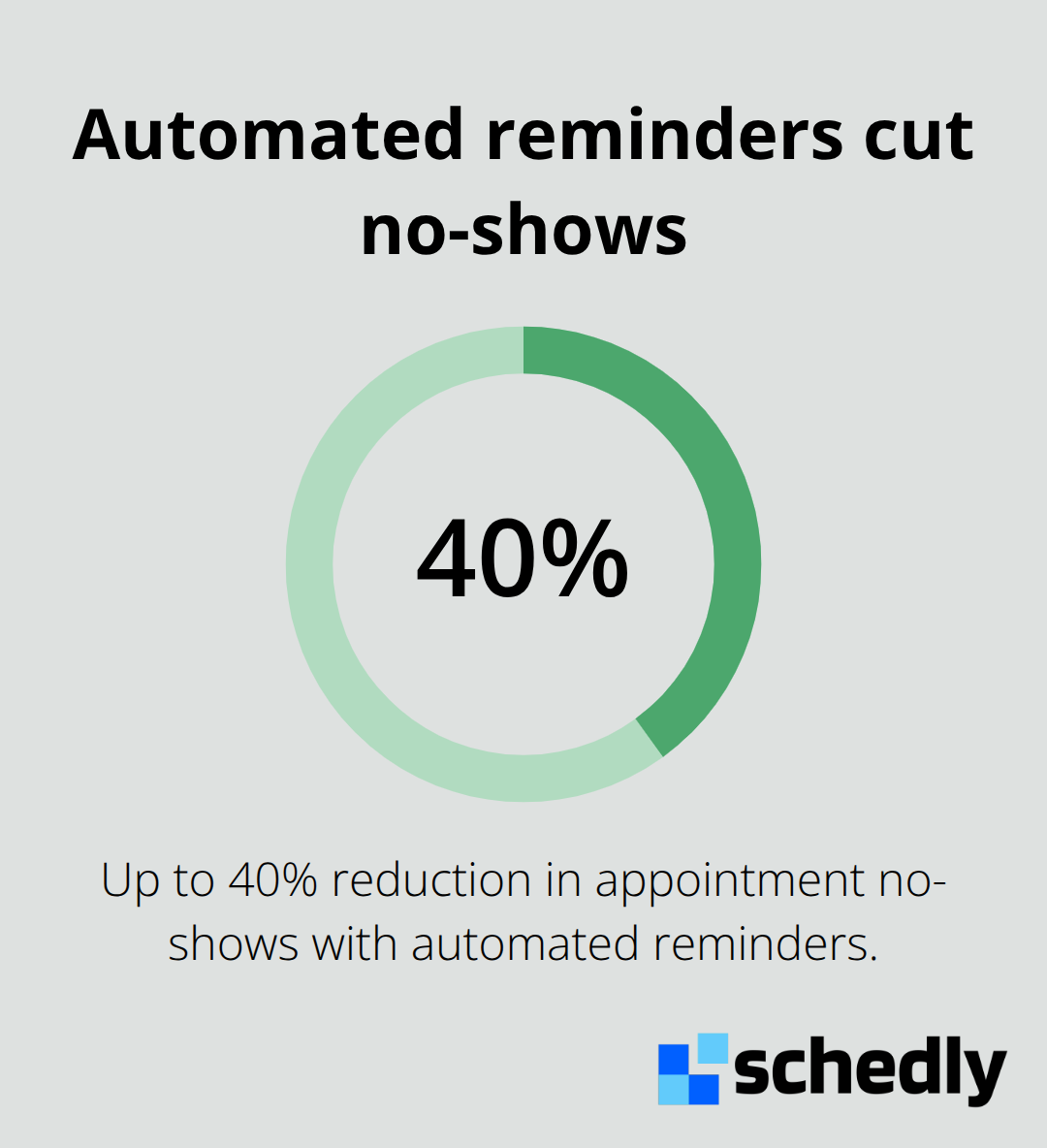
Automated booking systems eliminate these gaps. They handle the calendar while your team focuses on repairs. Automated reminders reduce no-shows by up to 40% according to industry data. Your technicians work on actual repairs, and your bays stay occupied throughout the day.
How No-Shows Drain Your Bottom Line
Every missed appointment represents lost revenue and wasted capacity. A technician scheduled for a 9 a.m. oil change who sits idle because the customer never showed up costs you money twice-once from the lost service and again from the idle labor. Shops that send automated confirmations and reminders see dramatic improvements in show rates. This simple step fills bays and keeps your revenue predictable.
Customers Notice Long Wait Times
No one enjoys sitting in a waiting room for two hours because a shop overbooked appointments or lost track of arrival times. When customers experience long waits, satisfaction drops sharply, and they leave negative reviews that damage your reputation. Research from Bright Local shows that 84% of auto shop prospects trust online reviews when choosing a service provider. A single bad experience can cost you multiple future customers.
Real-time scheduling visibility lets you manage customer expectations accurately. You communicate delays immediately and adjust appointments when issues arise. When a repair takes longer than expected, you notify the customer through their preferred channel rather than leaving them wondering what's happening. This transparency builds trust and keeps customers coming back.
Building Loyalty Through Follow-Up
Shops that follow up with customers within 24-48 hours of service completion see significantly higher repeat booking rates compared to those that don't. This direct contact improves your revenue stability and customer lifetime value. A simple message referencing the services performed and the vehicle shows customers you care about their experience.
These improvements in efficiency and customer satisfaction create the foundation for implementing modern scheduling solutions. The next section explores how scheduling software actually transforms your service operations.
How Modern Scheduling Software Delivers Real Operational Control
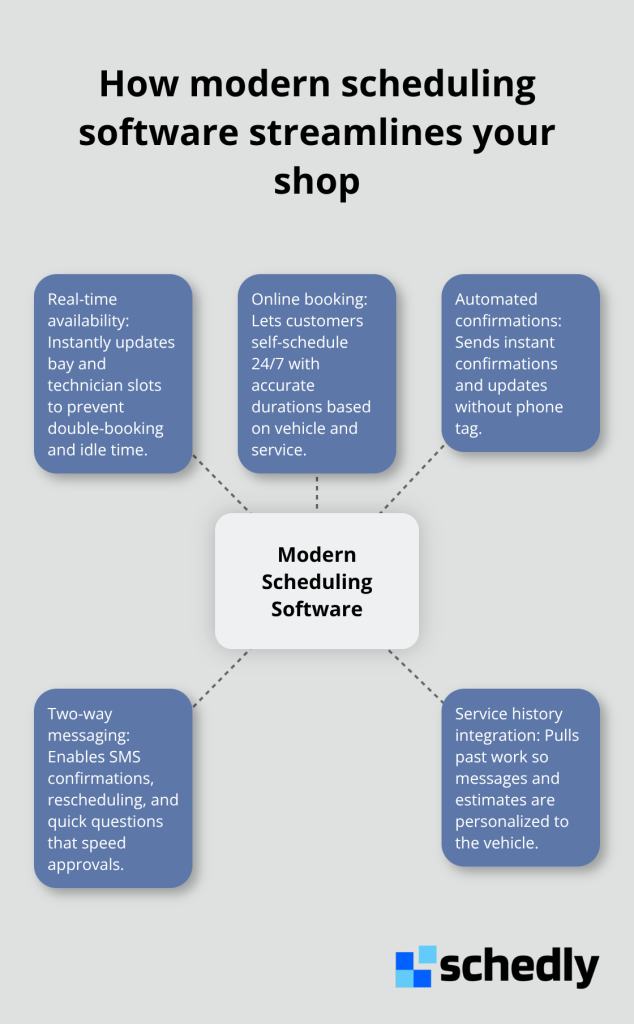
Modern scheduling software delivers competitive advantage when you understand what it actually does in your shop. The software doesn't just put appointments on a calendar-it connects your entire service operation so technicians know what's coming, customers know what to expect, and you see exactly where bottlenecks happen. When a customer books a 9 a.m. oil change through your online scheduling page, the system immediately reserves that bay time, notifies the available technician, and blocks out the estimated duration based on vehicle type. If that customer cancels at 11 p.m., the bay opens instantly for the next person to book. This real-time availability prevents the common nightmare of double-booked bays or technicians discovering mid-morning that they have no assigned work.
Real-Time Availability Prevents Idle Bays
Double-booked appointments and surprise cancellations create dead time that kills your profitability. When you shift to automated booking, the system updates availability instantly across all channels. A customer who cancels at 11 p.m. frees that bay immediately, and another customer can claim that slot before your shop opens the next morning. Technicians no longer discover mid-shift that their schedule has gaps or conflicts. They see their assigned work the moment they clock in and can prepare accordingly. This visibility transforms how your team operates-no more scrambling to fill empty bays or managing last-minute reshuffles that frustrate customers and waste labor hours.
Where Customer Communication Actually Moves the Needle
Automated reminders reach customers through preferred channels and two-way SMS lets them confirm, reschedule, or ask questions without calling your shop. When a repair takes longer than expected and you send a status update immediately, customers don't sit anxiously wondering if something went wrong-they trust you're keeping them informed. Shops using two-way digital communication see customers approve estimates faster and show up more consistently than those relying on voice calls alone. Integration with your service history means when you send follow-up communications, you reference the specific work performed and the vehicle, not generic messages. A customer who just had their brakes replaced receives a message about brake maintenance schedules, not a random reminder about oil changes. This personalization drives repeat bookings because it shows you actually remember their vehicle and care about their maintenance needs.
Personalized Follow-Up Builds Repeat Revenue
Shops that send personalized follow-ups within 48 hours of service completion see higher repeat visit rates, directly impacting your revenue stability and reducing the constant pressure to find new customers. A simple message referencing the services performed and the vehicle shows customers you care about their experience beyond the transaction. This direct contact improves your customer lifetime value and creates predictable revenue streams. When you combine real-time scheduling with personalized communication, you transform how customers perceive your shop. They experience a business that respects their time, keeps them informed, and remembers their needs. This foundation of trust and efficiency sets the stage for the next critical element: implementing these systems effectively so your team actually uses them and your customers feel the difference.
Making Scheduling Systems Actually Work
Getting a scheduling system live in your shop is only half the battle. The real challenge is making your team use it consistently and extracting the actual value from the data it collects. Most shops implement software and then watch adoption stall because technicians revert to old habits, front desk staff enter data inconsistently, and customer communication remains sporadic. The difference between shops that see real results and shops that waste money on unused software comes down to three specific implementation practices that transform scheduling from a nice-to-have into a competitive advantage.
Start with Accurate Service Duration Data
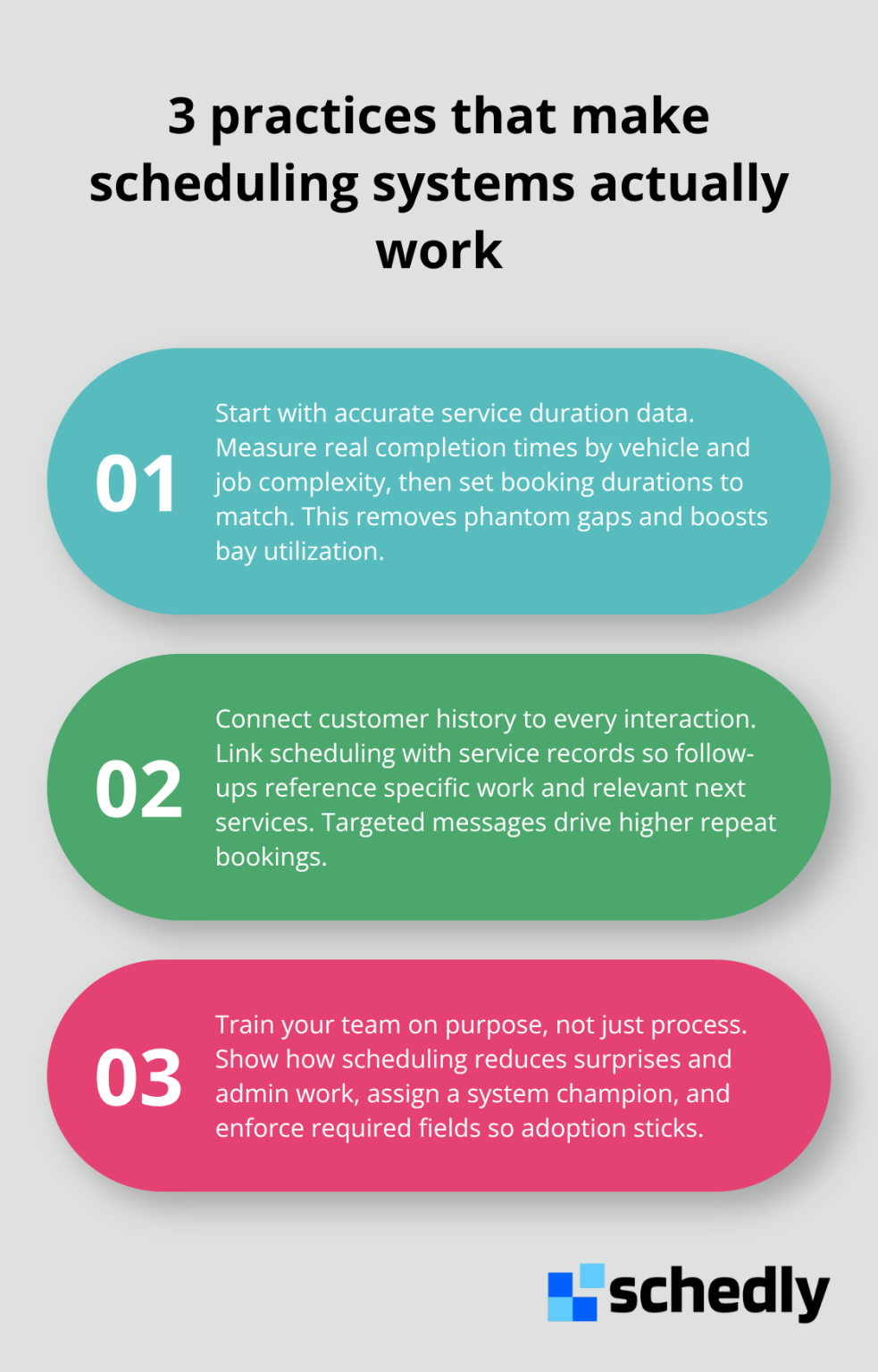
Your scheduling system is only as good as the time estimates you feed into it. If you tell the system an oil change takes 45 minutes but your technicians consistently finish in 30 minutes, you create artificial gaps in your schedule and leave money on the table. Shops that win at scheduling spend their first two weeks documenting actual service times across vehicle types and complexity levels. An oil change on a 2015 Honda Civic differs from one on a 2024 Ford F-150 with a skid plate. A brake pad replacement on a sedan takes less time than the same job on a truck with larger rotors. Track real completion times for your most common services, then build your booking durations around this actual data. When a customer books online, the system reserves exactly the time your technicians need, nothing more. This precision eliminates the overbooking problem where you promise a 2 p.m. pickup but the previous job runs late. Shops that calibrate their time estimates to reality see bay utilization jump from 70% to 85% or higher within the first month because they stop creating phantom gaps in their schedules.
Connect Customer History to Every Interaction
Your scheduling software should link directly to customer service records so that when you send a follow-up message or prepare an estimate, the technician or front desk staff sees the complete maintenance history instantly. A customer calling to schedule a tire rotation should immediately show whether they had their brakes inspected six months ago and whether that inspection flagged any concerns. This visibility lets you send targeted follow-up messages that reference actual work performed on their vehicle, not generic maintenance reminders. A customer who just had their transmission serviced receives a message about transmission fluid checks at their next visit, not a random oil change reminder. When your scheduling system talks to your service history database, you eliminate the disconnect where front desk staff send irrelevant communications that customers ignore. Staff should spend 15 minutes per week reviewing which services your shop performs most frequently, then create pre-written message templates for each service type. These templates reference the specific work performed and suggest relevant next-visit services, turning routine follow-up into a revenue-generating tool.
Train Your Team on Purpose, Not Just Process
Technicians and front desk staff resist new scheduling systems when they see them as administrative burden rather than tools that make their jobs easier. Your training should start with showing mechanics that accurate scheduling means fewer mid-shift surprises, more predictable workload, and less time wasted on communication. A technician who knows their full day's schedule the moment they clock in can prepare materials, order parts, and work more efficiently than someone discovering assignments throughout the day. Front desk staff who use the system correctly spend less time on phone calls and emails because customers self-schedule online and receive automated confirmations. Your team needs to understand that 30 minutes spent entering customer data accurately today saves three hours of rework and confusion tomorrow. Schedule a single dedicated training session where staff see how the system improves their daily workflow, then assign one person as the system champion who can answer questions and troubleshoot issues. This champion role prevents the common failure mode where one person knows how to use the software while everyone else fumbles through it. Track adoption metrics for the first 30 days and address gaps immediately. If your front desk staff consistently forgets to send follow-up messages, set up automated reminders in the system itself. If technicians skip entering service notes, make that field mandatory before they can close a job. The software should adapt to your team's workflow, not the other way around.
Final Thoughts
Automotive service scheduling transforms how repair shops operate when you stop managing calendars manually and start automating the entire process. The shops winning today eliminated scheduling chaos, kept bays full, and built customer loyalty through reliable communication. When you implement the practices covered in this guide, you see immediate results: fewer no-shows, higher bay utilization, faster appointment approvals, and customers who return consistently.
Look at your current scheduling process and identify where time disappears. Are technicians waiting for assignments? Are customers canceling because they never received reminders? Are you losing repeat business because follow-up communication never happens? These gaps represent money leaving your business every single day, and small experiments prove the value before you ask your entire team to change how they work.
Shops that master automotive service scheduling see bay utilization climb from 70% to 85% or higher within months. Schedly automates online booking, sends reminders through customer preferred channels, integrates with your service history, and delivers analytics that show exactly where your scheduling performs well and where bottlenecks remain. Your team gets the visibility they need to work efficiently, and your customers experience the seamless service that builds loyalty.