
Schedly resources
Bulk Appointment Scheduling Strategies: Plan Weeks at a Glance

Scheduling appointments one by one drains your team's energy and creates gaps where mistakes happen. Bulk appointment scheduling strategies let you map out weeks in advance, cutting administrative work and preventing double-bookings before they occur.
At Schedly, we've seen businesses reclaim hours each week by shifting from reactive scheduling to planned batches. This guide shows you exactly how to build a system that works for your team and your clients.
How Bulk Scheduling Cuts Hours from Your Week
The Hidden Cost of Reactive Scheduling
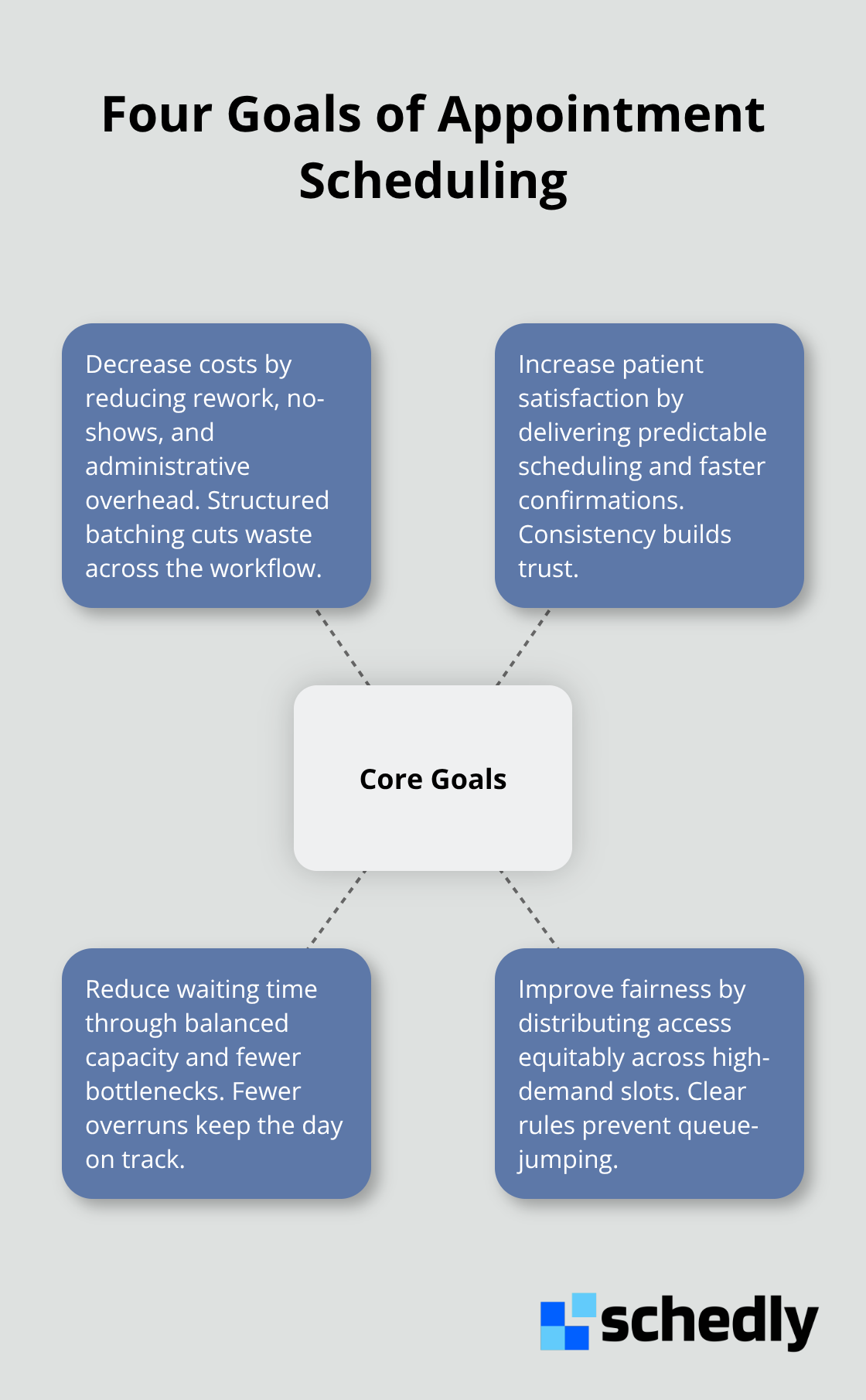
Planning appointments one at a time forces your team to context-switch constantly throughout the day. Someone checks availability, confirms details, updates records, and sends confirmations for each booking-then repeats the entire sequence for the next client. Multiply that by 50 appointments weekly and you're looking at dozens of repetitive tasks that drain focus and introduce errors. Research identifies four core goals in appointment scheduling: decreasing costs, increasing patient satisfaction, reducing waiting time, and improving fairness. Bulk scheduling addresses all four simultaneously by creating predictable patterns your staff can follow without interruption.
How Batch Planning Reclaims Your Team's Time
When you shift from reactive to planned scheduling, your administrative staff stops answering the same questions repeatedly and starts managing schedules strategically. Instead of reacting to each booking request, you map out entire weeks where similar services cluster together, staff workload balances naturally, and clients receive faster confirmation. Your team sees the week at a glance and spots understaffed periods or resource conflicts before clients arrive. Double-bookings vanish because you work from a master plan rather than scattered calendar entries.
Resource Alignment and Peak Demand Management
Certain time slots naturally attract more demand depending on your business type. Bulk scheduling lets you align staff assignments with peak demand rather than scrambling to cover gaps. If you run a salon, fitness facility, or healthcare practice, you'll notice patterns emerge once you examine your booking data across full weeks. The administrative burden shrinks because confirmation messages, payment processing, and calendar updates happen in coordinated batches rather than as isolated transactions. This approach means fewer mistakes propagate through your system and staff can focus on delivering quality service instead of managing chaos.
Now that you understand how bulk scheduling saves time, the next step involves selecting tools and processes that fit your specific operation.
Building Your Bulk Scheduling Foundation
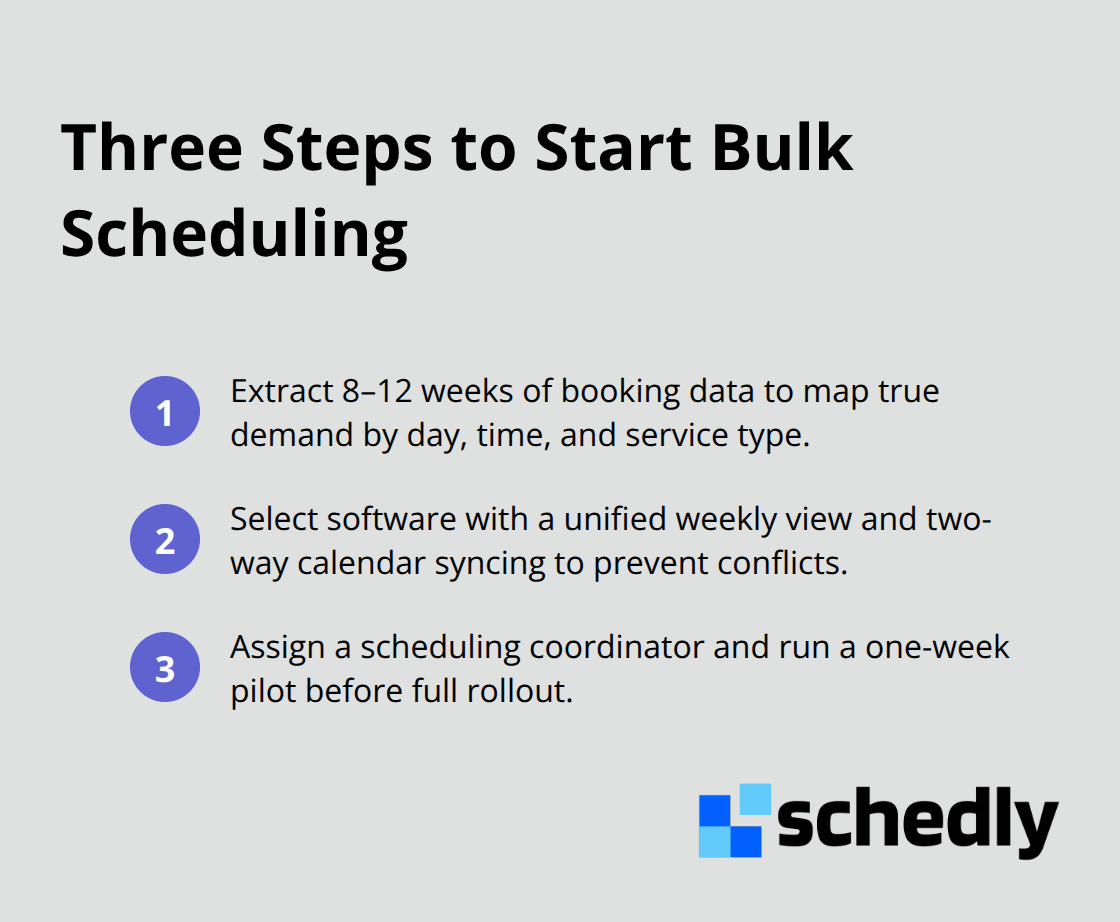
Extract data from your existing booking system for the past 8–12 weeks. Open your calendar and identify which days and times generate the most appointments, which services take longest, and which staff members handle peak demand. Look for patterns: do Mondays and Fridays fill faster than mid-week slots? Do morning appointments cluster while afternoons stay sparse? Do certain service types consistently run over their scheduled time? Document these patterns in a simple spreadsheet with dates, appointment counts, service types, and actual duration versus estimated duration. This raw data becomes your planning baseline.
Once you see where demand concentrates, you can design your weekly structure around reality instead of guessing. If demand concentrates outside regular business hours according to after-hours demand data from healthcare providers, your bulk scheduling system must reserve slots for those late-night and early-morning requests rather than block them off.
Selecting Tools That Match Your Operation
The scheduling software you choose determines whether bulk planning becomes effortless or frustrating. Prioritize tools that display multiple staff members, resources, and service types on a single weekly view so you can spot conflicts and imbalances instantly. Two-way calendar syncing with Google Calendar or Outlook prevents double-bookings when staff members manage personal and work schedules in separate systems.
If you operate across multiple locations or serve clients in different time zones, select a platform that handles multi-location management and supports various languages and payment gateways. Test any software's reporting features before committing-you need dashboards showing weekly load, cancellation rates, and staff utilization so you can optimize future planning cycles. Avoid tools that lock essential bulk-planning features behind expensive premium tiers; many reputable options offer robust free plans or affordable paid versions that include multi-provider scheduling, resource assignment, and automated reminders.
Preparing Your Team for Coordinated Planning
Training staff on bulk scheduling requires more than a quick tutorial. Hold a 30-minute session where your team reviews the actual booking patterns you extracted and explains why you're shifting to planned batches. Show them how the new system reduces context-switching and eliminates the individual confirmation tasks they currently repeat dozens of times weekly.
Assign one person as the scheduling coordinator who owns the weekly planning process and has authority to adjust staff assignments or block off buffer time for emergencies. This person needs access to all staff calendars and the authority to move or consolidate appointments when necessary. Create a simple one-page checklist for the weekly planning routine: review the previous week's no-shows and cancellations, map out peak demand slots first, assign staff to those slots, block buffer time between complex services, and publish the finalized schedule by Friday for the following week.
Run a dry run with one week of bulk scheduling before rolling it out company-wide so your team can spot friction points and adjust processes. Once your team masters the weekly rhythm and your coordinator confirms the system works smoothly, you'll need to address the specific mistakes that derail most bulk scheduling efforts.
Common Mistakes That Derail Bulk Scheduling Plans
Overstuffing Peak Hours Without Realistic Buffers
Bulk scheduling works brilliantly until you pack too many appointments into peak hours and watch your team collapse under pressure. The most common failure happens when coordinators accept more appointments than their data actually supports.
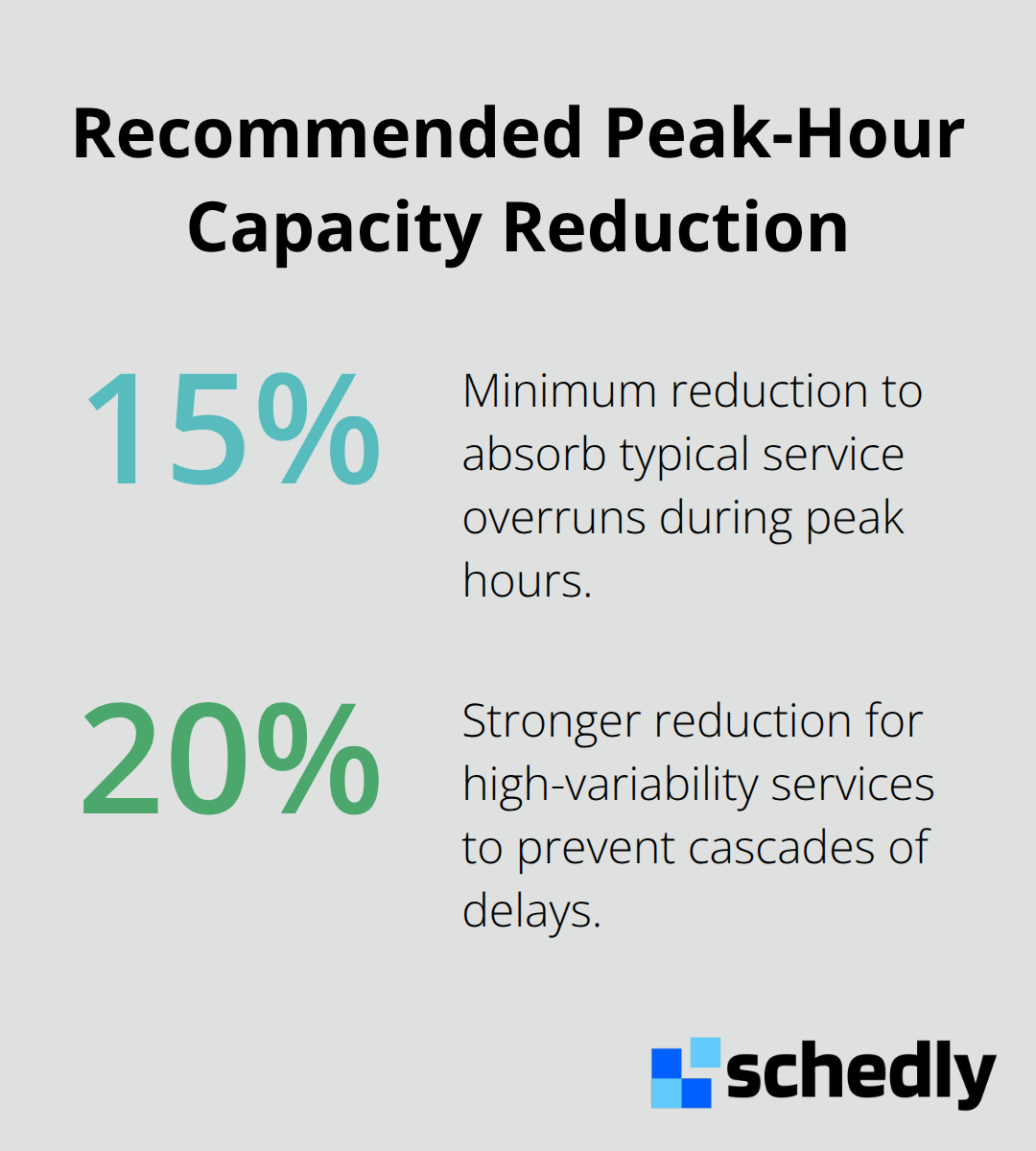
When you bulk schedule without padding for reality, your staff starts running 20 minutes behind by mid-morning, clients wait longer than promised, and your team burns out faster than reactive scheduling would cause. The fix is straightforward: reduce your peak-hour capacity by 15 to 20 percent compared to what your booking data suggests. This creates breathing room for service overruns and prevents the cascade of delays that destroys client satisfaction and staff morale.
Ignoring Where Clients Actually Want to Book
Your second critical mistake involves ignoring what clients actually need when they book. You might discover through your data analysis that Tuesday afternoons have plenty of availability, so you design your bulk schedule around that slot. Then you publish the plan and discover your clients overwhelmingly prefer mornings and evenings because they work traditional hours. Bulk scheduling only succeeds when you align your planned capacity with real client demand patterns, not available staff time.
Before finalizing any weekly schedule, cross-reference your availability plan against your booking data broken down by time slot and day. If 60 percent of your appointments land in morning slots, allocate roughly 60 percent of your staff capacity to mornings, even if afternoons feel easier to manage. This alignment prevents empty slots in unpopular times while you turn away clients who want your preferred hours.
Missing Buffer Time Between Complex Services
The same principle applies to buffer time between appointments. Without built-in gaps, a single complex client or unexpected situation cascades into a domino effect of delays. Your coordinator needs authority to block 10 to 15 minutes of buffer time after complex services, medical procedures, or high-touch client interactions. This isn't wasted time-it's the difference between a functioning schedule and a chaotic one that generates complaints and staff turnover.
Final Thoughts
Bulk appointment scheduling strategies transform how your business operates by replacing daily chaos with predictable weekly rhythms. Your team stops repeating confirmation tasks dozens of times daily, your coordinator spots conflicts before clients arrive, and your staff delivers better service because they're not constantly context-switching. Double-bookings disappear when you plan from a master weekly view instead of managing scattered calendar entries, and your clients benefit because they book into slots that actually match their preferences.
Schedly provides the scheduling foundation these strategies require, with features like multi-location management, automated reminders, and an analytics dashboard that shows you exactly where demand concentrates. Your bulk scheduling system works best when your software handles the administrative details automatically, freeing your coordinator to focus on strategic planning rather than manual calendar updates. The shift from reactive to planned scheduling isn't complicated, but it demands commitment to the weekly planning rhythm and willingness to adjust based on what your data reveals about your clients' actual needs.