
Schedly resources
CRM Alternatives for SMBs: Choosing the Best Fit for Your Customer Management
Most SMBs waste thousands annually on CRM systems they don't need. Enterprise platforms come loaded with features your team will never use, bloated interfaces that slow adoption, and price tags that drain your budget.
At Schedly, we believe CRM alternatives for SMBs should be simple, affordable, and actually built for how small businesses operate. This guide walks you through the options that actually work.
Why SMBs Abandon Enterprise CRM
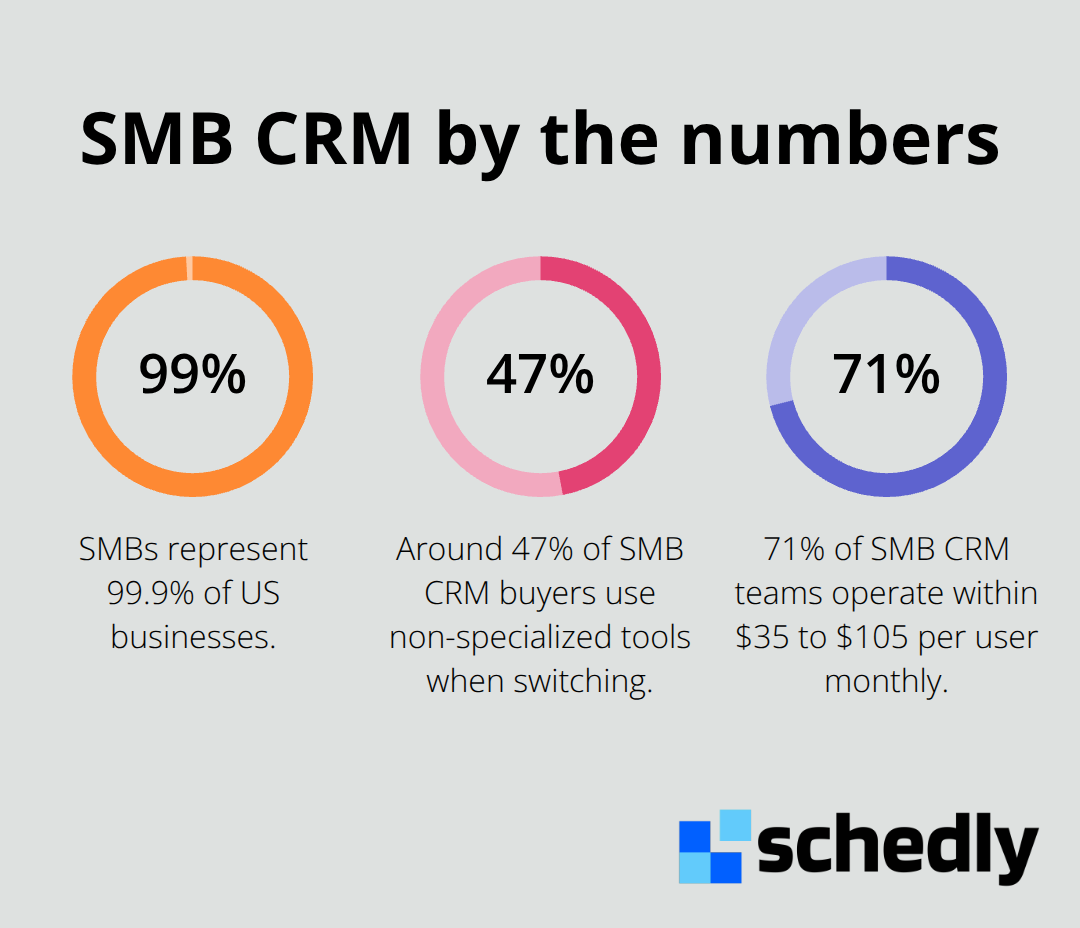
SMBs represent 99.9% of US businesses, yet most CRM vendors ignore their reality. Enterprise platforms cost $50 to $150 per user monthly, demand IT support to implement, and force teams through weeks of training before anyone sees value. A startup with five salespeople pays $3,000 to $9,000 annually just for software licenses, then spends another $5,000 to $15,000 on setup and customization. That's money that should go toward hiring, marketing, or product development.
Where Enterprise CRM Goes Wrong
Enterprise systems assume you have a dedicated CRM manager, a data analyst, and a team of 50+ users who need complex reporting across multiple departments. They pile on workflow automation, custom fields, and integration capabilities that sound impressive in a demo but create chaos during daily use. A five-person sales team doesn't need predictive forecasting across regional offices or role-based access controls with 12 permission levels. What they need is a tool that takes 30 minutes to set up, syncs automatically with Gmail and Outlook, logs calls and emails without manual entry, and shows a clear pipeline at a glance. Affordable CRM options like Freshsales (free plan for three users), Bigin by Zoho (for solopreneurs), or EngageBay (free tier supporting 15 users) prove that simplicity and affordability work. These platforms prioritize the activities that actually drive revenue: tracking conversations, setting reminders for follow-ups, and organizing deals by stage. They skip the organizational charts, approval workflows, and custom report builders that drain adoption. SMBs need CRM alternatives designed from the ground up for their constraints and workflows, not stripped-down versions of enterprise monsters.
Scaling Without Overcomplicating
The right CRM alternative grows with your business without forcing a costly migration or retraining when you add your tenth employee. Zoho CRM's free edition supports 5,000 records and scales smoothly into paid tiers starting around $14 per user monthly. Pipedrive keeps the same clean interface across all pricing levels, so your team doesn't relearn the tool as you upgrade. A platform that works for three people should still work intuitively for thirty. This means avoiding tools that lock essential features behind expensive tiers. Lead scoring, email integration, and basic automation shouldn't cost extra in 2026. Mobile access matters too, especially for field-based teams in real estate, construction, or consulting. Bitrix24 offers unlimited users on free and paid plans, appealing to SMBs hiring quickly. Less Annoying CRM uses a single pricing tier, eliminating the guesswork of when to upgrade. The best CRM alternative for SMBs removes friction at every stage: onboarding takes days, not weeks; adding users doesn't trigger sticker shock; and switching from spreadsheets to a real system feels like relief, not punishment.
What SMBs Actually Need From CRM
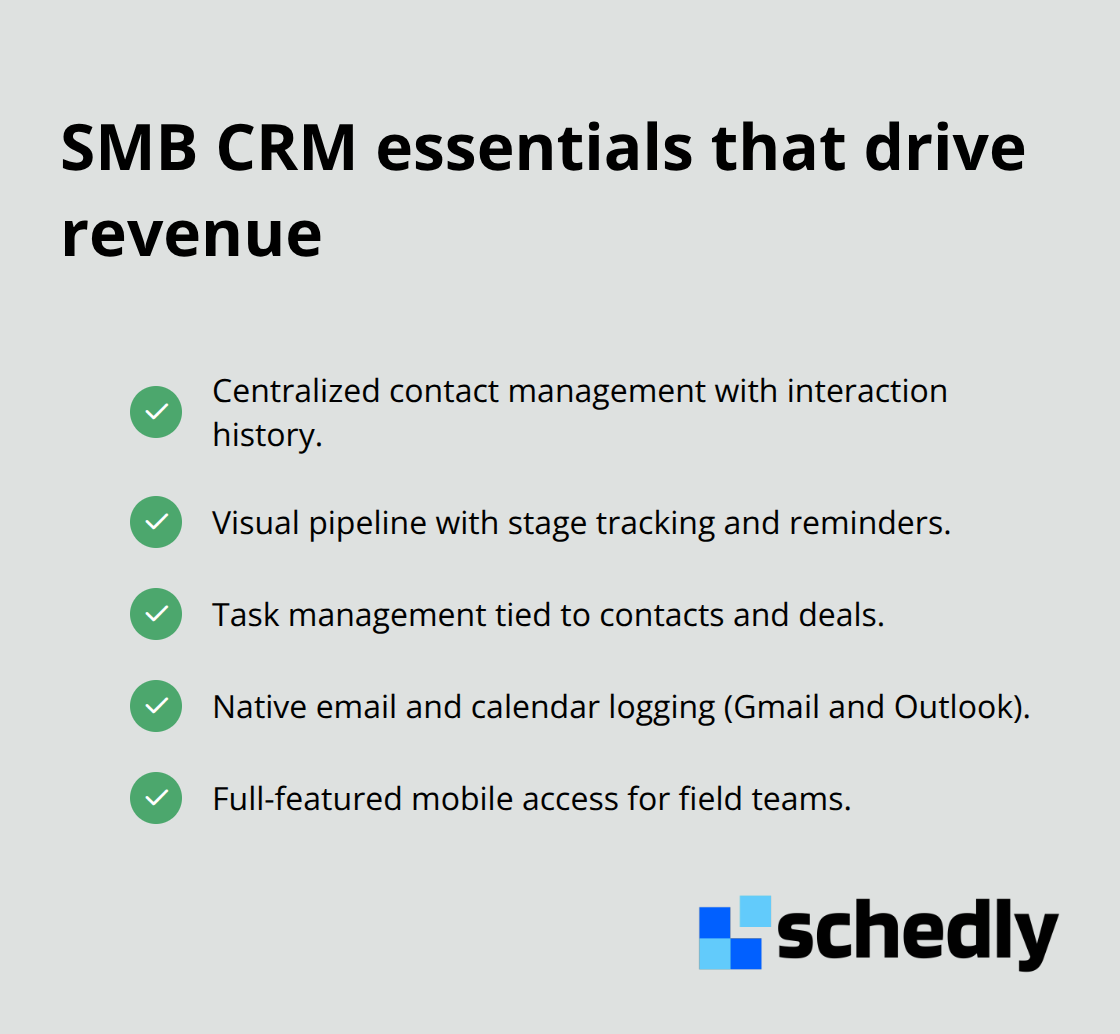
Your team needs a CRM that handles the core activities without unnecessary complexity. Contact management that centralizes profiles and interaction history prevents duplicates and saves hours of searching through emails. Pipeline tracking visualizes deal stages and triggers timely reminders so nothing falls through the cracks. Task management ties actions to contacts or deals, keeping everyone accountable without overwhelming workflows. Email and calendar integration (Gmail, Outlook) logs conversations automatically, eliminating manual data entry that kills adoption.
The Hidden Cost of Complexity
Overcomplicated CRM systems create a hidden tax on your business: low adoption. When your team avoids the tool because it's slow, confusing, or requires constant training, data quality suffers and you lose the entire benefit of centralization. User experience matters more than feature count for SMB CRM success. A tool with 50 features that your team uses 10 times a week beats a tool with 200 features that sits unused. Onboarding speed directly impacts adoption. If setup takes weeks and requires external consultants, your team resents the tool before they even start using it. If setup takes hours and feels intuitive, adoption happens naturally. Mobile access separates tools that work for distributed teams from tools that trap your salespeople at desks. Field-based teams in real estate, construction, or consulting need full editing capabilities on phones, not read-only access. The best CRM alternatives for SMBs prioritize what your team actually does every day, then make those activities frictionless. This focus on simplicity and usability is what separates tools built for small businesses from enterprise systems that happen to have a cheaper tier.
Key Features That Justify CRM Investment
Transparent Pricing Without Hidden Traps
Pricing transparency separates CRM tools built for SMBs from those designed to trap you in upgrade cycles. When Gartner surveyed SMB CRM budgets, they found 71% of teams operate within $35 to $105 per user per month. That's your realistic ceiling. Tools that hide costs behind add-ons, charge separately for AI features, or jump from free to $50 per user monthly will kill adoption before you gain momentum.
Freshsales keeps its free tier at three users with core features intact, then scales to $19 per user monthly for the Starter plan without forcing you into a $99 monthly commitment. Pipedrive charges $14 per user monthly for essential pipeline management, no surprise fees. Zoho CRM's free edition handles 5,000 records and costs $14 per user when you upgrade, with no mandatory jump to enterprise pricing.
The worst CRM decision happens when you pick based on feature count rather than actual usage. A tool with 200 features at $40 per user monthly costs more than a tool with 50 features at $15 per user monthly if your team only needs those 50.
Speed of Implementation Drives Real ROI
Setup time directly impacts your ROI. Less Annoying CRM, Freshsales, and Bigin by Zoho all report typical implementations under one week, meaning your team generates value immediately instead of sitting through month-long onboarding. Quick implementation also means less consultant fees and lower training costs. Tools that require external setup consultants add 30% to 50% to your total cost of ownership before anyone logs in.
Your team should feel productive within days, not weeks. Test whether the platform actually solves your current bottleneck during the free trial phase. If setup takes hours and feels intuitive, adoption happens naturally. If setup requires weeks and external consultants, your team resents the tool before they even start using it.
Native Integrations Beat Workarounds Every Time
Integration capabilities determine whether your CRM becomes the single source of truth or another isolated tool in your tech stack. Your team already uses Gmail or Outlook, Google Calendar or Outlook Calendar, and probably Slack. A CRM that doesn't sync automatically with these tools forces manual data entry, which kills adoption faster than complexity ever could.
Pipedrive integrates with 400+ applications natively, including email, phone systems, and accounting software. Zoho CRM works seamlessly with other Zoho apps like Zoho Books for accounting, creating a unified ecosystem if you're building a Zoho stack. Freshsales logs emails and meetings automatically from Gmail and Outlook without manual action, removing the friction that derails most SMB CRM implementations.
Avoid tools that require Zapier workarounds for basic integrations. Zapier adds cost ($20 to $99 monthly depending on task volume) and creates delays in data sync that can stretch to hours. Native integrations sync in real-time and don't count against your automation limits.
Mobile Capabilities for Distributed Teams
Mobile access deserves its own evaluation criteria. Field teams in real estate, construction, or consulting need full editing capabilities on phones, not read-only dashboards. Bitrix24 and Pipedrive both deliver strong mobile apps with offline functionality, meaning your team updates deal status and logs activities without waiting for wifi. A CRM that requires a desktop for meaningful work fails distributed teams.
Test your top two choices with your actual workflow before committing. Spend two hours using the free tier with your sales process, not a vendor demo. If the tool feels slow, confusing, or requires constant clicking to complete basic tasks, your team will abandon it regardless of price. The platform you choose should accelerate your team's ability to close deals, not slow them down with unnecessary steps.
CRM Solutions That Actually Fit SMB Workflows
The Three Platforms That Dominate SMB Adoption
Freshsales, Pipedrive, and Bigin by Zoho lead the SMB market because they solve the real problem: launching a working CRM in days instead of months. Freshsales maintains a generous free tier for three users with core pipeline, contact management, and automatic email logging from Gmail and Outlook. The Starter plan at $19 per user monthly adds AI-powered lead scoring and predictive deal insights without forcing you into $99 commitments. Pipedrive charges $14 per user monthly for its Essential tier and delivers a visual pipeline interface that requires zero training, making adoption instant across distributed teams. The platform integrates with over 1,000 applications including email, phone systems, and accounting software, eliminating workarounds that drain your automation budget. Bigin by Zoho targets solopreneurs and tiny startups with built-in VoIP, automatic call logging, and seamless integration with the broader Zoho ecosystem if you already use Zoho Books for accounting or Zoho Mail.
Industry-Specific Platforms for Specialized Workflows
Industry-specific platforms like Pipeline CRM and Attio take a different approach by modeling your actual business process instead of forcing a generic sales pipeline. Pipeline CRM excels for field-based teams in construction, real estate, and wholesale because it handles offline access, location tagging, and unlimited file storage without charging per gigabyte. Attio shines when you need to track custom deal stages or non-linear sales workflows that don't fit the traditional pipeline metaphor, offering flexible canvas design tools to match your exact process. However, these platforms cost more upfront and require deeper configuration, making them better choices once you outgrow basic CRM needs.
For most SMBs starting out, the generalist platforms win because they deliver faster value with less setup friction. The specialized approach works best when your sales process genuinely differs from standard pipeline stages, not when you're still establishing your core workflows.
All-in-One Platforms: Convenience vs. Compromise
All-in-one platforms like Bitrix24 bundle CRM, project management, live chat, and collaboration tools into one subscription, appealing to SMBs trying to consolidate their tech stack. Bitrix24 offers unlimited users on both free and paid plans, eliminating per-seat sticker shock as you hire. The catch: bundled platforms often deliver mediocre CRM functionality compared to focused alternatives. Your email integration might be weaker, your pipeline visualization less intuitive, or your mobile app less polished than Pipedrive or Freshsales.
The question isn't whether you need CRM features bundled with project management; it's whether you actually use project management enough to justify compromise on your core CRM experience. For most SMBs, picking a dedicated CRM that excels at sales and integration beats picking a platform that does everything adequately. Your team spends more time in the CRM than any other tool, so that experience should be optimized for speed and clarity, not feature breadth.
Final Thoughts
The right CRM alternative for SMBs isn't the one with the most features or the biggest brand name-it's the one your team actually uses every day because it solves real problems without creating new ones. Freshsales, Pipedrive, and Bigin by Zoho dominate SMB adoption because they deliver core functionality at $14 to $19 per user monthly, implement in days instead of months, and integrate seamlessly with the tools your team already relies on. These platforms prove that affordability and simplicity aren't compromises; they're competitive advantages.
Start by identifying your actual bottleneck when you evaluate CRM alternatives for SMBs. Are deals stalling because follow-ups slip through the cracks? Are leads getting lost in email threads? Does your team waste hours updating spreadsheets instead of selling? Test your top two choices with your real sales process during the free trial phase, spending two hours with actual contacts and deals rather than a vendor demo. If setup takes hours and feels intuitive, adoption happens naturally; if the interface feels slow or confusing, your team will abandon it regardless of price.
Transparent pricing matters more than feature count, and mobile access deserves serious evaluation if your team works in the field. A tool with 50 features at $15 per user monthly beats a tool with 200 features at $40 per user monthly if your team only needs those 50, and full editing on phones separates tools that work for distributed teams from tools that trap your salespeople at desks. Schedly combines automated booking with customer-focused capabilities, helping teams manage client data while automating the scheduling process and reducing manual work across your entire operation.