
Schedly resources
Customer Management Best Practices For Engaging Clients
Most businesses lose clients not because of poor products, but because of poor communication and lack of personalization. At Schedly, we've seen firsthand how customer management best practices transform client retention and satisfaction.
The difference between a one-time customer and a loyal advocate comes down to three things: how well you know them, how consistently you reach out, and how much you value their time. This guide walks you through the strategies that actually work.
Know Your Clients Before You Engage Them
Personalization starts with data, not guesswork. You need to segment your client base into meaningful groups based on actual behavior and purchase patterns, not just demographics. A client who books monthly requires different communication than one who books quarterly. According to Gallup, emotional factors influence 70% of B2B buying decisions, which means understanding what matters to each client emotionally-their goals, pain points, and values-shapes how you should reach out.
Analyze Engagement Patterns to Identify Segments
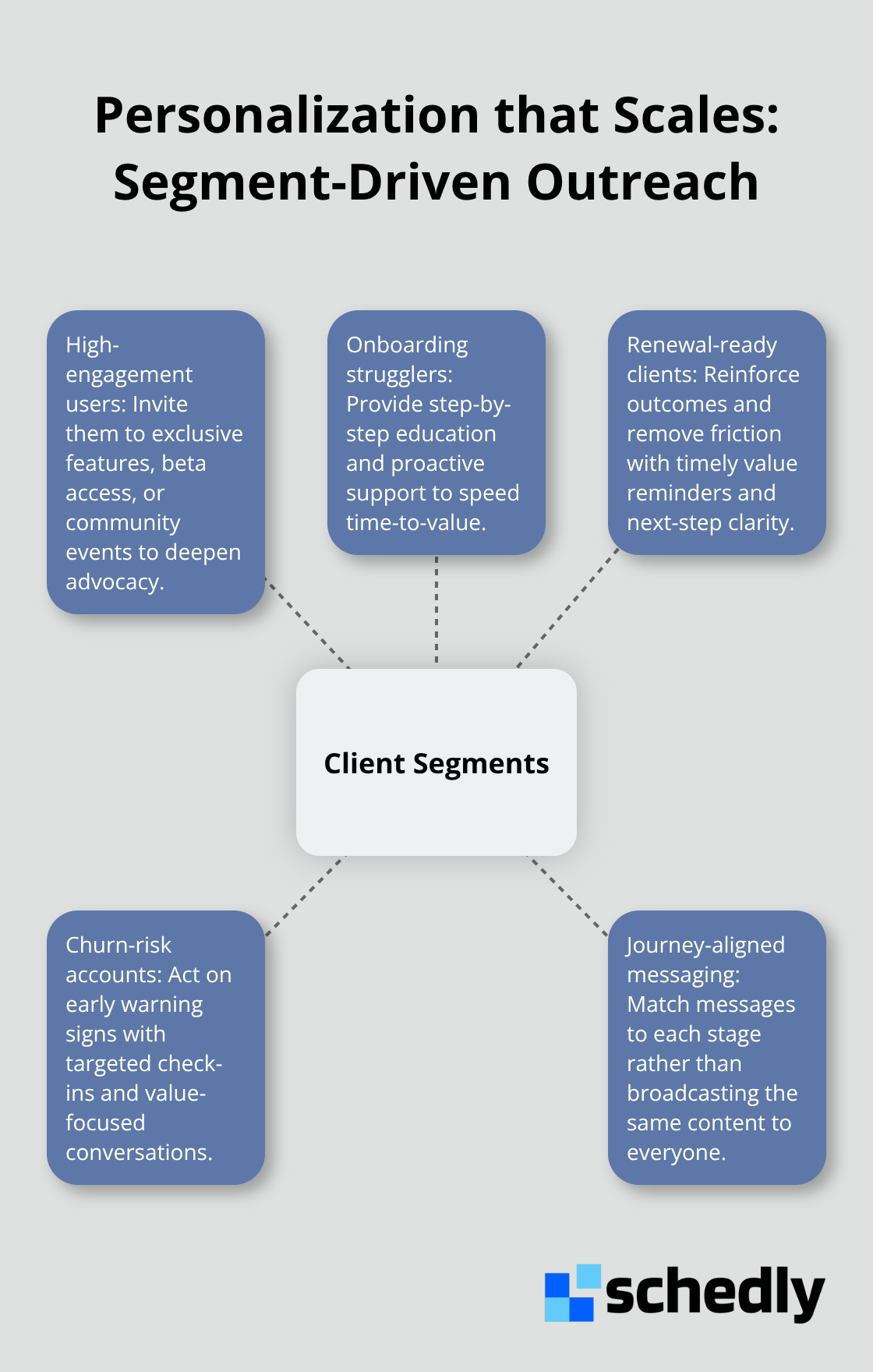
Start by analyzing which clients spend the most time in your product, who renews without friction, and who tends to churn. Track these patterns across your client base to reveal which segments are most engaged and which need intervention. Once you identify these groups, craft communication that speaks to their specific situation. A client struggling with onboarding needs educational resources and proactive support, while a power user might respond better to invitations to exclusive features or community events.
Tailor Your Outreach to Client Needs
Data should predict what clients need before they ask. Look at license utilization rates-if a client purchased five seats but only two are active, that's a signal to reach out with training on underutilized features or to discuss whether their plan still fits their needs. A client who frequently asks about a specific feature signals a content or product gap worth addressing. The clients who feel most understood are those whose needs you anticipate, not those who have to repeatedly explain themselves.
Respond Fast and Across All Channels
Response speed matters enormously. Data shows that responding to customer feedback within 24 to 48 hours boosts retention, so establish clear SLAs for inquiry response times and stick to them. McKinsey research found that 75% of shoppers expect unified experiences across sales, marketing, and service, which means your data about client interactions must flow seamlessly across teams so no one delivers conflicting messages or misses a critical touchpoint. Use your CRM to log every interaction and flag patterns that reveal client preferences and pain points.
Act on Behavior Changes Before Churn Happens
Proactive outreach based on client behavior prevents churn more effectively than reactive support. If a client's usage drops suddenly, that's your cue to check in with value-focused content or a personal call. These early interventions transform how clients perceive your commitment to their success and set the stage for deeper, more consistent communication across your entire organization.
How to Build Trust Through Consistent Communication
Communication consistency separates clients who stay from those who leave. Most businesses treat communication as reactive-they respond when clients reach out-but the best client relationships are built on a rhythm of scheduled, valuable touchpoints that clients come to expect. This means establishing contact channels that work for your clients' preferences, not yours.
Set Response Time Standards That Signal Priority
Response time is equally critical. When clients reach out, speed signals priority. Response time standards for client engagement should be set firm for each channel and tracked ruthlessly. A client waiting three days for a response begins questioning whether you actually value their business. Your CRM should log every interaction and flag patterns that reveal client preferences and pain points, ensuring no team member misses a critical touchpoint or delivers conflicting messages.
Structure Touchpoints Around Client Outcomes
The most damaging communication mistake is reaching out without adding value. Generic check-ins or product pitches waste client time and erode trust. Instead, structure touchpoints around client outcomes. If a client recently renewed, send them a guide to features that align with their stated goals. If usage data shows they're underutilizing paid features, offer a brief training session or personalized walkthrough rather than a sales pitch. When you send something, it should answer a question they have or solve a problem they face.
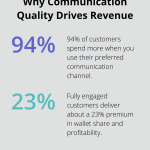
Track what types of outreach generate responses and engagement-open rates for email, attendance at webinars, feature adoption after training-and double down on what works for each segment. Gallup found that fully engaged customers represent about a 23% premium in wallet share and profitability, which means the time you invest in meaningful communication directly impacts revenue. Create a communication calendar that balances education, updates, and relationship-building across quarters. One month might focus on feature adoption; another on gathering feedback through NPS surveys.
Catch Warning Signs Before Churn Happens
The clients most likely to leave often show warning signs weeks before they churn. Sudden drops in usage, missed login streaks, or support tickets about specific pain points signal the need to intervene proactively. Instead of waiting for a client to request cancellation, reach out with tailored content or a conversation that addresses what the data suggests they need. A client whose license utilization dropped from 80% to 40% needs a check-in about whether their plan still fits, not silence.
Implement a system where your CRM flags behavior changes automatically so your team catches these moments before they become churn events. These proactive conversations transform how clients perceive your commitment. They feel heard and understood, not abandoned. The goal is to make clients feel that you're invested in their success, not just their payments. This foundation of trust and responsiveness positions you to introduce new tools and strategies that deepen engagement even further.
Technology That Actually Saves Time on Client Management
The biggest mistake we see businesses make is implementing technology without a clear purpose. They buy a CRM, dump client data into it, and wonder why nothing improves. Technology only works when it solves a specific problem: freeing your team to focus on high-value client conversations instead of administrative busywork. A unified system that centralizes client information, automates repetitive tasks, and surfaces actionable insights transforms how your team operates. The goal is not to have more data-it's to have the right data at the right moment so your team can act faster and smarter.
Connect Your Tools So Data Flows Automatically
Start with a CRM that integrates with email, scheduling, and payments so data flows seamlessly across your systems. When a client books an appointment through your scheduling software, that action should automatically log in your CRM and trigger relevant follow-ups. When they open an email, that engagement data should inform your next outreach. When they use a specific feature repeatedly, that signal should flag potential upsell opportunities. This interconnected system prevents information silos where marketing doesn't know what sales promised or support doesn't see the client's purchase history.
Automate Tasks That Waste Your Team's Time
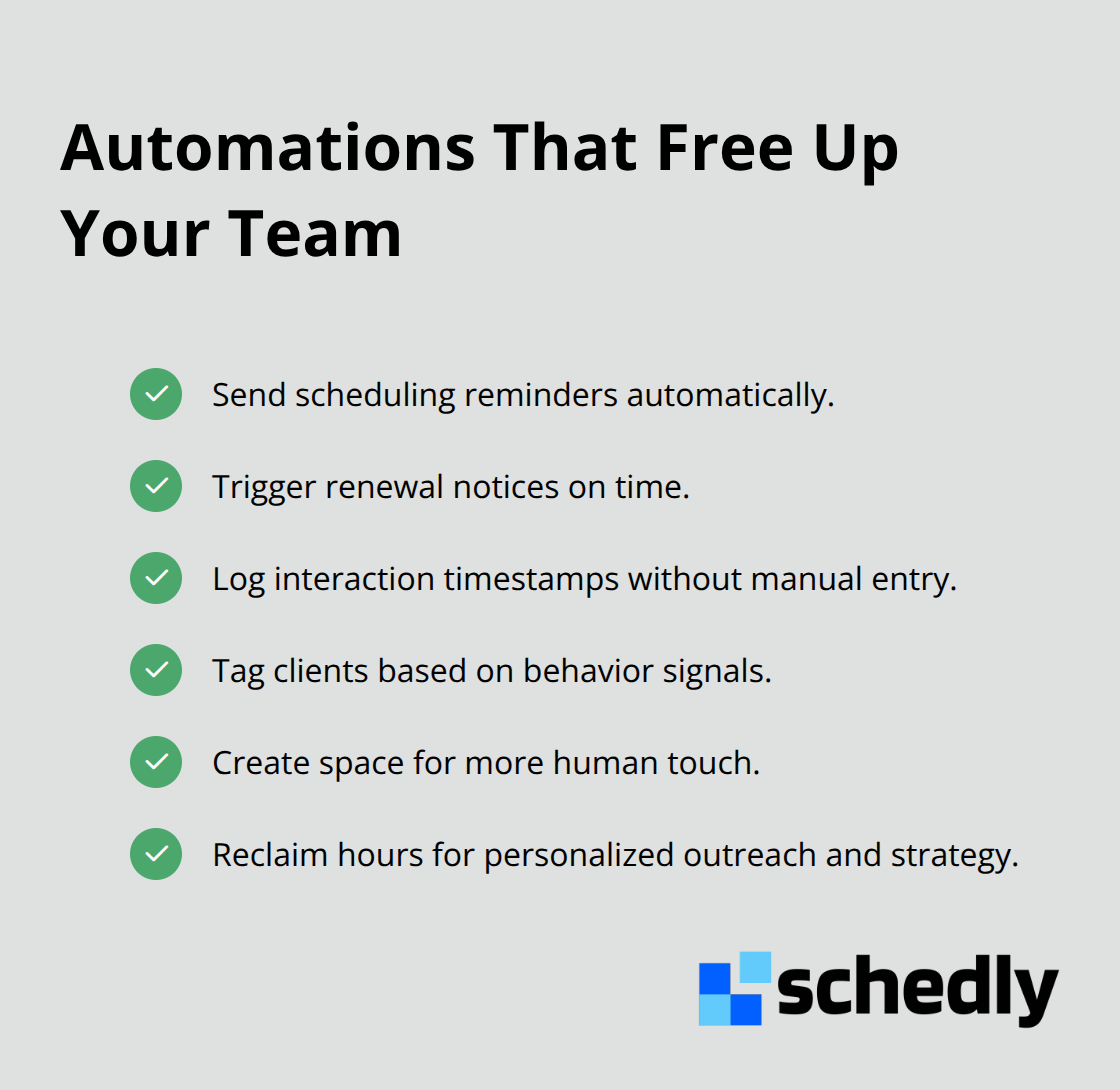
Automate the tasks that consume time but don't require human judgment: scheduling reminders, sending renewal notices, logging interaction timestamps, and tagging clients based on behavior. This automation isn't about removing the human touch-it's about creating space for it. Your team gains hours each week to spend on personalized outreach, relationship-building calls, and strategic problem-solving instead of manual data entry.
Measure Outcomes, Not Just Activity
Track what matters: which clients respond to which communication types, which segments churn at the highest rates, which features drive the longest retention windows, and which touchpoints generate the most engagement. Most businesses measure activity instead of outcomes. They count emails sent instead of response rates, meetings scheduled instead of deals closed. Your analytics should show you the direct connection between specific actions and business results.
If a client receives personalized feature recommendations, adoption increases and engagement improves. If proactive check-ins deepen engagement and reduce churn, invest more in that approach. Data-driven client management means you stop guessing and start iterating based on what actually works for your business. Your CRM should surface these patterns automatically so your team spots opportunities without manual analysis.
Final Thoughts
Effective customer management best practices rest on three fundamentals: knowing your clients deeply, communicating with consistency and speed, and using technology to amplify your team's impact. The businesses that retain clients aren't those with perfect products-they're the ones that make clients feel understood and valued at every interaction. Fully engaged clients spend 23% more, renew without friction, and become advocates who refer others.
Start this week by auditing your current approach and mapping where your clients prefer to connect. Review your CRM to see if it surfaces behavior changes that signal churn risk or upsell opportunities, then identify which tasks consume your team's time without adding client value and automate them ruthlessly. Establish a communication rhythm that adds value-one month focuses on feature adoption, another on gathering feedback-and track what works so you double down on patterns that prevent churn.
Choose tools that integrate seamlessly so data flows automatically across your systems and your team spots opportunities faster. Schedly combines scheduling automation with customer-focused CRM and analytics, eliminating data silos and freeing your team to focus on relationships instead of logistics. Customer management best practices require consistency, speed, and genuine attention to what clients actually need.