
Schedly resources
Customer Relationship Management Careers Guide

Customer relationship management careers offer diverse opportunities across technology, analytics, and strategic leadership roles. The CRM industry continues expanding as businesses prioritize customer data and relationship optimization.
At Schedly, we understand how CRM professionals drive business growth through effective customer management systems. This guide covers career paths, required skills, salary expectations, and practical steps to enter this growing field.
What CRM Career Paths Are Available
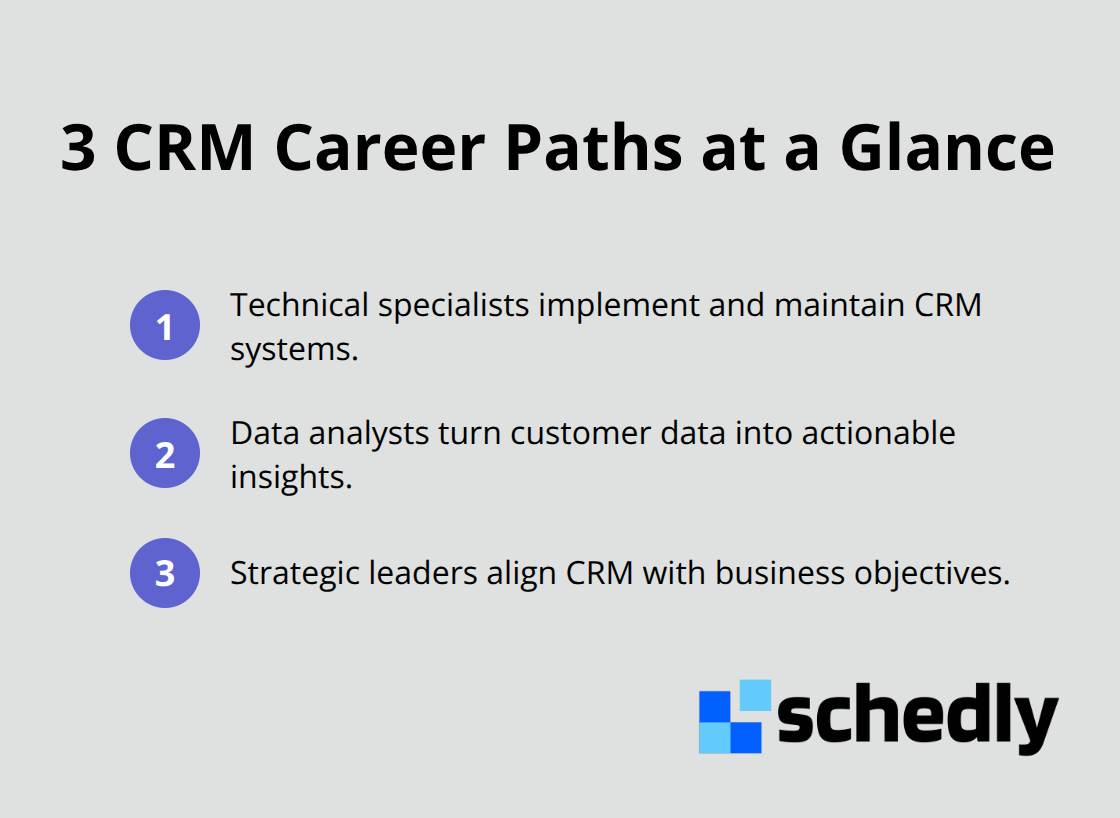
CRM careers span three primary categories, each with distinct skill requirements and growth opportunities. Technical specialists focus on system implementation and maintenance, with competitive salaries in the field. These professionals work directly with CRM platforms like Salesforce, HubSpot, and Zoho CRM to manage user access, customize workflows, and maintain data integrity. The role demands proficiency in database management, API integrations, and technical troubleshooting that impacts customer data accessibility.
CRM Administrator and Technical Specialist Roles
Technical specialists handle the backbone of CRM operations through system configuration and user support. They create custom fields, design automated workflows, and manage data imports from multiple sources. Most positions require 2-5 years of experience in related technical roles, with strong knowledge of SQL databases and API management.
Data-Driven Analytics Positions
CRM analysts extract actionable insights from customer data, with salaries that range from $60,000 for entry-level positions to $90,000 for mid-level roles. These professionals create reports, identify customer behavior patterns, and support strategic decisions through data visualization. Strong SQL skills, experience with business intelligence tools (like Tableau or Power BI), and statistical analysis capabilities are non-negotiable requirements. Companies increasingly seek analysts who can translate complex data into practical recommendations for sales and marketing teams.
Strategic Leadership Opportunities
CRM managers oversee entire customer relationship strategies, commanding salaries up to $150,000 for senior positions with 9+ years of experience. These leaders coordinate cross-functional teams, develop customer retention programs, and align CRM initiatives with business objectives. The role requires extensive experience in project management, budget oversight, and stakeholder communication. Advanced positions often demand MBA credentials and proven track records in customer experience optimization.
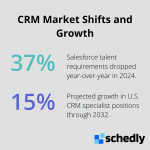
The U.S. Bureau of Labor Statistics projects 15% growth in CRM specialist positions through 2032, significantly outpacing average job market expansion. This growth creates opportunities across all three career categories, but success depends on developing the right combination of technical and soft skills for your chosen path.
What Skills Do CRM Professionals Need
CRM professionals require specific technical competencies that differ significantly across role types. CRM administrators must master Salesforce configuration, HubSpot workflow automation, and SQL database management within their first two years. Data analysts need advanced Excel skills, Tableau visualization expertise, and statistical analysis capabilities with tools like R or Python. Strategic managers require project management software proficiency, budget planning systems knowledge, and advanced CRM platform administration. Companies expect candidates to show hands-on experience with at least two major CRM platforms before they consider them for mid-level positions.
Technical Competencies That Matter Most
Database management skills separate successful CRM professionals from those who struggle. SQL proficiency allows analysts to extract customer insights from complex datasets, while API integration knowledge enables administrators to connect CRM systems with marketing automation tools. Salesforce professionals face declining market demand, with talent requirements dropping by 37% year-over-year in 2024 according to recent industry surveys.
Communication Skills That Drive Career Success
CRM professionals spend significant time with non-technical stakeholders, which makes communication abilities essential. Successful candidates translate complex customer data into actionable business recommendations for sales teams and executives. Active listening skills help relationship managers understand client feedback and implement system improvements that boost satisfaction scores. Project management capabilities become vital for senior roles, as CRM implementations typically involve coordination across marketing, sales, and IT departments (often spanning 6-12 months). Professionals who excel at presenting data-driven insights to C-level executives advance faster than those who focus solely on technical execution.
Educational Background Requirements
Most CRM positions require a bachelor's degree in business administration, marketing, or computer science as the foundation. Advanced degrees like an MBA enhance career prospects significantly, particularly for strategic leadership roles. Professional certifications provide competitive advantages: Project Management Professional (PMP) certification opens doors to senior positions, while Certified Customer Experience Professional (CCXP) credentials demonstrate expertise in customer relationship optimization. Specialized courses on platforms like Coursera and Udemy offer essential knowledge for aspiring CRM specialists, focusing on software functionality and data analysis techniques.
These skill requirements directly impact salary expectations and career advancement opportunities across different CRM roles and geographic markets.
How Much Can CRM Professionals Earn
CRM career advancement follows predictable salary trajectories, with entry-level coordinators progressing to analyst roles and beyond. The average salary for CRM managers reaches $86,681 annually. The path from coordinator to senior manager typically spans 5-7 years, with strategic leadership positions commanding higher compensation for professionals with extensive experience. Technical specialists advance faster than generalists, particularly those who master multiple CRM platforms like Salesforce and Microsoft Dynamics 365. Companies promote administrators to senior roles within 3-4 years when they demonstrate API integration skills and cross-functional project management capabilities.
Geographic Salary Variations Drive Career Decisions
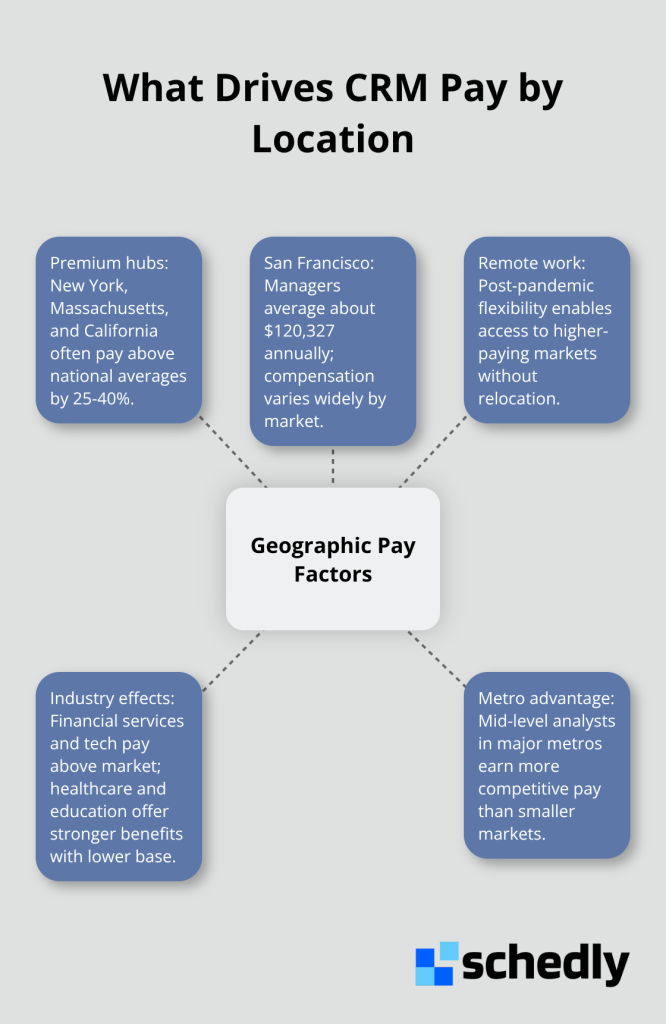
Location significantly impacts CRM compensation, with New York, Massachusetts, and California offering premium salaries which exceed national averages by 25-40%. San Francisco CRM managers earn approximately $120,327 annually, while similar positions in other markets vary considerably according to recent salary surveys. Remote work opportunities have expanded since the pandemic, allowing professionals to access higher-paying markets without relocation costs. Financial services and technology sectors consistently pay above market rates, while healthcare and education organizations typically offer lower base salaries but stronger benefits packages.
Industry Specialization Accelerates Earnings Growth
Healthcare CRM specialists earn premium salaries due to compliance requirements and complex patient data management needs. Healthcare managers earn median salaries of $117,960 annually. Technology companies prioritize CRM professionals who understand subscription revenue models and customer lifetime value optimization. Financial services firms seek specialists with regulatory compliance experience and offer signing bonuses for qualified candidates. Retail and hospitality sectors provide entry-level opportunities but may limit senior-level compensation growth.
Career Progression Timeline Impacts Salary Expectations
Entry-level CRM coordinators typically advance to analyst positions within 18-24 months when they demonstrate proficiency with data analysis tools and customer segmentation techniques. Mid-level professionals transition to management roles after 4-6 years of experience, particularly those who lead successful CRM implementation projects. Senior managers who oversee enterprise-wide customer strategies command the highest salaries, with compensation packages that include performance bonuses and equity participation in technology companies.
Final Thoughts
Customer relationship management careers provide exceptional growth opportunities across technical, analytical, and strategic roles. The 15% projected job growth through 2032 creates strong demand for professionals with CRM platform expertise and data analysis skills. Entry-level positions start around $60,000 annually, while senior managers earn up to $150,000 with geographic premiums in major markets.
Success in the CRM field requires technical proficiency combined with strong communication abilities. Start with foundational roles in customer service or sales to understand client needs. Pursue certifications in Salesforce, HubSpot, or Microsoft Dynamics 365 to demonstrate platform expertise and build data analysis skills through SQL training and business intelligence tools like Tableau.
We at Schedly support customer relationship management through our scheduling software that provides automated booking processes. Our platform helps businesses manage client interactions while streamlining appointment scheduling. The future favors CRM professionals who adapt to AI integration and automation trends, making this an ideal time to enter customer relationship management careers.