
Schedly resources
Cut Missed Appointments With Proactive Reminders

Missed appointments drain your revenue and frustrate your customers. The average business loses thousands annually to no-shows, yet most rely on outdated reminder methods that simply don't work.
At Schedly, we've seen firsthand how the right reminder strategy can cut missed appointments dramatically. This guide shows you exactly how to implement systems that keep customers on track and your schedule full.
The Real Cost of No-Shows
Financial Impact That Hits Hard
The U.S. healthcare system loses about $150 billion annually due to missed appointments, with an average missed visit costing around $200 in lost revenue per physician. For a clinic charging $200 per visit, five no-shows per week translate to roughly $52,000 in annual lost revenue. No-show rates vary dramatically across practices, ranging from 9% to 80%, with an average sitting around 37.4%. This means a typical medical group loses revenue from about 80 established and 43 new patients each month.
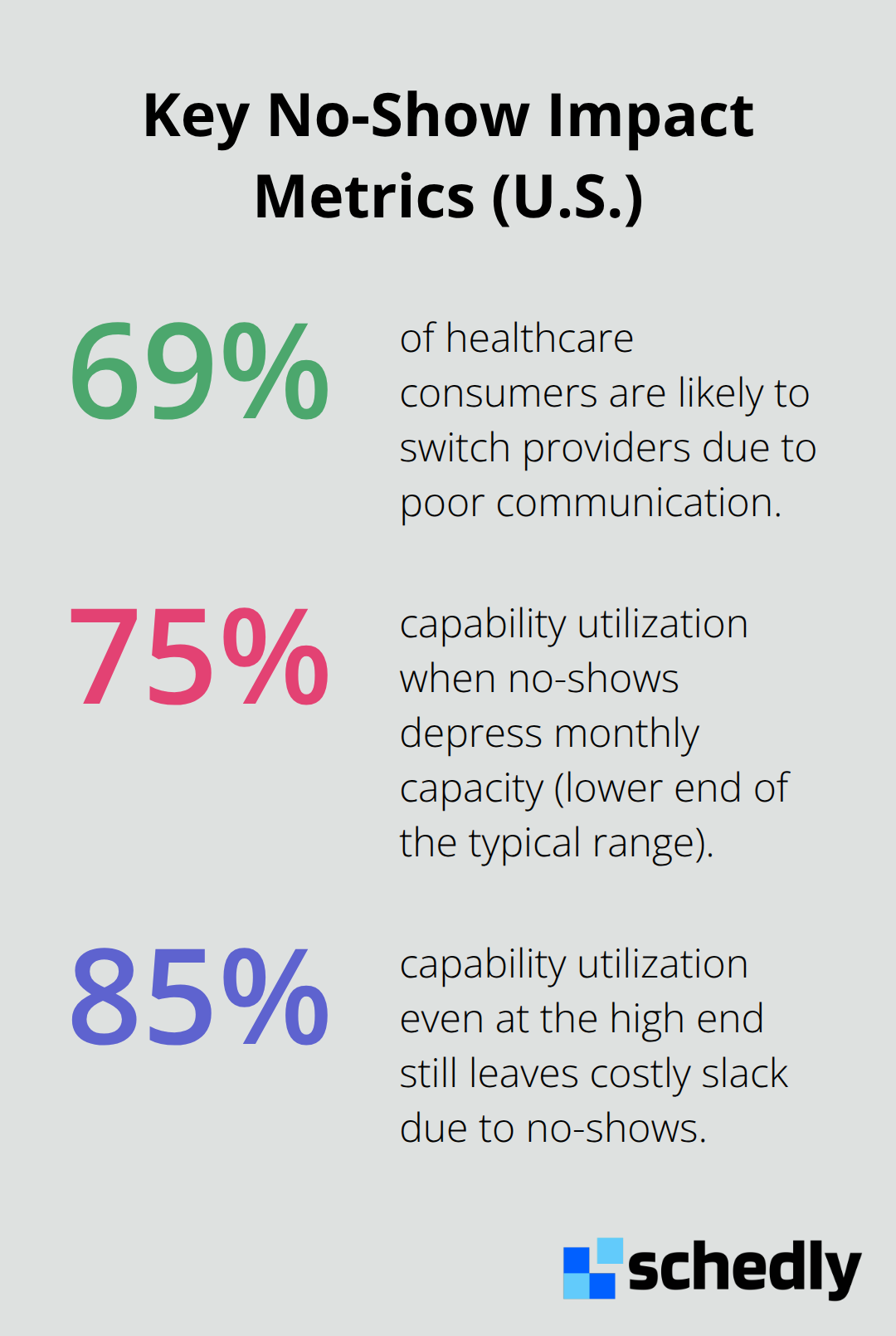
The financial bleeding extends beyond direct revenue loss. No-shows reduce monthly capability utilization to roughly 75–85%, leaving expensive equipment idle and staff with nothing to do. Workflow disruption from missed appointments creates administrative bottlenecks as staff spend hours chasing down patients, attempting rescheduling, and updating records. Clinicians spend about 28 hours per week on administrative duties while medical office staff spend about 34 hours-no-shows consume a significant portion of that time. These indirect costs compound quickly, consuming resources that could go toward patient care, intake, or billing.
Customer Trust Erodes Rapidly
69% of healthcare consumers are likely to switch providers due to poor communication. When patients miss appointments or experience disorganized follow-up, they interpret it as a sign of poor service and take their business elsewhere. In addiction care specifically, no-shows are linked to worse clinical outcomes and lower treatment throughput, making the problem even more serious.
Understanding Why Patients Miss Appointments
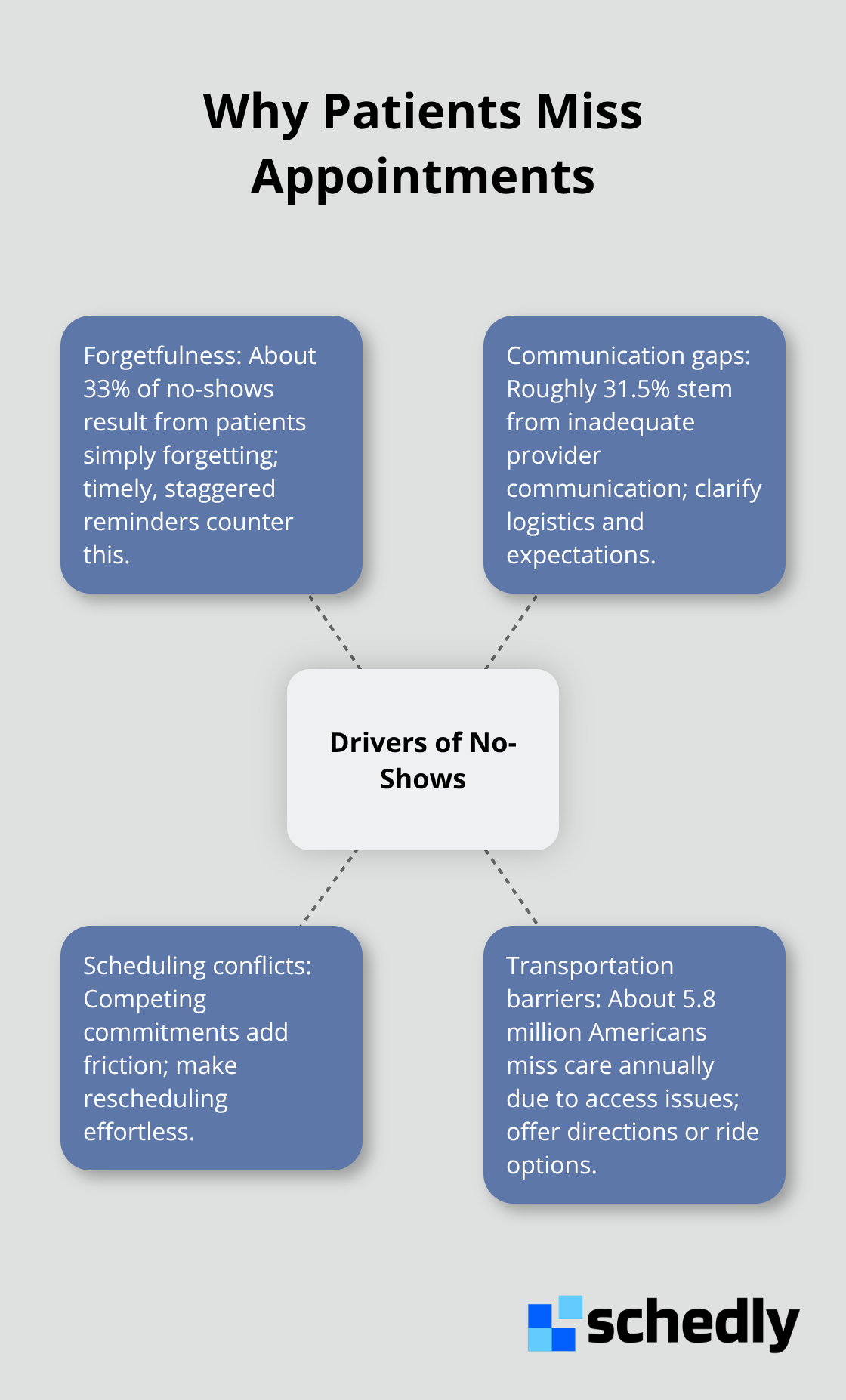
The root causes reveal where intervention matters most. Forgetfulness accounts for about 33% of no-shows, inadequate provider communication causes about 31.5%, and scheduling conflicts create additional friction. Transportation barriers affect millions of Americans, with about 5.8 million missing care annually due to access issues. These specific pain points require targeted solutions that keep patients engaged, informed, and supported throughout their appointment journey.
What Reminder Timing Actually Works
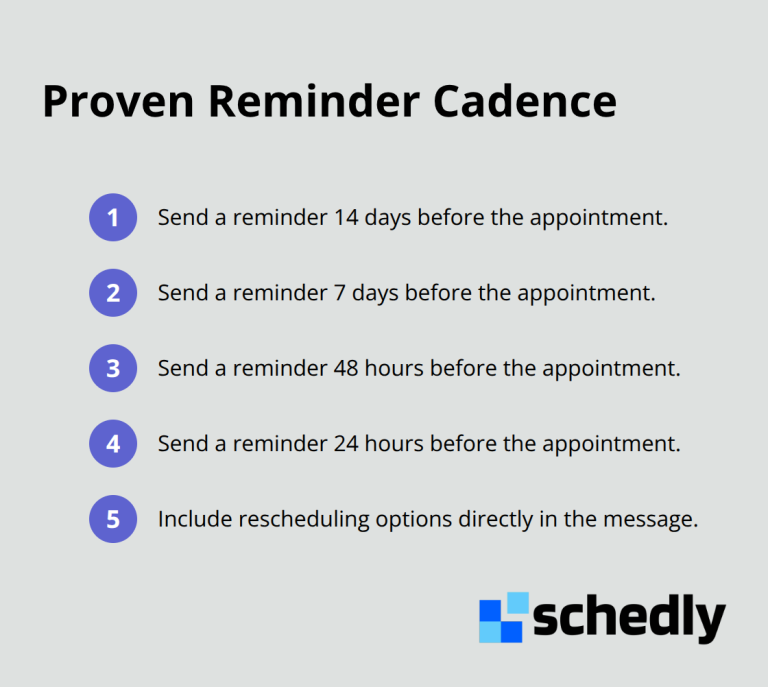
Text reminders reach customers faster than emails, which matters when you're racing against forgetfulness. SMS text reminders ranked as the second most popular choice among patients, and the data backs this up: SMS reminders cut no-shows substantially more than email alone. The timing question is equally important. Staggered reminders work better than a single message-send them at 14 days before, 7 days before, 48 hours before, and 24 hours before the appointment. A 72-hour trigger paired with a final 24-hour nudge creates enough friction to prevent forgetfulness without annoying customers. Include rescheduling options directly in the message so people can reply with a simple confirmation or request a new time. This two-way texting removes friction: instead of forcing customers to call or navigate a portal, they confirm or reschedule in the same thread they received the reminder.
Multi-Channel Engagement Beats Single-Channel Every Time
Don't choose between SMS and email-use both. Reach customers through their preferred channels because channel preference varies. Some respond instantly to text while others check email first thing in the morning. Include appointment details that matter: exact time, location with parking notes, what to bring, and preparation instructions. When customers understand logistics clearly, confusion drops and attendance rises. Personalize messages with customer names and staff names when possible, as this small detail increases engagement rates. For industries outside healthcare, the principle holds: customize reminders to your appointment type and customer segment. Verify insurance and authorizations as part of the outreach workflow in healthcare settings, catching issues before patients arrive.
Speed Matters More Than Perfection
Reduce the gap between booking and appointment-new patients waiting more than a month are more likely to cancel compared to those scheduled within a week. Close this window aggressively. Request confirmation immediately after booking so you know within hours whether someone will actually show. Online self-service confirmations reduce phone overhead and let you reallocate slots quickly if someone cancels. Track which channels yield the best response rates for your specific business because what works for healthcare differs from fitness or legal services. Automation across reminders, scheduling, and calendar synchronization prevents double-bookings and reduces staff burden dramatically. One practical step: flag staff when a customer doesn't check in after receiving a reminder so you can reach out proactively before they miss the appointment entirely.
Personalization Drives Real Results
Customers respond to messages that feel tailored to them rather than generic blasts. Include dynamic fields such as first name, appointment date, time, and staff name to boost engagement. Customize reminder tone to your industry-healthcare requires a different approach than fitness or legal services. Request confirmations through a simple reply keyword like "C" to lower the barrier for response. Add a calendar link so customers can add the appointment to their calendar instantly, removing one more friction point. These small touches compound: personalized messages with native-language support overcome communication barriers and lower no-show risk significantly.
Prepare Customers for Success
What customers bring and how they prepare directly affects whether they show up. Include specific preparation instructions in your reminders-what documents to bring, whether they need to fast, or what to expect during the visit. Provide clear contact details so customers know how to respond or reschedule if circumstances change. For healthcare, verify insurance and authorizations as part of the outreach workflow, catching issues before patients arrive and reducing frustration. When customers feel prepared and informed, they treat the appointment as a commitment rather than an optional task.
What Real Businesses Actually Gain From Reminder Systems
Attendance Jumps and Revenue Returns
Businesses implementing automated reminder systems see appointment attendance rise by up to 38%. Memorial Hospital at Gulfport achieved a 28 percent relative reduction in no-shows and recovered significant revenue through data-driven reminders. These improvements reflect actual staff hours freed up, exam rooms generating revenue instead of sitting empty, and patients who show up ready to proceed with care.
The attendance gain compounds quickly. If your practice sees 100 appointments weekly at a 37 percent no-show rate, you lose 37 slots. A 25 percent improvement in attendance adds nine full appointment slots back into your schedule each week, equivalent to roughly $93,600 in annual revenue recovery at $200 per visit. That's money your team already budgeted for but couldn't capture because reminders weren't working.
Staff Hours Redirect to High-Value Work
Administrative relief matters equally to revenue recovery. Staff stop spending 28 to 34 hours weekly chasing missed appointments, rescheduling, and updating records. Instead, they handle exceptions-the patient who genuinely has an emergency or the one flagged by your system as high-risk. Automated multi-channel reminders with two-way texting eliminate the phone tag game entirely. Patients confirm or reschedule directly in text threads, and your calendar updates instantly.
This workflow change reduces manual data entry errors and prevents double-bookings that create customer frustration. Your team focuses on what matters: patient care, intake, and billing rather than administrative cleanup from no-shows.
Customer Satisfaction Strengthens Loyalty
Customer satisfaction tracks directly to communication quality. When patients receive personalized reminders with specific prep instructions, parking details, and insurance verification done in advance, they perceive your business as organized and professional. They're less likely to switch providers-69 percent of healthcare consumers say poor communication drives them away, but that statistic inverts when communication is clear and proactive.
Businesses that request confirmation immediately after booking capture cancellations within hours rather than days, allowing staff to fill those slots from waitlists before they go wasted. The combination of reduced no-shows, faster slot recovery, and stronger customer relationships creates a revenue multiplier effect that extends far beyond the initial attendance improvement.
Final Thoughts
Missed appointments drain revenue and consume staff time that should go toward serving customers. The evidence is clear: automated reminders work, and businesses that implement staggered, multi-channel reminder systems cut missed appointments by 25 to 38 percent, recovering thousands in annual revenue while freeing staff from administrative busywork. A practice losing 37 appointments weekly at $200 per visit recovers roughly $93,600 annually by improving attendance by just 25 percent.
Implementation doesn't require overhauling your entire operation. Start by identifying your current no-show rate and the channels your customers prefer, then send reminders at proven intervals: 14 days, 7 days, 48 hours, and 24 hours before appointments. Include rescheduling options directly in messages so customers confirm or reschedule without calling, and track which channels deliver the best response rates for your specific business. Schedly handles this automatically with 24/7 online booking, multi-channel reminders, confirmation capture, and analytics that show what's working across industries from healthcare to fitness to real estate.
Start small with one reminder interval and one channel, measure the results, then expand what works. Your revenue recovery and staff relief are waiting on the other side of implementation.