
Schedly resources
Cut No-Show Rate: Proven Tactics To Improve Attendance
No-shows drain your revenue and frustrate your team. At Schedly, we've seen businesses lose thousands monthly to missed appointments-and the damage goes far beyond that single lost sale.
The good news: you can cut your no-show rate significantly with the right tactics. This post walks you through proven strategies that actually work.
What No-Shows Really Cost You
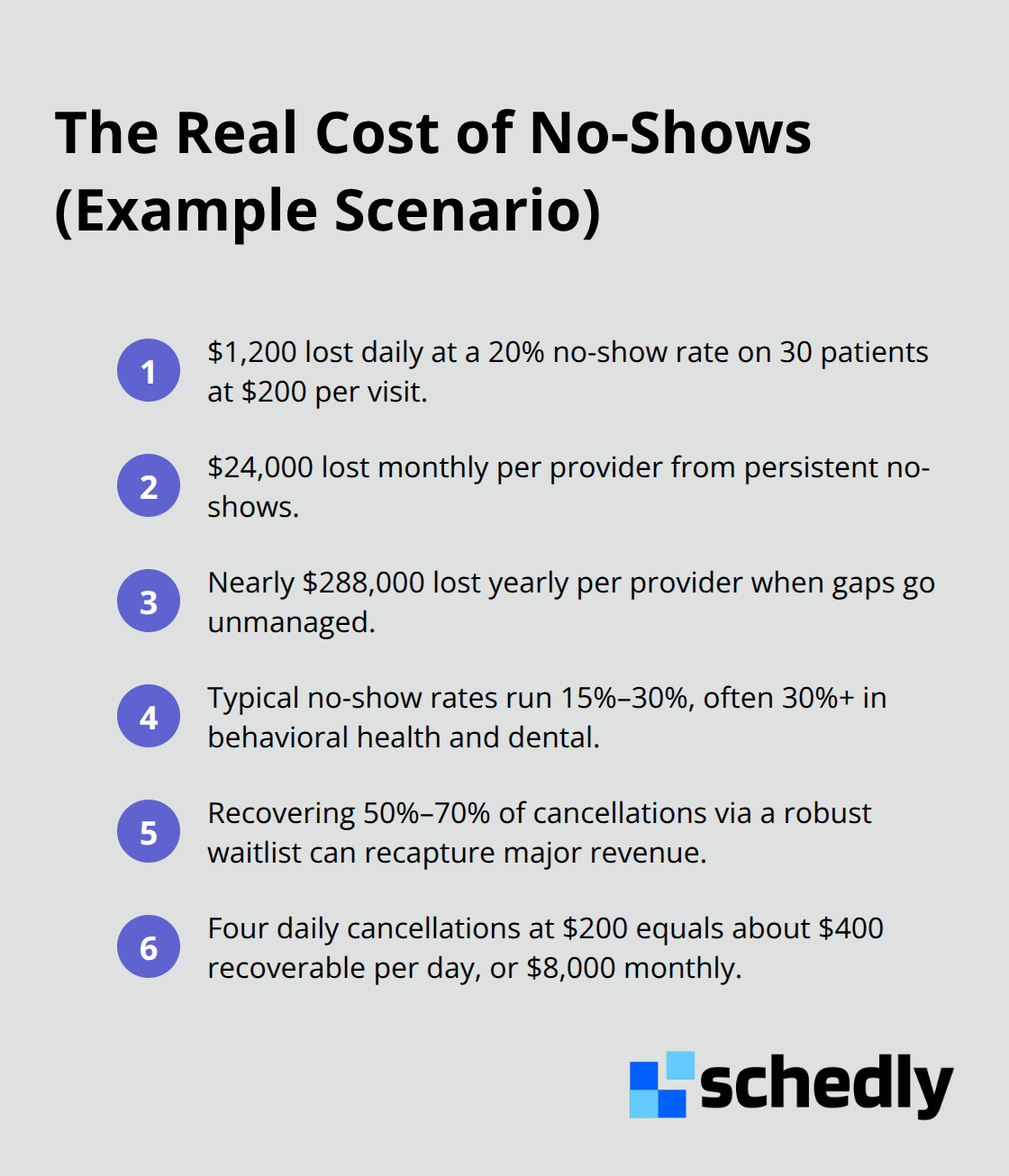
A practice earning $200 per visit that sees 30 patients daily loses roughly $1,200 in revenue on a 20% no-show rate. That's $24,000 monthly or nearly $288,000 yearly per provider. Medical practices typically experience no-show rates between 15% and 30%, with behavioral health and dental practices often exceeding 30%. These numbers aren't hypothetical-they're what happens when scheduling gaps go unmanaged. The financial damage compounds because those empty slots can't be recovered. A cancelled appointment at 2 p.m. can't be filled at 2:15 p.m., meaning the provider sits idle and overhead costs continue regardless.
The Team Pays the Price Too
No-shows create scheduling chaos that demoralizes staff. Front-desk teams waste time confirming appointments that won't happen, and clinical staff adjust workflows around phantom patients. When patients don't show, schedulers can't fill those gaps quickly enough, leaving providers underutilized and frustrated. Staff morale drops when they manage the aftermath of no-shows rather than focus on patient care. Teams working in practices with high no-show rates report greater stress because they constantly firefight rather than plan. The scheduling friction also means less predictable income, making it harder for businesses to forecast revenue and plan staffing levels.
How Operational Inefficiency Spreads
No-shows force teams to spend energy on reactive problem-solving instead of proactive service delivery. This friction directly impacts the quality of care for patients who do show up, as staff stretch thin managing cancellations and rescheduling. Providers lose focus on their core work when they navigate the fallout from missed appointments. The ripple effect extends to your entire operation-scheduling software with automatic appointment reminders shows promise to improve clinics' management through timely cancellations and rescheduling. Practices that rely on manual confirmation calls or outdated systems experience higher no-show rates and greater staff burnout. The solution requires moving beyond reactive management to systems that prevent no-shows before they happen.
Reminders That Actually Work
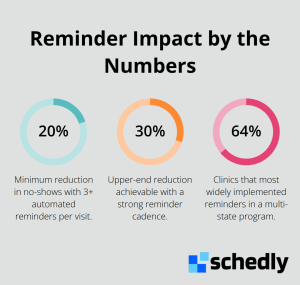
Automated reminders cut no-shows by 20 to 30 percent when you send three or more reminders per visit. The STAR-SI program reduced no-shows from 36.3 percent to 19.5 percent across 67 addiction-treatment outpatient clinics in 10 states. Clinics adopted this single tactic most widely, with 64 percent implementing it. Reminders work because they bridge the gap between booking and the appointment. Patients forget. Life happens. A well-timed message brings the appointment back into focus when it matters most.
Timing Your Reminders for Maximum Impact
The moment you send a reminder determines whether patients act on it or ignore it. Most practices send reminders too late or too infrequently, which means they blend into the noise. Instead, use a three-reminder sequence: one at 5 to 7 days before the appointment, another at 1 to 2 days before, and a final one the morning of the visit.
Make Reminders Personal and Easy to Act On
Generic reminders fail because they feel impersonal and forgettable. Include the patient's name, provider name, exact appointment time, location, and what to bring. This specificity increases engagement dramatically because patients see themselves in the message rather than reading a template. Even better, enable two-way confirmation so patients can reply to confirm or reschedule with a single text or click. This transforms a passive reminder into an actionable step, which significantly boosts show rates. Practices that make cancellation and rescheduling effortless see about 10 to 15 percent improvement in attendance because friction drops. One-click rescheduling options and online self-scheduling let patients pick new times that fit their work, childcare, or travel schedules without calling the practice. This removes a major barrier because many patients avoid calling to reschedule due to wait times or scheduling hassles.
Layer Your Channels for Complete Coverage
A layered strategy balances cost and effectiveness while maximizing your chances of reaching each patient through their preferred channel. Send a text at 7 days out, email 3 days before, text the day before, and a phone call the morning of if not confirmed. This approach ensures that patients receive your message across multiple touchpoints without feeling bombarded. The combination of low-cost channels (texts and emails) with high-touch outreach (phone calls for confirmed no-shows) lets you allocate resources where they matter most. Patients who respond to texts never need a phone call, while those who ignore messages get personal contact when it counts.
Now that you've built a reminder system that reaches patients effectively, the next step involves making it harder for patients to miss appointments in the first place. Accountability measures and incentives shift patient behavior in ways that reminders alone cannot achieve.
Incentivize Attendance and Build Accountability
Clear Policies Create Real Consequences
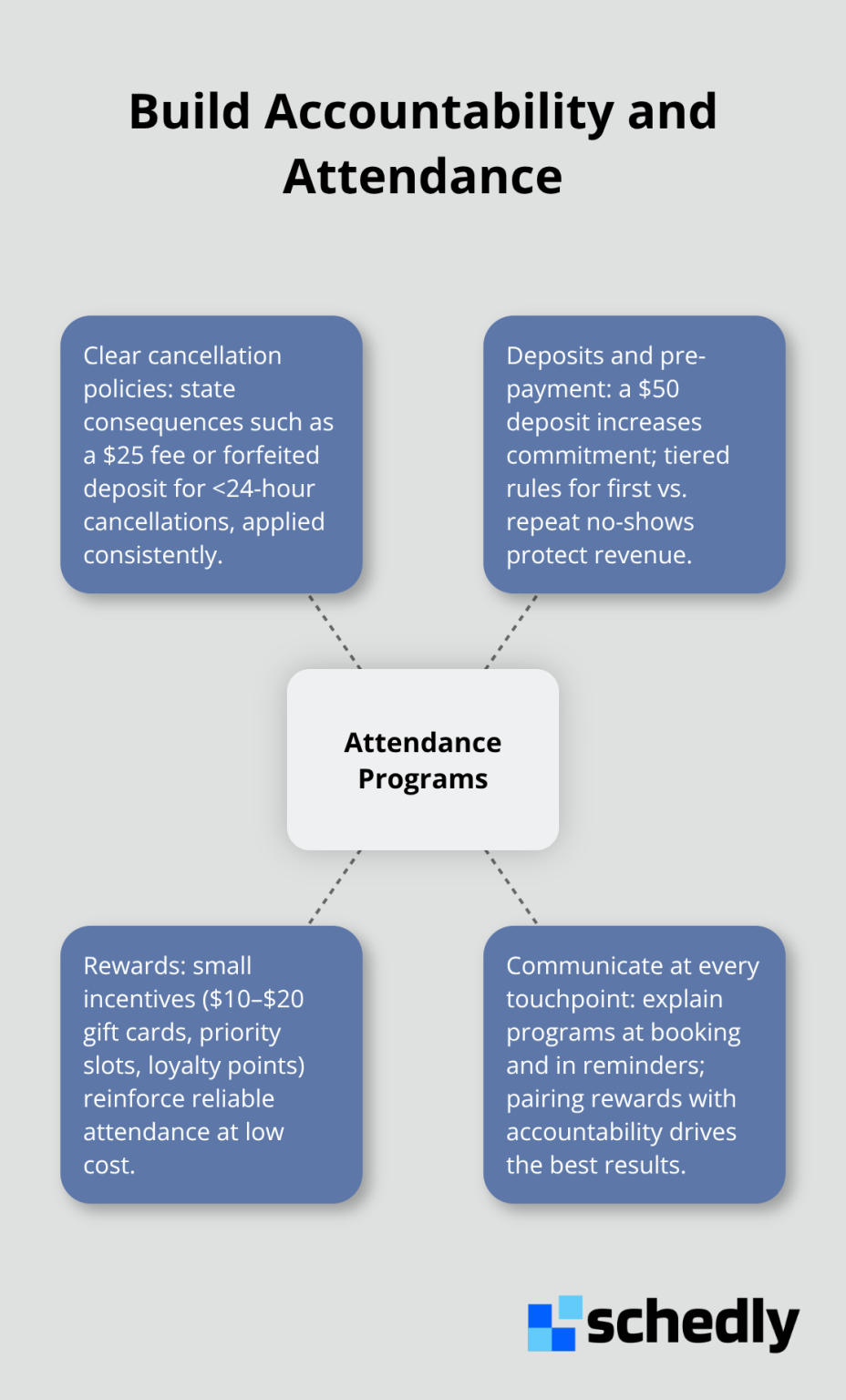
Clear cancellation policies with measurable consequences fundamentally change how patients treat appointments. A written policy stating that patients who cancel within 24 hours face a $25 fee or forfeit their deposit removes ambiguity and creates real friction for casual cancellations. The key is consistency: enforce the policy equally for all patients, not selectively, or it loses credibility and effectiveness. When staff apply policies fairly, patients internalize that appointments matter and cancellations cost them personally.
Deposits and Pre-Payment Drive Commitment
Deposits or pre-payment work powerfully because money in hand creates psychological commitment. Patients who prepay show up at higher rates than those who don't because they've already invested financially. A $50 deposit held against future visits incentivizes attendance far more than a verbal promise. Some practices use tiered approaches where first-time no-shows trigger a conversation and second offenses trigger a deposit requirement, which preserves goodwill while protecting revenue for chronic offenders. The deposit should be substantial enough to matter financially but not so large that it deters new patients from booking.
Rewards Reinforce Positive Behavior
Reward systems targeting consistent attendance work alongside accountability measures to reinforce positive behavior. Offering small incentives-gift cards worth $10 to $20, priority booking slots, or loyalty points redeemable for services-recognizes patients who show up reliably and costs far less than absorbing no-shows. Behavioral engagement strategies using contingency management increase show rates by providing tangible rewards for attendance. The reward should feel meaningful but not excessive; a coffee card for 12 consecutive on-time arrivals costs you little but signals that attendance matters.
Communicate Programs at Every Touchpoint
Communicate these programs clearly at booking time and in reminder messages so patients know exactly what they're working toward. Practices pairing accountability measures with rewards see stronger results than using either approach alone because accountability addresses the cost of cancelling while rewards celebrate showing up.
Final Thoughts
Three proven levers cut your no-show rate: automated reminders that reach patients at the right moment, clear accountability measures that make cancellations costly, and rewards that celebrate attendance. Reminders prevent forgetfulness, policies and deposits create real consequences, and rewards reinforce the behavior you want. Practices implementing all three simultaneously see no-show reductions of 30 to 45 percent within the first three months, with some reaching 50 percent or higher depending on baseline rates and execution quality.
The financial payoff arrives immediately-a practice recovering just half of cancelled appointments through better attendance gains thousands monthly. Your team stops firefighting and starts delivering better care, scheduling becomes predictable, and staff morale improves. Providers spend less time managing chaos and more time on what they do best.
Start by picking one tactic and measure your baseline no-show rate for two weeks, then layer in the others. Schedly automates the entire process for you, sending personalized reminders across multiple channels, enforcing your cancellation policies, tracking attendance patterns, and providing analytics so you see exactly which tactics move the needle.