
Schedly resources
Efficient Appointment Scheduling: Save Time and Book Smarter
Appointment scheduling is broken for most businesses. Manual booking processes drain your team's time, double-bookings cost you money, and frustrated customers leave bad reviews.
At Schedly, we've seen how efficient appointment scheduling transforms operations. The right system eliminates chaos, prevents conflicts, and lets your business run on autopilot.
Why Manual Scheduling Costs You More Than You Realize
Administrative Work Drains Your Budget
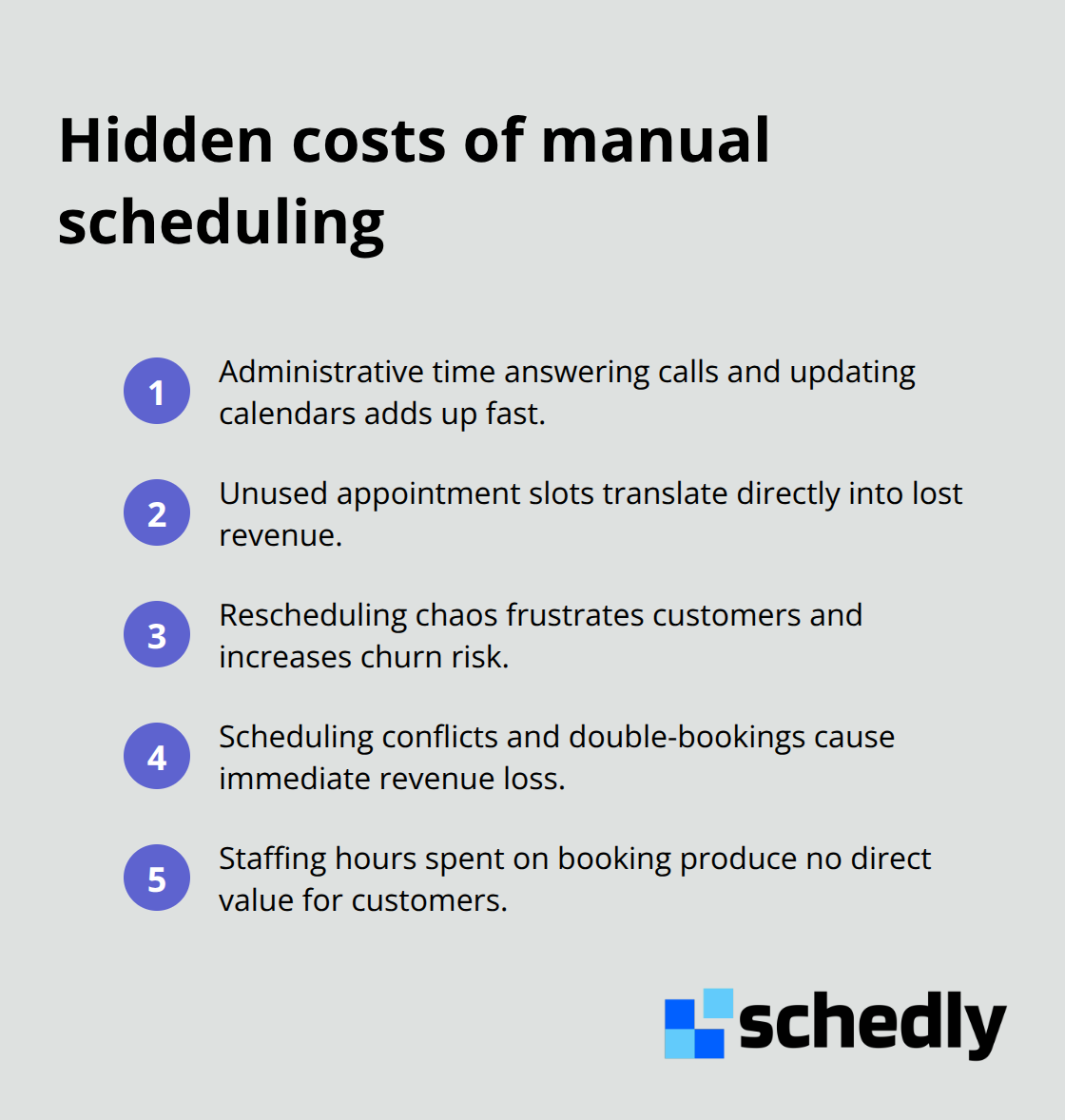
Your team wastes hours every week answering calls, checking calendars, and typing the same information into spreadsheets. A private ophthalmology practice in Germany discovered this firsthand: before switching to online appointment scheduling, 22.7% of their appointment slots sat unused because staff couldn't manage the volume manually. That's nearly a quarter of your revenue walking out the door. When you add up the salary costs of administrative staff handling booking requests, the lost appointments, and the rescheduling chaos that follows, manual systems drain thousands of dollars monthly from your business. The math is brutal.
Scheduling Conflicts Hit Your Bottom Line
Double-bookings and scheduling conflicts cost you money directly. When two clients arrive at the same time or a staff member becomes overbooked, you lose the transaction entirely or damage relationships trying to reschedule. Research on appointment value shows that scheduled appointments generate significant revenue compared to walk-ins. A single missed or botched appointment represents hundreds of dollars in lost value. The same German practice that struggled with unused slots saw 8.6% of appointments never get booked at all because customers gave up trying to reach someone.
Poor Scheduling Damages Your Reputation
Poor scheduling also damages your reputation in ways that compound over time. Customers who experience long waits, forgotten appointments, or staff confusion leave negative reviews that discourage future bookings. Your scheduling system is often the first impression customers have of your business, and a broken system tells them you don't respect their time. When customers can't book easily or receive conflicting information about their appointments, they simply choose competitors who make scheduling frictionless. This reputation damage extends beyond lost reviews-it reduces word-of-mouth referrals and makes customer acquisition more expensive. The solution isn't to work harder at manual processes; it's to replace them entirely with systems that handle the work automatically while your team focuses on what matters: delivering excellent service to the customers who do book with you.
How Digital Scheduling Eliminates Operational Chaos
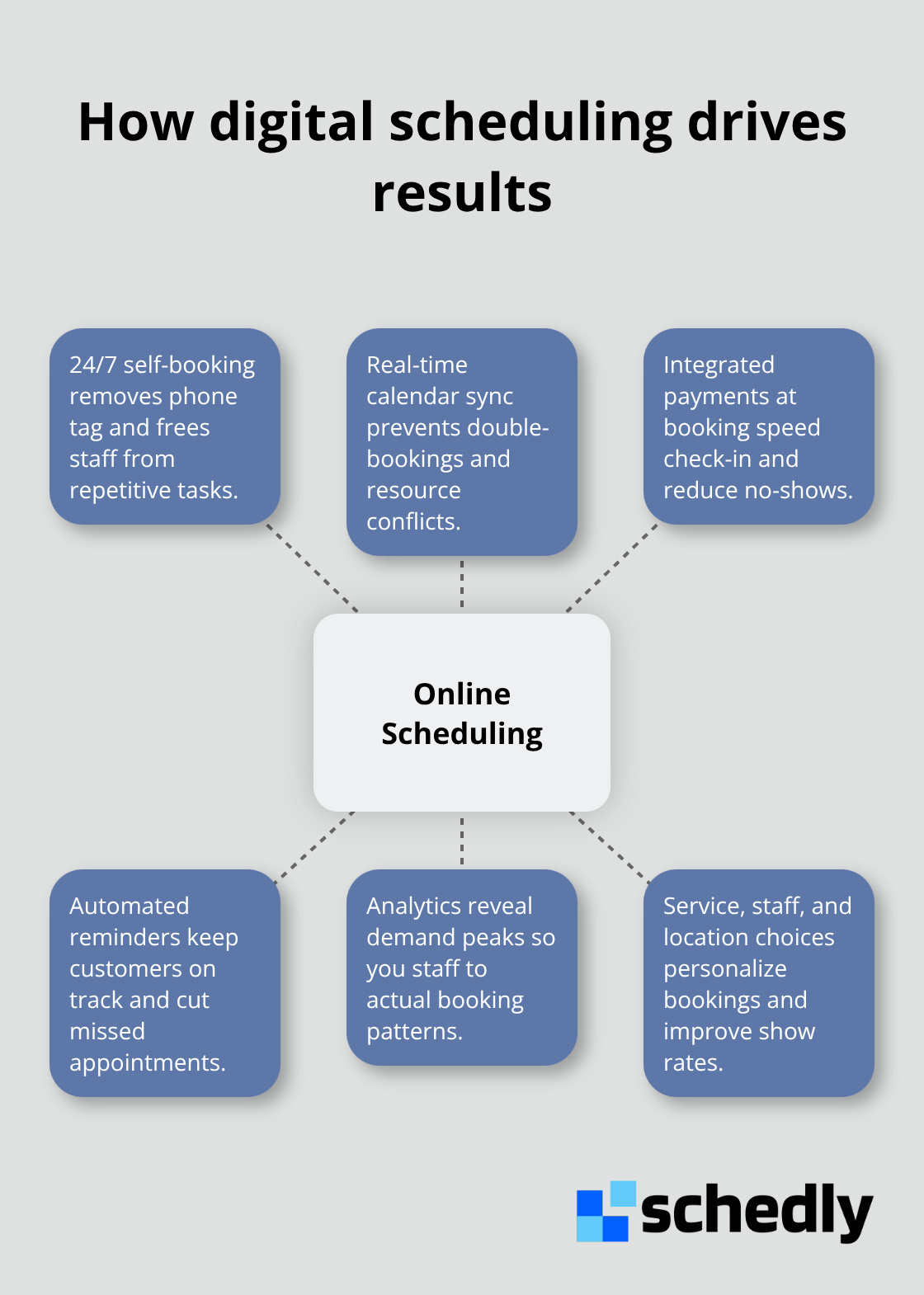
Online booking systems eliminate the administrative burden that manual scheduling creates. When customers book online 24/7, your team stops answering repetitive scheduling calls and typing information into multiple systems. A German ophthalmology practice that implemented online scheduling saw unused appointment slots drop from 22.7% to 10.3% immediately. That improvement happened not because staff worked harder, but because the system handled the work. The same practice reduced never-booked appointments from 8.6% to 1.6%, meaning more customers actually completed their booking instead of abandoning the process mid-way.
Real-Time Synchronization Prevents Double-Bookings
Real-time calendar synchronization prevents the double-bookings that tank your revenue. When your scheduling system connects to your team's calendars automatically, staff cannot accidentally overbook themselves or assign the same room to two clients. This eliminates the costly scramble of rescheduling and the reputation damage of turning customers away. Payment processing integrated directly into your scheduling system removes another friction point. Customers who pay during booking rather than at arrival complete transactions faster, reduce administrative work, and lower no-show rates. When payment happens upfront, customers commit more strongly to showing up.
Automated Reminders Reduce No-Shows Dramatically
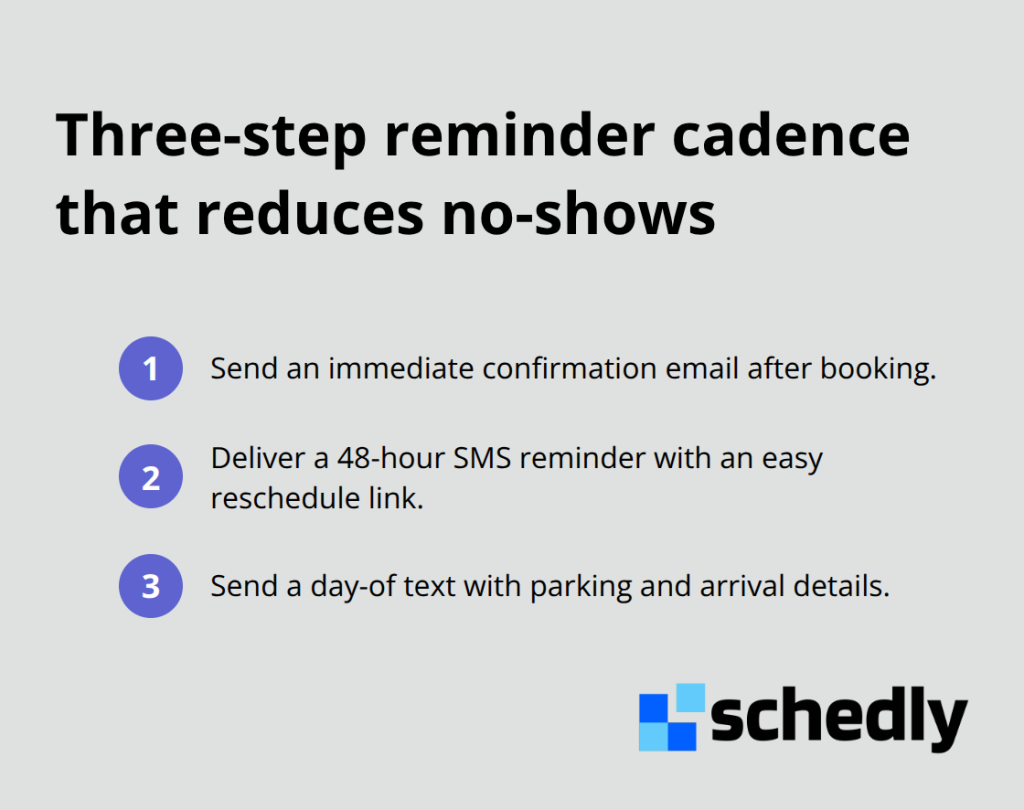
Automated reminders work. The German practice mentioned earlier implemented SMS reminders alongside online booking, and no-shows dropped measurably as reminder usage increased from 11.4% to 25.4% of appointments over eighteen months. Across 105 studies reviewed in systematic research, reminders consistently reduce no-shows. A practical setup sends three touches: a confirmation email after booking, a 48-hour SMS reminder with rescheduling options, and a day-of text with parking or arrival details.
Data-Driven Staffing Replaces Guesswork
Data-driven staffing replaces guesswork by showing you exactly when your business peaks and which services drive volume. Rather than guessing about staffing needs, you see the pattern in numbers. If mortgage consultations peak on Thursday nights, you extend hours for specialists that day and capture additional volume without hiring permanent staff. If walk-ins request first-time homebuyer consultations most frequently, you know which service to promote and resource. This data-driven approach to staffing replaces gut feeling with facts. You stop paying for idle time and start scheduling staff only when customers actually book. These operational improvements set the stage for the next level of scheduling sophistication-one where your system doesn't just manage appointments, but actively shapes how your business grows.
How to Set Up Your Scheduling System for Maximum Results
The difference between a scheduling system that merely exists and one that actively drives business growth comes down to three operational decisions: how you remind customers, how you segment your booking experience, and what data you actually track. Most businesses implement scheduling software and stop there, leaving thousands of dollars in optimization on the table. Teams that transform their operations treat their scheduling system as an active business tool rather than a passive calendar.
Automated Reminders Recover Lost Revenue
Automated reminders work reliably across every industry. A study on SMS reminders in ophthalmology found that reminder systems could help reduce non-attendance rates. The setup is straightforward: send a confirmation email immediately after booking so customers have proof of their appointment, deploy a 48-hour SMS reminder that includes a link to reschedule if plans change, and send a day-of text with specific arrival instructions like parking details or check-in procedures.
This three-touch sequence costs virtually nothing to automate but recovers tens of thousands annually by filling chairs that would otherwise sit empty. Without reminders, your schedule fills with empty slots and lost revenue.
Segment Your Booking Flow by Customer Type
Different customer types need different booking experiences. A first-time customer requires different information and reassurance than a returning client. A customer booking a complex service like a mortgage consultation needs to select a specific specialist, while someone scheduling a routine cleaning just needs the next available slot.
When your scheduling system lets customers choose their service type, preferred location, and preferred staff member upfront, they complete bookings faster and show up more reliably because they've made specific commitments. This personalization also surfaces which services drive volume, which staff members customers prefer, and which locations need additional resources-data that feeds directly into your staffing decisions.
Use Analytics to Replace Staffing Guesswork
Treat your scheduling analytics as a staffing tool rather than a reporting afterthought. If you see that Thursday evenings drive higher mortgage consultation bookings, extend specialist hours on Thursday without adding permanent staff and capture that volume. If your data shows that walk-in customers most frequently request first-time homebuyer consultations, you know which service to promote and which advisor training delivers the highest return.
Many businesses waste money by staffing uniformly across the week when demand clusters heavily on specific days and times. A practice saw appointment occupancy rise as they increased the share of online bookings, and this happened because online booking data revealed exactly when their customers wanted to schedule. Rather than guessing about staffing needs, you respond to actual customer behavior.
Review your booking data weekly to spot patterns that shift with seasons, promotions, or market conditions. When you tie staffing decisions directly to booking volume data instead of assumptions, you stop paying for idle time and start scheduling people only when customers actually book appointments. This operational precision separates businesses that merely use scheduling software from those that leverage it to grow.
Final Thoughts
The scheduling landscape shifts rapidly, and businesses that adapt now gain a competitive advantage. Artificial intelligence moves beyond simple automation to predictive insights that anticipate customer behavior and staffing needs before problems emerge. Systems that learn from your booking patterns forecast demand spikes, suggest optimal staffing levels, and flag customers likely to reschedule, letting your team intervene proactively rather than react to chaos.
Customer relationship management integration transforms scheduling from a transactional tool into a relationship-building engine. When your scheduling system connects directly to your CRM, every appointment becomes part of a continuous customer journey. Your team sees appointment history, past preferences, and previous conversations before customers arrive, enabling personalized service that builds loyalty and increases lifetime value-and booking data feeds directly into marketing and sales workflows so follow-up campaigns target customers based on actual behavior rather than assumptions.
Efficient appointment scheduling forms the foundation of modern business operations. Schedly combines 24/7 online booking, integrated payment processing, workflow automation, and multi-location management with a customer-focused CRM and advanced analytics to eliminate scheduling friction. Whether you operate a single location or manage multiple branches, you gain the tools to focus on what matters: delivering excellent service.