
Schedly resources
Faster Scheduling System: How to Speed Up Booking Without Sacrificing Quality

Your booking system is only as good as how fast it works. Customers abandon carts when they wait too long, and slow processes cost you real revenue.
At Schedly, we've seen businesses cut booking times in half while actually improving their service quality. A faster scheduling system isn't about rushing-it's about removing friction at every step.
Why Speed in Booking Matters Now
Customers Abandon Slow Booking Experiences
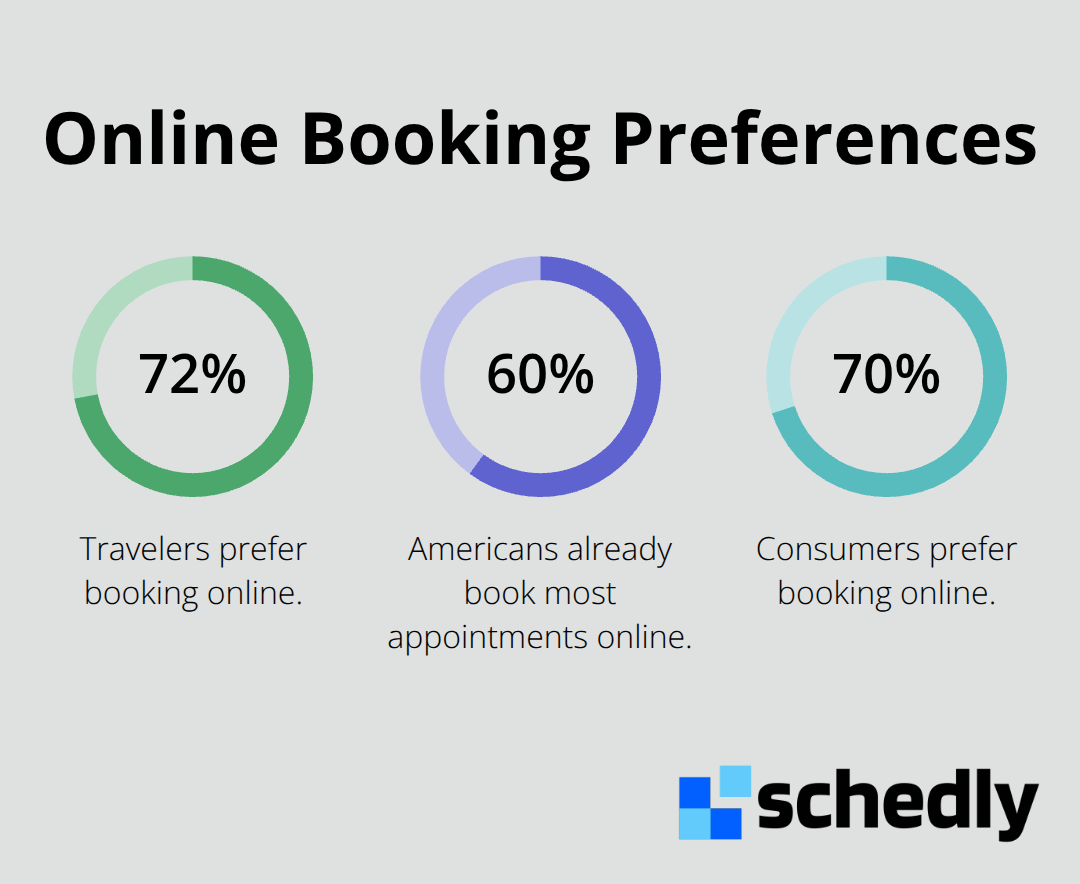
The numbers tell a stark story about what happens when booking takes too long. According to GetApp's Online Booking Survey, 72% of travelers prefer booking online, and 60% of Americans already book most appointments online. But preference means nothing if your system frustrates them. When visitors land on your booking page and face slow load times, unclear availability, or a lengthy form, they leave. Local businesses that added online booking saw revenue increases up to 120%, which means the inverse is also true-businesses without fast, frictionless booking lose money to competitors who offer it.
Mobile Speed Determines Your Booking Success
In 2024, mobile bookings overtook desktop according to recent data. If your booking page takes five seconds to load on a phone or requires typing into ten form fields, you've already lost half your potential customers. This shift toward mobile means that speed on small screens isn't optional-it's your primary competitive advantage. A fast, mobile-optimized booking experience converts visitors into confirmed appointments far more effectively than any marketing campaign.
Streamlined Booking Reduces No-Shows and Protects Revenue
Spanish55, a language tutoring platform, implemented automated reminders and streamlined their booking flow with Google Calendar integration to improve their no-show rates. That's not just better customer experience-that's direct revenue protection. When customers confirm quickly and receive instant reminders, they actually show up. Speed here means fewer empty slots, more predictable revenue, and staff members spending time on actual work instead of chasing down confirmations.
Fast Booking Builds Customer Loyalty
Customers who book fast also stay loyal because the entire interaction signals respect for their time, which builds trust far better than any marketing message ever could. A frictionless booking experience creates positive first impressions that extend well beyond the initial appointment. This loyalty translates into repeat bookings, referrals, and higher lifetime customer value.
The question isn't whether you can afford to speed up your booking system-it's whether you can afford not to. The next section reveals the specific features that make fast scheduling possible without compromising the quality of your service.
The Three Systems That Speed Up Booking
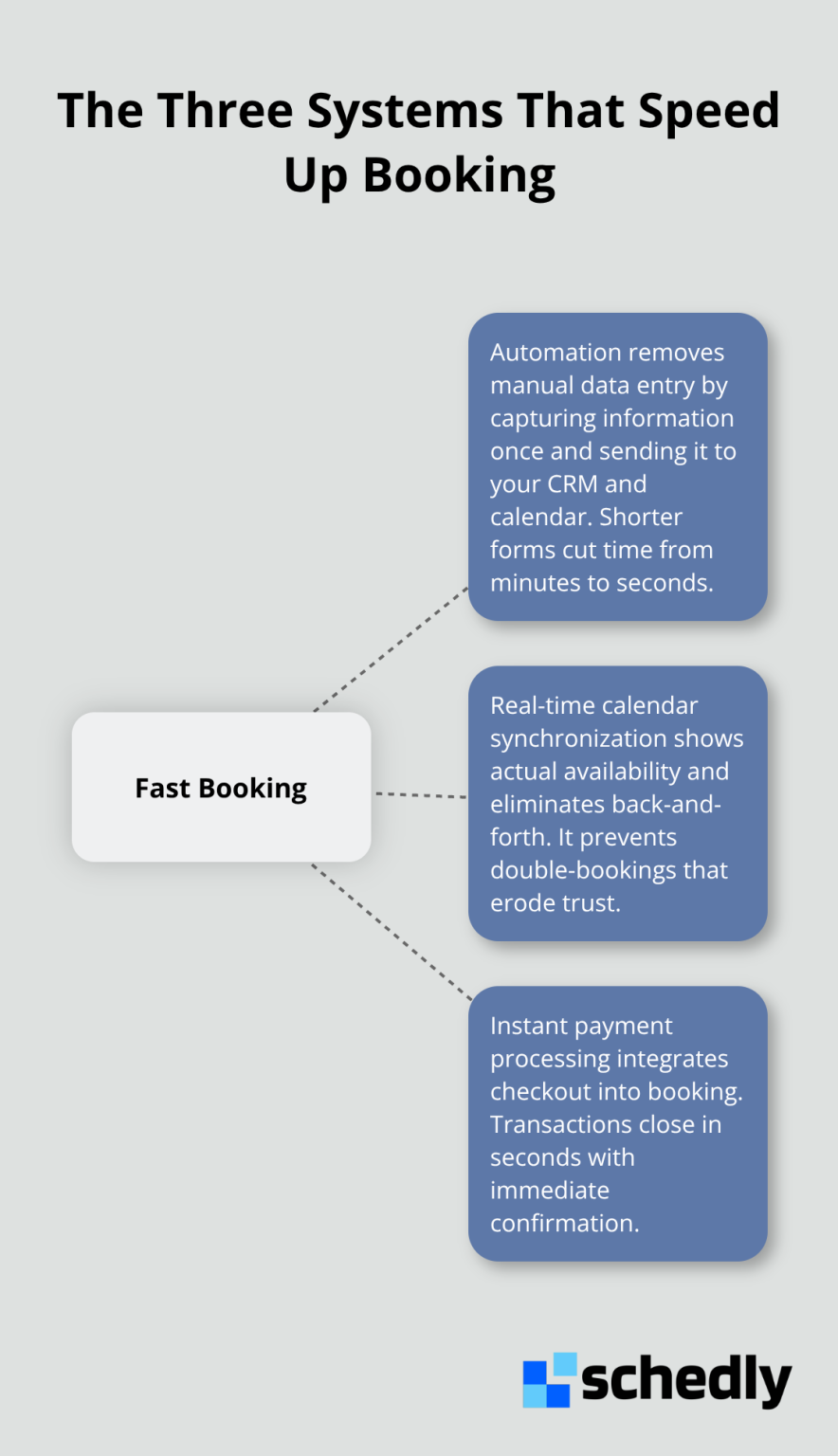
The difference between a fast booking system and a slow one comes down to three core mechanisms working together. When these are missing, customers face delays, staff members waste time on manual tasks, and revenue slips away to competitors. These three mechanisms eliminate the friction that kills conversions.
Automation Removes Manual Data Entry
The first mechanism is automation that removes manual data entry entirely. Instead of customers filling out lengthy forms and staff members typing information into multiple systems, automated workflows capture data once and feed it directly into your CRM and calendar. This single change cuts booking time from minutes to seconds. When forms shrink from ten fields to four essential ones, completion rates jump significantly, according to scheduling best practices across industries. Your staff never manually enters customer information, never checks the calendar to confirm availability, and never sends a separate invoice.
Real-Time Calendar Synchronization Prevents Double-Bookings
Real-time calendar synchronization is the second mechanism, and it's non-negotiable if you want to prevent double-bookings that destroy customer trust. When your Google Calendar, team member calendars, and booking system synchronize in real time, visitors see exactly what's available and confirm instantly without the back-and-forth of outdated time slots. This synchronization prevents scheduling conflicts that frustrate both customers and staff.
Instant Payment Processing Closes Transactions Immediately
The third mechanism is instant payment processing integrated directly into the booking flow. Customers should not complete a booking and then receive a separate payment request via email. When payment happens during the booking process using gateways like Stripe or PayPal, the entire transaction closes in seconds, not hours. Money arrives faster, and customers receive immediate confirmation.
How These Three Systems Work Together
These three systems work because they remove decision points and waiting periods. A customer lands on your booking page, sees real-time availability, selects a time, fills in three critical fields, pays in one click, and receives an instant confirmation. The entire process takes under two minutes on mobile. The speed here isn't artificial-it's the natural result of eliminating unnecessary steps.
Automated reminders sent 24 and 48 hours before appointments further protect your revenue by reducing no-shows, which means fewer empty slots to fill and more predictable revenue. When these three systems operate together seamlessly, speed and quality reinforce each other. Fast booking attracts more customers, automated workflows reduce errors, real-time synchronization prevents scheduling conflicts, and instant payment means money arrives faster. Businesses that implement all three see booking volumes increase while administrative overhead actually decreases. The next section reveals how to maintain quality while these systems accelerate your entire operation.
Speed Without Sacrificing Quality
Smart Routing Assigns Customers to the Right Professional Instantly
Smart routing assigns customers to the right professional stands as the invisible force that keeps fast booking systems from becoming chaotic. When a customer books an appointment, they land with the right staff member immediately, not shuffled between departments or assigned to someone unavailable. Routing logic examines customer needs, staff expertise, and real-time availability to make this assignment instantly. A customer requesting a specific service type matches to the qualified person who can handle it, preventing wasted time and frustration.
This routing happens during the booking flow itself, not after, which means customers receive confirmation with their assigned professional already determined. The difference is measurable: businesses using smart routing see faster appointment starts and fewer scheduling errors that require manual correction.
Automated Confirmations and Reminders Protect Revenue While Maintaining Standards
Automated confirmations and reminders operate as your quality control system while speed accelerates everything else. When Spanish55 implemented automated reminders at 24 and 48 hours before appointments, automated reminders reduce no-shows significantly while keeping their operation lean. These reminders arrive via SMS and email, giving customers multiple touchpoints without requiring staff intervention.
The confirmation message itself should include appointment details, location, preparation instructions, and cancellation options, so customers arrive ready and informed. This automation prevents the scenario where a customer forgets an appointment and your staff member sits idle, wasting both time and revenue. Reminders sent at strategic intervals prove more effective than single-day notices, according to industry scheduling patterns. The speed of booking actually improves quality here because customers confirm faster and receive instant acknowledgment, reducing anxiety about whether their appointment is truly scheduled.
Analytics Reveal Bottlenecks and Drive Continuous Improvement
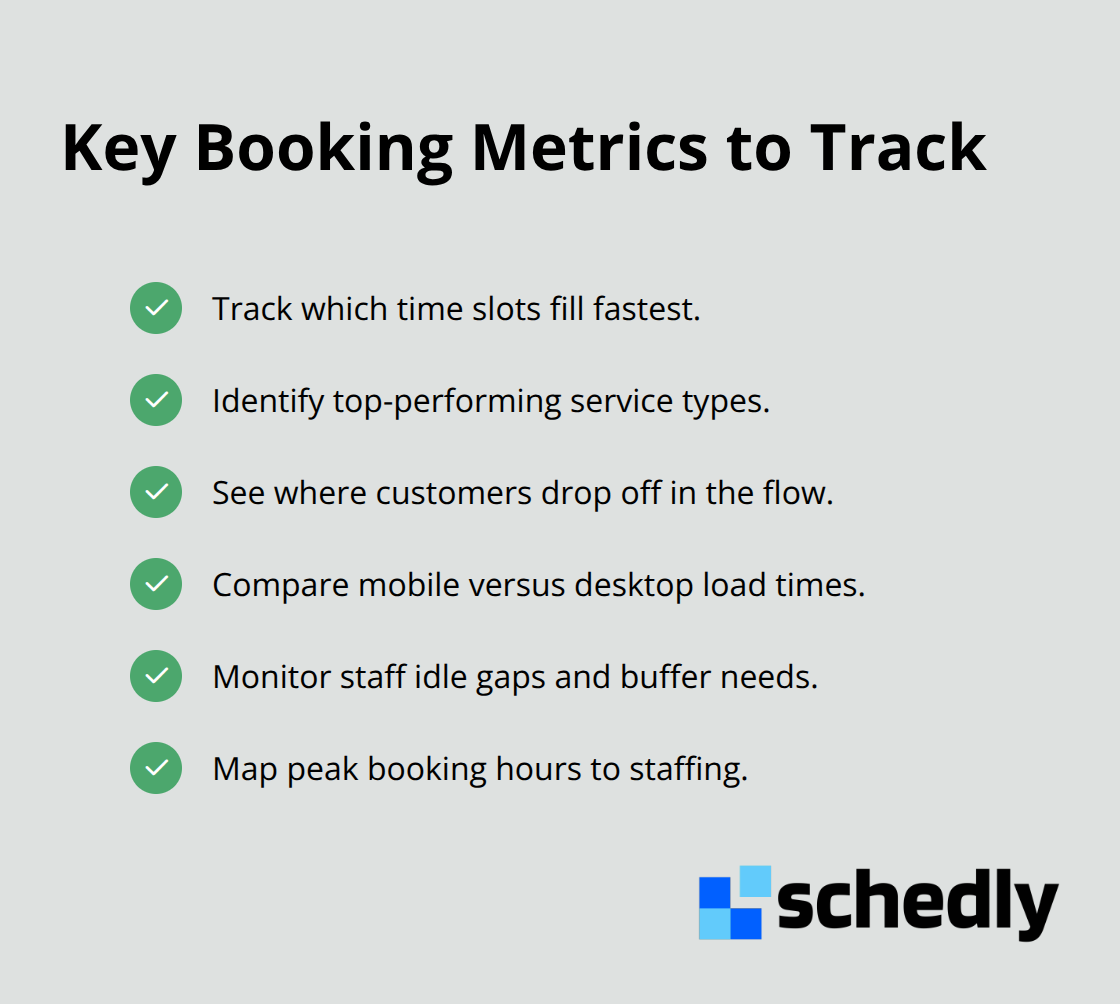
Data-driven optimization completes the equation by identifying where your specific process slows down or loses customers. An analytics dashboard tracks booking metrics to reveal which time slots fill fastest, which service types generate the most bookings, and where customers drop off during the booking flow. If your mobile booking page takes longer to load than desktop, analytics reveal this immediately.
If certain staff members have longer wait times between appointments, you can adjust buffer times or redistribute demand. Analyzing peak booking hours across your business shows when to staff up or run promotions to smooth demand. This data transforms vague assumptions about your booking process into concrete actions. A business that reviews booking analytics weekly spots friction points that invisible manual processes would never catch, then removes them systematically.
Final Thoughts
A faster scheduling system separates businesses that grow from those that lose customers to competitors. The evidence speaks clearly: 70% of consumers prefer booking online, mobile bookings now dominate, and businesses that streamline their scheduling see revenue increases up to 120%. Speed matters because it directly impacts whether customers complete their booking or abandon it halfway through.
Speed and quality work together rather than against each other. When you automate data entry, you eliminate errors. When you synchronize calendars in real time, you prevent the scheduling conflicts that damage trust. When you send automated reminders at the right intervals, you reduce no-shows while respecting customer time. Every system that accelerates your booking process also strengthens the quality of your customer experience.
The booking page is where customer relationships begin, and a fast, seamless experience signals professionalism and builds loyalty before the first appointment happens. Your staff members also benefit-they spend less time on manual scheduling tasks and more time on actual work that matters. Schedly handles the scheduling complexity so you can focus on delivering excellent service.