
Schedly resources
Group Bookings Management: Streamline Scheduling For Big Classes

Group bookings management can make or break a class-based business. When you're running fitness studios, language schools, or workshops, one poorly managed booking can cascade into overbooking, frustrated customers, and lost revenue.
At Schedly, we've seen firsthand how the right systems transform chaos into smooth operations. This guide walks you through proven strategies to handle large groups without the headaches.
Why Group Bookings Drive Real Business Growth
Revenue Multiplies Across Each Time Slot
Group bookings transform how your business generates income. When you fill a yoga class with 12 people instead of 6, you don't simply double your revenue-you spread fixed costs like instructor wages and facility rental across more customers. Each additional participant becomes more profitable because your studio spends the same amount running the class regardless of attendance. A fitness studio with proper group booking systems captures this advantage consistently, turning empty seats into lost profit.
Your Resources Work Harder
Better resource utilization follows naturally when you fill more seats. Your instructors, equipment, and space operate at higher capacity when you eliminate empty spots. A dance studio can run fewer classes to serve the same number of customers, freeing up instructor time for private sessions or other revenue streams. Your facility operates more efficiently too-you're not heating or cooling a room for a handful of people when you could serve 15.
Customers Experience Frictionless Booking
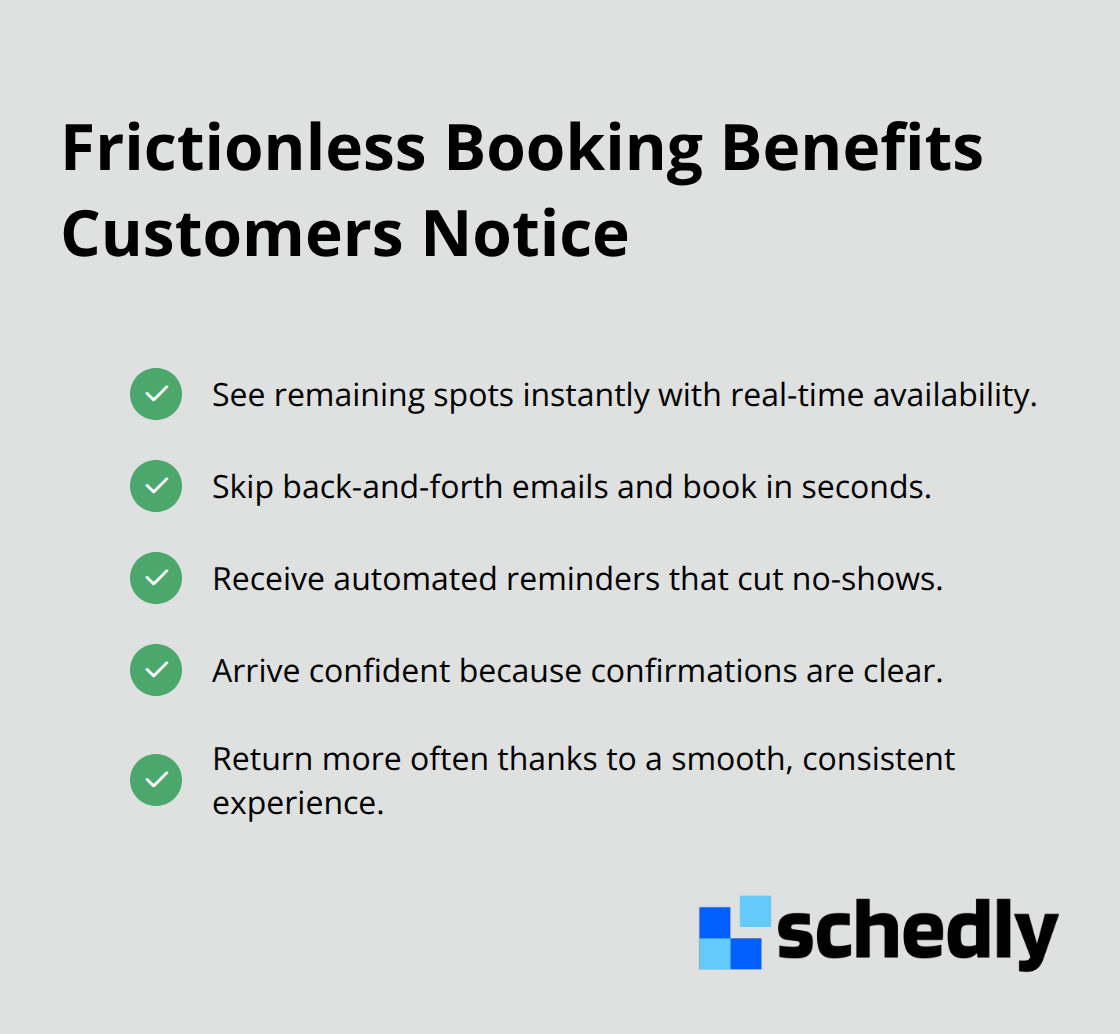
Real-time availability on a booking system shows customers exactly what spots remain, eliminating the back-and-forth emails that waste everyone's time. Automated reminders cut no-shows significantly, which protects your revenue and ensures the experience stays intact when participants actually show up. When customers experience smooth booking and clear communication, they return more often and stay longer.
Retention Compounds Your Growth
This retention effect builds momentum over time. Customers who book into group classes without friction develop stronger habits and loyalty than those who struggle through manual coordination. Retention becomes as valuable as the initial revenue boost-satisfied customers who return repeatedly generate far more lifetime value than one-time bookings ever could.
What Stands Between You and These Benefits
The gap between potential and reality comes down to systems. Manual coordination, spreadsheets, and email chains create bottlenecks that prevent you from capturing these advantages. The next section reveals exactly which operational challenges block most class-based businesses from reaching their full capacity.
What Goes Wrong When You Scale Group Bookings
Overbooking Destroys Customer Trust Instantly
Most class-based businesses hit their first real crisis around 40-50 concurrent bookings per week. That's when spreadsheets fail, email confirmations get lost, and you discover that two customers booked the same spot. Overbooking destroys customer trust instantly-a customer who shows up to a full class gets turned away, and your reputation takes a hit that no discount can repair.
The problem compounds because manual systems lack real-time visibility. When your booking page doesn't sync instantly with your instructor's calendar, you can't see that Sarah already claimed the last yoga mat. You end up confirming bookings that shouldn't exist, then scramble to contact customers and apologize. Studios without automated capacity controls experience no-show rates between 15-25%, but the real damage comes from overbooking that creates customer cancellations and refund requests.
Payment Processing Becomes a Logistical Nightmare
Your payment processing becomes equally chaotic at scale. Collecting payments from 12 people for a group workshop means tracking 12 separate transactions, handling refunds across multiple payment methods, and reconciling who paid what. If one person's card declines, you're stuck deciding whether to hold the entire group or proceed without full payment.
Some platforms support batch charging, but without integration into your booking system, you still manually process each transaction. The coordination nightmare extends to customer communication. Sending reminders to 15 people means 15 separate emails or SMS messages that you have to generate manually, or worse, you forget to send them at all. Automated reminders reduce no-shows by 30-40%, but manual reminders require discipline that disappears once you handle multiple classes daily.
Revenue Leaks From No-Shows and Inconsistent Policies
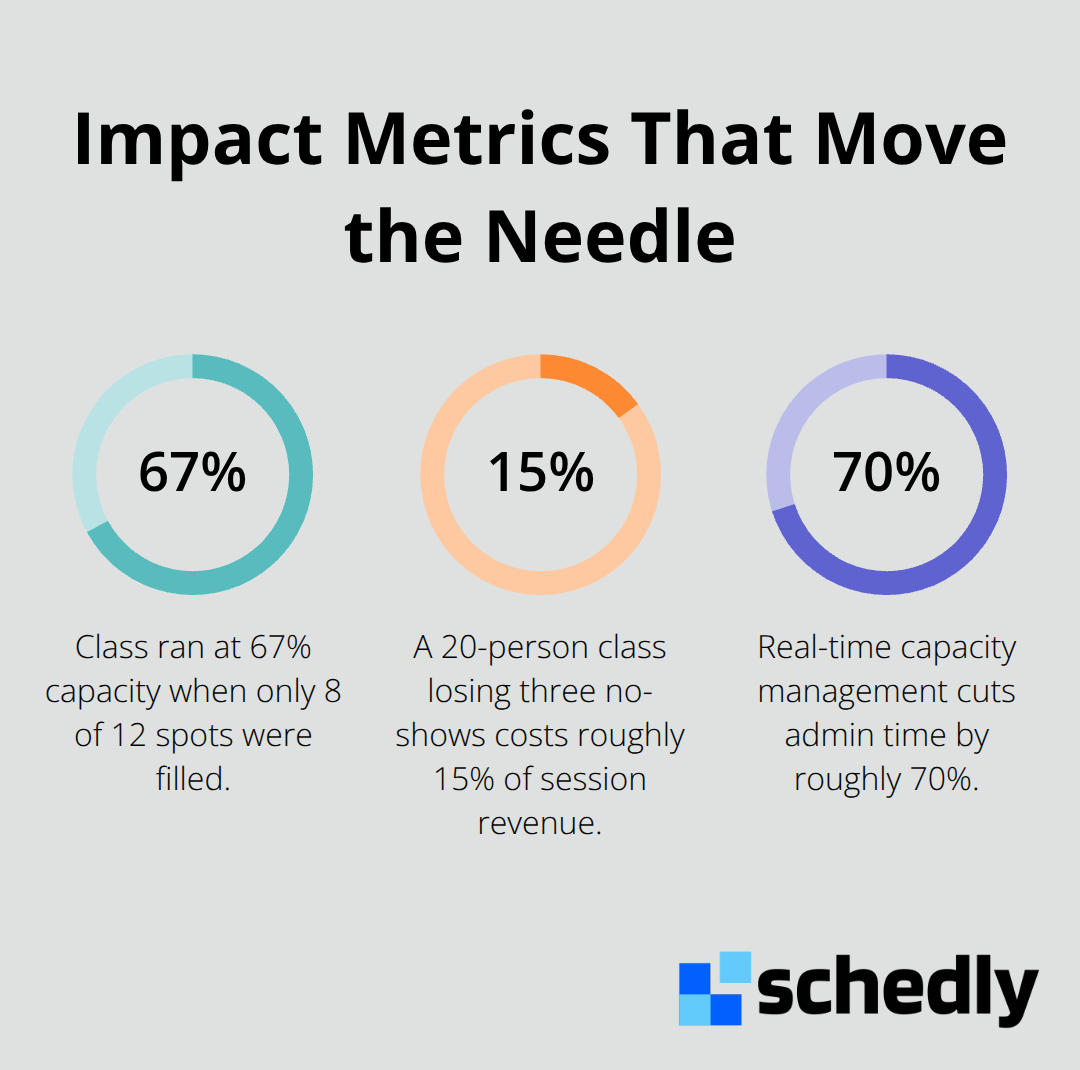
The real cost of these failures isn't just administrative time-it's the revenue you leave on the table. A 20-person class that loses three participants to no-shows costs you roughly 15% of that session's revenue. Multiply that across a week of classes, and you lose thousands annually.
Cancellation policies should protect this revenue, but enforcing them manually creates conflict. You track who canceled within the window, calculate refunds, and process them manually-tasks that generate customer service complaints and consume your time. Without clear automated policies, you make inconsistent decisions that frustrate customers who followed the rules but see others receive exceptions.
Underutilized Classes Hide Scheduling Problems
The gap between your capacity and actual bookings also wastes resources. If you cap a class at 12 but only 8 people book, you run that class at 67% capacity. You don't know whether the time slot is wrong, the price is too high, or the marketing isn't reaching the right audience.
Without booking data and analytics, you can't identify patterns. Platforms that provide attendance trends and demand reports let you shift underperforming classes to better time slots or run limited-time promotions to fill seats. The absence of this data means you repeat the same scheduling mistakes week after week, leaving money on the table while assuming the market simply isn't there. These operational breakdowns reveal why the right software matters-not as a nice-to-have, but as the foundation that separates thriving studios from those stuck in manual chaos.
How Automated Systems Fix Group Booking Chaos
Real-Time Capacity Management Stops Overbooking
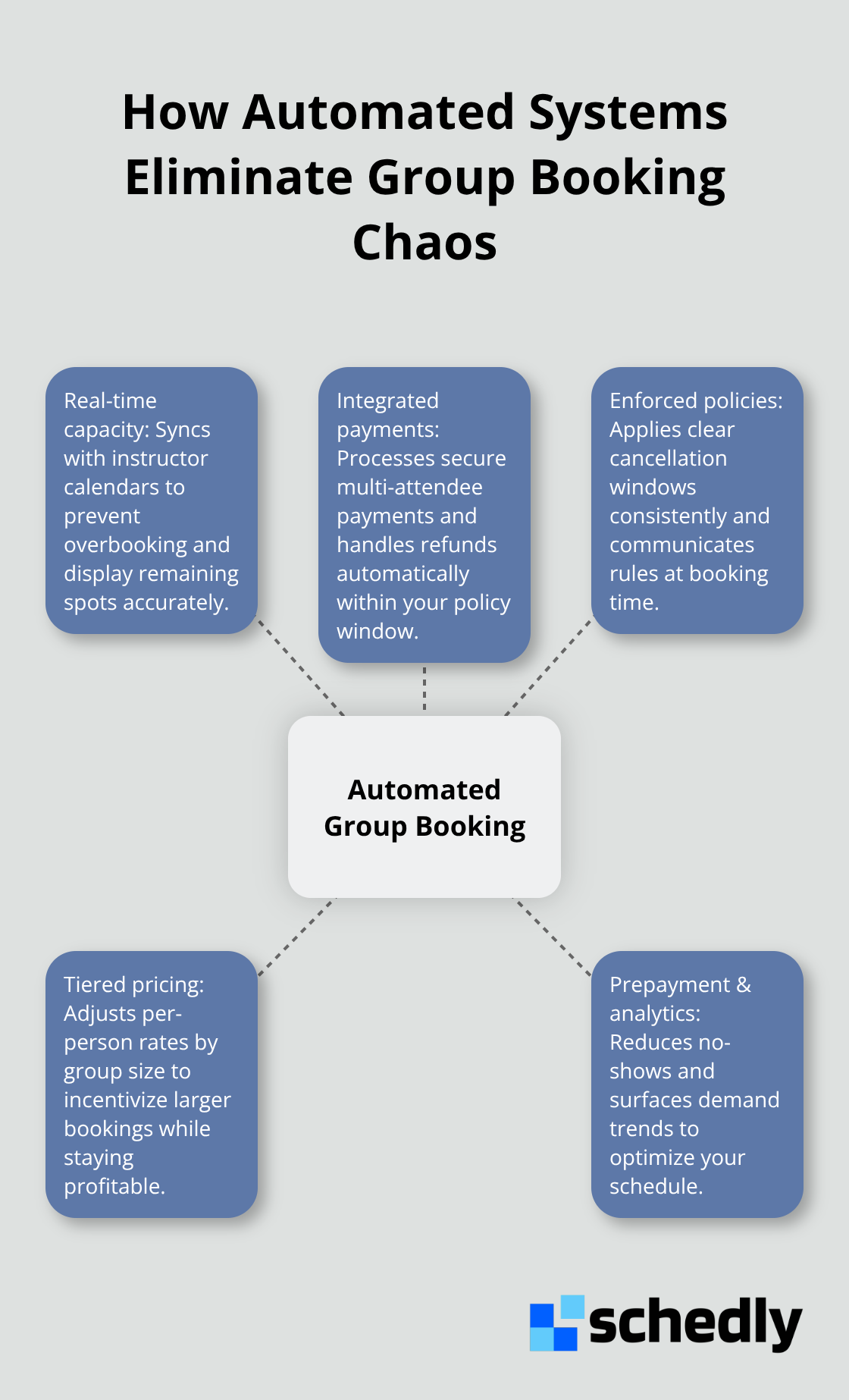
Automated scheduling software with real-time capacity management eliminates the core problems that plague class-based businesses. When your booking system syncs directly with instructor calendars and payment processors, overbooking becomes impossible. Real-time availability shows customers exactly how many spots remain, creating urgency that drives conversions while preventing you from confirming bookings that don't exist. A platform that integrates capacity limits with your pricing structure means you can set maximum class sizes of 12 for yoga but 20 for group workshops, and the system enforces these limits automatically across every booking channel.
Payments Process Automatically Across Multiple Attendees
Payment processing transforms from a logistical nightmare into an automated transaction the moment someone books. Scheduling software handles secure payments through Stripe and PayPal, collecting funds from multiple attendees in a single transaction without manual intervention. When someone cancels, the system automatically processes refunds within your defined cancellation window, eliminating the back-and-forth coordination that wastes your time and frustrates customers. Automated reminders sent via email or SMS to each participant reduce no-shows significantly, protecting the revenue you've already secured.
Clear Policies Make Enforcement Automatic
Clear policies matter more than the software itself, but software makes policies enforceable. Set your cancellation window upfront-say, 48 hours before class-then let the system handle refunds automatically for cancellations within that window. Customers who cancel outside the window receive no refund, and the system communicates this clearly at booking time, eliminating disputes later. This approach removes the emotional labor from enforcing rules and creates consistency that customers respect.
Tiered Pricing Unlocks Hidden Revenue
Group pricing tiers unlock revenue that flat-rate pricing leaves on the table. Charge one price per person for groups under 5, a lower per-person rate for groups of 5-10, and an even lower rate for 11 or more. This structure incentivizes larger bookings while maintaining profitability across different group sizes. Some platforms support tiered discounts and per-person pricing within the same system, so a customer booking for three people in a workshop sees the price adjust automatically based on group size.
Prepayment and Data Drive Better Decisions
Prepayment requirements work particularly well for high-demand classes. Require full payment at booking rather than offering payment plans, and your no-show rate drops because customers who've already paid are far more likely to attend. Track which time slots and class types generate the strongest bookings, then shift underperforming classes to better times or run limited promotions to fill empty seats. Data from your booking system reveals these patterns instantly, replacing guesswork with actionable intelligence that transforms how you schedule classes.
Final Thoughts
Group bookings management transforms from a source of stress into a competitive advantage the moment you move from manual processes to automated systems. Real-time capacity controls prevent double-bookings before they happen, automated payments process instantly across multiple attendees, and clear cancellation policies enforce themselves without disputes. Tiered pricing structures unlock revenue that flat rates leave behind, while prepayment requirements reduce no-shows and protect the income you've already earned.
The real advantage lies in the data you gain from your booking system. Analytics reveal which time slots drive demand, which classes underperform, and where to shift resources for maximum profitability, so you make scheduling decisions based on actual customer behavior rather than guesswork. Automated reminders ensure participants show up, delivering the experience that builds loyalty and repeat bookings. If you're managing bookings through spreadsheets, email chains, or manual payment tracking, you're leaving significant revenue on the table while burning hours on administrative work.
Schedly handles group bookings management with features built specifically for this challenge. The platform automates the entire booking workflow, processes secure payments through Stripe and PayPal, syncs with your calendar automatically, and sends reminders that reduce no-shows. The businesses winning in class-based markets aren't the ones with the most marketing budget-they're the ones who've eliminated operational friction so customers book effortlessly and staff focus on delivering great experiences rather than managing spreadsheets.