
Schedly resources
Healthcare Appointment Scheduling: Streamline Patient Care

Healthcare appointment scheduling is broken in most practices. Patients wait weeks for appointments, staff spend hours managing calls and cancellations, and no-shows drain revenue.
At Schedly, we've seen firsthand how the right scheduling software fixes these problems. Modern tools eliminate friction, cut no-shows, and free your team to focus on patient care instead of administrative chaos.
What's Really Costing Your Practice Time and Money
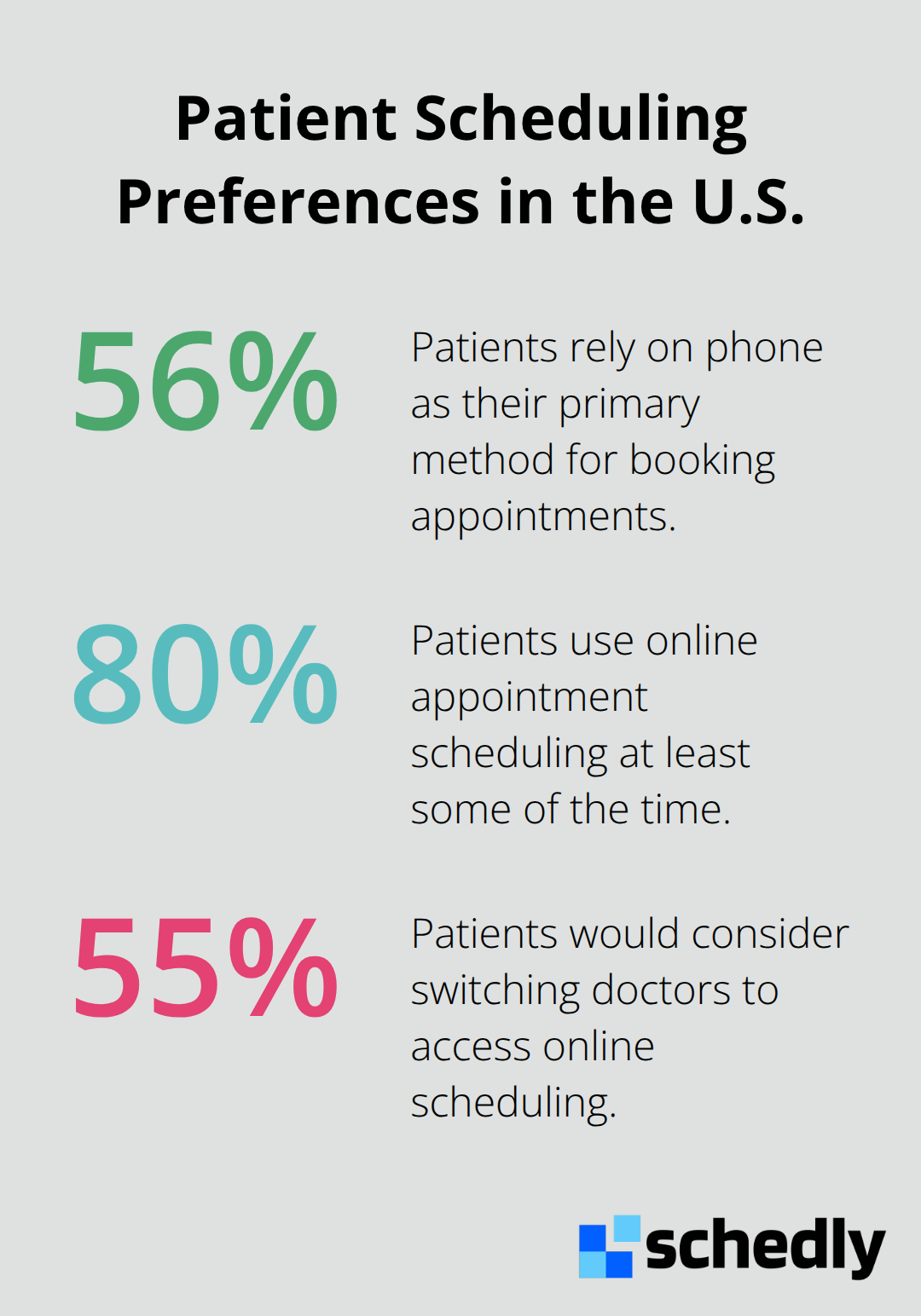
Phone calls still dominate how patients schedule appointments. A 2024 national survey found that 56.4% rely on phone as their primary method. This dependency on phones creates a bottleneck that no practice can ignore.
The No-Show Problem Hits Your Bottom Line
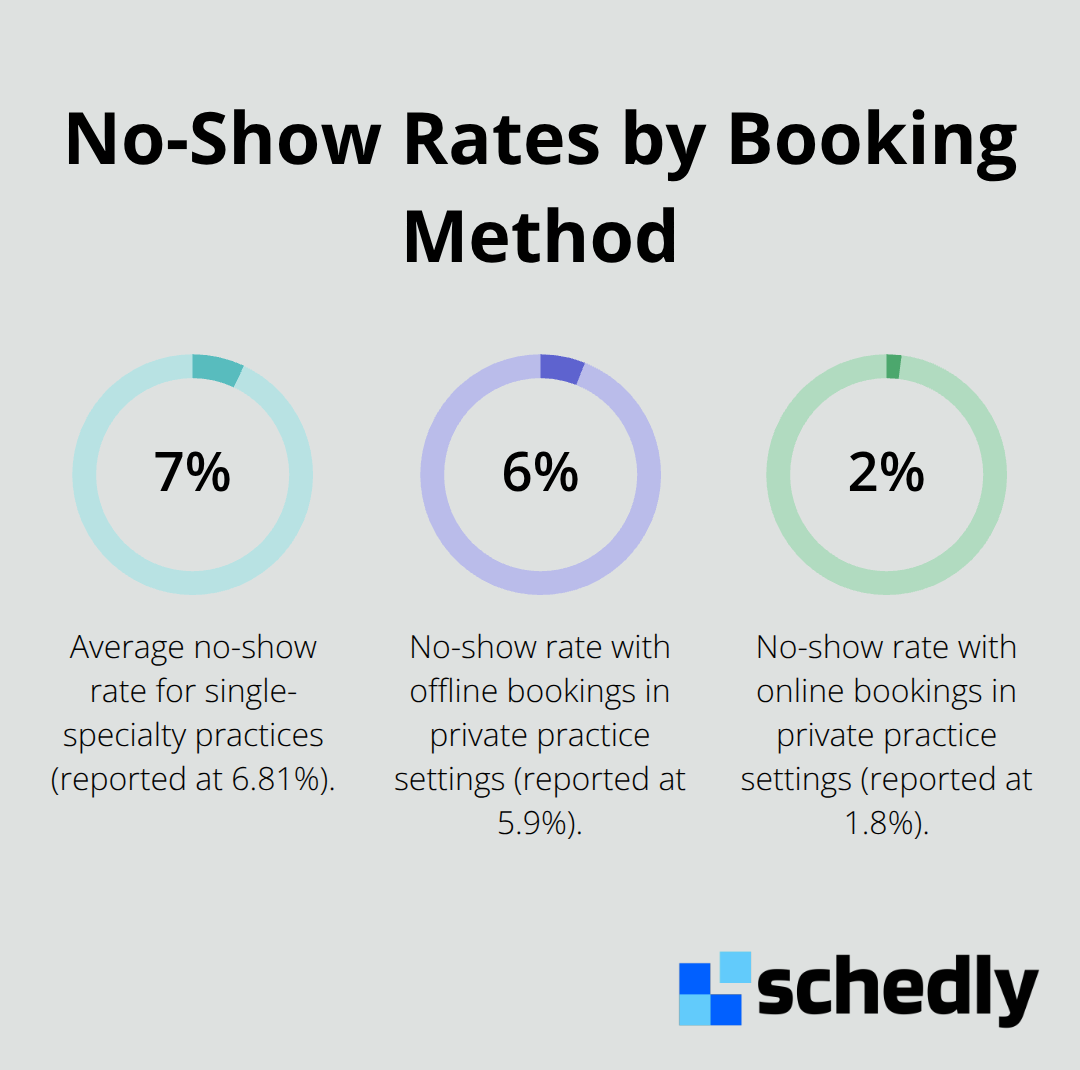
No-shows represent a staggering financial drain across healthcare. The industry loses an estimated $150 billion annually due to missed appointments. A 2023 Medical Group Management Association report found the average no-show rate for single-specialty practices sits at 6.81%, but some practices experience significantly higher rates depending on their patient population and communication strategy. Research from a two-center ophthalmology study published in Frontiers in Digital Health showed that offline bookings had a 5.9% no-show rate in private practice settings, compared to just 1.8% for online bookings. The difference isn't marginal-it's transformative.
Administrative Overhead Consumes Staff Resources
Your front desk staff spend an estimated 50% of their scheduling time on routine call management, confirmation calls, and rescheduling requests. A guided scheduling system can cut this time in half, freeing staff for higher-value work like patient relationship building and clinical support. Yet most practices still rely on paper notes, spreadsheets, and manual calendar management. This creates inefficiency, errors, and staff frustration. When a patient calls to reschedule, staff must check the provider's calendar, handle conflicts, update records, and often call back to confirm. The coordination required across multiple providers and locations makes administrative burden genuinely unsustainable. Staff turnover in medical administration remains high partly because the work feels reactive and repetitive rather than strategic.
Why Modern Scheduling Software Changes Everything
Practices that continue manual scheduling essentially pay staff to manage chaos instead of optimizing care delivery. Online appointment scheduling eliminates these friction points. A 2025 Healthgrades study found that 80% of respondents use online appointment scheduling at least some of the time, and 55% would consider changing doctors to offer this feature. When patients book appointments online (available 24/7), they confirm their own attendance, reduce staff workload, and fill slots that would otherwise remain empty. Automated reminders via email or text dramatically reduce no-shows-research shows that SMS reminders reduce no-show risk significantly in hospital settings. Real-time availability calendars let patients see open slots immediately, eliminating back-and-forth communication. Integration with your electronic medical records means patient information flows seamlessly from scheduling into clinical workflows, reducing duplicate data entry and errors.
The financial impact extends beyond no-show reduction. A private practice that implemented online scheduling saw unused appointment slots drop from 22.7% to 10.3%, and never-booked appointments fell from 8.6% to 1.6%. That same practice experienced a strong inverse relationship between online booking volume and wasted slots (Spearman r = -0.82), meaning higher adoption directly improved resource utilization. These aren't theoretical gains-they represent real revenue recovery and operational efficiency that practices achieve when they move beyond phone-dependent scheduling.
How Modern Scheduling Software Transforms Operations
The 24/7 Booking Advantage Eliminates Phone Dependency
24/7 online booking availability removes the single biggest bottleneck in healthcare scheduling: the phone call. When patients book appointments outside business hours, your staff stops fielding calls about basic scheduling requests. A 2025 Healthgrades study found 80% of patients already use online scheduling, and 55% would switch providers to access this feature. This is no longer a convenience factor-it has become table stakes. Real-time availability calendars show patients exactly which time slots exist, removing the guesswork and back-and-forth that consumes staff time. Patients see open appointments instantly and book without waiting for confirmation calls. Integration with your electronic medical records means the appointment data flows directly into patient records without manual entry, eliminating duplicate work and transcription errors.
The practical outcome proves significant: same-day and next-day slots that normally sit empty fill up because patients can access them after hours when your phone lines are closed. One private practice that implemented online scheduling reduced never-booked appointments from 8.6% to 1.6%, recovering substantial lost revenue. This shift happens because patients no longer depend on your team's availability to complete a booking transaction.
Automated Reminders Slash No-Show Rates and Protect Revenue
Automated SMS and email appointment reminders address the second major revenue drain: no-shows. Research from a two-center ophthalmology study in Frontiers in Digital Health showed private practices experienced 5.9% no-show rates with offline bookings but only 1.8% with online bookings. The difference stems partly from reminder behavior-patients who book online receive automated confirmations, and those who receive SMS reminders show significantly lower no-show risk. The cost of a single no-show averages $150 per slot, and practices lose an estimated $150 billion annually to missed appointments. Automated reminders protect that revenue directly by confirming attendance before appointment times.
Streamlined Workflows Free Staff for Higher-Value Work
The operational transformation extends deeper than filling slots. Practices report 50% reductions in scheduling time when staff use guided scheduling workflows instead of manual calendar management. Your team stops playing phone tag and managing paper notes, instead handling exceptions and complex scheduling scenarios that require human judgment. One private practice saw unused appointment slots drop from 22.7% to 10.3% after implementing online scheduling, with a strong inverse correlation between online booking volume and wasted slots. This correlation matters because it shows the relationship is causal-higher adoption directly improves utilization, not coincidentally.
Staff training takes approximately one hour per scheduler, replacing memorized procedures with standardized workflows that new hires can follow immediately. The financial impact extends across multiple metrics: improved patient satisfaction from convenient access, reduced administrative costs from automation, and higher revenue per provider from better slot utilization. Healthcare practices that continue relying on phone-based scheduling essentially pay staff to manage chaos while leaving money on the table through wasted appointment slots and preventable no-shows.
Yet implementing the right software solution requires more than just selecting a platform. Your practice must establish clear policies and measurement systems to maximize the benefits that scheduling automation offers.
How to Set Up Scheduling Software for Real Results
Selecting scheduling software is just the first step. The real challenge lies in implementation-choosing a platform that protects patient data, training your team effectively, establishing cancellation policies that work, and measuring outcomes that matter. Most practices fail at implementation because they treat software deployment as a one-time event rather than an ongoing operational change.
Prioritize Security and Compliance From Day One
Security cannot be an afterthought. Your scheduling platform must be HIPAA-compliant, encrypt patient data in transit and at rest, and integrate securely with your existing electronic medical records system. Verify that any platform you select undergoes regular security audits and maintains SOC 2 compliance, which demonstrates third-party validation of data handling practices. When evaluating vendors, ask specifically about their encryption standards, backup procedures, and incident response protocols-vague assurances about security are worthless.
Train Your Staff to Adopt New Workflows
Your staff needs clear training on new workflows within the first week of deployment. Allocate approximately one hour per scheduler for initial training, then schedule monthly refresher sessions to reinforce best practices and address questions that emerge during real-world use. Staff adoption determines success more than software features do. If your team views the new system as burdensome rather than helpful, they will revert to phone-based workarounds and undermine the entire implementation.
Make training practical: show schedulers exactly how the system reduces their workload, demonstrate real-time calendar features, and let them practice with test bookings before going live. Your team responds more enthusiastically when they understand how the platform eliminates frustration rather than creates additional work.
Establish Clear Cancellation and Rescheduling Policies
Cancellation and rescheduling policies must be explicit and enforced consistently. Define your cancellation window (typically 24 hours before appointment time), establish whether cancellations trigger automatic rebooking attempts, and decide how your practice handles last-minute changes. Without clear policies, your team makes inconsistent decisions that confuse patients and waste staff time on exceptions. A written policy distributed to patients at booking reduces friction and sets expectations upfront.
Measure What Matters to Track Real Improvement
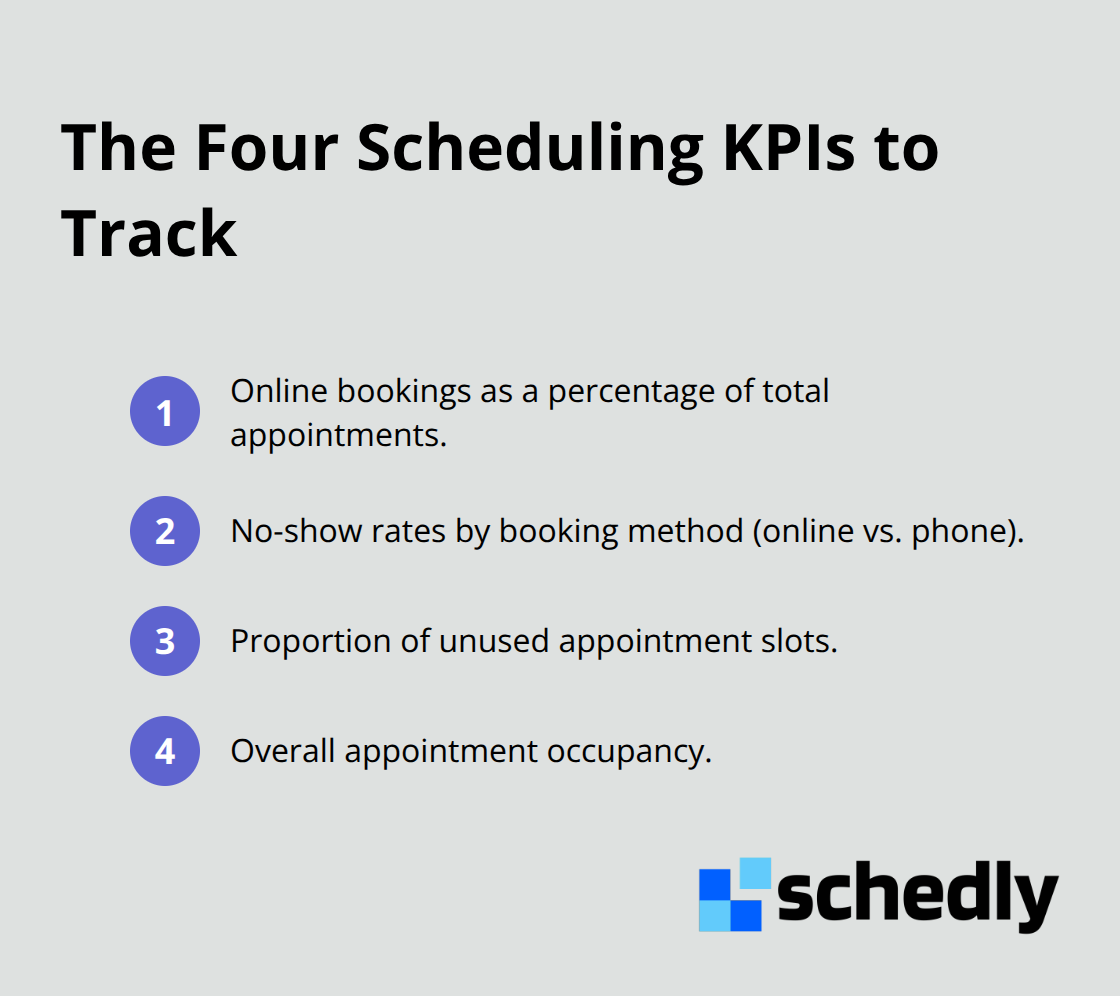
Measurement separates practices that genuinely improve from those that merely adopt new software. Track four core metrics starting on day one: the percentage of online bookings relative to total appointments, no-show rates broken down by booking method (online versus phone), the proportion of unused appointment slots, and overall appointment occupancy.
Your practice should expect similar gains, though the exact timeline depends on adoption rates and patient population. Monitor these metrics monthly and share results with your team to maintain engagement and demonstrate impact. Set realistic targets: if your current no-show rate sits at 8%, try reaching 5% within three months and 3% within six months as automated reminders and patient confirmation improve adherence.
Calculate the financial value of improvements explicitly. If you recover 15 previously wasted slots per week at an average revenue of $150 per appointment, that represents $117,000 in annual revenue recovery. Staff members respond more enthusiastically to implementation when they see concrete financial outcomes and understand how the system directly benefits the practice and patient experience.
Final Thoughts
Healthcare appointment scheduling software transforms how medical practices operate, and the evidence supporting this shift is undeniable. Practices that implement modern scheduling solutions recover substantial revenue through reduced no-shows and eliminated wasted slots, while staff transition from reactive call management to meaningful patient relationships. A private practice implementing online scheduling recovered over $117,000 annually by reducing wasted appointment slots from 22.7% to 10.3%, and no-show rates dropped from 5.9% to 1.8% when patients booked online instead of by phone. The competitive advantage belongs to practices that meet patient expectations for 24/7 access and streamlined booking experiences.
Implementation requires genuine commitment to security, staff training, clear policies, and consistent measurement of outcomes that matter. Your team needs approximately one hour of initial training per scheduler, and you should track four core metrics from day one: the percentage of online bookings, no-show rates by booking method, unused appointment slots, and overall appointment occupancy. These steps separate practices that see real improvement from those that deploy software without capturing its full potential.
We at Schedly understand these operational challenges firsthand and built our platform to address them directly. Our solution automates the entire booking process with 24/7 online scheduling, secure payment processing, and seamless integration with your existing systems. Start your transformation at Schedly and reclaim the time and revenue your practice deserves.