
Schedly resources
Healthcare Scheduling Platform: Streamlined Care Delivery
Healthcare facilities waste countless hours on manual scheduling. Staff spend time juggling shifts, patients wait on hold for appointments, and no-shows pile up because confirmations never reach them.
A healthcare scheduling platform changes this. At Schedly, we've seen firsthand how the right system eliminates these friction points, cutting administrative work while improving how care actually gets delivered.
Why Healthcare Scheduling Still Breaks Down
The Phone Bottleneck Wastes Staff Time
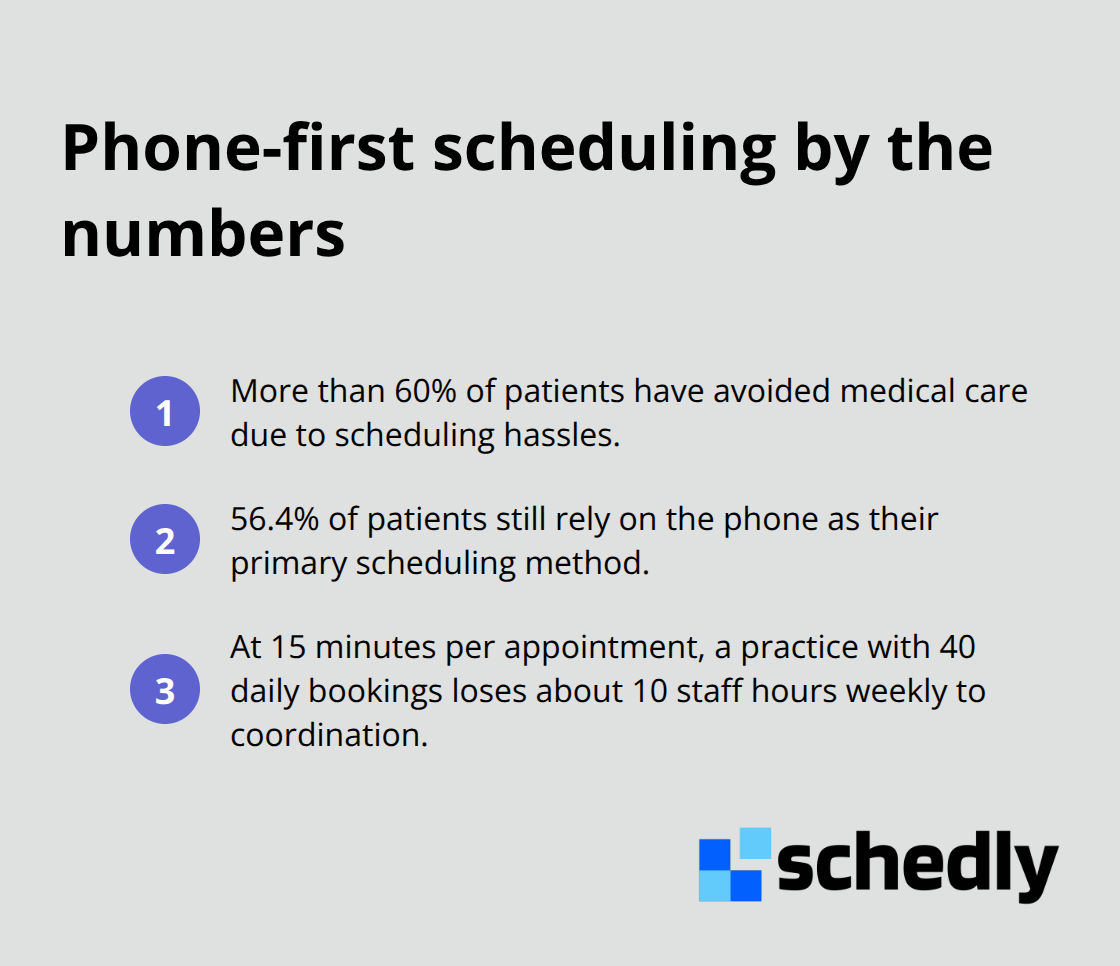
Manual scheduling in healthcare creates predictable, measurable problems that compound daily. More than 60% of patients have avoided medical care due to scheduling hassles, and that statistic reflects a system fundamentally misaligned with how people expect to book care. Phone-based scheduling dominates: 56.4% of patients still rely on phone as their primary scheduling method, creating a massive access bottleneck.
Errors Multiply Across Manual Systems
Errors compound this waste significantly. Double-bookings happen when staff manually check multiple calendars. Patient details get entered incorrectly when collected over the phone. Shift coverage gaps appear because no system tracks staff availability across multiple locations. Healthcare organizations then discover they have unused appointment slots-meaning revenue simply evaporates.
Staff Burnout Accelerates Without Automation
Staff burnout accelerates in this environment. Schedulers repeat the same information collection endlessly. Providers check manually whether rooms and equipment are available. Nurses manage shift swaps through text chains instead of systems. A similarly sized hospital without modern scheduling needed four full-time staff to handle what another facility managed with just 1.75 FTE using better tools.
No-Shows Drain Revenue at Scale
No-shows drain resources at scale. The healthcare industry loses an estimated $150 billion annually to no-shows. When patients book appointments without confirmations, they forget or cancel last-minute. When staff cannot send automated reminders, slots stay empty. The operational cost compounds: a single wasted appointment slot at $150 represents $117,000 in annual revenue loss if that pattern repeats 15 times per week across a facility.
Modern Platforms Offer a Clear Path Forward
These breakdowns reveal why healthcare organizations increasingly turn to scheduling platforms that automate booking, eliminate manual coordination, and send confirmations automatically. The shift from phone-dependent systems to digital solutions addresses each of these pain points directly-and the financial impact justifies the investment immediately.
How Modern Platforms Transform Healthcare Scheduling
Online Booking Recovers Staff Capacity Immediately
Scheduling platforms eliminate the manual coordination that wastes staff time and frustrates patients. When patients book appointments online without calling, healthcare organizations immediately recover hours of staff capacity. A facility handling 40 daily bookings through phone scheduling loses roughly 10 hours weekly to administrative work-time that shifts directly to patient care when digital booking takes over. Platforms automate the entire intake process, pulling patient information once and storing it securely rather than re-entering details across multiple systems. Staff no longer coordinate availability across scattered calendars or manage shift swaps through text messages.
Real-Time Availability Eliminates Back-and-Forth Delays
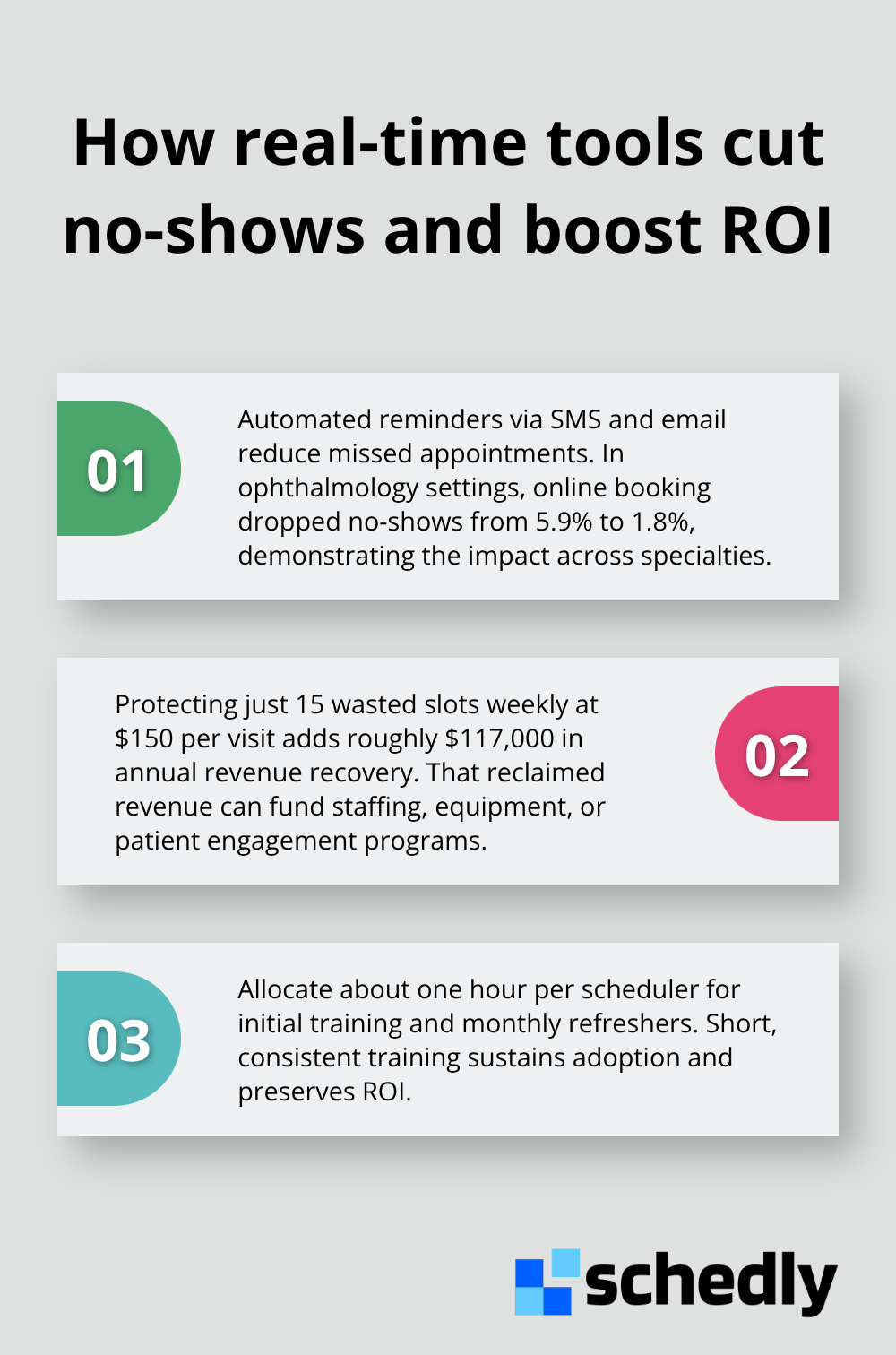
Real-time availability calendars show patients exactly which slots are open, eliminating back-and-forth calls and the scheduling errors that create double-bookings or missed appointments. Automated reminders sent via SMS and email dramatically reduce no-shows. In ophthalmology settings, online booking reduced no-shows from 5.9% to 1.8%. That single improvement protects substantial revenue-recovering just 15 wasted slots weekly at $150 per appointment generates roughly $117,000 in annual revenue recovery.
System Integration Removes Data Silos
Integration with existing healthcare systems removes a critical friction point. When scheduling platforms connect directly to electronic medical records and practice management systems, patient data flows automatically between tools without duplicate entry or manual reconciliation. Staff access patient history, insurance details, and appointment instructions instantly during the booking process, reducing disruptions and improving care quality. Compliance becomes automatic rather than manual-platforms track licenses, certifications, and expiration dates while enforcing HIPAA requirements through encryption and security audits.
Multi-Location Networks Standardize Care Delivery
Multi-location healthcare networks gain particular value here: centralized scheduling enables standardized processes and consistent care delivery across facilities while maintaining local control over specific requirements. Analytics dashboards provide visibility into scheduling patterns, no-show rates by booking method, unused appointment slots, and occupancy rates. These metrics reveal exactly where revenue leaks exist and which interventions work.
Scheduling Time Drops Dramatically with Automation
Healthcare organizations using modern platforms report scheduling time dropping from 15 minutes per appointment to 3 minutes, freeing schedulers for higher-value patient interactions and reducing the full-time staffing needed to manage appointments. The combination of automation, integration, and real-time visibility transforms scheduling from a bottleneck into a competitive advantage-one that directly impacts which healthcare providers patients choose and which facilities retain their best staff.
What Metrics Actually Matter for Healthcare Scheduling
Focus on Four Core Metrics That Reveal Real Performance
Healthcare organizations track the wrong metrics. Call volume and average scheduling call duration tell nothing about whether scheduling improves patient outcomes or protects revenue. The scheduling platforms that drive real results focus on four concrete metrics from day one: share of online bookings, no-show rate by booking method, unused appointment slots, and overall appointment occupancy. These numbers reveal exactly where money leaks and which interventions work. When a facility tracks that online bookings account for only 20% of appointments while phone bookings dominate, staff immediately understand why capacity remains constrained. When data shows no-show rates varying between 5.5% and 50% in the U.S. healthcare system, with a global average of 23.5%, leadership recognizes the challenge as a local problem requiring immediate action.
Unused Slots Represent Pure Revenue Loss
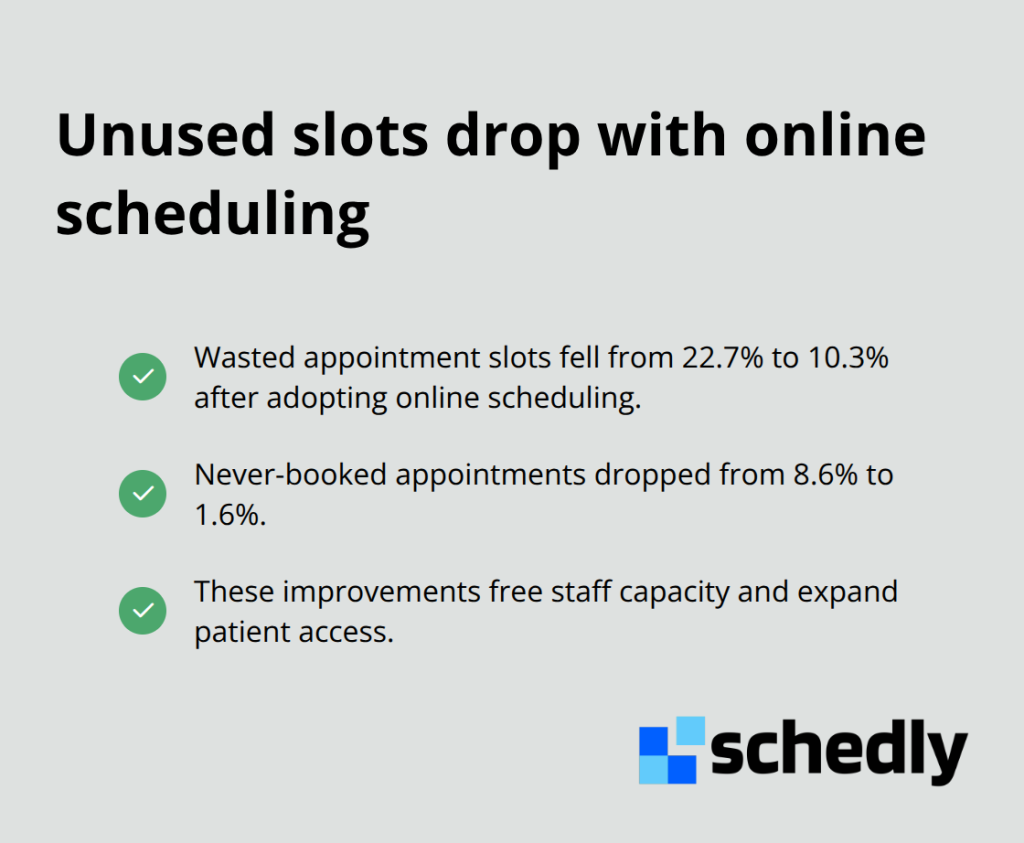
Unused appointment slots represent pure revenue loss-a case study tracking this metric found wasted slots dropped from 22.7% to 10.3% after adopting online scheduling, while never-booked appointments fell from 8.6% to 1.6%. That single improvement translates directly to staff capacity recovered and patient access expanded.
Compliance Tracking Eliminates Manual Audits
Compliance tracking becomes automatic instead of manual-platforms monitor license expiration dates, certification renewals, and shift regulations across all locations simultaneously, eliminating the spreadsheet audits that consume hours monthly. Payment processing integration removes another friction point entirely. When patients book appointments and pay securely through platforms (using Stripe or PayPal), revenue captures immediately rather than sitting in accounts receivable limbo. Staff spend zero time chasing payments or processing insurance verifications manually.
Real-Time Visibility Drives Operational Excellence
The combination of real-time visibility into scheduling performance, automated compliance monitoring, and integrated payment processing creates the operational foundation that drives better patient outcomes-not through theoretical improvements, but through freed-up staff capacity, reduced no-shows, and protected revenue that facilities reinvest directly into patient care. Healthcare networks that implement these metrics-driven approaches recover capacity, reduce administrative friction, and align their scheduling operations with actual patient demand rather than guesswork.
Final Thoughts
Healthcare scheduling platforms eliminate the friction that drains staff time and frustrates patients. When facilities move from phone-dependent systems to digital booking, they recover hours of administrative capacity, reduce no-shows measurably, and protect revenue that would otherwise evaporate through wasted appointment slots. Staff redirect their energy toward actual patient care instead of answering phones and coordinating availability.
The financial impact justifies implementation immediately. A facility recovering just 15 unused slots weekly at $150 per appointment generates approximately $117,000 in annual revenue recovery, while scheduling time drops from 15 minutes to 3 minutes per appointment, reducing staffing needs while capacity increases. Compliance becomes automatic rather than manual, and real-time analytics reveal exactly where scheduling bottlenecks exist and which interventions work.
Healthcare networks that implement modern scheduling solutions gain competitive advantage because patients increasingly expect online booking and will switch providers to access it. Staff retention improves when systems eliminate repetitive administrative work, and multi-location organizations standardize processes while maintaining local control. Schedly removes the manual coordination that wastes time and frustrates patients, letting healthcare providers focus on delivering excellent care.