
Schedly resources
How Poor Reminders Damage Your Reputation
A single missed appointment reminder can cost you a customer. When client communication gaps go unaddressed, no-shows spike and your reputation takes a hit.
At Schedly, we've seen businesses lose thousands in revenue because their reminder systems were outdated or unreliable. The good news: automated reminders fix this problem entirely.
Why Your Current Reminders Are Costing You Customers
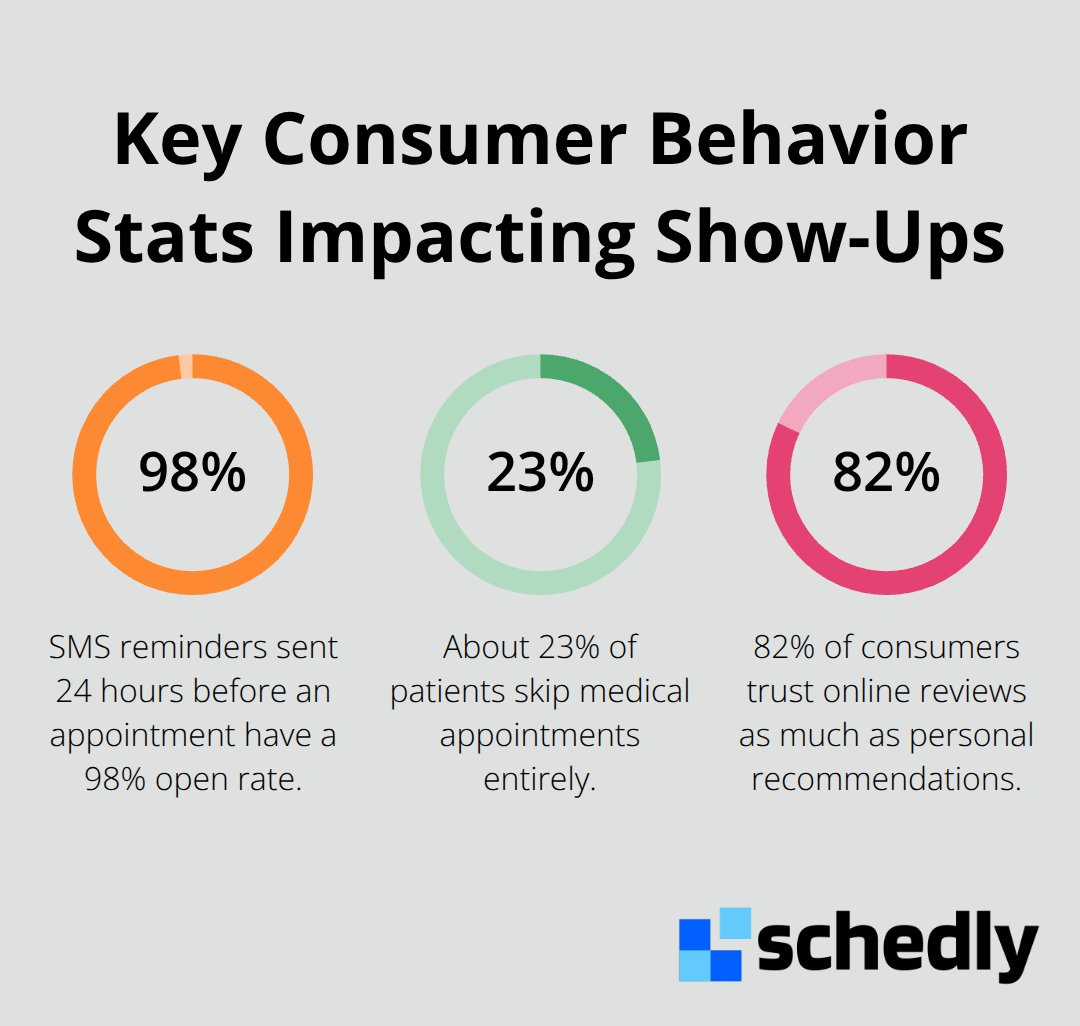
Missed appointments represent pure revenue loss. When a client doesn't show up, that time slot vanishes forever. You can't resell it, and your staff still gets paid. About 23% of patients skip medical appointments entirely. In service industries like salons, fitness, and healthcare, no-show rates often hover between 20–30%, which translates to thousands in lost revenue annually for a typical business. The worst part isn't just the immediate financial hit-it's what happens next. Customers who miss appointments often feel guilty, and businesses that fail to remind them appear negligent. This creates a trust gap that's hard to repair. Poor reminders signal disorganization and indifference, making customers question whether you actually value their business.
The Domino Effect of Forgotten Customers
When reminders are weak or nonexistent, customers feel invisible. They miss appointments, feel embarrassed, and often don't return. The cost extends beyond that single lost slot. You've already invested in acquiring that customer through marketing, sales conversations, or referrals. A single no-show erases that investment. Most businesses still rely on manual phone calls or send reminders too close to appointment time. An SMS reminder sent 24 hours before an appointment has a 98% open rate and gets read within minutes, while email reminders hover around 20–30% open rates. This gap matters enormously.
How Bad Reminders Tank Your Reputation Online
Negative online reviews frequently mention poor communication and missed appointment confirmations. When customers feel forgotten or receive confusing reminder messages, they post about it publicly. A business with inconsistent reminders attracts complaints on Google, Yelp, and social platforms that explicitly highlight disorganization. Word-of-mouth referrals dry up when existing customers don't feel valued enough to receive clear, timely communication. The reputation damage compounds because potential customers read these reviews before booking. They assume if you can't send a simple reminder, you probably can't deliver quality service either. This perception directly impacts your ability to attract new clients, making it harder to offset the revenue lost to no-shows.
The solution isn't complicated-it's automated. A well-designed reminder system transforms how customers experience your business, and the next section shows exactly how.
What Poor Reminders Actually Cost Your Business
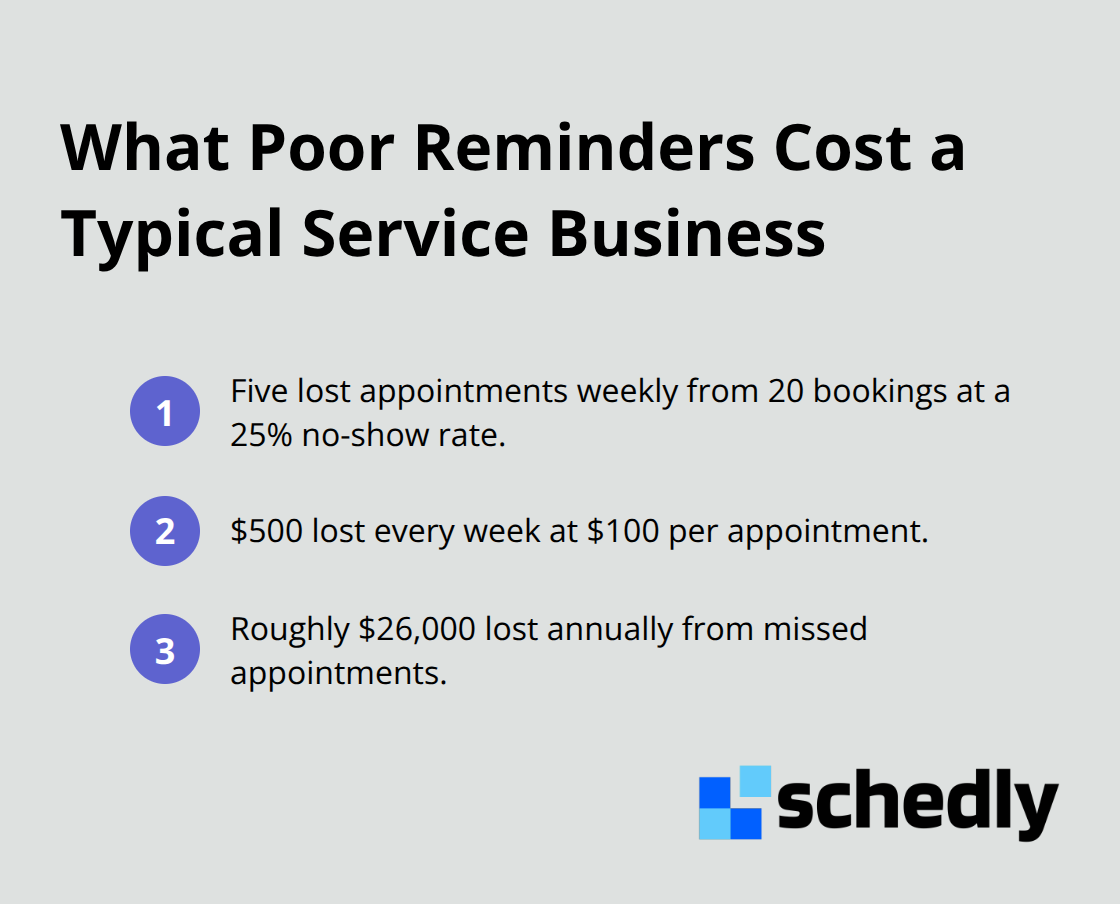
No-shows aren't just inconvenient scheduling gaps-they're direct revenue losses that compound over time. A typical service business with 20 appointments per week at a 25% no-show rate loses five customer slots weekly. If the average appointment generates $100 in revenue, that's $500 gone every week, or roughly $26,000 annually. Staff still arrive and get paid, so the loss is pure.
The Hidden Acquisition Debt
The real damage extends far beyond the immediate lost slot. Customer acquisition costs money through marketing, sales conversations, or referral incentives. A typical business spends $50-200 to acquire a single customer depending on industry. When that customer misses an appointment due to poor reminders and never returns, you've wasted that entire acquisition investment. Most customers who no-show once don't come back-they feel embarrassed or assume the business doesn't value their time. Replacing them requires spending that acquisition cost again, making poor reminders an expensive cycle. Businesses that actively manage no-shows through reliable reminder systems reduce customer churn and dramatically improve lifetime value. The numbers show it: companies using automated reminders see 20-30% higher retention rates compared to those relying on manual follow-ups or outdated systems. This gap directly impacts profitability because retaining existing customers costs roughly 5-25% of what acquiring new ones does. When reminders fail, you're forced into constant acquisition mode just to maintain revenue.
Why Online Reputation Suffers in Real Time
Customers post about poor communication immediately. A single bad reminder experience-a forgotten confirmation, a message sent too late, or confusing rescheduling instructions-generates negative reviews on Google, Yelp, and Facebook. These reviews stay visible for months and influence potential customers before they ever contact you. Research shows 82% of consumers trust online reviews as much as personal recommendations. When your Google Business profile displays complaints about communication failures, you're competing against your own reputation. Worse, negative reviews about scheduling and reminders spread through word-of-mouth faster than positive ones. Existing customers tell friends about the frustration of unclear appointment confirmations, and those friends choose competitors instead. The referral pipeline dries up because your current customers don't feel confident recommending a business with communication problems. Repairing this reputation damage takes months of consistent, flawless service and positive reviews to counterbalance. The cost of managing this reputation damage-through review responses, improved systems, and lost potential referrals-far exceeds the initial investment in reliable reminder automation.
How Poor Reminders Erode Customer Trust
When reminders arrive late or contain confusing information, customers question whether you respect their time. A vague message about appointment details leaves them uncertain about what to prepare or where to go. Customers who receive unclear reminders often arrive unprepared or skip the appointment entirely, blaming the business for poor communication. This erosion of trust happens quickly and spreads faster than you'd expect. One frustrated customer tells five others about their bad experience, and those five people avoid your business without ever giving you a chance. The reputation damage compounds because potential customers read these negative experiences online before they contact you. They assume if you can't send a clear reminder, you probably can't deliver quality service either. This perception directly impacts your ability to attract new clients, making it harder to offset the revenue lost to no-shows.
The solution isn't complicated-it's automated. A well-designed reminder system transforms how customers experience your business and protects your reputation before damage occurs.
Automated Reminders Stop No-Shows Before They Happen
The difference between a 20% no-show rate and a 5% no-show rate isn't luck-it's systematic reminder design. Automated reminder systems work because they reach customers through channels they actually use, at times when they're most likely to respond. SMS reminders sent 24 hours before an appointment demonstrate the lowest no-show rate at 19%, while a follow-up SMS sent 1-2 hours before the appointment catches last-minute cancellations before they happen. Email reminders operate differently-they hit around 20-30% open rates but give you space to include detailed appointment information, cancellation policies, and rescheduling links that SMS can't accommodate. The most effective approach combines both channels: send an email 3-7 days before the appointment with full details and options, follow with SMS 24 hours out for confirmation, then send a final SMS 1-2 hours before as a last-minute reminder. This three-touch strategy reduces no-shows by up to 38% according to research on multi-channel reminder effectiveness. Customers don't miss appointments because they're irresponsible-they miss them because they genuinely forgot. A well-timed SMS reminder arriving when someone is actually checking their phone works far better than a single email buried in their inbox or a phone call they can't answer during work hours.
What Personalization Actually Does to Cancellation Rates
Generic reminder messages feel impersonal and often get ignored or deleted. A message that includes the customer's name, the specific service they booked, the exact time, location details, and a one-click confirmation option dramatically increases engagement. Personalized reminders also reduce friction-customers who receive a link they can tap to confirm without calling or emailing are far more likely to respond. This responsiveness matters because it gives you visibility into who's actually coming. When customers confirm their appointments, you can immediately fill cancellations or adjust staffing accordingly. Businesses that track confirmation rates in real-time can reduce scheduling chaos and optimize labor costs. The data shows customers appreciate this level of attention: businesses using personalized reminders see higher retention rates compared to those relying on manual follow-ups. This retention advantage compounds because existing customers cost 5-25% less to serve than acquiring new ones. Personalization also signals professionalism and care-customers feel valued when a business takes the time to address them by name and provide relevant details rather than sending a template message to everyone.
Automation Frees Your Team to Focus on Service
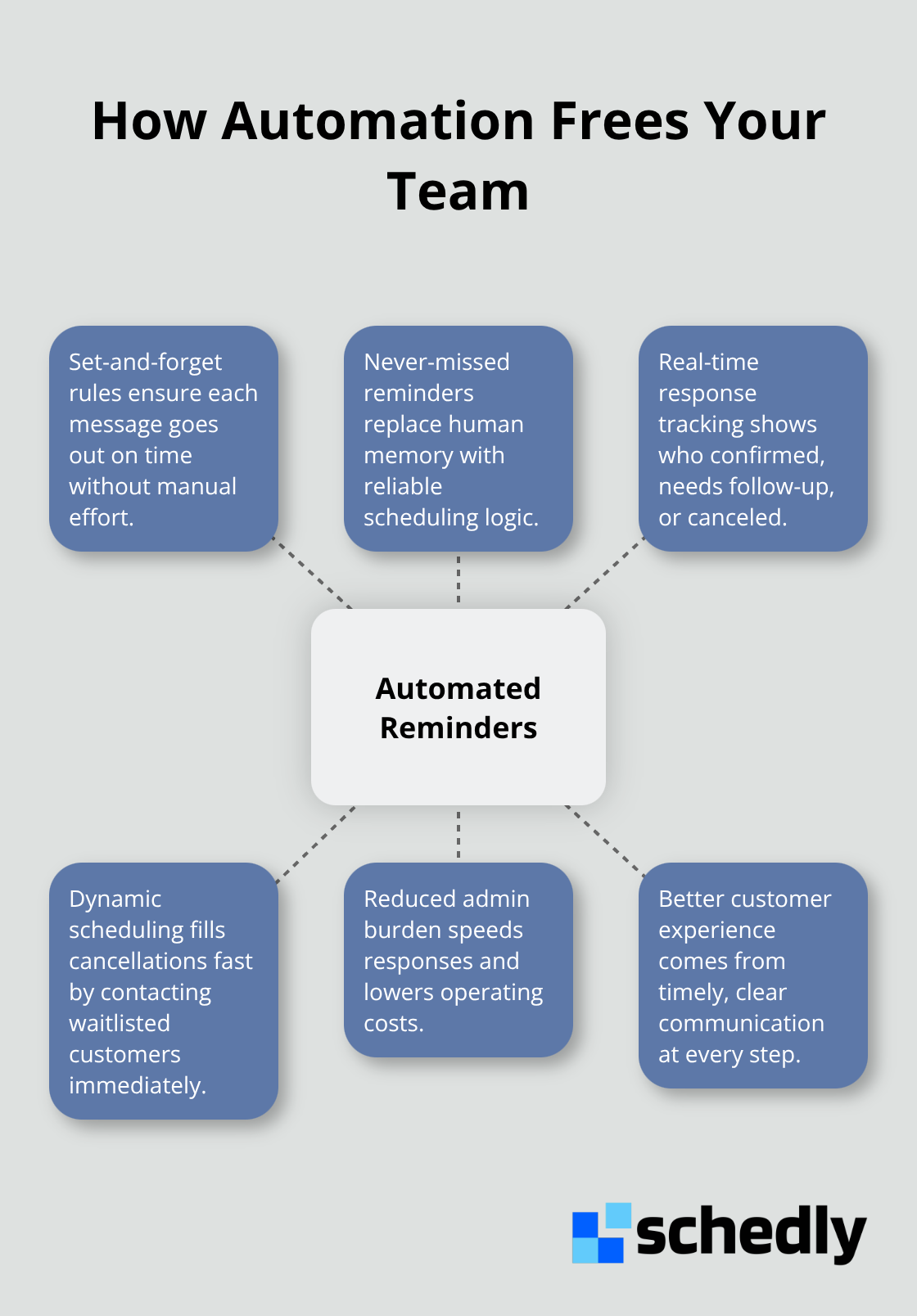
Manual reminder systems require staff to send emails, make phone calls, or text messages individually. This work is repetitive, error-prone, and steals time from actual customer service. Automated systems eliminate this burden entirely. Set up your reminder rules once-specify when each message goes out, what it contains, and which customers receive it-and the system handles everything. This automation also means reminders never get forgotten. A staff member doesn't have to remember which customers need a reminder today; the system sends it automatically.
Final Thoughts
Poor reminders directly damage your bottom line through lost revenue, wasted staff time, and customers who never return. Client communication gaps compound into reputation damage that takes months to repair, while your business hemorrhages thousands annually from no-shows and replacement customer acquisition costs. Frustrated customers post about forgotten confirmations online, and word-of-mouth referrals dry up because existing customers don't feel valued enough to recommend you.
Automated reminder solutions eliminate these problems through multi-channel notifications that reach customers when they actually check their phones. Personalized messages with appointment details and one-click confirmation options reduce no-shows while signaling professionalism and care. Real-time response tracking gives you visibility into who's coming, allowing you to fill cancellations immediately and optimize staffing without manual follow-ups stealing your team's time.
Businesses that prioritize automated reminders protect their reputation before damage occurs and retain existing customers at far lower cost than acquiring new ones. Schedly automates the entire reminder process with multi-channel notifications, personalized messaging, and real-time tracking across healthcare, salons, and real estate. Stop losing customers to poor reminders and start protecting your reputation today.