
Schedly resources
How Quick Confirmations Prevent Last-Minute Cancellations
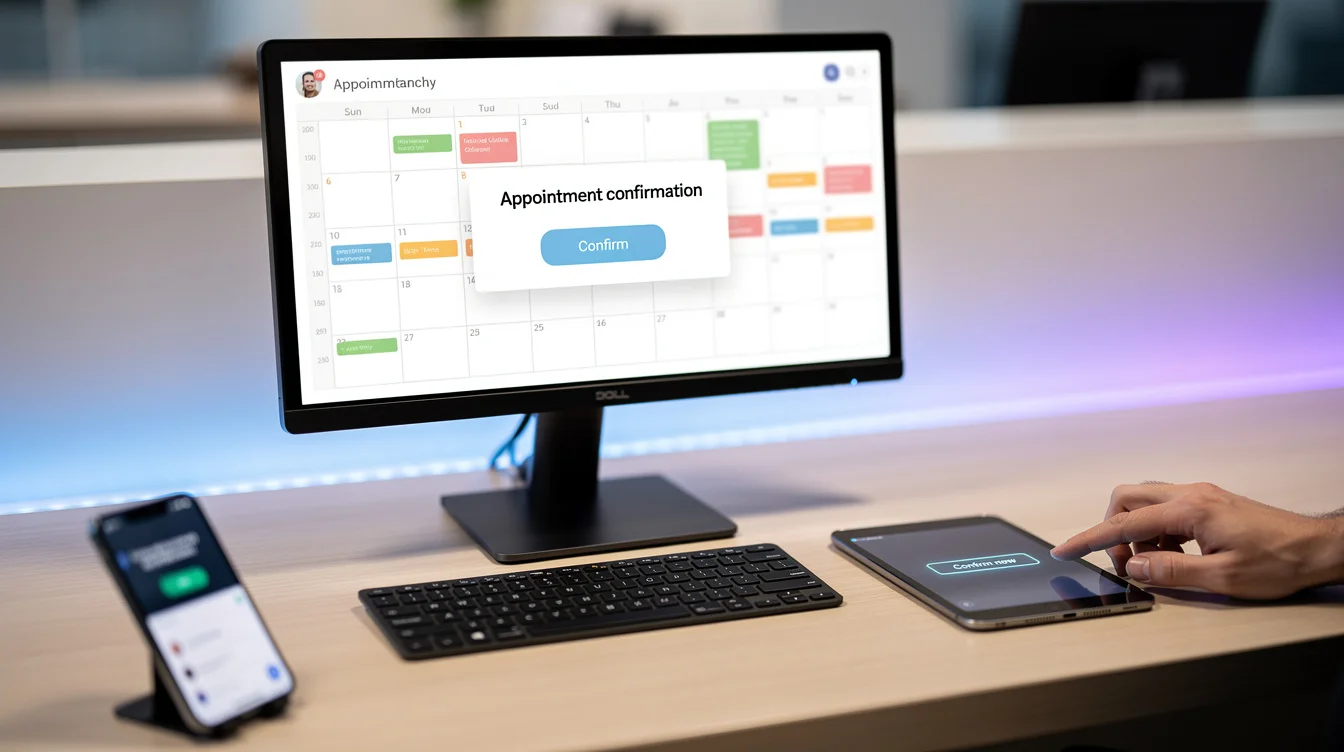
A no-show costs you money, time, and customer trust. When someone books an appointment and then vanishes, your team loses revenue, your schedule falls apart, and your reputation takes a hit.
At Schedly, we've seen firsthand how appointment follow-up automation changes this. Instant confirmations create psychological commitment, reduce confusion, and keep bookings front and center in customers' minds.
The Real Financial Damage of Last-Minute Cancellations
A no-show costs you money, time, and customer trust. When someone books an appointment and then fails to appear, your team loses revenue, your schedule falls apart, and your reputation takes a hit.
Lost Revenue That Never Returns
Last-minute cancellations hit your bottom line harder than most businesses realize. When a client cancels within 24 hours or doesn't show up, you lose not just the appointment fee but also the opportunity to fill that slot with another paying customer. Research shows that lost revenue from no-shows costs US healthcare providers about $150 billion annually, with an average loss of roughly $200 per missed appointment. Outside healthcare, businesses report direct revenue loss from no-shows. For service-based businesses like fitness studios, salons, and consulting firms, this damage compounds because each time slot has a fixed capacity and a fixed cost. A therapist with a 4 PM opening that goes unfilled generates zero revenue while still covering overhead. That's money that walks out the door and never comes back. The problem worsens when cancellations cluster: if 15% of your weekly bookings cancel last-minute, you bleed revenue consistently rather than absorb one-off losses.
The Hidden Costs Beyond Lost Fees
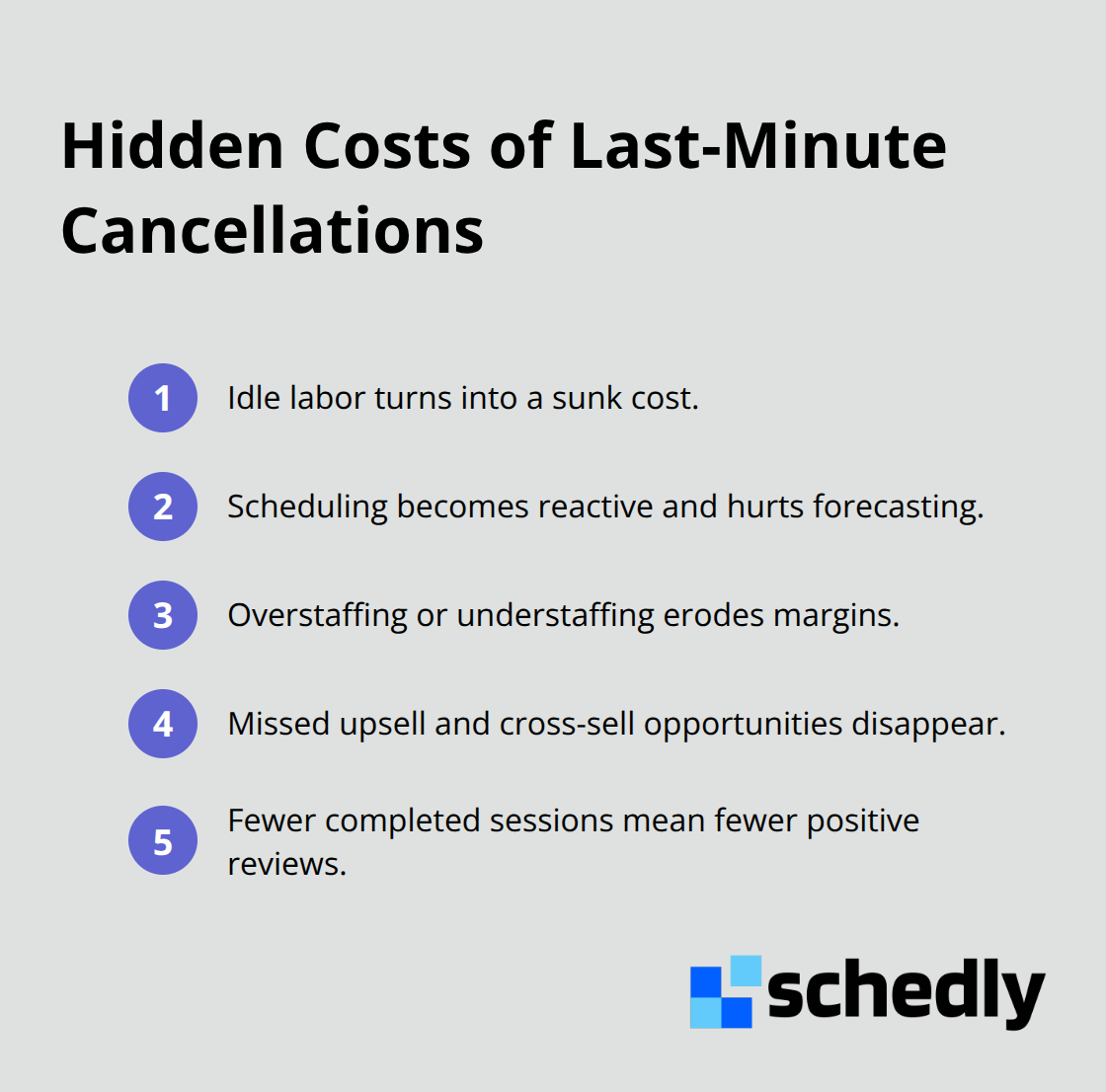
The financial pain extends far beyond the appointment itself. When someone cancels with minimal notice, your team often cannot reallocate the time productively. Staff members remain on the clock, wages continue, and no service gets delivered. Idle labor becomes a sunk cost that directly reduces profit margins.
Why Cancellations Damage Long-Term Customer Value
Repeated last-minute cancellations signal weak commitment from clients and create friction in your relationship. Customers who frequently cancel tend to have lower lifetime value because they reschedule less often and eventually stop booking altogether. When cancellations become a pattern, you invest extra time managing rescheduling, chasing confirmations, and handling customer service issues rather than growing your business. The administrative burden falls on your team, pulling them away from higher-value work. For businesses operating on thin margins-small salons, independent coaches, solo consultants-even a handful of preventable cancellations per week can mean the difference between profitability and loss. This reality makes prevention not just desirable but essential to your survival.
How Instant Confirmations Lock In Commitment
The Psychology Behind Immediate Acknowledgment
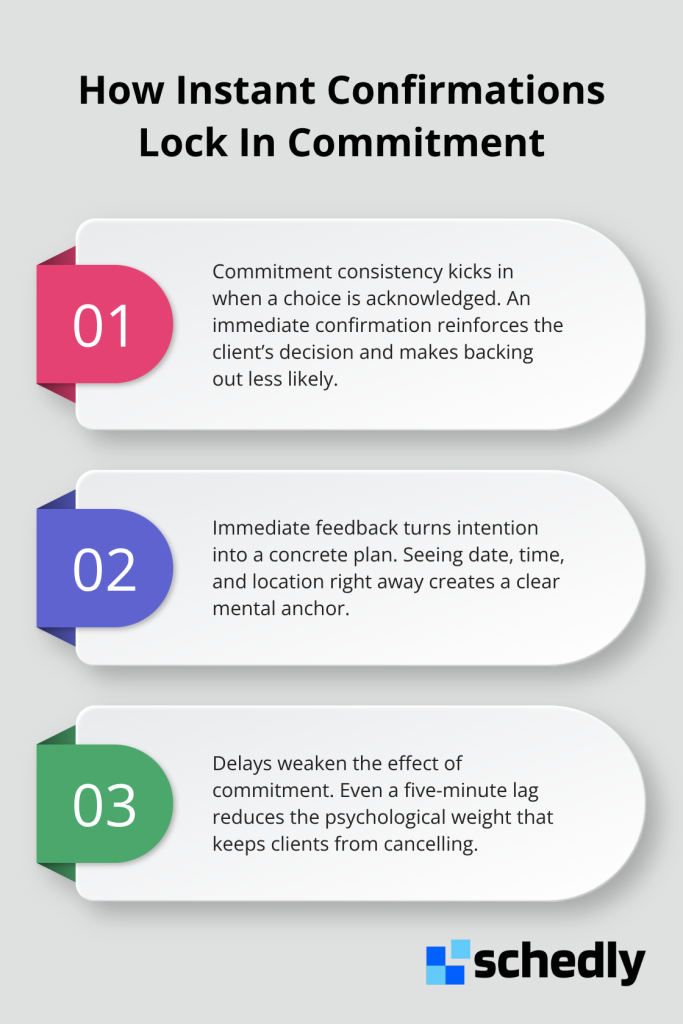
The moment someone books an appointment, their brain enters a vulnerable state. They've made a decision, but that decision hasn't solidified yet. An instant confirmation changes everything. When a client receives an immediate message acknowledging their booking, they experience what behavioral scientists call commitment consistency-a psychological principle showing that people follow through more reliably when they've received explicit confirmation of their choice. Research from The Decision Lab demonstrates that quick confirmations act as nudges that secure commitments faster, with targeted interventions reducing drop-offs by up to 46% across large client populations.
The confirmation serves as a mental anchor. Your client sees their appointment date, time, and location in writing within seconds of booking. This immediate feedback transforms a fuzzy intention into a concrete fact in their mind. They've told someone (you), and someone has told them back. That reciprocal acknowledgment creates psychological weight that a delayed confirmation simply cannot match. A confirmation that arrives five minutes later, or worse, an hour later, loses much of its power to cement the decision.
Eliminating Confusion With Complete Details
Instant confirmations eliminate the confusion that drives last-minute cancellations. When clients receive a confirmation email or SMS immediately, they have all essential details in one place: the exact appointment time, location or video link, what to bring, and your cancellation policy. Include your cancellation policy directly in the confirmation message so clients understand the stakes upfront. Many cancellations happen because clients misunderstood the appointment time or forgot the location entirely; instant confirmations with complete details eliminate that friction.
The American Journal of Medicine found that staff reminders reduce no-shows to around 13.6%, but automated reminders work even better because they're consistent and reach people at optimal moments. Research from the TURNUP study on appointment attendance shows that reminders requiring or facilitating confirmation tend to improve attendance outcomes significantly.
Strategic Reminders Keep Appointments Visible
Follow your instant confirmation with automated reminders sent 2–3 days before and again 24 hours before the appointment. This multi-touch approach keeps your appointment visible on their phone and in their inbox when they're most likely to reschedule if needed rather than ghost you. Make rescheduling effortless by including a direct booking link in every reminder so clients can move their appointment instantly instead of facing friction that leads to abandonment.
Segment your high-risk clients-those with prior cancellations-for extra proactive outreach in these reminder messages. The data is clear: confirmation systems that combine instant acknowledgment with strategic reminders and easy rescheduling pathways reduce cancellations far more effectively than hoping clients remember on their own. These systems create multiple opportunities for clients to engage with their commitment, reinforcing their intention to show up.
Building a Confirmation System That Actually Works
Speed Matters More Than You Think
The difference between a confirmation system that prevents cancellations and one that doesn't comes down to speed and completeness. Automated booking software sends instant notifications the moment someone completes their booking. The software should trigger a confirmation message within seconds, not minutes. This immediate response locks in psychological commitment. When you delay confirmation by even a few hours, you lose the momentum that makes the booking feel real to your client. Automated booking platforms eliminate manual delays entirely because the confirmation fires automatically as soon as the transaction completes.
What Your Confirmation Message Must Contain
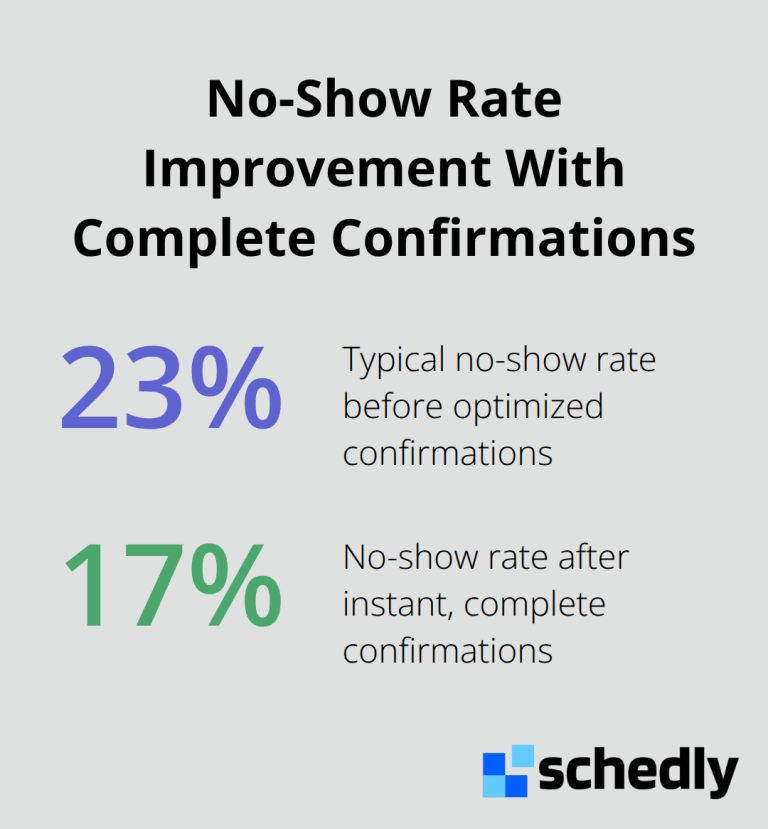
Your confirmation message must include the appointment date, time, location or video meeting link, what the client should bring or prepare, and your cancellation policy stated clearly. The difference matters financially: if you have 100 bookings per week and reduce no-shows from 23% to 17%, you recover roughly 6 additional appointments weekly. At $200 per missed appointment, that's $1,200 in recovered revenue per week or nearly $62,000 annually.
Reach Clients Through Their Preferred Channels
Your software should support multi-channel delivery, sending confirmations via both email and SMS because contact method preferences vary by client. SMS confirmations often achieve higher open rates than email alone, but email allows you to embed more detailed information like links and policies. Sending both guarantees your client receives the message through their preferred channel. Make your confirmation message interactive by including a direct link to reschedule or confirm attendance. This gives clients an immediate action they can take, reinforcing their commitment while offering an escape valve if their plans have changed.
Schedule Strategic Follow-Up Reminders
Configure your software to send follow-up reminders automatically at 72 hours, 24 hours, and 2 hours before the appointment. These reminders should reference the original confirmation details and always include an easy rescheduling link so clients can move their appointment without friction if needed. Segment clients who have cancelled previously and send them slightly earlier reminders, perhaps at 5 days and 3 days out, giving them extra runway to adjust their schedules proactively.
Track Performance and Optimize Continuously
Track your metrics ruthlessly: measure your show rate, reschedule rate, and cancellation rate by service type and client segment. Export this data regularly so you can identify patterns and optimize your reminder timing. A fitness business might find that reminders sent at 48 hours and 1 hour before appointments work best, while a healthcare provider might see better results with reminders at 3 days and 1 day. Your data will tell you where your clients need the most support.
Final Thoughts
Instant confirmations form the foundation of a scheduling system that actually works. When you send confirmations within seconds of booking, you trigger psychological commitment that makes clients follow through. When you pair those confirmations with strategic reminders and easy rescheduling options, you eliminate the friction that drives last-minute cancellations.
Modern scheduling software handles appointment follow-up automation for you, sending instant confirmations automatically and triggering reminders at optimal times. You don't need to manually send emails or chase clients through multiple channels. The system does it all while tracking your performance metrics so you can continuously improve. Appointment follow-up automation transforms what once required hours of manual work into a seamless, data-driven process that reduces your no-show rate and recovers thousands in annual revenue.
At Schedly, we've built our platform specifically to solve this problem. Our software sends instant confirmations the moment someone books, delivers multi-channel reminders via email and SMS, and integrates with tools like Zoom and Google Calendar so your clients have everything they need in one place. Explore how Schedly can automate your entire confirmation workflow and recover the revenue you're currently losing to last-minute cancellations.