
Schedly resources
How Schedly's Advanced Scheduling Integrations Enhance Team Productivity
Introduction: The New Era of Team Productivity
In today's fast-paced business environment, productivity is not just a goal, it's a necessity for survival. The competitive landscape demands that organizations not only keep pace with their rivals but also constantly seek ways to optimize their operations. With the emergence of advanced scheduling tools like Schedly, teams can now streamline operations, reduce inefficiencies, and enhance their overall performance. According to McKinsey's automation success research, companies that leverage automation in scheduling see up to a 30% increase in productivity. This article explores how Schedly's advanced scheduling integrations are revolutionizing team productivity across various industries, providing a comprehensive overview of its potential to transform traditional business practices.
The historical context of scheduling has always been marked by its cumbersome nature, often leading to miscommunications and unnecessary delays. Traditionally, managers spent countless hours juggling meetings, adjusting calendars, and ensuring that all team members were on the same page. However, the landscape is rapidly changing. As HubSpot's marketing automation statistics reveal, businesses that implement automation tools experience a 40% reduction in scheduling errors. This shift not only saves time but empowers teams to focus on strategic initiatives rather than administrative tasks.
Schedly's integration capabilities allow businesses to seamlessly connect their scheduling processes with other vital systems, creating a cohesive workflow that supports efficiency and collaboration. As the demand for seamless integration grows, understanding how Schedly's solutions can enhance productivity is crucial for any forward-thinking organization.
Understanding Schedly's Integration Ecosystem
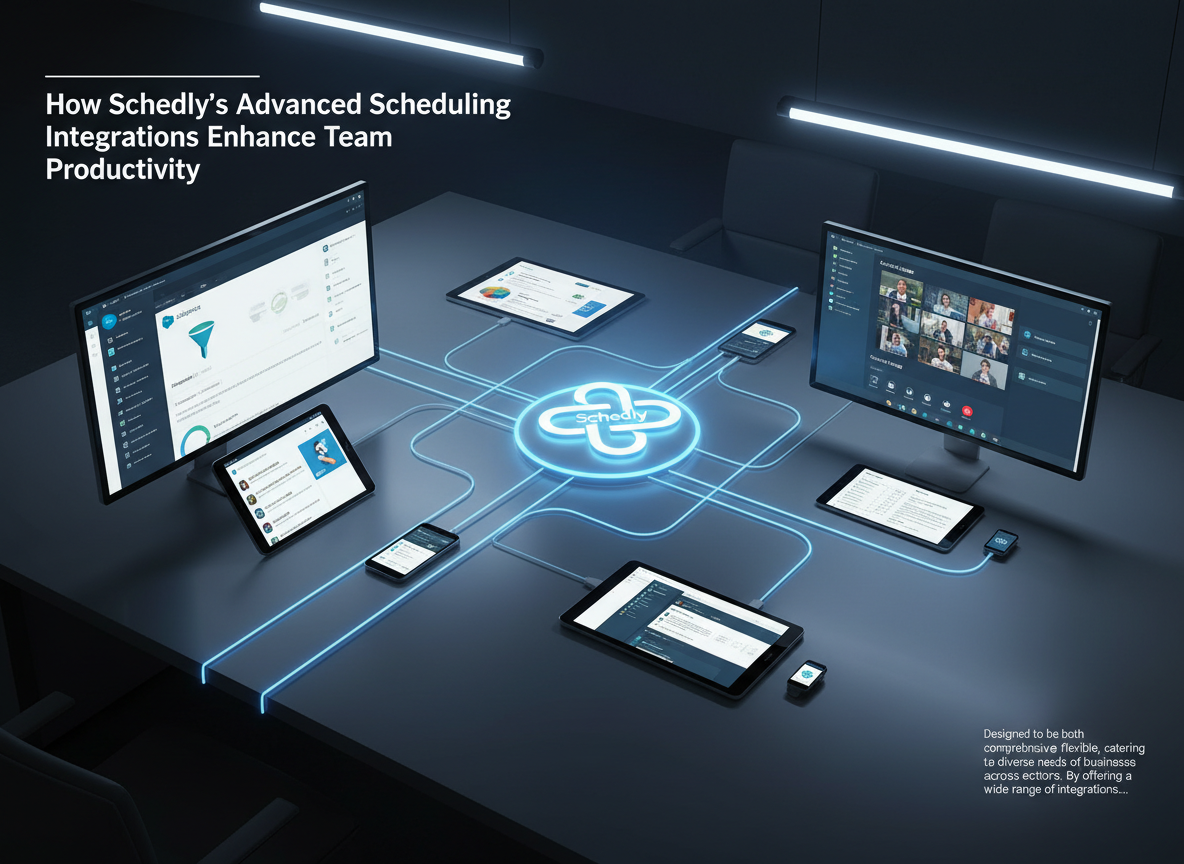
Schedly's integration ecosystem is designed to be both comprehensive and flexible, catering to the diverse needs of businesses across sectors. By offering a wide range of integrations with popular platforms such as Salesforce, Slack, and Microsoft Teams, Schedly ensures that teams can maintain their preferred workflows while benefiting from enhanced scheduling capabilities. The adaptability of Schedly's system is a key factor in its widespread adoption, as it aligns with the specific operational needs of different industries.
One of the key features of Schedly's integration strategy is its API-first approach. According to Forrester's Total Economic Impact study, businesses that adopt API-driven solutions see a 312% return on investment due to increased flexibility and scalability. Schedly's robust API allows developers to create custom integrations tailored to specific business needs, ensuring that the scheduling process aligns perfectly with existing systems. This modularity is crucial for businesses that require tailored solutions to meet their unique challenges.
Moreover, Schedly's integrations are designed to enhance data visibility and collaboration. For instance, integrating with project management tools like Asana or Trello enables teams to synchronize schedules with task deadlines, reducing the risk of missed deadlines and enhancing project management efficiency. This seamless connectivity fosters a culture of transparency and accountability, essential components of a productive team environment. Additionally, integrating communication platforms ensures that all team members are kept in the loop, reducing the likelihood of miscommunications that can derail projects.
Enhancing Operational Agility
Schedly's integration ecosystem goes beyond mere connectivity; it enhances operational agility by allowing businesses to respond swiftly to changes. For example, integrating with customer support platforms can enable immediate adjustments to team schedules based on real-time customer feedback or demand spikes. This agility is critical in industries such as retail, where customer expectations and market conditions can change rapidly.
Furthermore, the ability to integrate with data analytics platforms provides organizations with deeper insights into their scheduling processes. These insights can reveal patterns and trends that were previously unnoticed, allowing for informed decision-making and strategic adjustments. By leveraging data-driven insights, companies can optimize resource allocation and improve overall operational efficiency.
Pro Tip: Leveraging Cross-Platform Capabilities
To maximize the benefits of Schedly's integration ecosystem, organizations should leverage cross-platform capabilities. This involves not only integrating scheduling with project management and communication tools but also exploring integrations with industry-specific software. For example, a logistics company might integrate Schedly with fleet management software to synchronize driver schedules with delivery routes, thereby optimizing logistics operations.
The Productivity Framework: Integrate, Automate, Elevate
The "Integrate, Automate, Elevate" framework is a proprietary approach designed to help organizations fully leverage the potential of Schedly's integrations to boost productivity. This framework consists of three critical phases:

1. Integrate: Begin by identifying key systems and tools within your organization that can be integrated with Schedly. This phase involves mapping out existing workflows and determining how Schedly can enhance them. According to Gartner's automation productivity study, effective integration can lead to a 25% reduction in process redundancies. By carefully aligning the integration with business objectives, organizations can ensure that the transition is smooth and that the benefits are maximized.
2. Automate: Once integrations are established, focus on automating repetitive tasks. Automation not only reduces manual errors but also frees up valuable time for strategic activities. In fact, Nucleus Research found that automation can increase productivity by up to 20%. This phase involves leveraging Schedly's features to automate scheduling processes, thereby allowing team members to dedicate more time to value-driven activities.
3. Elevate: The final phase involves continuously monitoring and optimizing the integrated systems to ensure maximum productivity. This includes analyzing performance metrics, gathering feedback, and making necessary adjustments to workflows. By maintaining a cycle of continuous improvement, organizations can ensure that their scheduling processes remain effective and aligned with evolving business needs.
Detailed Steps for Successful Integration
To implement the "Integrate, Automate, Elevate" framework effectively, organizations can follow a detailed step-by-step approach:
- Conduct a Workflow Audit: Start by assessing current workflows and identifying bottlenecks or inefficiencies that can be addressed through integration and automation.
- Select the Right Tools: Choose the appropriate tools and platforms that align with your business objectives and can be integrated with Schedly.
- Develop a Pilot Program: Implement a pilot program to test the integration on a smaller scale before a full rollout. This allows for adjustments and fine-tuning based on initial feedback.
- Gather Feedback: Collect feedback from users to identify any issues or additional needs that may arise during the integration process.
- Continuous Optimization: Regularly review and optimize the integrated systems to ensure they continue to meet business needs and drive productivity.
Expert Insight: Embracing Change Management
Successful implementation of the "Integrate, Automate, Elevate" framework requires effective change management strategies. This involves preparing the organization for changes, communicating the benefits of integration, and providing training and support to ensure smooth adoption. As noted by change management expert John Kotter, "The rate of change is not going to slow down anytime soon. If anything, competition in most industries will probably speed up even more in the next few decades." Embracing change management is essential to harness the full potential of scheduling integrations.
Case Studies: Success Stories with Schedly Integrations
Real-world examples provide compelling evidence of the transformative power of Schedly's integrations. Consider a mid-sized tech startup that integrated Schedly with its customer relationship management (CRM) and project management tools. By doing so, the company was able to synchronize client meetings with project timelines, reducing scheduling conflicts by 50%. This integration not only improved client satisfaction by ensuring timely project deliveries but also enhanced internal team coordination.

Another noteworthy example is a healthcare provider that utilized Schedly's integration with electronic health record (EHR) systems. This integration streamlined the scheduling process for patient appointments, resulting in a 30% reduction in no-show rates and a significant increase in patient satisfaction. According to Deloitte Insights, seamless scheduling can enhance patient engagement and operational efficiency in healthcare settings. By reducing administrative burdens, healthcare providers can focus more on patient care and less on logistical challenges.
Case Study: Retail Sector Transformation
In the retail sector, a major retail chain integrated Schedly with its inventory management and point-of-sale systems. This integration enabled the company to align staff schedules with peak shopping hours and promotional events, thereby optimizing staffing levels and enhancing customer service. The result was a 20% increase in sales during promotional periods and a notable improvement in customer satisfaction scores.
By aligning employee schedules with customer demand, the retailer was able to provide a more personalized shopping experience, reducing wait times and increasing customer engagement. This case study demonstrates how strategic scheduling integrations can directly impact revenue and customer loyalty.
Pro Tip: Learning from Industry Leaders
Organizations looking to implement Schedly's integrations can benefit from studying industry leaders who have successfully transformed their operations through scheduling automation. By analyzing the strategies and best practices of these pioneers, companies can gain valuable insights and avoid common pitfalls during their integration journey.
Common Mistakes and How to Avoid Them
Despite the clear benefits of scheduling integrations, some organizations encounter challenges in implementation. One common mistake is failing to conduct a thorough needs assessment before integration. Without understanding the specific requirements and pain points, businesses may implement solutions that do not address the core issues, leading to suboptimal results and wasted resources.
An expert insight from Capterra suggests that a detailed analysis of existing workflows and stakeholder interviews can mitigate these risks. Additionally, over-reliance on a single integration without considering the broader ecosystem can limit the potential productivity gains. It's essential to view integrations as part of a larger strategy to enhance overall operational efficiency.
Finally, neglecting employee training and change management can hinder successful implementation. Even the most advanced tools require user adoption to be effective. Organizations should prioritize training sessions and provide continuous support to ensure that teams can leverage new integrations fully. Successful change management can facilitate smoother transitions and greater acceptance of new technologies.
Avoiding the Pitfalls of Integration
Beyond initial implementation, businesses should be aware of ongoing challenges that can arise with new integrations. These include issues such as data silos, where information is not shared between systems, and integration fatigue, where users become overwhelmed with too many tools. To combat these issues, regular reviews of the integration landscape and ongoing training are crucial.
Additionally, organizations should develop a feedback loop where end-users can report issues and suggest improvements. This proactive approach helps in maintaining the effectiveness of integrations and ensures that the tools continue to meet evolving business needs.
Expert Insight: The Importance of Scalability
When implementing scheduling integrations, scalability should be a top consideration. As businesses grow, their needs will change, and their technology stack must be able to adapt. Choosing solutions that can easily scale with the organization will save time and resources in the long run. A scalable integration strategy ensures that the systems support future expansion without requiring significant overhauls.
Maximizing Efficiency: Tips and Best Practices
To maximize the efficiency of Schedly's integrations, organizations should adopt best practices that align with their specific needs. Here are some actionable tips to get started:
1. Tailor Integrations to Workflows: Customize integrations to fit the unique workflows and processes of your team. This ensures seamless adoption and maximizes the impact on productivity. Taking time to understand the nuances of each department's operations can lead to better-customized solutions.
2. Leverage Analytics: Utilize analytics tools to monitor the performance of integrated systems. This data-driven approach allows for continuous improvement and optimization of workflows. By regularly reviewing key metrics, organizations can identify bottlenecks and adjust their strategies accordingly.
3. Foster Collaboration: Encourage cross-functional collaboration by integrating tools that facilitate communication and information sharing. This promotes a cohesive work environment and enhances team productivity. According to TrustRadius, organizations that adopt a collaborative approach to scheduling see a 15% increase in efficiency and a 20% improvement in team morale.
Best Practices for Seamless Integration
Implementing seamless integrations requires attention to detail and adherence to best practices. For instance, conducting regular integration audits can ensure that systems remain aligned with business objectives and are operating efficiently. Audits can uncover areas for improvement and help maintain the integrity of the system over time.
Moreover, establishing clear communication protocols and documentation for integrations can help new team members get up to speed quickly. This ensures continuity and minimizes disruptions when staff changes occur.
Expert Insight: Balancing Automation with Human Oversight
While automation is a powerful tool for increasing efficiency, it is essential to maintain a balance with human oversight. Automation should complement human decision-making rather than replace it entirely. By involving team members in the integration process and encouraging them to provide input, organizations can create a harmonious blend of technology and human expertise.
The Future of Scheduling Integrations
As technology continues to evolve, the future of scheduling integrations promises even greater advancements in team productivity. Emerging trends such as artificial intelligence (AI) and machine learning (ML) are set to further enhance the capabilities of tools like Schedly. These technologies are poised to revolutionize how scheduling is managed, making it more efficient and intuitive.
AI-powered scheduling can predict optimal meeting times, automate rescheduling, and provide personalized recommendations based on individual preferences. According to Forbes Tech Council, AI-driven solutions can improve scheduling accuracy by 35% and reduce administrative burdens significantly. By analyzing patterns and preferences, these systems can offer insights that greatly enhance decision-making.
Moreover, the integration of voice-activated scheduling assistants and smart devices will enable more intuitive interactions with scheduling systems, further streamlining the process. As these technologies become more accessible, organizations can expect a new era of efficiency and productivity in their operations. The convergence of these advanced technologies will likely set new standards for productivity tools in the business world.
Embracing AI and Machine Learning
The integration of AI and machine learning into scheduling systems offers exciting possibilities for the future. These technologies can help organizations anticipate scheduling conflicts and proactively resolve them before they occur. By leveraging predictive analytics, businesses can make informed decisions about resource allocation and workforce management.
Additionally, AI-driven chatbots and virtual assistants can provide real-time support for scheduling inquiries and adjustments, offering a seamless user experience. As AI continues to advance, its role in scheduling will only grow, providing organizations with powerful tools to enhance productivity.
Pro Tip: Preparing for Future Trends
To stay ahead of the curve, organizations should proactively prepare for future trends in scheduling technology. This involves staying informed about emerging technologies, investing in continuous learning and development for employees, and being open to experimenting with new tools and approaches. By fostering a culture of innovation, companies can position themselves as leaders in productivity and efficiency.
FAQ: Common Questions About Schedly Integrations
Q1: What platforms does Schedly integrate with?
Shedly integrates with a wide range of platforms including Salesforce, Microsoft Teams, Slack, Asana, and Trello, providing flexibility for various business needs. This extensive compatibility ensures that organizations can integrate Schedly into their existing technology stack without disruption.
Q2: How secure are Schedly's integrations?
Shedly prioritizes security with robust encryption protocols and compliance with industry standards to ensure data integrity and confidentiality. Organizations can trust that their data is protected against unauthorized access and breaches.
Q3: Can Schedly integrations be customized?
Yes, Schedly's API allows for extensive customization to meet the specific needs of your organization and optimize workflows. Customization options provide the flexibility needed to tailor integrations to unique business processes.
Q4: How do I get started with Schedly integrations?
Visit our platform features to learn more about integration options and start enhancing your team's productivity today. The platform offers step-by-step guidance to help organizations seamlessly adopt Schedly's solutions.
Q5: What support is available for implementing Schedly integrations?
Shedly offers comprehensive support including training sessions, documentation, and customer service to assist in seamless implementation. This ensures that organizations have the resources they need to effectively integrate and utilize Schedly's tools.
Additional FAQs
Q6: What industries benefit most from Schedly integrations?
While Schedly is versatile and applicable across various sectors, industries such as healthcare, retail, technology, and logistics often see significant benefits due to their complex scheduling needs.
Q7: How does Schedly handle data migration from other systems?
Schedly provides tools and support for seamless data migration, ensuring that historical data is preserved and accurately integrated into the new system.
Conclusion: Taking the Next Step
In conclusion, Schedly's advanced scheduling integrations offer a powerful solution for enhancing team productivity in today's dynamic business landscape. By streamlining operations, reducing errors, and fostering collaboration, these integrations empower teams to focus on strategic initiatives and achieve their goals more efficiently. The integration of Schedly into existing business processes can significantly transform the way organizations operate, leading to greater success and competitiveness in the market.
As you consider implementing Schedly's solutions, explore related tools like Apparatuz for workflow automation, Applicantz for applicant tracking, Supportly for customer support, Zatisfied for feedback management, and Zignature for e-signature solutions. Together, these tools create a comprehensive ecosystem that supports your business's growth and success. By leveraging a suite of integrated solutions, organizations can build a robust infrastructure that enhances all aspects of their operations.
Final Thoughts: Positioning for Future Success
As organizations continue to navigate the complexities of the modern business environment, integrating advanced scheduling solutions like Schedly will be crucial for maintaining competitiveness. By adopting a strategic approach to integration and embracing emerging technologies, businesses can position themselves for long-term success and innovation. The journey towards enhanced productivity begins with a single step: choosing the right tools and partners to support your vision.