
Schedly resources
How to Build an Effective Scheduling Workflow for Cross-Team Collaboration
In today's interconnected business environment, cross-team collaboration is no longer a luxury—it’s a necessity. Organizations rely on diverse teams with varying expertise to drive innovation and efficiency. However, one major obstacle to seamless collaboration is scheduling. Poor scheduling can lead to wasted time, missed deadlines, and strained relationships among team members. On the other hand, a well-designed scheduling workflow boosts productivity, fosters team harmony, and ensures projects are completed on time and within budget.
This comprehensive guide outlines actionable strategies, industry-tested frameworks, and insider recommendations to help you build an effective scheduling workflow for cross-functional teams. Whether you’re managing a small startup or a large enterprise, these insights will empower you to streamline operations and enhance collaboration in 2026 and beyond.
Understanding the Importance of Scheduling in Cross-Team Collaboration
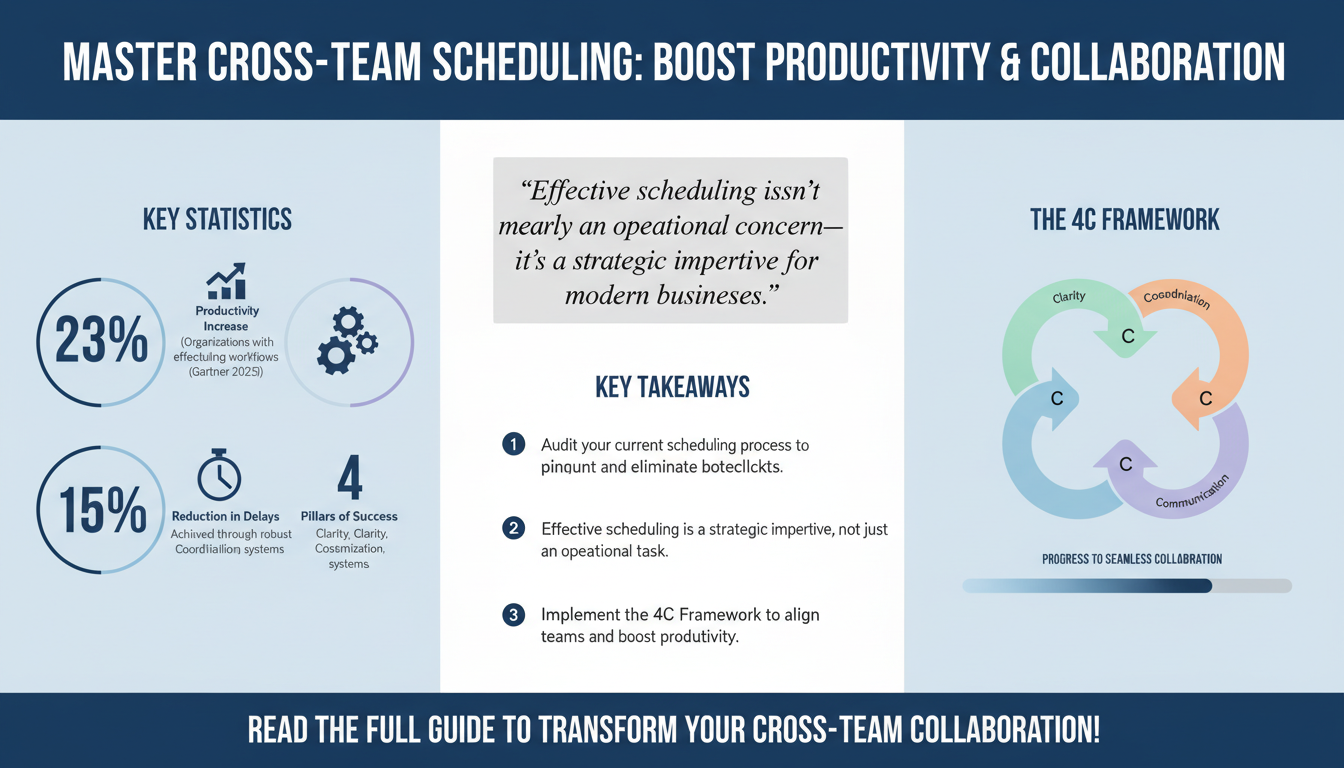
Effective scheduling isn’t merely an operational concern—it’s a strategic imperative. Cross-team collaboration involves aligning diverse groups with varying priorities, workflows, and time zones. Without a robust scheduling workflow, miscommunication and inefficiencies can derail even the most promising projects.

According to a 2025 study by Gartner, organizations that implement effective scheduling workflows experience a 23% increase in productivity and a 15% reduction in project delays. These figures underscore the tangible benefits of investing in scheduling systems. Additionally, poorly managed schedules can lead to employee burnout, decreased morale, and missed opportunities.
To illustrate the importance of scheduling, consider the following real-world scenarios:
- Scenario 1: A software development team in San Francisco needs to coordinate with a marketing team in Sydney. Without clear scheduling, meeting times overlap with other commitments, leading to confusion and delays in launching a product.
- Scenario 2: A healthcare organization struggles to align doctors, nurses, and administrative staff due to inconsistent scheduling practices. This results in longer wait times for patients and operational inefficiencies.
Both examples reveal how misaligned schedules can hinder productivity and damage relationships. A well-designed workflow eliminates these issues and fosters collaboration.
Actionable Tip:
Start by auditing your current scheduling process. Identify key bottlenecks, such as overlapping meetings, unclear responsibilities, or time zone issues. Use this analysis to pinpoint areas for improvement.
Key Takeaways:
- Effective scheduling improves productivity by as much as 23%.
- Misaligned schedules can lead to delays and inefficiencies.
- Conduct an audit of your existing process to identify weaknesses.
The 4C Framework for Scheduling Success
To build an effective scheduling workflow, we recommend the proprietary 4C Framework: Clarity, Coordination, Customization, and Communication. This framework provides a holistic approach to scheduling that ensures all team members stay aligned and productive.

1. Clarity
Clarity is about ensuring that everyone understands their roles, tasks, and deadlines. Ambiguity can lead to confusion and missed deliverables. Use clear, jargon-free language in your scheduling directives and provide visual aids like Gantt charts or Kanban boards to make schedules easily understandable. Tools like Schedly’s workflow automation features can simplify this process by creating intuitive, visual schedules.
For example, a construction company successfully implemented clarity by using color-coded schedules for different teams. This allowed workers to instantly identify their shifts, reducing confusion and increasing punctuality.
2. Coordination
Coordination involves aligning schedules across teams and time zones. This is particularly critical for global organizations. Tools like Google Calendar or Slack can integrate multiple time zones, making it easier to identify overlapping working hours. According to McKinsey, teams that prioritize coordination see a 30% improvement in project turnaround times.
One example of effective coordination is a multinational tech company that uses AI-powered scheduling tools to automatically adjust meeting times based on participants’ availability across different time zones.
3. Customization
Customization recognizes that different teams have unique requirements. For instance, creative teams may benefit from flexible scheduling that accommodates brainstorming sessions, while operational teams might need stricter timelines to meet deadlines. Tailor your scheduling workflow to reflect these distinctions.
A great example of customization is a marketing agency that allows its creatives to block out “focus time” for uninterrupted work while maintaining consistent meeting times for administrative staff.
4. Communication
Communication is the glue that holds your scheduling workflow together. Regular updates, check-ins, and feedback loops ensure that everyone stays informed. Use tools like Microsoft Teams to facilitate open communication channels and provide real-time updates on schedule changes.
For instance, a retail company uses weekly check-ins to address scheduling conflicts and gather feedback, ensuring their workflow evolves to meet team needs.
Key Takeaways:
- Follow the 4C Framework to create a robust scheduling workflow.
- Invest in tools that support clarity, coordination, customization, and communication.
- Regularly review and adapt your workflow to meet evolving needs.
Best Practices for Scheduling Across Time Zones
Global teams face unique challenges when it comes to scheduling. Time zone disparities can lead to delays, missed meetings, and inefficiencies. Overcoming these challenges requires strategic planning and the use of appropriate tools.

1. Use Time Zone Conversion Tools
Tools like World Time Buddy or Schedly’s multi-time zone support simplify the process of finding overlapping working hours. These platforms allow you to visualize time zones, ensuring meetings are scheduled at convenient times for all participants.
For example, an international NGO uses World Time Buddy to coordinate meetings among teams spread across Nairobi, London, and New York.
2. Set "Core Hours"
Define a set of core hours when all team members are available. This approach minimizes disruptions and ensures smoother collaboration. For instance, a remote software company designates core hours from 2 PM to 6 PM UTC, allowing developers and project managers to align their schedules effectively.
3. Record Meetings
Recording meetings and sharing detailed notes is invaluable for team members who cannot attend live sessions. This practice ensures that everyone stays informed and reduces the need for redundant follow-up meetings.
For example, a global consultancy firm records all virtual meetings and uploads them to a shared drive, allowing team members in different time zones to catch up at their convenience.
Key Takeaways:
- Leverage technology to manage time zones effectively.
- Establish core hours to better align global teams.
- Record meetings to ensure inclusivity and transparency.
Common Mistakes to Avoid
Even the best scheduling workflows can fail if common mistakes aren’t addressed. Avoiding these pitfalls requires proactive planning and continuous improvement.
1. Overloading Schedules
Too many meetings can lead to burnout. According to Harvard Business Review, 67% of employees feel overwhelmed by excessive meetings. Limit meetings to only what’s necessary and ensure they are concise and productive.
2. Ignoring Feedback
Failure to adapt based on team feedback can lead to inefficiencies and dissatisfaction. Regularly solicit input from team members to identify areas for improvement.
3. Lack of Automation
Manual scheduling is time-consuming and error-prone. Automate repetitive tasks using tools like Schedly to save time and reduce errors.
Key Takeaways:
- Avoid overloading schedules to prevent employee burnout.
- Gather feedback to refine your scheduling workflow.
- Adopt automation tools to streamline scheduling processes.
Measuring the Success of Your Scheduling Workflow
Once your workflow is implemented, measuring its effectiveness is crucial. Use metrics such as meeting attendance rates, project completion times, and employee satisfaction scores to evaluate performance.
1. Meeting Attendance Rates
Track attendance rates to identify patterns and areas for improvement. If attendance is consistently low, reassess meeting times and formats.
2. Project Completion Times
Compare project timelines before and after implementing the new scheduling workflow. A decrease in delays indicates success.
3. Employee Satisfaction
Conduct surveys to gauge team satisfaction with the scheduling process. High satisfaction scores signal that the workflow is meeting team needs.
Key Takeaways:
- Use attendance rates, project timelines, and surveys to measure workflow success.
- Regularly review metrics to identify areas for improvement.
Conclusion
Building an effective scheduling workflow for cross-team collaboration is essential for modern organizations. By leveraging the 4C Framework, adopting best practices for global teams, and avoiding common mistakes, you can create a system that enhances productivity and morale. Remember, the key to success lies in continuous improvement, open communication, and the strategic use of technology.
Ready to transform your scheduling process? Explore our advanced scheduling tools and take the first step toward better collaboration today.