
Schedly resources
How to Build Client Trust With Transparent Payment Practices

Clients abandon businesses over hidden fees and surprise charges. At Schedly, we've seen firsthand how transparent payment practices separate thriving service businesses from those stuck in constant disputes.
When clients know exactly what they're paying and why, trust follows naturally. That's why payment gateway security and clear communication aren't luxuries-they're the foundation of sustainable growth.
Why Clients Really Care About Payment Transparency
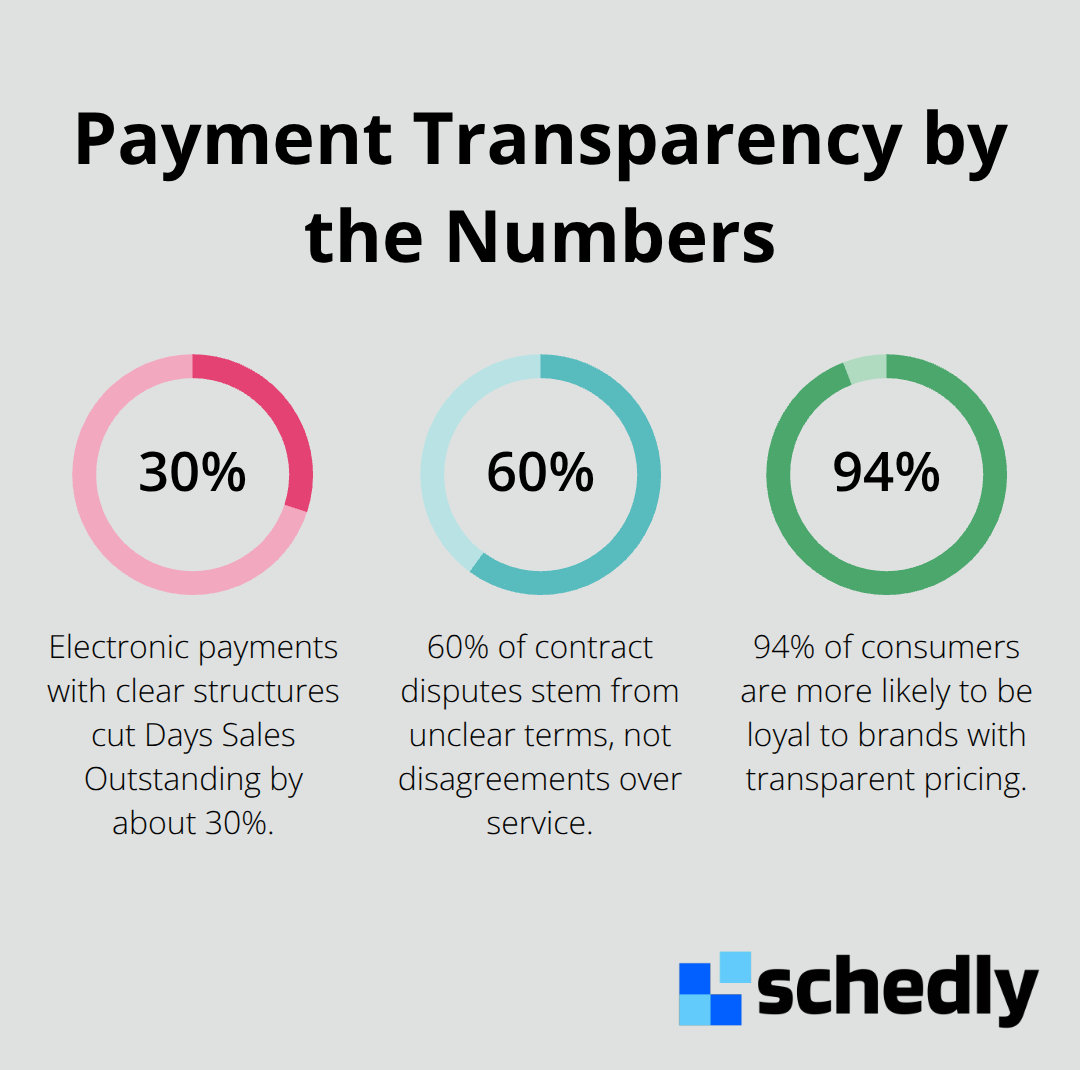
Clients abandon businesses over hidden fees and surprise charges far more than most service providers realize. According to research from PYMNTS, electronic payments and clear payment structures reduce Days Sales Outstanding by about 30%, which tells you something important: when payment processes are transparent, money flows faster and relationships stay stronger. The American Bar Association found that 60% of contract disputes stem from unclear terms, meaning the majority of payment conflicts aren't about disagreement over services-they're about confusion over what clients actually owe. This distinction matters because it means transparent payment practices aren't just nice to have; they're a direct path to eliminating the disputes that drain your time and damage client relationships.
Clear Pricing Stops Disputes Before They Start
When clients see a detailed price breakdown before they commit, two things happen: they make informed decisions and they stop feeling blindsided later. The practical reality is this: clients who understand exactly what they're paying for rarely dispute invoices, rarely file chargebacks, and rarely leave negative reviews. They also refer more often because they trust you enough to recommend you to others. Hidden fees create the opposite effect. When clients spot unexpected charges-whether it's a booking fee, same-day processing charge, or vague service adjustment-they feel deceived, even if the fee was technically disclosed somewhere in fine print. That feeling of deception turns a satisfied client into one who stops paying, disputes the charge, or worse, tells others to avoid you.
Payment Transparency Builds Accountability and Reliability
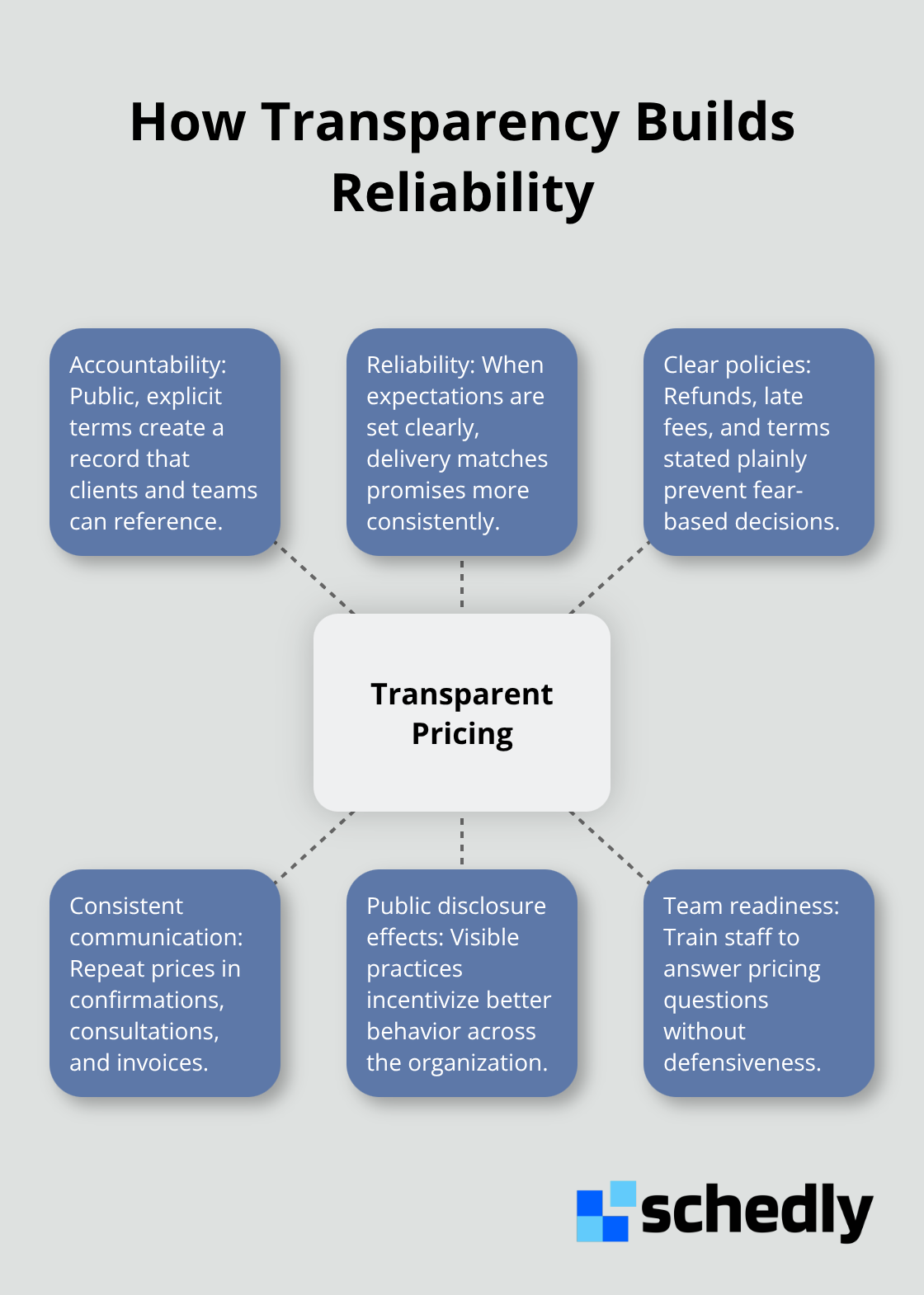
Transparent payment practices work because they eliminate the information gap between you and your clients. When clients don't know your payment terms, your refund policy, or how you'll handle late payments, they make decisions based on fear and assumption. That fear erodes trust faster than almost anything else. The UK Payment Practices Disclosure Regulation provides a natural experiment in this dynamic: when large firms disclosed their payment practices publicly, their payment behavior improved measurably, and suppliers reported fewer financial constraints. The mechanism is straightforward-transparency creates accountability, and accountability creates reliability. For your business, this means posting your pricing clearly on your website, including it in booking confirmations, discussing it during initial consultations, and restating it on invoices.
What Happens When You Lead With Clarity
The businesses that treat pricing as something to hide are the ones stuck in constant payment friction. The ones that lead with clarity are the ones clients choose to work with again and again. When you implement transparent payment practices, you shift the conversation from "What am I really paying?" to "This is fair and I understand it." That shift changes everything about how clients experience your business. They move from skeptical to confident, from defensive to collaborative. Your invoices stop triggering anxiety and start confirming value. Your payment reminders stop feeling like pressure and start feeling like helpful nudges. This foundation of clarity is what allows you to move forward with the actual systems and communication strategies that turn transparency into action.
How to Make Pricing Impossible to Misunderstand
The gap between what you think you've communicated about pricing and what clients actually understand is where payment disputes live. You need to eliminate that gap entirely by making your pricing visible, specific, and repeated at every interaction point.
Display Pricing Where Clients Look First
Start on your website. Your pricing page should not hide behind a contact form or sit buried in a FAQ. Put it where clients land when they're researching you. List individual services with exact prices, package deals with exact prices, and any conditional costs that might apply. If you offer sliding scale pricing or discounts for recurring bookings, state those clearly with the calculation method. 94% of consumers are more likely to be loyal to a brand that offers complete transparency regarding its pricing. That's not because people love paying more-it's because they trust brands that don't hide information.
When clients book through a scheduling platform, your pricing should appear in the booking confirmation before payment is processed. This is non-negotiable. The confirmation should show the service name, duration, price, and any additional fees like processing charges or same-day booking premiums. Do not bury fees in fine print. State them clearly as separate line items so clients see exactly what they're paying for. If you charge a 2.5% processing fee for credit cards, show it. If you charge a $5 same-day booking fee, show it. This transparency prevents the moment when clients feel blindsided by their receipt.
Create Invoices That Read Like Contracts
Your invoices are where transparency either succeeds or fails completely. An invoice should read like a contract, not a mystery. Include the service provided, the date it occurred, the base price, any applicable fees broken down individually, the total amount due, your payment terms (net 15, net 30, due upon receipt), your late payment policy if applicable, and multiple payment method options. If a client paid a deposit, show that clearly and state the remaining balance. If they're on an installment plan, show which payment this is and when the next one is due.
Clear invoices prevent disputes and build trust with clients. Most payment conflicts are preventable with a single detailed invoice. The practical reality is this: clients who receive clear, itemized invoices rarely dispute charges, rarely file chargebacks, and rarely leave negative reviews. They also refer more often because they trust you enough to recommend you to others.
Discuss Pricing Before Clients Commit
Train your team to discuss pricing during the initial consultation, not after the service is delivered. This conversation should happen before clients commit. Walk them through what they're paying for, answer questions without defensiveness, and confirm their understanding. If you're offering flexible payment options like installment plans, explain how those work in concrete terms: for example, a $600 service might be offered as $200 today, $200 in 30 days, and $200 in 60 days. Show the total they'll pay and confirm there are no additional fees for splitting payments.
This approach removes the anxiety clients feel when they're trying to budget for your services. When clients understand your pricing structure before they book, they move from skeptical to confident. Your payment reminders stop feeling like pressure and start feeling like helpful nudges. This foundation of clarity is what allows you to move forward with the actual systems that turn transparency into action.
Systems That Turn Transparency Into Action
Your pricing strategy means nothing if your payment systems undermine it. The moment a client completes payment and receives a vague receipt with no itemization, you've erased all the trust you built with clear communication. This is where most service businesses fail: they invest in transparent pricing but then hand clients off to payment systems that obscure what just happened. The solution is straightforward-your payment infrastructure must be as transparent as your pricing.
Choose Payment Gateways That Show Transaction Details
Select payment gateways that display transaction details clearly to clients. Stripe and PayPal both show clients exactly what they're paying for in real time. When a client completes a payment, they see an itemized breakdown on the confirmation screen before the transaction processes. This final confirmation step prevents the moment when clients second-guess their purchase or feel uncertain about what they just authorized. The gateway you select shapes how clients experience your business after they commit financially. A transparent gateway reinforces trust. An opaque one destroys it.
Payment Confirmations That Reinforce Trust
Automated payment confirmations must arrive within minutes of a transaction, not hours later. The confirmation email needs to restate the service provided, the amount charged, the payment method used, the date the service is scheduled, and your refund policy in plain language. Most businesses send generic receipts that look like they came from a bank. Instead, your confirmation should feel like a professional summary from someone who values your client's business.
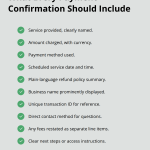
Include your business name prominently, a transaction ID for reference, and a direct contact method if the client has questions. If you charge setup fees, processing fees, or any other ancillary costs, restate them individually in the confirmation so there's no confusion later. The confirmation should also include next steps: if the client booked a service, tell them when to expect a reminder; if they purchased a package, tell them how to access it or when they'll receive it.
Automated confirmations create a paper trail that protects you if disputes arise. When a client claims they never received confirmation or doesn't remember what they paid for, you have timestamped evidence of exactly what you communicated and when.
Refund Policies That Prevent Disputes
Your refund policies that prevent disputes must be stated explicitly before clients pay, restated in confirmations, and easy to execute without friction. A vague refund policy creates disputes. A clear one prevents them. State whether refunds are available, under what circumstances, and how long they take to process. If you offer refunds only within 48 hours of purchase, say that. If you offer refunds up to one week before a scheduled service, say that. If certain services are non-refundable, say that. The specificity eliminates the moment when clients feel cheated because they assumed a different policy existed.
When a client requests a refund, process it within 48 hours, not within two weeks. Fast refunds signal confidence in your service and eliminate the resentment that builds when clients wait for their money.
Documentation That Wins Disputes
When a dispute does arise, respond within 24 hours with a detailed explanation of what the client paid for and why. Most payment disputes are resolved simply by showing clients clear evidence of what they agreed to. Your invoices, booking confirmations, and payment receipts should all align perfectly so there's no ambiguity about what was purchased.
If a client disputes a charge with their credit card company, you'll need to provide documentation showing the agreement, the service delivery, and communication with the client. Businesses that maintain detailed records almost always win these disputes. Businesses that don't have documentation lose them, even when they're right. Documentation transforms a he-said-she-said situation into an objective record that protects your revenue and your reputation.
Final Thoughts
Transparent payment practices form the operating system that determines whether clients trust you enough to return. When you combine clear communication about pricing with payment systems that reinforce that clarity at every step, clients stop questioning your invoices and stop filing disputes. They book again, refer others, and become the foundation of sustainable growth.
The businesses winning right now treat payment gateway security and transparent communication as inseparable. Your pricing strategy fails if your payment system obscures what clients actually paid for, and your payment confirmations fail if they don't restate what clients agreed to. These elements work together because trust reinforces itself with every interaction (from the first pricing conversation through the final refund confirmation).
If you manage multiple clients, services, and payment methods, friction multiplies without the right tools. We at Schedly built our scheduling software to eliminate that friction by integrating transparent booking, secure payment processing, and automated confirmations into one platform. Schedly handles the systems so you can focus on the communication and start building client trust today.