
Schedly resources
How to Leverage Customer Relationship Management Capabilities

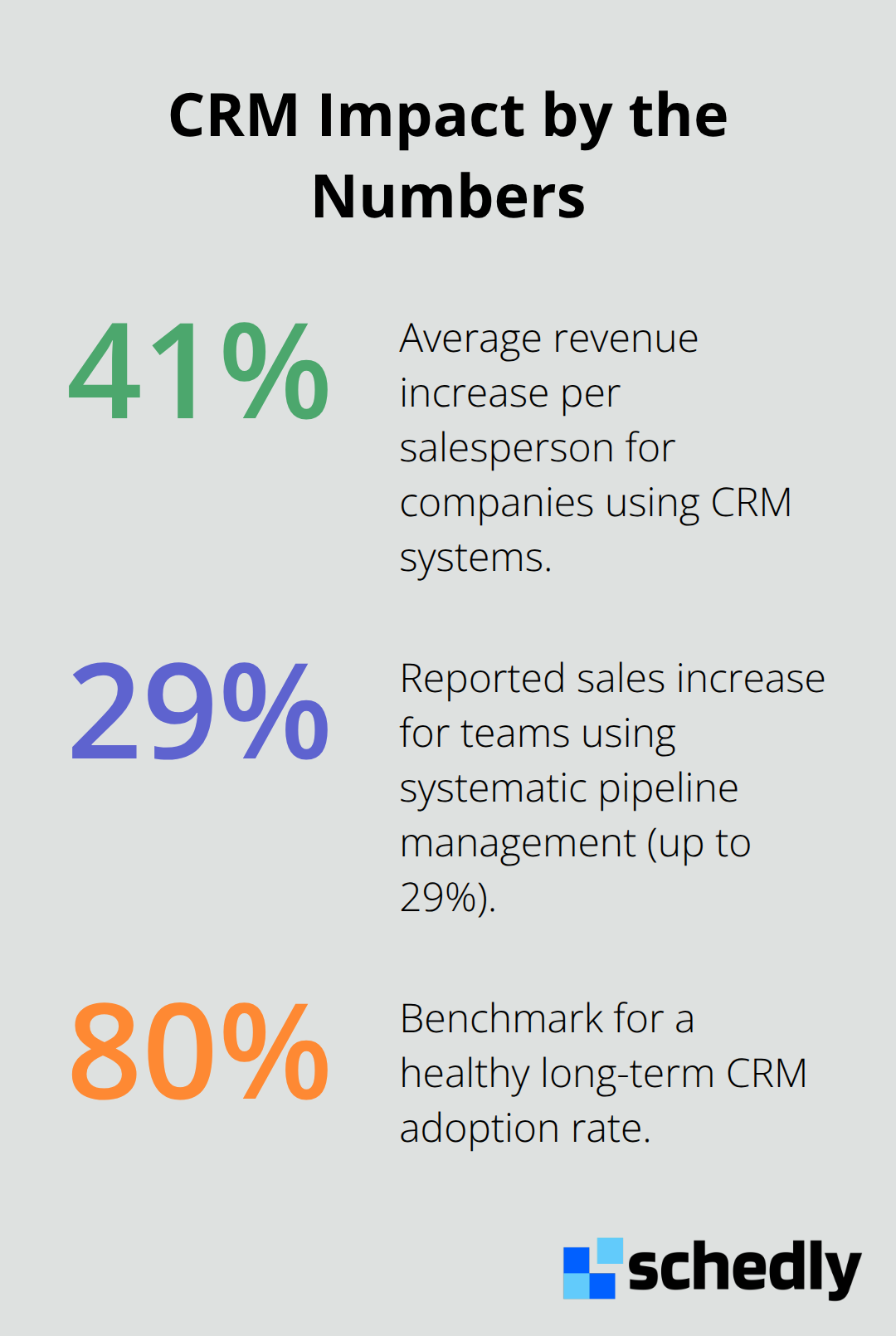
Customer relationship management capabilities can transform how businesses connect with their audience and drive revenue growth. Companies using CRM systems see an average 41% increase in revenue per salesperson.
At Schedly, we understand that implementing the right CRM strategy requires more than just selecting software. The key lies in maximizing every feature to build stronger customer relationships and streamline your sales process.
What Core CRM Functions Drive Business Growth
Centralized Customer Data Management
Modern CRM systems transform scattered customer information into organized, accessible databases. Companies that centralize their customer data reveal that 68% of companies achieve 75% or higher user adoption, which indicates significant engagement potential. The key lies in creating a single source of truth for all customer interactions, purchase history, and communication preferences. Sales teams gain instant access to customer information, which allows them to respond faster to client inquiries compared to manual data searches.
Real-Time Sales Pipeline Tracking
Sales pipeline management separates high-performing teams from those that struggle. Microsoft Dynamics 365 utilizes Azure Machine Learning for predictive analytics, which improves sales forecasts and opportunity identification. Effective pipeline tracking categorizes opportunities as hot, warm, or cold, and directs efforts where they generate the highest conversion rates. Teams that use systematic pipeline management report up to 29% increases in sales (as demonstrated by companies like Casio after they implemented comprehensive CRM solutions).
Communication History That Converts
Complete interaction records eliminate the frustration of starting conversations from scratch. CRM systems track every email, call, and meeting, and create detailed customer journey maps. This comprehensive history enables personalized follow-ups and targeted upselling opportunities based on previous interactions. Sales professionals who use detailed communication tracking benefit from AI-driven workflows that boost productivity through faster response times. The system automatically prompts follow-ups and identifies cross-selling opportunities through purchase history analysis.
Automated Task Management
CRM systems automate routine administrative tasks that typically consume valuable sales time. These platforms schedule follow-ups, send reminder emails, and update contact records without manual intervention. Sales teams that leverage automation features spend 30% more time on actual selling activities rather than data entry. The automation extends to lead scoring (which prioritizes prospects based on engagement levels) and workflow triggers that activate specific actions when customers reach certain milestones.
The foundation you build with these core functions determines how effectively your team can implement advanced CRM strategies and maximize system capabilities.
How Do You Select and Deploy CRM Technology Successfully
Platform selection determines implementation success more than any other factor. AAXIS Digital saved approximately $250,000 after they switched from Salesforce to HubSpot CRM, which demonstrates how the wrong platform choice creates massive financial drain. We recommend that you evaluate CRM platforms based on three non-negotiable criteria: feature alignment with your sales process, integration capabilities with existing tools, and total cost of ownership over three years.
Migration Strategy That Preserves Business Continuity
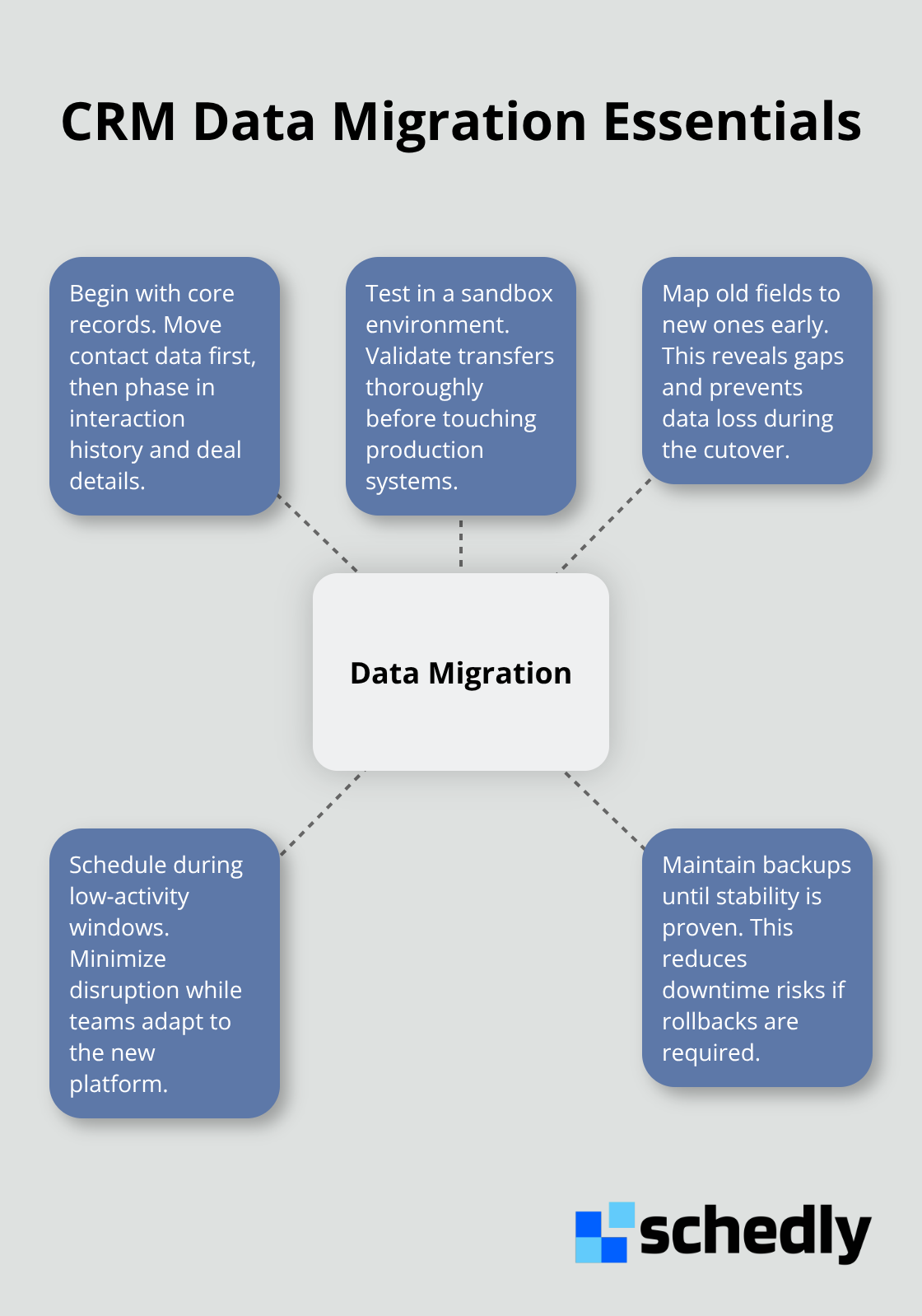
Data migration failures destroy CRM implementations within the first year according to industry research, with failure rates between 47% and 63% for new CRMs. Start migration with contact records and basic customer information, then gradually transfer interaction history and deal data. Test all data transfers in sandbox environments before you touch production systems. Map existing data fields to new CRM fields weeks before migration to identify gaps and prevent data loss.
Team Adoption Through Practical Training Programs
Training programs must focus on daily workflows rather than software features. UGURUS doubled sales productivity after they implemented role-specific training that connected CRM functions to actual sales tasks. Create training modules that match real customer scenarios your team faces regularly. Assign CRM champions within each department who provide ongoing support and collect feedback. Measure adoption through activity metrics like data entry rates and pipeline updates rather than training completion certificates. A healthy adoption rate is 80% or higher for long-term success.
Integration With Existing Business Tools
Successful CRM deployment requires seamless connection with your current software stack. Most teams use multiple tools for email marketing, accounting, and project management (which creates data silos without proper integration). Evaluate how well potential CRM platforms connect with tools like Google Calendar, Zoom, and payment processors. Poor integration forces teams to duplicate data entry across systems, which reduces efficiency and increases error rates. Test integration capabilities during trial periods to verify that data flows smoothly between platforms before you commit to a specific solution.
These implementation strategies set the foundation for advanced CRM optimization techniques that maximize your return on investment.
How Do You Maximize CRM Performance Through Data Excellence
Data quality determines CRM success more than platform features or team size. Companies with clean customer data achieve higher conversion rates compared to organizations that tolerate duplicate records and outdated information. Establish weekly data protocols that identify duplicate contacts, incomplete records, and outdated email addresses. Assign data ownership to specific team members who verify contact information during every customer interaction.
Set mandatory field requirements for essential data points like phone numbers and company information to prevent incomplete records from entering your system. Use automated data validation tools that flag suspicious entries and standardize formatting across all records. Teams that maintain clean databases see immediate improvements in email deliverability rates and campaign performance metrics.
Automated Communication That Converts Prospects
Smart automation transforms sporadic follow-ups into systematic revenue generation. Customer.io leveraged automated workflows to facilitate smarter sales processes, which led to enhanced productivity gains across their entire sales organization. Configure trigger-based email sequences that activate when prospects download content, visit pricing pages, or abandon shopping carts.
Set up automated appointment reminders that reduce no-show rates through SMS and email notifications sent 24 hours before scheduled meetings. Create lead scoring algorithms that automatically prioritize hot prospects based on engagement levels and demographic criteria. The automation should feel personal rather than robotic, so customize message content based on prospect behavior and previous interactions.
Performance Tracking That Drives Revenue Growth
Analytics separate profitable CRM investments from expensive software subscriptions. Track three performance metrics that directly correlate with revenue: lead conversion rates, average deal size, and sales cycle length.

Use predictive analytics to forecast future sales performance based on current pipeline activity and historical conversion patterns. The global big data and business analytics market is expected to reach $274.3 billion by 2022, demonstrating the massive value potential. Calculate CRM ROI through revenue attribution that connects closed deals back to specific marketing campaigns and lead sources.
Data Integration Across Business Systems
Successful CRM performance requires seamless data flow between all business platforms. Most companies use separate systems for email marketing, accounting, and customer support, which creates information silos that reduce efficiency. Connect your CRM with existing tools to eliminate duplicate data entry and maintain consistent customer records across all touchpoints.
Test integration capabilities during trial periods to verify that customer information updates automatically across connected platforms. Poor integration forces teams to manually sync data between systems, which increases error rates and wastes valuable time that could be spent on revenue activities.
Final Thoughts
Effective customer relationship management capabilities deliver measurable business transformation when companies implement them correctly. Organizations that master CRM fundamentals see 41% revenue increases per salesperson while they reduce administrative overhead through automation. The key lies in platform selection that aligns with your sales process, clean data standards, and team training on practical workflows rather than software features.
Most CRM failures stem from poor data migration strategies and inadequate team adoption. Organizations that rush implementation without proper planning face the 47-63% failure rates that plague new CRM deployments (which demonstrates the importance of thorough preparation). Avoid these pitfalls when you test integrations thoroughly, establish data ownership protocols, and measure adoption through activity metrics rather than training completion rates.
Your next optimization step involves connection of CRM capabilities with scheduling automation to streamline customer interactions. Schedly integrates with CRM platforms while it provides automated booking and workflow management. Track three performance metrics that directly impact revenue: lead conversion rates, average deal size, and sales cycle length to identify trends before they affect quarterly results.