
Schedly resources
How to Predict and Fill Your Schedule Gaps
Empty slots in your schedule cost you money. Whether it's a cancellation, a no-show, or simply weak demand on certain days, these gaps directly reduce your revenue and leave your team underutilized.
At Schedly, we've seen businesses transform their operations by spotting these gaps early and filling them strategically. By analyzing recurring appointment patterns and using real-time data, you can predict where demand will drop and take action before it happens.
Spotting Gaps Before They Widen
Map Your Historical Patterns
The most common reason schedule gaps appear is that businesses wait until they stare at empty slots to react. What you need instead is a system that flags gaps while there's still time to fill them. Pull your booking data from the last 12 months and map which days, times, and service types consistently underperform. Look for patterns: Does Tuesday afternoon always have low demand? Do certain team members have recurring gaps that others don't? Does demand drop predictably after holidays or seasonal shifts?
Physical therapy practices see patient attrition rates ranging from 10 to 73%, which creates cascading cancellations that ripple through schedules weeks later. Track your exact cancellation rate, not a rough guess-measure it weekly so you catch deterioration early. If you see 15% cancellations one week and 22% the next, that signals a change worth investigating. The data matters because it tells you whether your gaps stem from cancellations with notice, no-shows, or simply weak demand in the first place. Each root cause requires a different fix.
Monitor Real-Time Utilization
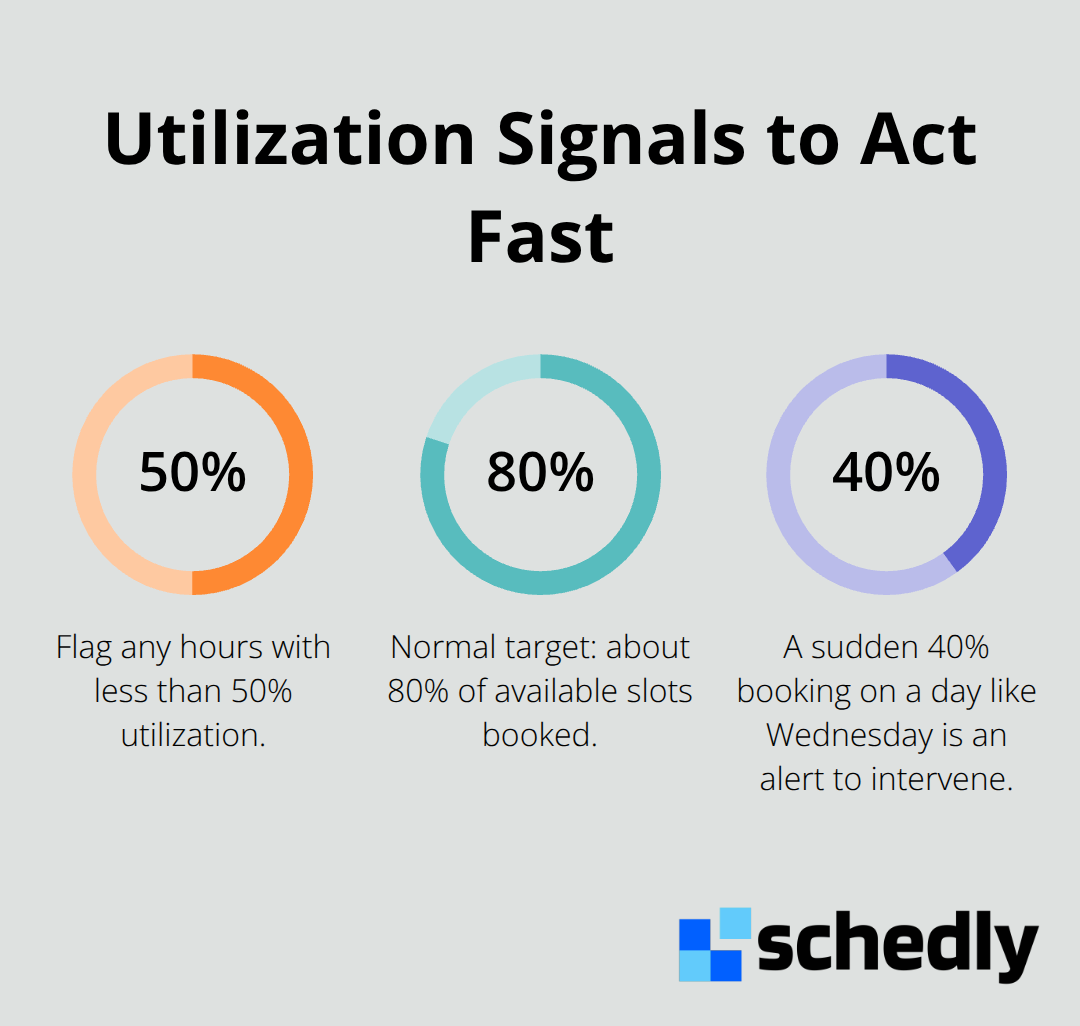
Real-time visibility is where most practices fail. You cannot fill gaps if you don't see them as they happen. Set up a simple weekly review where you map the next two weeks of your schedule and flag any hours with less than 50% utilization. If your team normally books 80% of available slots and suddenly Wednesday has only 40% booked, that's your alert to act.
Use your scheduling platform to pull utilization reports by day, time slot, and team member so you spot which provider is underbooked and which times consistently struggle. Then look forward: if your current cancellation rate is 18% and you have 30 appointments booked for next month, expect roughly 5 of them to cancel. That math tells you to be more aggressive about overbooking or building a waitlist now rather than scrambling later.
Build Your Same-Day Waitlist Strategy
The fastest way to fill a canceled slot is a same-day waitlist with SMS notifications, matching visit type and patient preferences. Build that muscle now while you have time to prepare. Proactive scheduling means treating next month's gaps as a problem you solve this month, not next month.
Once you identify where gaps will appear, the real work begins: filling them strategically before they cost you revenue.
How to Actually Fill Those Gaps
The gaps you identified last week won't fill themselves. You need a concrete system that turns empty slots into booked appointments before they drain your revenue. Most businesses treat gap-filling as a marketing problem when it's actually an operational one. Your front desk, your reminders, and your booking workflow determine whether you recover lost revenue or watch it slip away.
Audit Your Cancellation and No-Show Patterns
Start by measuring your exact cancellation and no-show rates. If your cancellation rate sits at 18% and you're not overbooking or maintaining a waitlist, you're leaving money on the table every single week. Physical therapy practices experience patient attrition rates between 10 and 73%, and many see 20% of patients drop out before their fourth visit, costing the average practice upwards of $150,000. That's not just lost revenue-it's a cascading scheduling problem that compounds when you don't act.
Track your no-show rate separately from cancellations because each requires a different response. Audit your cancellation and no-show rates by calculating the percentage of missed appointments against total scheduled appointments. Monitor it weekly so you catch patterns and decide whether to overbook, add buffer time, or implement aggressive reminder protocols.
Respond to Cancellations Within Hours, Not Days
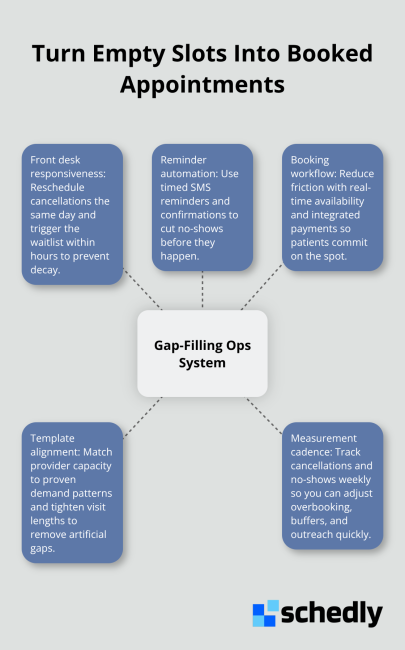
When someone cancels, your front desk should reschedule them into that slot within the same day if possible, not three days later. If they can't be reached, trigger an SMS to your waitlist or warm backfill pool within two hours. That speed matters because the longer a slot sits empty, the harder it becomes to fill.
A same-day waitlist with SMS notifications works because it matches visit type, respects patient preferences, and closes the gap before the day ends. Segment your waitlist by service type and provider preference so your front desk can make one quick match instead of calling five people. The first confirmed booking wins, and others receive a closed-loop notification so they know the slot filled. Your scheduling platform should surface these matches instantly without forcing your team to jump between tools.
Use Automated Reminders to Prevent No-Shows
Automated reminders reduce no-shows measurably when sent 24 hours and 2 hours before the appointment. SMS reminders tend to outperform email because they're harder to ignore, but make sure patients opted in to avoid compliance issues. Some practices send a confirmation text 24 hours prior and a final reminder two hours before; that double-touch catches most drift-aways.
Align Your Scheduling Template to Actual Demand
Stop offering availability that doesn't match patient behavior. If Thursday afternoons never book, shift that provider capacity to Wednesday or Friday if data shows those days fill faster. Your scheduling template is an operations problem, not a cosmetic one.
If your standard follow-up appointment runs 30 minutes but you've booked 45 minutes, you're creating artificial gaps. Tighten that template and use the reclaimed time for buffer blocks at predictable choke points-Monday mornings, post-lunch slots, or days after holidays when cancellations spike. Schedule the next visit at checkout when clinically appropriate rather than leaving that conversation for later. If your treatment plan calls for eight more sessions, book those sessions ahead during the initial evaluation instead of hoping patients will call to schedule later.
Remove Friction From Your Booking Flow
Your scheduling platform should make booking the next appointment frictionless. Integration with your calendar and payment systems means patients can book and pay in the same flow, removing friction that kills conversions. Real-time availability beats generic request forms every time because patients see exactly what's open instead of submitting a form and waiting for a callback.
Once you've tightened your cancellation response and aligned your templates to demand, the next challenge emerges: how to build a referral pipeline that fills gaps with new patients rather than relying on existing patients to rebook.
The Right Tools Make Gap Prediction Automatic
Your scheduling platform is where prediction and action intersect. Without proper tools, gap-filling remains a manual guessing game where your front desk spends hours calling waitlist patients instead of handling real work. The right system surfaces gaps automatically, shows you exactly where demand drops, and connects that insight directly to your filling mechanisms so nothing falls through the cracks. Businesses need visibility into their utilization in real time, not a report they read three days later when the damage is done.
Analytics Dashboards That Show What's Actually Happening
Start with an analytics dashboard that shows utilization by day, time slot, and team member without forcing you to export data or build custom reports. Your dashboard should display this week versus last week so you catch deterioration immediately, and it should break down which cancellations, no-shows, and weak bookings caused each gap. Shell reported substantial cost savings through better scheduling visibility and compliance, which shows what precision scheduling delivers when you can actually see where time is wasted. Your platform should also forecast next month's gaps based on your current cancellation rate and booking patterns so you know how many slots will likely sit empty before they actually do.
If your historical cancellation rate runs 18 percent and you have 80 appointments booked for next month, expect roughly 14 to cancel. That forecast tells you to activate your waitlist strategy now, not after cancellations arrive. Real-time charts that filter by provider, service type, and location help your team spot underutilized capacity instantly so they can trigger backfill protocols within hours instead of days. The speed of that insight matters because every empty slot that sits unfilled for 24 hours becomes exponentially harder to recover.
Automated Systems That Close Gaps While You Work
Your booking system should integrate seamlessly with your calendar and communication tools so filling a gap requires minimal friction. When a cancellation lands in your system, your platform should instantly surface available slots to your waitlist, match them against patient preferences, and send SMS notifications to matching candidates without manual intervention. Your system needs to remember and respect patient preferences rather than forcing manual matching.
Real-time availability on your booking page beats request-form workflows because patients see exactly what's open and book immediately instead of waiting for callbacks. If a patient can book their next appointment at checkout using your integrated payment system, you capture that commitment when motivation is highest. Your scheduling template should also auto-populate buffer blocks at predictable choke points (Monday mornings, post-lunch slots) based on your historical no-show and cancellation patterns, so those slots stay protected and available for waitlist fills rather than overbooking. Integration with Google Calendar, Zoom, or your EHR ensures that availability syncs across all your touchpoints so you never show a slot as open in one place while it's booked in another.
Data That Tells You What to Fix First
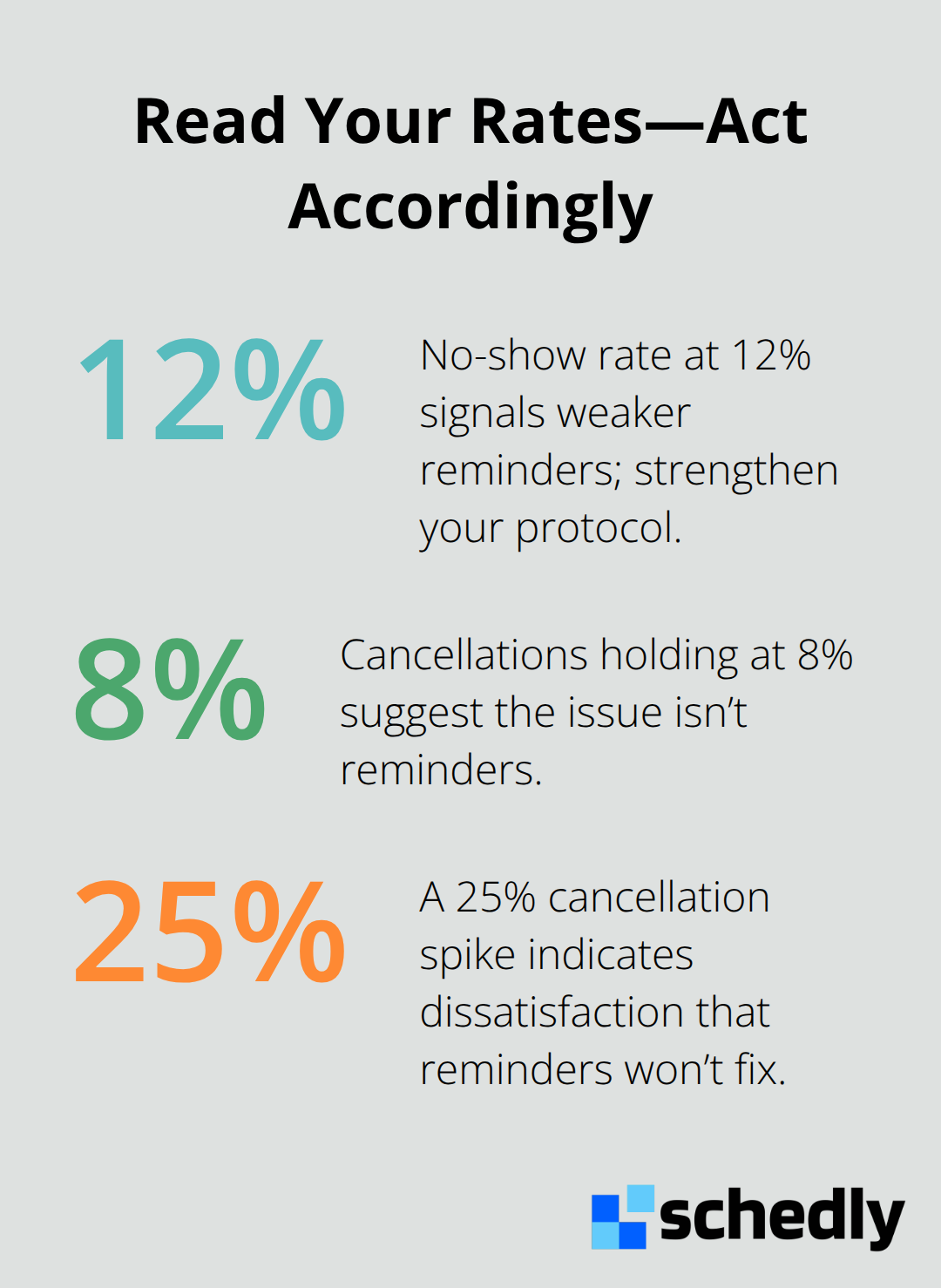
Track your cancellation and no-show rates separately because they require different responses, and your system should surface both metrics prominently on your dashboard. Measure cancellations with notice separately from no-shows so you know whether your problem is patients changing their minds or patients forgetting. If your no-show rate climbs to 12 percent while cancellations stay flat at 8 percent, your automated reminder protocol needs strengthening, not your cancellation policy. Conversely, if cancellations spike to 25 percent, something is driving patient dissatisfaction that reminders won't fix.
Your dashboard should highlight these trends weekly so you catch them before they compound across months. Alberta Justice and Solicitor General resolved high-priority scheduling issues rapidly through better visibility and support, which mirrors what happens in your practice when you can see gaps and respond within hours instead of weeks. The data also tells you whether your gaps stem from a specific provider, service type, or day of the week so you can target fixes precisely rather than applying broad changes that waste effort.
Final Thoughts
Schedule gaps cost you revenue every single week, and waiting for them to fill wastes money that you could recover. The practices that win measure their cancellation rates precisely, spot recurring appointment patterns before they widen, and respond to gaps within hours instead of days. Your front desk needs real-time visibility into utilization so they can trigger waitlist protocols instantly when a slot opens, and your scheduling template needs to match actual demand rather than wishful thinking.
Proactive scheduling improves your bottom line because it recovers revenue that would otherwise slip away and keeps your team fully utilized instead of sitting idle. When patients see real-time availability and book without friction, they commit and show up more reliably. When you respond to cancellations within hours instead of days, you fill those slots before they become a problem.
The tools you choose determine whether gap-filling remains a manual scramble or becomes an automated system that works while you focus on delivering excellent service. Schedly provides the analytics dashboard, automated booking integration, and real-time visibility you need to predict gaps and fill them strategically, with features like workflow automation, advanced analytics, and seamless calendar integration that give you the data and speed required to turn empty slots into booked appointments.