How to Streamline Scheduling for Small to Medium Businesses: A Step-by-Step Guide

How to Streamline Scheduling for Small to Medium Businesses: A Step-by-Step Guide

Effective scheduling is the backbone of productivity for small and medium businesses (SMBs). Yet, many organizations face bottlenecks, missed deadlines, and frustrated teams due to outdated or inefficient scheduling practices. In this comprehensive guide, we’ll explore actionable strategies, tools, and frameworks to help SMBs streamline their scheduling process, reduce administrative overhead, and maximize operational efficiency. Whether you’re managing client appointments, coordinating team calendars, or juggling multiple projects, this guide will equip you with the know-how to optimize scheduling workflows.

Scheduling is more than just a logistical task—it plays a critical role in shaping customer experiences, team morale, and operational success. By implementing the strategies outlined here, SMBs can save hours of administrative work, reduce appointment no-shows, and create seamless experiences for both employees and clients. With increasing competition in today’s business landscape, adopting modern scheduling practices is no longer optional but essential for growth and sustainability.

Why SMBs Struggle with Scheduling: Common Challenges

Managing schedules in SMBs often comes with unique challenges. Unlike large enterprises that have dedicated resources for operations, smaller businesses rely on lean teams to handle multiple responsibilities. This can lead to inefficiencies that snowball into larger operational issues. Below are the most common scheduling pitfalls:

A small business office with a stressed manager at a desk covered in sticky notes and calendars, symbolizing scheduling inefficiencies.
  • Manual Processes: Many SMBs still rely on spreadsheets or paper-based systems, which are prone to errors, time consumption, and lack of scalability. For instance, a small dental clinic using paper-based appointment books may find it difficult to track last-minute cancellations or reschedule appointments efficiently.
  • Lack of Integration: Disconnected tools make it challenging to sync calendars, coordinate across teams, or integrate with customer relationship management (CRM) platforms. This often results in missed opportunities to improve workflows and customer interactions.
  • Overlapping Appointments: Without automated conflict detection, double bookings and scheduling overlaps are frequent. This is especially problematic in industries like healthcare or personal services, where time-sensitive appointments are critical.
  • Client Frustration: Complex booking processes or lack of self-service options can drive customers away. For example, a salon that only accepts bookings over the phone may alienate tech-savvy clients who prefer online scheduling.

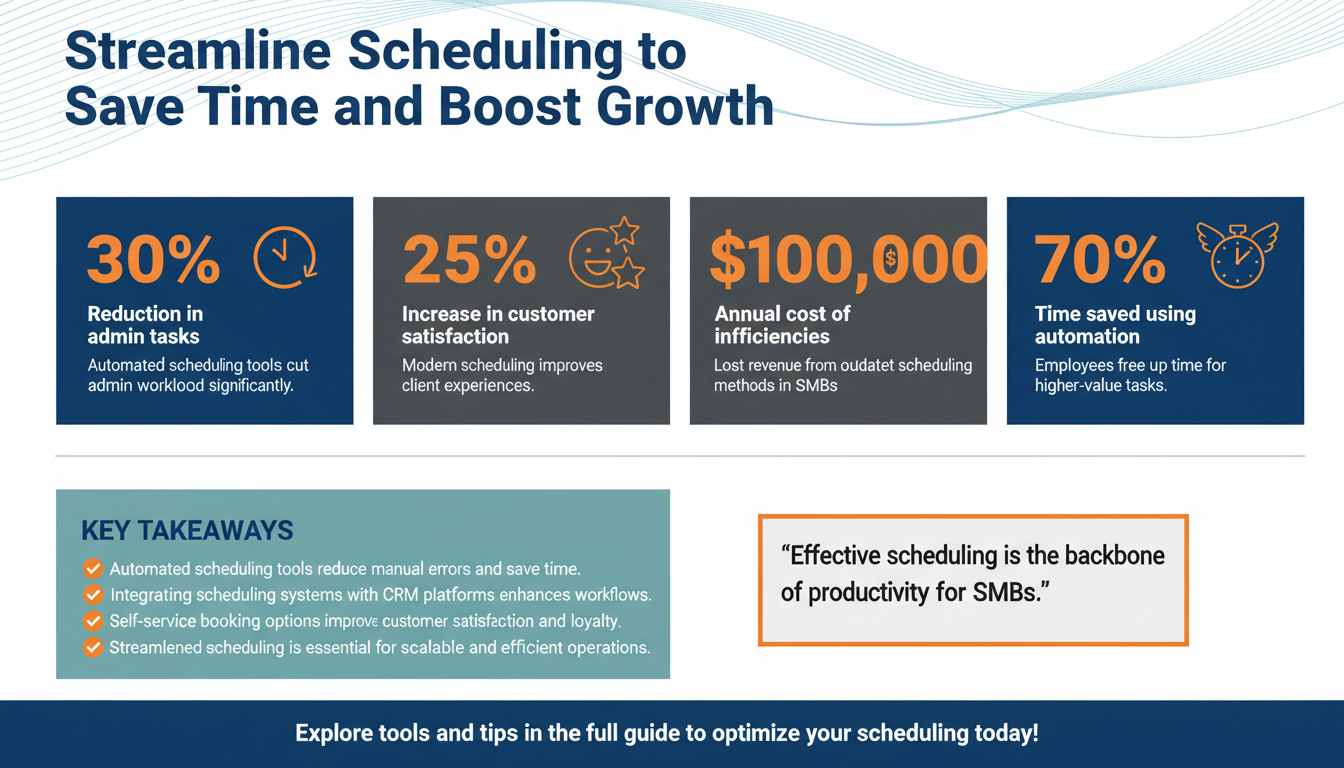
According to McKinsey’s operations insights, businesses that adopt automated scheduling tools see a 30% reduction in administrative tasks and a 25% increase in customer satisfaction. Furthermore, research by AppointmentPlus found that inefficient scheduling processes can cost SMBs up to $100,000 annually in lost revenue and productivity.

Key Takeaway: SMBs need solutions that eliminate manual scheduling, reduce inefficiencies, and integrate seamlessly with existing workflows to overcome these challenges.

The Benefits of Streamlined Scheduling for SMBs

Streamlining scheduling isn’t just about saving time—it’s about building a more efficient, customer-friendly, and scalable business model. Here are the top benefits:

A co-working space with a manager reviewing a digital scheduling tool, symbolizing productivity and streamlined workflows.

1. Time Savings

Automated scheduling tools can reduce the time spent on manual bookings by up to 70%, according to Forrester’s Total Economic Impact study. Instead of spending hours coordinating appointments, employees can focus on higher-value tasks like customer service or strategic projects. For example, a fitness studio that implemented automated scheduling reported saving over 15 hours per week in administrative work.

2. Improved Accuracy

Automation eliminates the risk of human error, such as double bookings or incorrect appointment details. In industries like legal consulting or healthcare, where precision is critical, reducing errors can significantly enhance operational credibility and client trust.

3. Enhanced Customer Experience

Offering self-service booking and confirmation options improves convenience for clients, leading to higher satisfaction and retention rates. A recent survey by Statista found that 67% of customers prefer online booking options over traditional methods. Additionally, features like automated reminders reduce no-shows by up to 39%, according to industry data.

4. Scalability

As SMBs grow, streamlined scheduling ensures that operations remain smooth—whether adding new employees, clients, or services. For example, a growing tutoring center that adopted a scalable scheduling platform was able to manage a 50% increase in student enrollment without additional administrative staff.

Key Takeaway: Streamlined scheduling creates a foundation for growth, efficiency, and customer satisfaction, making it a vital component of any SMB’s operational strategy.

Step-by-Step Process to Streamline Scheduling

Streamlining scheduling involves both strategic planning and the adoption of modern tools. Below is a step-by-step approach to transforming your scheduling workflows:

A conference room with professionals discussing a step-by-step scheduling process displayed on a screen.

Step 1: Audit Your Existing Scheduling Process

Begin by identifying inefficiencies in your current system. Are you dealing with frequent double bookings? Do clients find it difficult to schedule appointments? Conduct surveys among employees and clients to gather insights into pain points. For example, a small veterinary clinic discovered through a survey that most clients preferred online booking but were frustrated by the clinic’s outdated phone-only system.

Step 2: Define Scheduling Goals

Set clear objectives, such as reducing no-shows by 20% or saving 10 hours a month in administrative work. Goals should align with broader business priorities, such as improving customer satisfaction or increasing employee productivity. Ensure these goals are measurable to track progress effectively.

Step 3: Choose the Right Tools

Invest in B2B scheduling tools tailored for SMBs. Look for features like multi-calendar sync, automated reminders, and self-service booking. Platforms such as Schedly and Acuity Scheduling are designed to simplify complex scheduling needs while offering robust customization options.

Step 4: Train Your Team

Ensure employees are trained on new scheduling platforms. Provide resources, tutorials, and hands-on sessions to maximize adoption. For instance, a small marketing agency that introduced a new scheduling tool held weekly training sessions for a month, resulting in a 90% adoption rate among staff.

Step 5: Monitor and Optimize

Track key metrics such as appointment completion rates and administrative time savings. Use these insights to continuously improve your scheduling process. Regularly review client feedback to identify opportunities for further enhancements.

Key Takeaway: A structured approach ensures that scheduling improvements are both measurable and impactful.

Proprietary Framework: The STREAM Model for Scheduling Success

To help SMBs streamline scheduling effectively, we’ve developed the STREAM Model:

A futuristic office with a holographic display showing the STREAM model for scheduling success.

S – Synchronize Calendars

Ensure all team calendars are integrated into one system to avoid conflicts. For example, using Google Calendar integrations can provide real-time updates across teams.

T – Train Staff

Provide training on tools and best practices for scheduling. This ensures effective implementation and long-term success.

R – Reminders and Notifications

Set up automated reminders to reduce no-shows. These can include email, SMS, or app notifications, depending on client preferences.

E – Evaluate Metrics

Track scheduling KPIs like booking rates, no-show percentages, and time saved to measure success.

A – Automate Processes

Leverage automation to handle repetitive tasks such as confirmations, rescheduling, and follow-ups.

M – Manage Customer Preferences

Offer flexible booking options and accommodate specific client needs, such as preferred time slots or service providers.

Key Takeaway: The STREAM Model provides a structured framework for achieving scheduling excellence.

Conclusion: Transform Your Scheduling Today

Streamlining scheduling is no longer optional for SMBs—it’s essential for staying competitive in today’s fast-paced business environment. By addressing common challenges, leveraging automation tools, and following the STREAM Model, businesses can unlock new levels of efficiency, scalability, and customer satisfaction. With the right approach, your scheduling process can evolve from a bottleneck into a powerful enabler of productivity and growth.

Ready to take the next step? Explore Schedly’s platform features for tailored solutions that empower SMBs to streamline scheduling effortlessly.

  • Product
  • Solutions
  • Pricing
  • Resources