
Schedly resources
How to Use Scheduling Automation to Improve Employee Satisfaction and Retention in High-Growth Companies
In today’s hyper-competitive business landscape, retaining top talent and maintaining high employee satisfaction are two of the most significant challenges faced by high-growth companies. As organizations scale rapidly, the complexities of workforce management multiply, often leading to inefficiencies, employee burnout, and high turnover rates. One area that becomes particularly cumbersome is scheduling. Manual scheduling processes, while initially manageable, often fail to keep pace with the demands of an expanding workforce, creating bottlenecks that hinder productivity and employee morale.
Enter scheduling automation—a game-changing solution for modern businesses. By leveraging advanced technology to streamline and optimize scheduling practices, high-growth companies can simplify workforce management, foster transparency, and empower employees. The result? Improved employee satisfaction, higher retention rates, and greater operational efficiency. This article delves into actionable strategies, proprietary frameworks, and real-world examples to help businesses unlock the full potential of scheduling automation.
The Role of Scheduling Automation in Employee Satisfaction
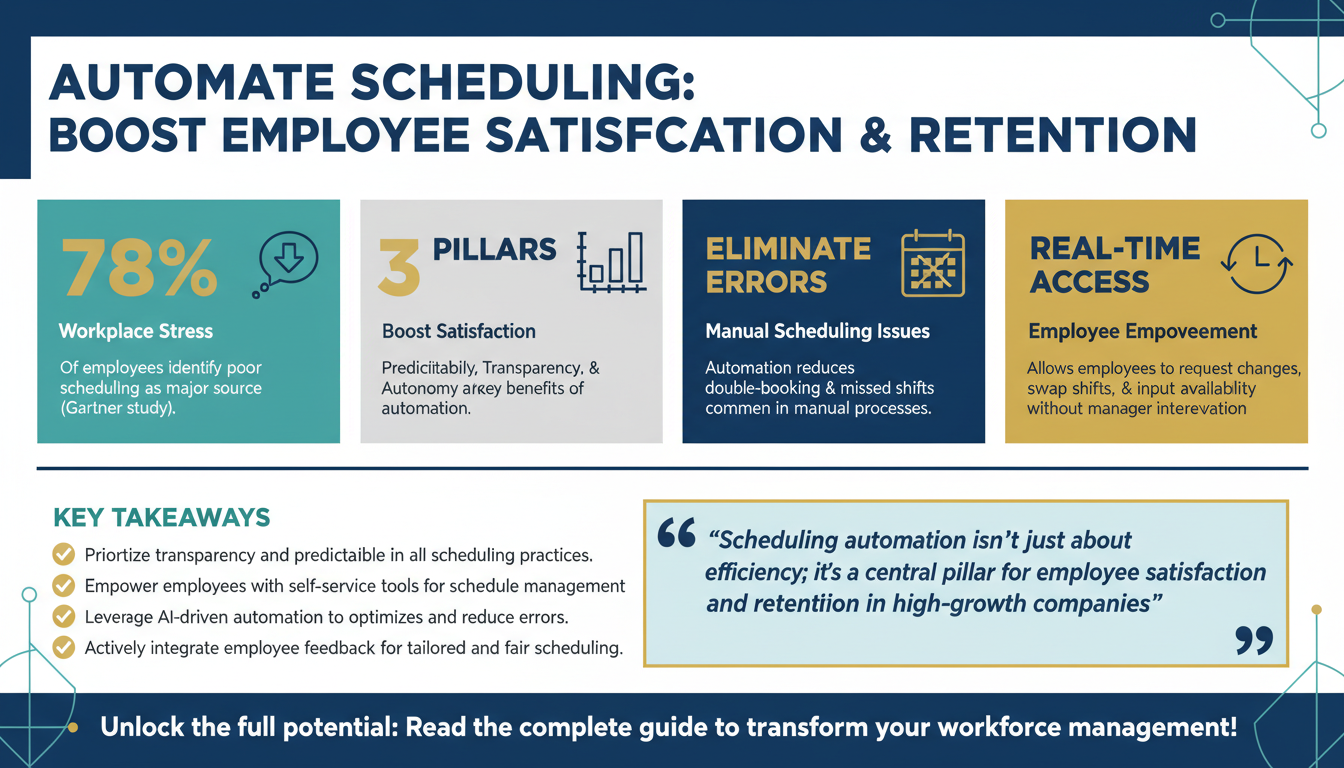
Scheduling is no longer a back-office task relegated to administrative staff—it is a central pillar of workforce management that directly influences employee morale, productivity, and overall job satisfaction. According to a Gartner study, 78% of employees identify poor scheduling practices as a major source of workplace stress. This highlights the critical need for solutions that minimize scheduling inefficiencies and improve transparency.

Scheduling automation tools, such as Schedly, address these challenges by creating predictable work patterns, reducing scheduling conflicts, and ensuring that schedules are fairly distributed. For instance, employees can access their schedules in real-time, request changes, swap shifts, and input their availability—all without requiring manager intervention. This level of autonomy fosters trust and reduces administrative friction.
Additionally, automation minimizes manual scheduling errors, such as double-booking or assigning shifts outside an employee’s availability. These seemingly minor issues can have a ripple effect, leading to employee frustration and decreased morale. Advanced scheduling automation platforms utilize AI-driven algorithms to optimize schedules, balancing business needs with employee preferences.
Transparency as a Cornerstone of Job Satisfaction
Transparency is a critical factor in fostering trust and engagement among employees. When employees can view their schedules well in advance and understand the rationale behind shift assignments, they are less likely to feel overlooked or undervalued. Automated scheduling systems make transparency easier by providing clear visibility into how shifts are allocated based on predefined criteria.
For example, in industries like retail and healthcare, where irregular shifts are common, employees often express frustration about last-minute changes. Automation tools mitigate this by setting clear guidelines for schedule changes, ensuring employees have ample notice. This not only boosts morale but also allows employees to plan their personal lives more effectively.
Pro Tip: Leveraging Employee Feedback
Integrating feedback mechanisms within scheduling platforms can further enhance employee satisfaction. For instance, collecting data on preferred shift times or frequently requested days off allows managers to tailor schedules to meet employee needs. This demonstrates that the organization values its workforce, leading to higher engagement and loyalty.
Key Takeaways:
- Transparency and predictability in scheduling are crucial for employee satisfaction.
- Automation reduces errors, builds trust, and eliminates unnecessary administrative tasks.
- Empowering employees to manage their schedules fosters engagement and loyalty.
Why High-Growth Companies Need Scheduling Automation
High-growth companies operate in an environment characterized by rapid expansion, evolving priorities, and increasing complexities. In such settings, traditional manual scheduling methods—such as spreadsheets or basic scheduling apps—often fall short. These tools lack the scalability and flexibility required to manage large, diverse teams effectively, leading to inefficiencies and employee dissatisfaction.

Scaling Scheduling Processes for Growth
One of the biggest challenges for high-growth companies is the ability to scale workforce management processes. As teams expand and operations become more complex, manual scheduling methods become untenable. Automation tools provide the scalability needed by dynamically adjusting schedules based on real-time data.
For example, a logistics company that grew from 100 to 1,000 drivers implemented scheduling automation to manage shift assignments across multiple locations. The tool’s ability to adapt to fluctuating demand and employee availability allowed the company to maintain consistent service levels while keeping its workforce satisfied. Employee complaints about unfair scheduling dropped by 60%, highlighting the tool’s effectiveness in managing rapid growth.
Flexibility in Dynamic Environments
High-growth organizations often deal with unexpected changes, such as surges in demand or last-minute project deadlines. Manual scheduling systems struggle to accommodate these fluctuations without disrupting employee schedules. Automation tools, however, use dynamic algorithms to reassign shifts seamlessly, ensuring minimal disruption.
Take the example of a software development firm scaling up its operations. With multiple projects running concurrently, the firm faced frequent rescheduling needs due to shifting deadlines. By adopting scheduling automation, the firm could reassign tasks efficiently while keeping employees informed of changes in real time. This created a more agile and responsive workflow while maintaining employee satisfaction.
Expert Insight: Data-Driven Decisions
“Data analytics embedded in scheduling automation platforms provide invaluable insights into workforce trends. These insights enable companies to optimize workflows, identify peak productivity periods, and address staff shortages proactively,” says Michael Carter, a workforce analytics consultant at PwC.
Key Takeaways:
- Automation is essential for scaling scheduling processes in fast-growing organizations.
- Flexible scheduling systems minimize operational disruptions and improve employee satisfaction.
- Data-driven insights enable smarter workforce management decisions.
Proprietary Framework: The CARE Model for Scheduling Automation Success
To maximize the benefits of scheduling automation, high-growth companies must adopt a structured and strategic approach. Enter the CARE Model—a proprietary framework designed to guide organizations through the successful implementation and optimization of scheduling automation. The model consists of four key pillars:
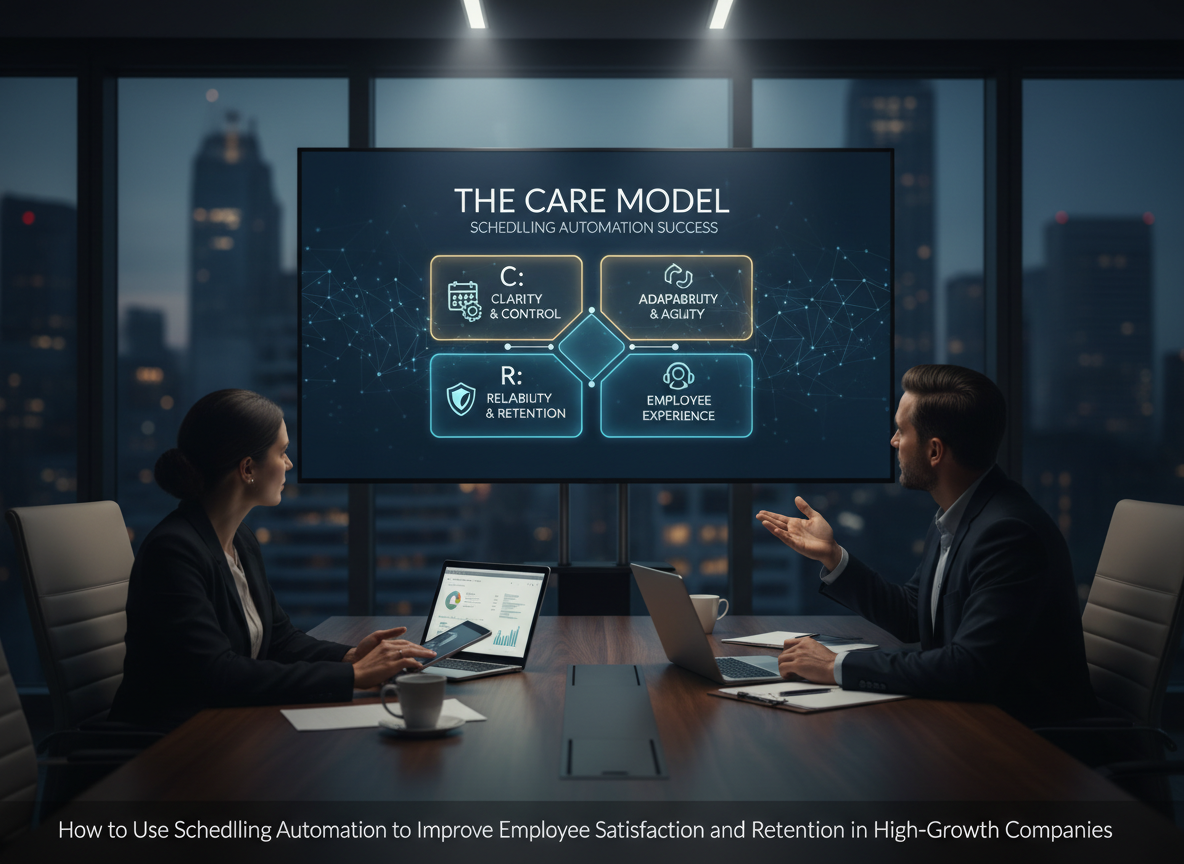
- C: Communicate scheduling policies transparently to employees.
- A: Automate routine scheduling tasks to eliminate inefficiencies and bottlenecks.
- R: Review scheduling data regularly to identify areas for improvement.
- E: Empower employees by providing flexible options and self-service tools.
Communication: Building Trust Through Transparency
Transparency in scheduling policies fosters trust and enhances employee engagement. For instance, a manufacturing company that implemented the CARE Model held town hall meetings to discuss the objectives of scheduling automation. Employees appreciated being included in the decision-making process, leading to smoother adoption of the new system.
Automation: Streamlining Processes
Automating routine tasks like shift assignments and overtime calculations reduces administrative overhead and ensures accuracy. For example, a call center reduced scheduling errors by 90% after automating its processes, freeing up managers to focus on strategic priorities.
Review: Driving Continuous Improvement
Regularly reviewing scheduling data helps organizations identify bottlenecks or inefficiencies. A retail chain using the CARE Model analyzed its scheduling data to optimize peak staffing during holiday seasons, resulting in higher customer satisfaction and improved employee morale.
Empowerment: Giving Employees Control
Self-service tools that allow employees to update their availability or swap shifts enhance satisfaction. Empowering employees to take control of their schedules fosters a sense of ownership and loyalty.
Expert Insight: The CARE Model in Action
“Companies that communicate scheduling policies openly and invest in automation tools not only reduce friction but also create a culture of trust and accountability,” says Dr. Amanda Lee, a workforce management expert at MIT Sloan.
Key Takeaways:
- Adopting a strategic framework like CARE ensures the success of scheduling automation initiatives.
- Transparent communication and employee empowerment are central to engagement and satisfaction.
- Regular reviews of scheduling data drive continuous improvement.
How Scheduling Automation Improves Retention Rates
Employee retention is a critical success factor for high-growth companies. High turnover rates not only disrupt operations but also incur significant costs related to recruitment, onboarding, and training. According to a Harvard Business Review study, organizations with optimized scheduling practices see a 25% improvement in retention rates compared to those relying on manual systems.
Work-Life Balance: A Retention Driver
Automated scheduling platforms allow employees to set preferences for work hours, ensuring they have adequate time for personal commitments. This focus on work-life balance reduces burnout and enhances loyalty. For example, a healthcare provider offering flexible scheduling options saw a significant reduction in turnover rates from 28% to 18% within a year.
Pro Tip: Piloting Automation
If your company struggles with high turnover, consider piloting scheduling automation in one department. Monitor key metrics such as retention rates, employee satisfaction, and absenteeism to evaluate its impact before scaling the solution across the organization.
Key Takeaways:
- Retention improves when employees feel their time is respected and their schedules are fair.
- Feedback loops foster continuous improvement and enhance employee satisfaction.
- Work-life balance is a critical factor in reducing employee turnover.
Overcoming Common Challenges in Scheduling Automation Implementation
While scheduling automation offers significant benefits, its implementation is not without challenges. Resistance to change, perceived complexity, and integration issues are common hurdles that organizations face. To ensure a smooth transition, companies should take the following steps:
Addressing Resistance to Change
Resistance to new systems is often rooted in fear of the unknown. Proactive communication and training can alleviate these concerns. For example, a logistics firm conducted hands-on workshops to familiarize employees with its new scheduling platform. As a result, adoption rates exceeded 90% within three months.
Ensuring Seamless Integration
Integration issues can derail automation efforts. Collaborating with vendors to ensure compatibility with existing HR, payroll, and workforce management systems is crucial. A retail chain successfully integrated its scheduling system with its payroll software, reducing payroll errors by 15%.
Expert Insight: Simplifying Adoption
“Implementation success hinges on proactive communication and training. Employees fear what they don’t understand, so addressing concerns early is critical,” notes Sarah Thompson, a consultant at Deloitte.
Key Takeaways:
- Proactive communication reduces resistance to change and simplifies adoption.
- User-friendly tools enhance the onboarding experience for both employees and managers.
- Seamless integration ensures that scheduling automation aligns with existing workflows.
Conclusion
Scheduling automation is no longer a luxury for high-growth companies—it is a strategic imperative. By streamlining scheduling processes, empowering employees, and leveraging data-driven insights, organizations can create a workplace environment that prioritizes fairness, transparency, and work-life balance. Frameworks like the CARE Model provide a roadmap for successful implementation, while addressing common challenges ensures a smoother transition.
As competition for top talent continues to intensify, the ability to retain satisfied and engaged employees will set leading organizations apart. Scheduling automation is a key tool in achieving this goal, enabling companies not only to scale efficiently but also to foster a culture of trust and accountability. By investing in the right tools and strategies, high-growth companies can unlock the full potential of their workforce and drive sustainable success.