
Schedly resources
How to Use Scheduling Automation to Improve Project Timelines and Resource Management
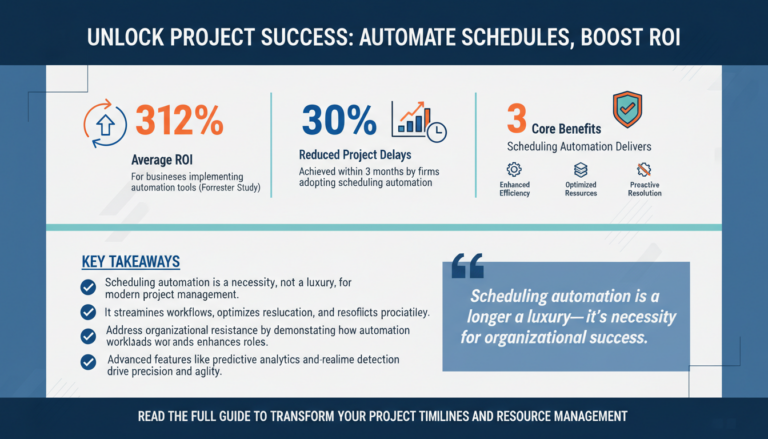
In today’s hyper-competitive business landscape, meeting project timelines and managing resources effectively are critical to organizational success. Yet, these tasks are often fraught with inefficiencies, human error, and an overwhelming number of moving parts. Scheduling automation has emerged as a game-changing solution, enabling businesses to streamline workflows, reduce operational delays, and allocate resources more effectively. For teams navigating complex projects, the adoption of scheduling automation tools is no longer a luxury—it’s a necessity.
This guide dives deep into the transformative power of scheduling automation, outlining its benefits, key features, and actionable strategies for implementation. Whether you’re a project manager, team leader, or business owner, you’ll discover how automated scheduling can optimize your operations, improve team collaboration, and drive measurable results.
Introduction: The Case for Scheduling Automation in Modern Project Management
Every organization, regardless of size or industry, faces the challenges of missed deadlines and inefficient resource allocation. These challenges not only disrupt project timelines but also have a ripple effect across the organization, leading to financial losses, strained client relationships, and overburdened employees. According to Forrester’s Total Economic Impact study, businesses that implement automation tools see an average ROI of 312%. This remarkable figure underscores how automation can reduce inefficiencies and enhance resource management.
Scheduling automation tools provide a comprehensive solution to these challenges by enabling organizations to:
- Enhance operational efficiency: Automate repetitive tasks and eliminate manual scheduling errors.
- Optimize resource allocation: Distribute workload equitably across teams and projects.
- Resolve scheduling conflicts proactively: Identify potential bottlenecks before they disrupt workflows.
Real-World Example: Overcoming Scheduling Chaos
Consider a scenario where a marketing firm struggles with overlapping project timelines and uneven resource distribution. By integrating scheduling automation, the firm can visualize dependencies, forecast resource needs, and dynamically adjust timelines to meet client demands. This approach not only improves project outcomes but also boosts employee morale by reducing burnout. For instance, after implementing a scheduling automation tool, the firm successfully reduced project delays by 30% within three months.
Pro Tip: Addressing Organizational Resistance
When implementing scheduling automation, organizational resistance is common. Managers and employees may fear that automation will render their roles redundant or be too complex to adopt. To combat this, ensure clear communication about the benefits of automation, provide hands-on training, and involve employees in the decision-making process. When teams see how automation simplifies their workload rather than replacing them, adoption rates soar.
This guide will explore the practical applications of scheduling automation, supported by data, case studies, and actionable steps. By the end, you’ll have a clear roadmap to implement automated scheduling solutions that enhance both project timelines and resource management.
Understanding Scheduling Automation: Key Features and Benefits
Scheduling automation goes beyond basic calendar tools. It represents a paradigm shift in how businesses approach project management and resource optimization. Modern scheduling platforms like Schedly offer advanced features such as predictive analytics, real-time conflict detection, and dynamic resource allocation, enabling teams to operate with precision and agility.
Key Features of Scheduling Automation Tools
Scheduling automation platforms are designed to integrate seamlessly with existing workflows, providing a centralized hub for project and resource management. Here are some of the standout features:
- Predictive Scheduling: Leverage historical data and machine learning to forecast project timelines and resource needs.
- Real-Time Conflict Detection: Identify overlapping tasks, resource shortages, or potential bottlenecks before they escalate.
- Dynamic Gantt Charts: Visualize project timelines with interactive charts that update in real time as tasks are completed.
- Resource Heatmaps: Monitor resource utilization across departments to ensure equitable distribution and prevent burnout.
- Multiplatform Integration: Seamlessly connect scheduling tools with other software such as CRMs, ERPs, and employee management systems.
Advanced Features to Look For
In addition to the basics, consider platforms that offer advanced features like automated notifications, flexible templates for recurring tasks, and AI-driven insights. For instance, some tools use AI to suggest optimal team configurations for specific projects, ensuring the right mix of skills and availability.
Benefits of Scheduling Automation
Adopting scheduling automation delivers tangible benefits that extend across the organization:
- Improved Accuracy: Automated systems eliminate the human errors common in manual scheduling, ensuring that timelines and resource allocations are precise.
- Time Savings: According to Gartner research, project managers can save up to 30% of their time by automating scheduling tasks, allowing them to focus on strategic priorities.
- Enhanced Collaboration: Integrating scheduling tools across departments fosters seamless communication and alignment, preventing silos and miscommunication.
- Cost Efficiency: Automation reduces the need for manual oversight, minimizing operational costs and reallocating resources to value-driving activities.
For example, a healthcare provider implemented scheduling automation to manage staff across multiple locations. By using real-time analytics and predictive scheduling, the provider reduced staffing inefficiencies by 20% and improved patient satisfaction scores by 15% within six months of implementation.
Pro Tip: Leverage Data for Continuous Improvement
Once your scheduling platform is in place, leverage its data analytics capabilities to identify trends and areas for optimization. For example, if certain tasks consistently take longer than expected, you can adjust your forecasting models or allocate additional resources to those areas.
Key Takeaway: Scheduling automation is not just a tool for efficiency—it’s a strategic enabler that drives scalability, collaboration, and innovation within organizations.
The Schedly Scheduling Optimization Framework (SSOF)
To help organizations maximize the value of scheduling automation, Schedly developed the Scheduling Optimization Framework (SSOF). This proprietary framework offers a structured approach to implementing and optimizing scheduling automation tools, ensuring long-term success.
Four Stages of the Schedly Scheduling Optimization Framework
The SSOF is divided into four key stages:
- Stage 1 - Assessment: Conduct a thorough analysis of current workflows and identify pain points, such as bottlenecks or resource imbalances. Tools like process-mapping software can help visualize inefficiencies.
- Stage 2 - Automation Design: Map out workflows and dependencies within the scheduling platform. This stage involves customizing templates, setting up rules for task dependencies, and configuring alerts for potential conflicts.
- Stage 3 - Implementation: Roll out the scheduling automation tool using a phased approach. Begin with a pilot program for a single team or department, gather feedback, and refine the setup before scaling across the organization.
- Stage 4 - Continuous Improvement: Use analytics dashboards to monitor KPIs such as on-time delivery rates and resource utilization. Regularly update the system based on performance insights and team feedback.
Case Study: Real-World Application
Consider the case of a software development firm that adopted the SSOF to improve project delivery. By addressing inefficiencies in the assessment stage and implementing predictive scheduling during the automation design phase, the firm reduced project delays by 35% and increased resource utilization by 25% within the first year.
Expert Insight: Achieving Buy-In
According to McKinsey’s analysis, organizations that adopt structured frameworks for automation, like the SSOF, experience a 40% increase in operational efficiency. To ensure buy-in from stakeholders, showcase early wins from pilot programs to demonstrate the tangible benefits of automation.
How Scheduling Automation Improves Project Timelines
Missed deadlines are a common pain point in project management, often resulting from manual scheduling errors, unforeseen complexities, or poor communication. Scheduling automation addresses these challenges by introducing predictability, transparency, and adaptability into project workflows.
Key Contributions of Scheduling Automation to Timelines
- Dependency Management: Automated tools ensure smooth transitions between project phases by managing task dependencies. For instance, a construction firm used scheduling automation to link dependencies between procurement, design, and construction phases, reducing delays caused by misaligned timelines.
- Proactive Conflict Resolution: Many scheduling tools can flag potential conflicts, such as overlapping resources, allowing project managers to address issues before they disrupt workflows.
- Real-Time Adjustments: Automated scheduling systems dynamically adapt to changing project priorities, ensuring timely completion even when unexpected changes arise.
For example, a technology startup using Schedly’s automation tools managed to reduce project delays by 25% by leveraging real-time adjustments and dependency management. The platform’s dynamic Gantt charts allowed team leaders to visualize progress, identify bottlenecks, and make data-driven decisions.
Checklist: Enhancing Timelines
- Use tools with dependency management to link tasks logically.
- Leverage predictive analytics to forecast accurate timelines.
- Enable notifications to alert teams of potential delays.
Quick Win: Use scheduling tools with dynamic Gantt charts to gain a clear visual representation of your project’s progress and easily make adjustments as needed.
Optimizing Resource Management with Automation
Effective resource management is essential for balancing workloads, avoiding employee burnout, and maximizing ROI. However, managing personnel, equipment, and budgets across multiple projects can be overwhelming without the right tools. Scheduling automation simplifies resource management by providing real-time visibility and forecasting capabilities.
Strategies for Resource Optimization
Here are some practical ways scheduling automation can optimize resource management:
- Equitable Distribution: Ensure workloads are balanced across teams to avoid overburdening specific employees or departments. For example, a consulting firm used resource heatmaps to distribute tasks more evenly, leading to a 15% reduction in employee turnover.
- Cost Savings: By matching resources to demand, organizations can minimize overstaffing and underutilization. A manufacturing company that implemented automated resource allocation saved 20% in labor costs by eliminating inefficiencies.
- Forecasting: Predict future resource requirements using historical data. This capability is particularly useful in industries with seasonal fluctuations, such as retail or hospitality.
Actionable Steps for Resource Optimization
Start by conducting a resource audit to identify underutilized areas. Use heatmaps and utilization reports from your scheduling tool to pinpoint inefficiencies. Then, create a strategy to redistribute workloads, matching resources to priority projects.
Key Takeaway: Resource optimization tools enable managers to make data-driven decisions, improving project outcomes while enhancing employee satisfaction.
Common Mistakes to Avoid When Implementing Scheduling Automation
While the benefits of scheduling automation are clear, poor implementation can undermine its effectiveness. Here are some common pitfalls to avoid:
- Ignoring Scalability: Choose a scheduling platform that can grow with your organization’s needs, ensuring long-term viability.
- Poor Integration: Ensure the tool integrates seamlessly with existing systems like CRMs, ERPs, and collaboration platforms.
- Insufficient Training: Invest in comprehensive onboarding and training programs to ensure team members fully understand how to use the tool.
Expert Insight: Overcoming Pitfalls
According to Harvard Business Review, poor onboarding is the leading cause of automation project failures. To avoid this, assign “automation champions” who can provide ongoing support and training. Additionally, schedule regular reviews to address any challenges teams face during implementation.
Measuring the Impact of Scheduling Automation
To justify the investment in scheduling automation, it’s essential to track its impact using key performance indicators (KPIs). Common metrics include:
- On-Time Delivery Rate: Track the percentage of projects completed by the deadline to measure efficiency improvements.
- Resource Utilization: Monitor how effectively resources are being deployed across projects.
- Cost Savings: Calculate reductions in expenses related to manual scheduling tasks.
- Employee Satisfaction: Use surveys to gauge team morale and satisfaction after adopting scheduling automation.
Creating a KPI Dashboard
Use your scheduling tool’s analytics dashboard to consolidate data on these metrics. Share the dashboard with stakeholders regularly to demonstrate the ROI and identify areas for further improvement.
Key Takeaway: Regularly review these metrics to refine your automation strategy and demonstrate ROI to stakeholders.
Conclusion: Elevating Project Timelines and Resource Management with Scheduling Automation
Scheduling automation has become a cornerstone of modern project management, offering unparalleled efficiency, accuracy, and scalability. By adopting tools like Schedly and following structured frameworks such as the Schedly Scheduling Optimization Framework, organizations can optimize project timelines, enhance resource management, and drive measurable business outcomes.
As you embark on your automation journey, remember that success requires not only the right tools but also the right strategies, training, and continuous improvement. By prioritizing these elements, you can unlock the full potential of scheduling automation and position your organization for sustained growth.
Ready to transform your operations? Visit Schedly’s features page to learn more about how our platform can help your business thrive.