
Schedly resources
Identifying Hidden Friction Points Slowing Your Business [Guide]
![Identifying Hidden Friction Points Slowing Your Business [Guide]](/wp-content/uploads/emplibot/scheduling-bottlenecks-hero-1783400893.webp)
Most businesses don't realize how much money they're leaving on the table. Scheduling bottlenecks, slow approval processes, and outdated systems quietly drain productivity every single day.
At Schedly, we've seen firsthand how these hidden friction points compound over time, frustrating teams and costing companies thousands in lost revenue. This guide shows you exactly where to look and what to fix.
What Friction Actually Costs Your Business
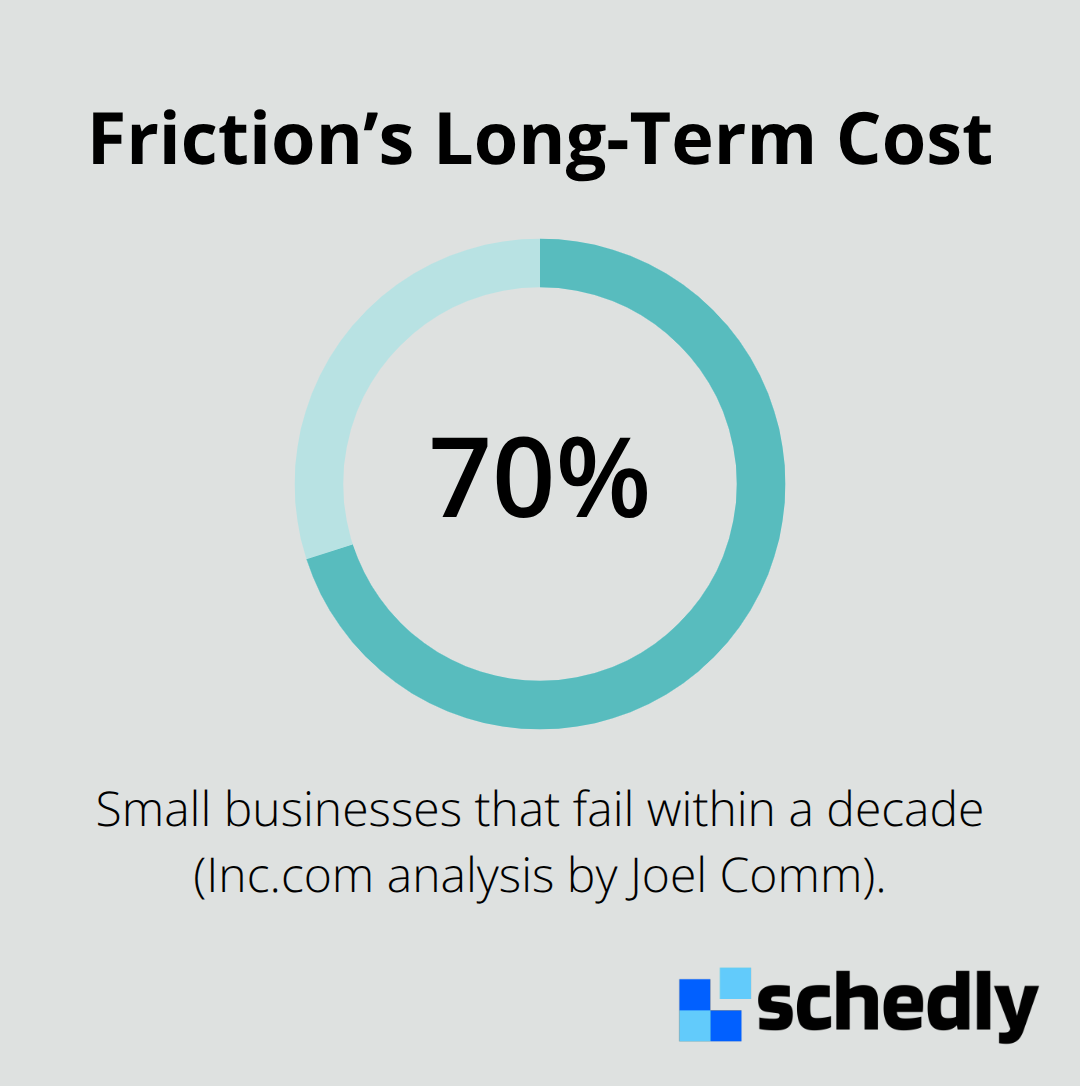
Friction isn't a single catastrophic failure. It's the accumulation of small delays, unnecessary steps, and process inefficiencies that pile up until they drain your bottom line. According to Inc.com analysis by Joel Comm, 70 percent of small businesses fail within a decade, and the culprit is often these day-to-day micro-friction points, not one big disaster.
Where Friction Shows Up First
The revenue impact arrives faster than most businesses expect. When booking takes too long, drop-off rates spike. When information is inconsistent across your website, Google Business profile, and social media, customers lose trust. When staff spend time fixing preventable issues instead of serving customers, labor costs rise while satisfaction falls. Industries handling high-volume transactions feel friction most acutely: healthcare clinics with chaotic appointment scheduling, real estate agencies managing multiple property inquiries, salons struggling with no-show rates, and automotive shops drowning in service request backlogs. These sectors lose thousands monthly to poor scheduling alone. The customer effort score-a key metric measuring how easy it is to interact with your business-directly predicts loyalty. Research shows that convenience matters nearly as much as service quality. One confusing booking form with too many steps, unclear pricing, or slow email responses doesn't just frustrate one customer. It compounds across hundreds of transactions monthly, turning friction into a revenue leak.
The Silent Revenue Drain
Friction that goes unaddressed doesn't generate complaints; it generates silence. Customers simply don't return. They don't leave negative reviews-they just move to a competitor. This invisibility makes friction particularly dangerous. A business might report solid customer satisfaction scores while experiencing steady churn because the friction points aren't dramatic enough to trigger feedback. The real cost emerges in your metrics: declining repeat bookings, longer sales cycles, higher staff turnover from frustration, and operational costs that should be falling but aren't.
Small Wins Create Real Impact
Fixing friction requires no complete overhaul. Small wins accumulate. Simplifying a booking process by removing two unnecessary form fields, ensuring pricing consistency across all touchpoints, or streamlining an approval workflow from five steps to three delivers measurable improvements in weeks, not months. These changes cost little to implement yet compound into significant gains in customer retention and team efficiency. The next section shows you exactly where to find these hidden friction points in your own operations.
Where Hidden Friction Actually Hides
Listen to Customer Silence
Start by listening to what your customers aren't saying. Most businesses obsess over complaint emails and negative reviews, but the real friction signal comes from silence. When customers stop booking, stop returning, or take longer to convert, friction is the culprit. Walk through your own booking process, payment flow, and customer service experience as if you're a stranger. Note where you hesitate, where information feels unclear, or where you must repeat details. This firsthand perspective reveals what your team has normalized.
Check whether your website pricing matches your Google Business profile, your social media, and your email confirmations. Inconsistency here is friction. Look at your support tickets and online reviews for recurring questions or complaints. If customers repeatedly ask the same question, your process or communication failed them. Track how long customers spend on your booking page before dropping off, what fields they abandon most, and whether they complete transactions on mobile or desktop. These metrics expose operational friction directly.
Map Your Internal Workflows
Audit your internal workflows next. Map out approval processes and handoffs between teams. Count how many people must touch a single task before it completes. If a scheduling request requires five approvals when two would suffice, you've found friction. Interview your staff about what slows them down daily. They encounter friction firsthand and can pinpoint where they waste time fixing preventable issues, searching for information across disconnected systems, or waiting for approvals. High staff turnover often signals underlying friction that leadership missed.
Track Operational Metrics
Operational metrics reveal friction patterns that complaints never will. Monitor how many customers abandon booking at specific stages, how long approval workflows actually take versus how long they should take, and whether certain team members consistently carry heavier workloads. These imbalances indicate bottlenecks. Track the time from customer inquiry to booking completion, from booking to payment, and from payment to service delivery. Any stage that stretches longer than industry norms harbors friction.
Look at your no-show rates, cancellation rates, and rescheduling frequency. High numbers here suggest booking friction or unclear communication. The customer effort score matters here too. Measure how easy customers find it to work with you. Tools like surveys or post-booking feedback forms quantify friction numerically, making it impossible to dismiss as anecdotal. When your effort score trails competitors or drops over time, friction is rising.
Test Your Customer Experience
Mystery shopping reveals blind spots your internal team won't catch. Hire someone to experience your booking process, interact with staff, and test your payment system without your team knowing. They'll spot inconsistent information, confusing instructions, delayed responses, and small operational details that compound into friction. This external perspective exposes what insiders have stopped noticing.
Set up a regular friction review cadence. Quarterly audits prevent friction from accumulating undetected. Assign someone to own this process so it actually happens instead of becoming a one-time project that fades. Once you've identified where friction lives in your business, the next step is deciding which friction points to tackle first and how to eliminate them systematically.
How to Fix Friction Without Overhauling Everything
Friction dies when you stop tolerating workarounds. Most businesses wait for a crisis before fixing processes, but the businesses winning now dismantle friction systematically before it compounds. The fix starts with automation where it matters most.
Automate Repetitive Tasks First
If your team manually enters the same information into three separate systems, you have found your first target. Automation eliminates these handoffs entirely. The data flows directly from booking to calendar to payment to CRM without human intervention. This single change cuts administrative time by 60 to 80 percent depending on your booking volume.
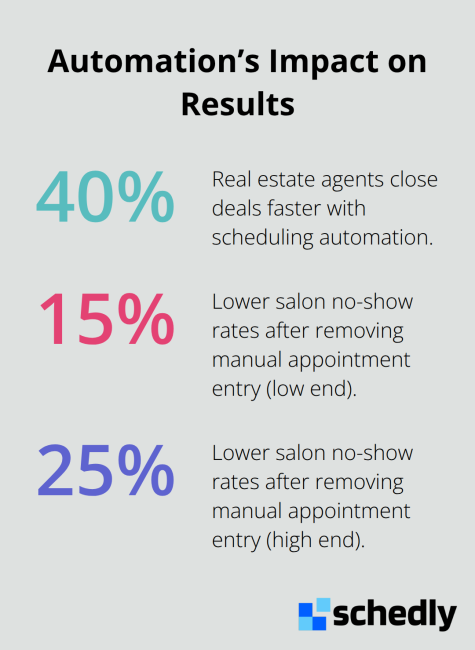
Real estate agents using scheduling automation close deals 40 percent faster because they spend zero time on back-and-forth scheduling emails. Salons that cut manual appointment entry see no-show rates drop by 15 to 25 percent because confirmation reminders now go out automatically instead of being forgotten. Automotive shops that automate service request workflows complete more jobs daily with the same staff.
Start here: identify the three tasks your team repeats most frequently. If any task involves copying information from one place to another, automating it should be your first move. The ROI arrives within weeks, not months.
Connect Your Tools Seamlessly
Integration gaps create their own friction layer. Your CRM talks to your email but not your calendar. Your payment processor doesn't connect to your accounting system. Your booking tool requires manual data entry into your scheduling software. Each gap means someone must manually move information, creating delays and errors.
Tools that integrate seamlessly eliminate these gaps entirely. Google Calendar, Zoom, Stripe, PayPal, and Salesforce integrations matter because they represent the platforms your business already uses daily. When scheduling software integrates natively with these tools, friction collapses. Your team stops juggling five different applications and works from a single source of truth.
Investing in tools that talk to each other isn't optional for modern operations. It's foundational. The right platform (one with native integrations to your existing stack) prevents data silos that mask friction and waste time.
Empower Your Team to Challenge Friction
Your team needs permission and training to challenge friction. Frontline staff encounter friction constantly yet rarely feel empowered to fix it. Create a simple process where anyone can flag friction without needing approval first.
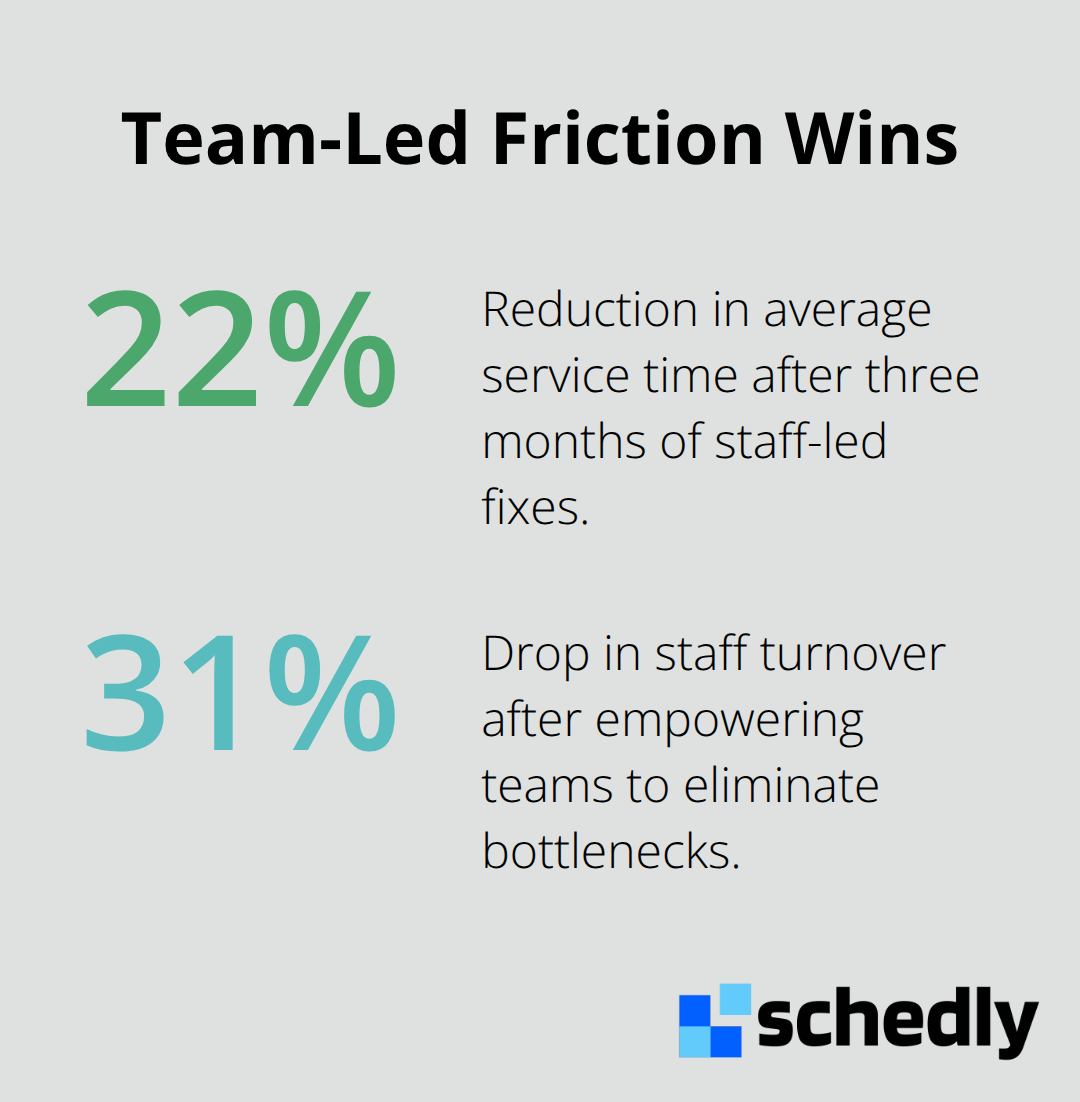
Monthly friction review meetings where staff share what slowed them down that month surface opportunities leadership would never see. One automotive shop started asking technicians weekly what frustrated them most. Within three months, staff suggestions eliminated 14 separate bottlenecks in their service workflow. They reduced average service time by 22 percent and staff turnover dropped by 31 percent because people stopped feeling trapped by broken processes.
Your team understands why processes exist before they can improve them. Give them the authority to suggest changes, test solutions, and implement improvements. When frontline workers own friction reduction, momentum accelerates and results compound faster than any top-down initiative could achieve.
Final Thoughts
Friction compounds silently until it costs you revenue. A scheduling bottleneck that consumes 30 minutes daily becomes 130 hours annually. Inconsistent information across channels erodes trust. Approval processes with unnecessary steps frustrate teams and slow growth. These small inefficiencies don't trigger complaints-they trigger silence, as customers simply move elsewhere.
The businesses winning now stop waiting for crises and audit their operations systematically. Your team already knows where friction lives because they navigate broken processes every single day. Map your customer journey and internal workflows to identify where delays occur, automate the repetitive tasks your team handles manually, and invest in tools that integrate seamlessly so information flows without human intervention.
Schedly handles this systematically by automating booking, integrating with your existing tools like Google Calendar and Salesforce, and providing analytics to track where friction still exists. Your team stops juggling multiple systems, customers experience frictionless booking, and your business gains the operational clarity needed to eliminate bottlenecks before they cost you revenue. The friction in your business isn't permanent-it's fixable.