
Schedly resources
Integrated Scheduling Platform: A Connected Backbone for Your Day

Most teams juggle between five to ten different tools just to manage their schedules. This fragmentation costs time, creates errors, and frustrates both staff and clients.
At Schedly, we've seen how an integrated scheduling platform changes everything. When your booking system, workflows, and team communication live in one place, coordination becomes effortless and your business runs faster.
How Fragmented Tools Tank Your Bottom Line
The Hidden Productivity Drain
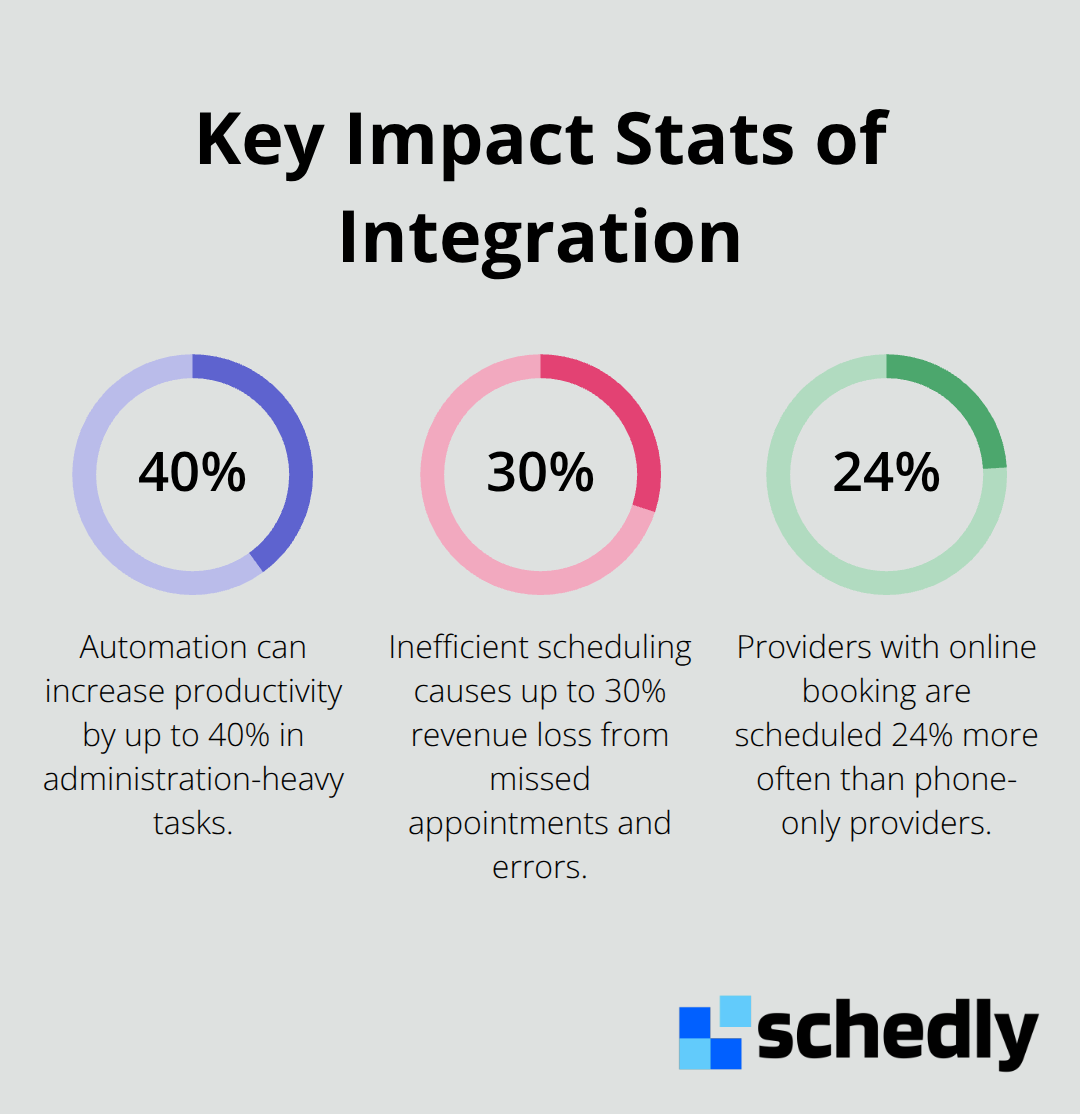
Operating across multiple scheduling systems creates invisible costs that compound monthly. When your booking tool doesn't connect to your payment processor, your team sends manual invoices. When your calendar app doesn't sync with your client database, staff spend hours pulling information from different places. McKinsey research shows that automation can increase productivity by up to 40% in administration-heavy tasks, yet teams stuck with disconnected tools operate at a fraction of that efficiency.
Every context switch between apps costs time. Studies indicate that refocusing after an interruption takes an average of 23 minutes. Jumping from your scheduling software to your email to your CRM drains hours weekly. With five to ten tools running simultaneously, your team operates in constant friction mode rather than flow mode.
Double Bookings and Lost Revenue
Inconsistent data across systems leads to double bookings, missed appointments, and frustrated clients. When client information exists in separate databases, one person updates the CRM while another doesn't see those changes in the scheduling system. A healthcare provider with outdated availability books a patient when a room is already reserved. A real estate agent with misaligned calendars schedules two clients for the same showing.
These errors don't just annoy people-they damage your reputation and create revenue loss. Inefficient scheduling causes up to 30% revenue loss due to missed appointments and administrative errors. The financial impact compounds quickly across weeks and months.
Why Adding More Tools Backfires
The instinct to solve fragmentation is to add another tool to manage the others. This approach fails because it multiplies complexity instead of reducing it. You end up with six tools instead of five, each requiring separate logins, training, and maintenance. Your team still switches between platforms, still maintains duplicate data, and still wastes time on manual coordination.
An integrated platform consolidates booking, payments, client communication, and team management into one connected system. This eliminates the switching tax and data gaps that plague fragmented workflows. When everything lives in one place, your team operates from a single source of truth-and that foundation determines whether your next chapter involves continued chaos or genuine operational efficiency.
How Integration Solves Operational Chaos
One System Replaces Scattered Tools
One booking system that connects everything transforms how your business functions day-to-day. Instead of your scheduling tool sitting isolated while your payment processor, client database, and team calendar operate independently, an integrated platform makes all these systems communicate automatically. When a client books an appointment through your scheduling page, that booking instantly updates your team's calendar, triggers payment collection, logs client information in your CRM, and queues an automated reminder. No manual data entry. No version conflicts. No staff member wondering whether the information they're looking at is current.
Gartner forecasts that AI-driven scheduling tools are transforming productivity. The organizations leading that shift aren't just adopting scheduling software-they consolidate their entire operational backbone into platforms that eliminate handoffs between systems. When your booking, payments, client management, and team coordination live in one place, your team stops losing hours to manual work and context switching.
Automation Removes Repetitive Work
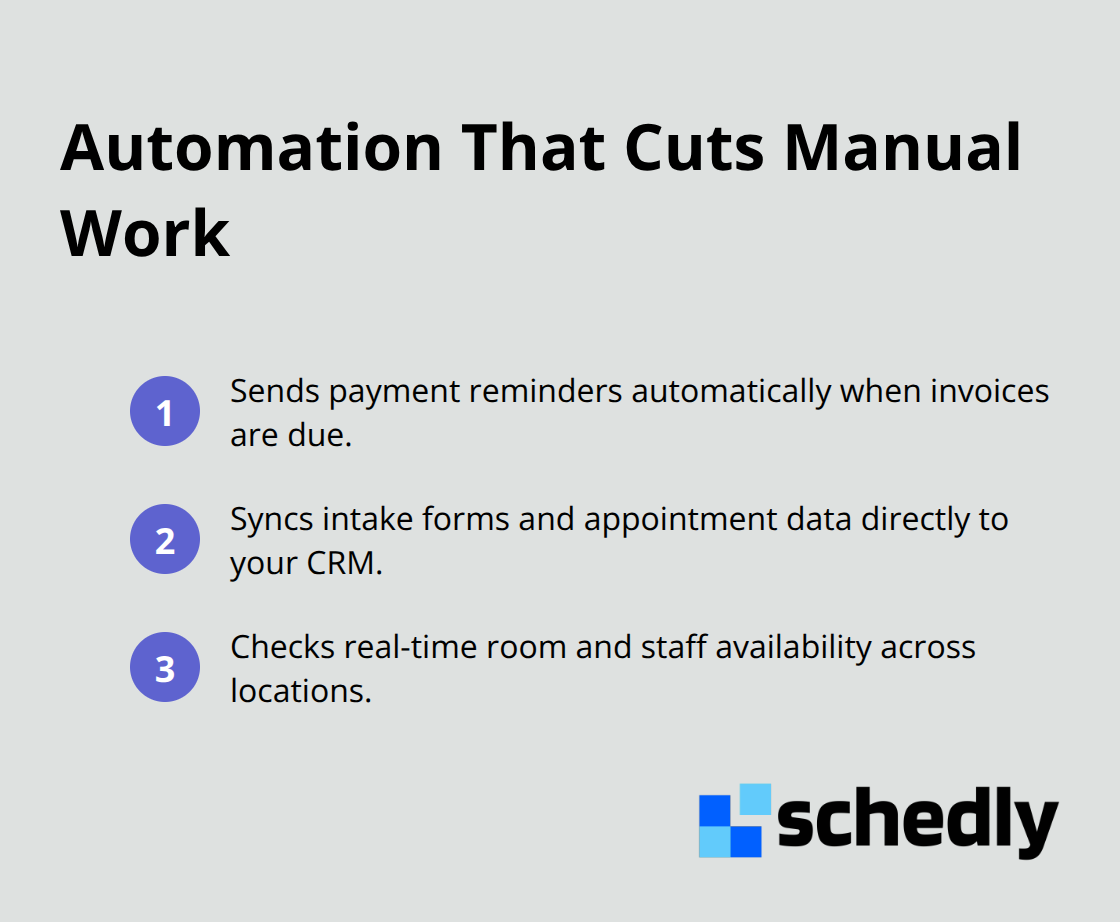
Automation within an integrated system eliminates the repetitive tasks that drain your team's energy and introduce errors. Instead of manually sending payment reminders, the platform sends them automatically when an invoice is due. Instead of staff manually updating client records after each appointment, intake forms and appointment data sync directly into your CRM.
This real-time synchronization prevents the double bookings, scheduling conflicts, and outdated information that plague fragmented workflows. Healthcare providers using integrated platforms with automated reminders see measurable drops in no-show rates because patients receive timely confirmations and reminders without staff intervention. Real estate agents using the same type of system close more deals because client availability syncs instantly with the agent's calendar, eliminating the back-and-forth that delays showings.
One Source of Truth Powers Better Decisions
Your team operates from one current source of truth, not six different versions of the truth. This unified data foundation means your analytics reflect actual business performance rather than fragmented snapshots. When scheduling, payments, and client interactions all feed into one system, you gain visibility into patterns that scattered tools hide. You see which time slots drive the most revenue, which clients convert fastest, and which team members operate most efficiently. These insights let you make decisions based on complete information rather than guesswork.
Real-world impact emerges quickly. A fitness studio consolidates member bookings, class scheduling, and payment processing into one platform and identifies revenue patterns across different times. A consulting firm integrates client scheduling with project tracking and discovers that certain appointment types consistently overrun, allowing them to adjust buffer times and improve team capacity. An automotive service center connects appointment booking with inventory management and reduces parts shortages that previously delayed customer pickups.
The operational efficiency gains compound as your team stops fighting fragmented systems and starts leveraging integrated workflows. This foundation positions your business to handle growth without proportionally increasing administrative overhead-and that capability determines whether your next phase involves scaling smoothly or hitting operational walls.
How Different Industries Gain Competitive Edges Through Integration
Real Estate Agents Close Deals Faster
Real estate agents face constant coordination chaos. A single agent might manage ten active listings, each requiring client showings that need to sync with the agent's calendar, the listing availability, and the client's preferences. When scheduling lives in one system, agents stop losing deals to slow response times. Providers with online booking are scheduled 24% more often than those with only phone-based options. An integrated platform lets agents share their real-time availability instantly, clients book showings without email delays, payment for any services processes automatically, and every interaction feeds into a client history that the agent can reference before the showing. The agent arrives prepared because the platform has captured preferences, previous viewings, and communication history in one searchable place. This speed advantage compounds across dozens of transactions monthly, directly impacting revenue and market share.
Healthcare Providers Reduce No-Shows and Improve Patient Safety
Healthcare providers operate in an environment where no-shows carry real financial consequences and patient safety implications. Automated reminders reduce no-show rates measurably when patients receive confirmations at strategic intervals. A clinic that integrates appointment scheduling with patient communication sees dramatic shifts in reliability. When a patient books an appointment through the clinic's scheduling system, the platform automatically queues a reminder for 24 hours before the appointment and a second reminder two hours before. The patient receives these through their preferred channel, whether SMS or email. If the patient needs to reschedule, they do so within the same system rather than calling the clinic, which means staff members stop managing phone tag and the appointment slot becomes available for another patient immediately. The clinic's calendar stays accurate because the system reflects real-time availability rather than outdated information.
Fitness Studios Maximize Utilization and Member Satisfaction
Fitness studios face similar coordination demands but with added complexity around class capacity, instructor scheduling, and member preferences. When member bookings, class schedules, and instructor availability live in one platform, studios stop overbooking classes and stop leaving instructors without proper schedules. Members book classes 24/7 without calling the studio, which reduces administrative overhead. The studio tracks which classes fill fastest, which instructors drive member retention, and which time slots generate the most revenue. This data lets studios adjust pricing, instructor assignments, and class schedules based on actual demand rather than assumptions.
Integration Delivers Measurable Competitive Advantages
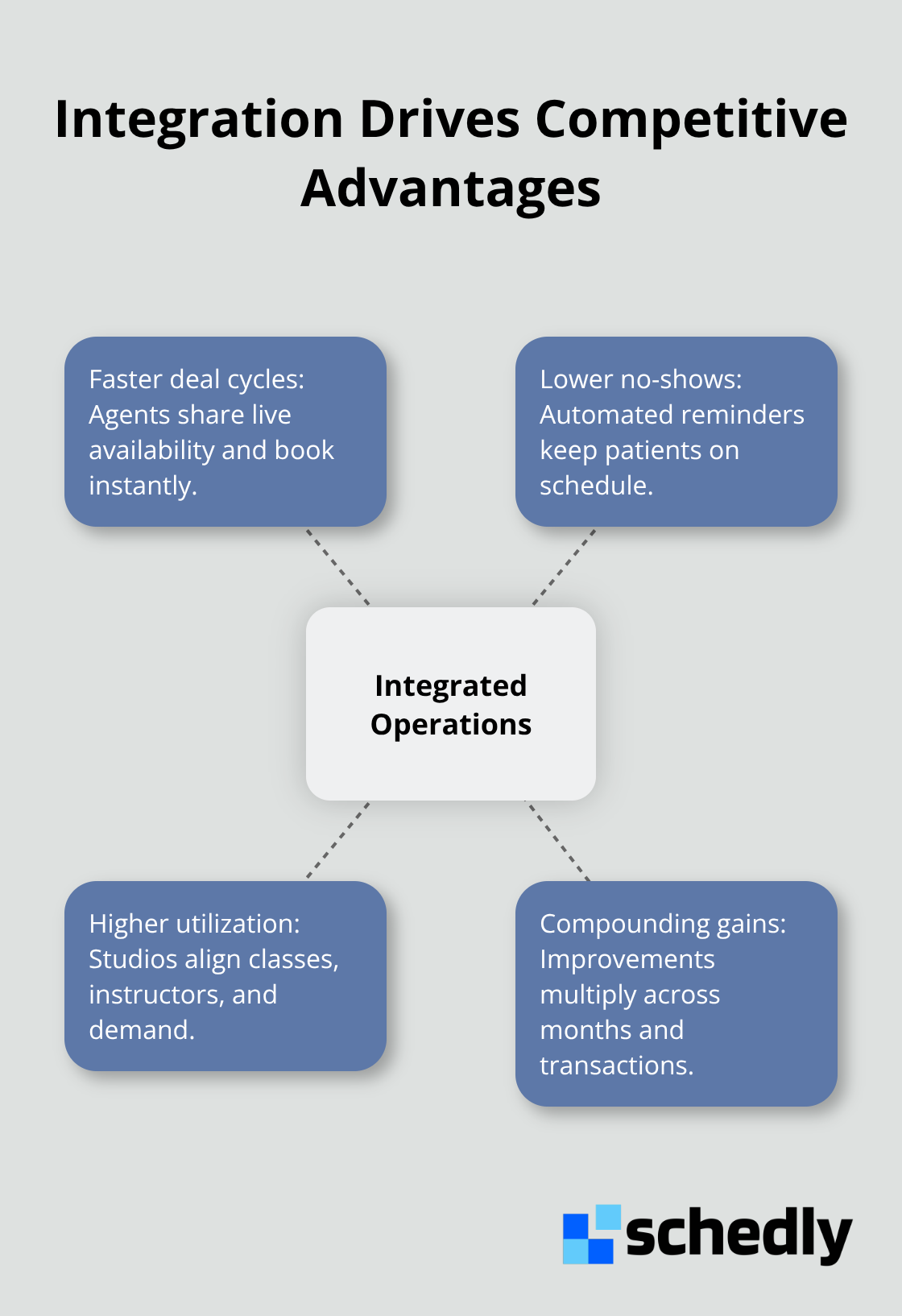
The operational reality across these industries reveals a consistent pattern: integration eliminates the coordination failures that cost money and reputation. Real estate agents close faster deals. Healthcare providers reduce no-shows and improve patient safety. Fitness studios maximize facility utilization and member satisfaction.
Final Thoughts
Fragmented scheduling systems cost your business money and reputation. Organizations that consolidate their booking, payments, client management, and team coordination into one integrated scheduling platform operate faster, make better decisions, and deliver superior customer experiences. Real estate agents close more deals, healthcare providers reduce no-shows, and fitness studios maximize capacity-these outcomes compound across every transaction and appointment.
We at Schedly built a platform that eliminates the operational friction holding your business back. Our system automates repetitive work, syncs information across all your locations in real time, and provides the analytics you need to make smarter decisions. Whether you operate in real estate, healthcare, fitness, automotive, legal, consulting, or any other industry, integration transforms how your team works together.
Visit Schedly to see how an integrated scheduling platform works in practice. The businesses that move first gain the speed and efficiency advantage that compounds across every client interaction. Integration separates thriving operations from those stuck in coordination chaos.