
Schedly resources
Multi Location Scheduling: Centralize Appointments Across Campuses
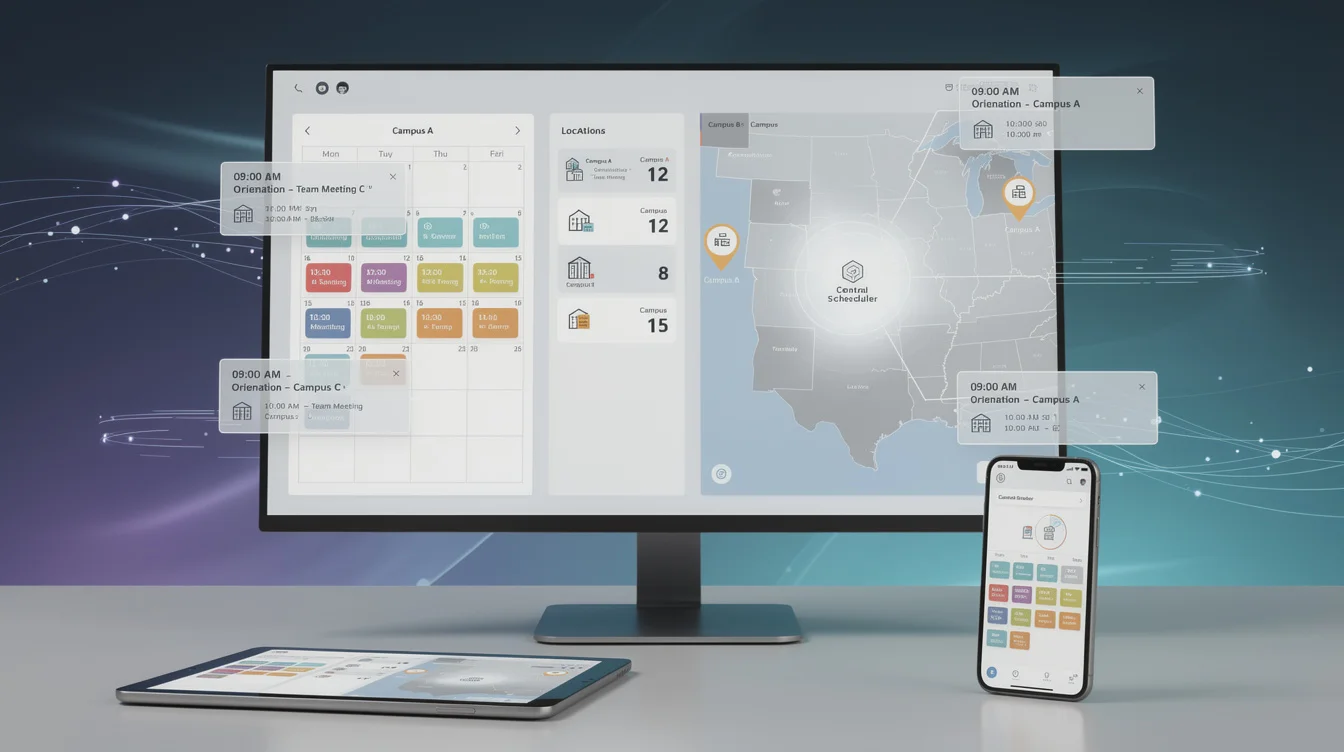
Running a business across multiple locations means juggling separate scheduling systems, conflicting bookings, and frustrated staff members. When your healthcare network, university campus, or dealership chain relies on disconnected tools, coordination becomes a nightmare.
At Schedly, we've seen how multi-location scheduling transforms this chaos into control. A single platform that manages all your locations and staff eliminates the back-and-forth that wastes hours every week.
The Real Cost of Disconnected Scheduling
Double Bookings Drain Revenue Fast
Disconnected scheduling systems damage your bottom line directly. When each location operates its own booking system, double bookings become inevitable. A patient books an appointment at your downtown clinic while another scheduler assigns the same practitioner to your uptown office. Staff waste time just checking multiple calendars and sending coordination emails.
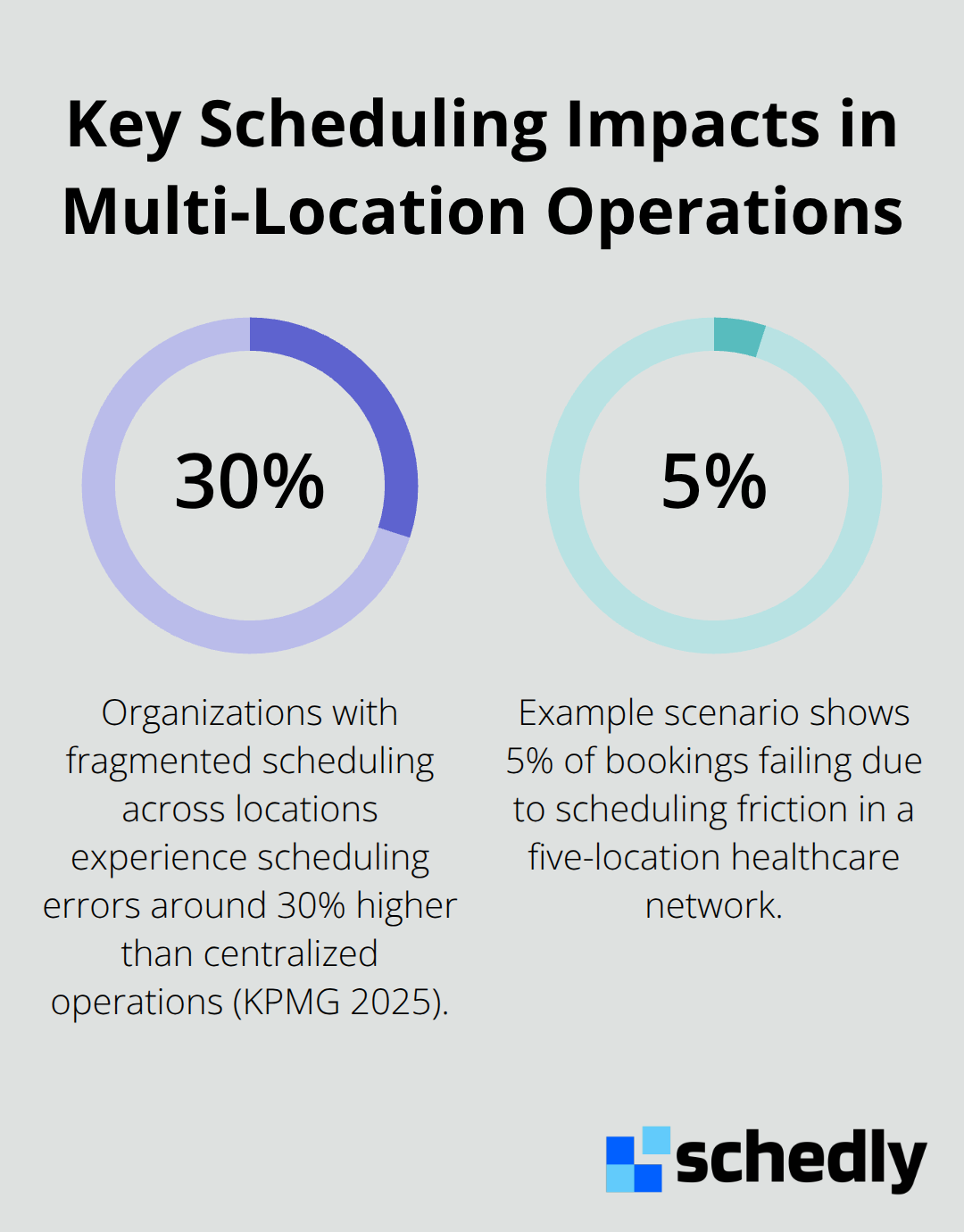
Consider a healthcare network with five locations handling 200 appointments weekly each-that's 1,000 weekly appointments. If just 5% of bookings fail due to scheduling friction, you lose 50 appointments per week. At $150 per reimbursement, that amounts to nearly $390,000 in annual revenue simply evaporating. Your staff also wastes energy on manual workarounds instead of patient care or sales.
Customers Abandon the Booking Process
Customers experience the confusion most directly. When someone calls your business, they cannot see which location has availability because your front desk staff lack real-time information across all sites. They get transferred between departments, placed on hold while someone checks another system, or told to call back later. This friction causes customers to book with competitors who offer instant cross-location visibility.
Educational institutions face similar problems when students try to register for courses across campuses-they cannot see which classrooms or instructors are actually available, which leads to registration errors and delayed degree progression. Automotive dealerships struggle when service customers need to schedule maintenance across multiple service centers, resulting in longer wait times and reduced customer satisfaction. The real problem isn't complexity-it's visibility.
Visibility Creates the Path Forward
Without a single source of truth for all your locations, coordination fails and customers abandon the booking process entirely. The solution requires more than just better communication between staff members. You need a system that shows real-time availability across every location, prevents conflicts before they happen, and lets customers book instantly at any site. This shift from fragmented tools to unified scheduling transforms how multi-location businesses operate-and how their customers experience them.
How Centralized Scheduling Actually Works
One Dashboard Replaces Multiple Systems
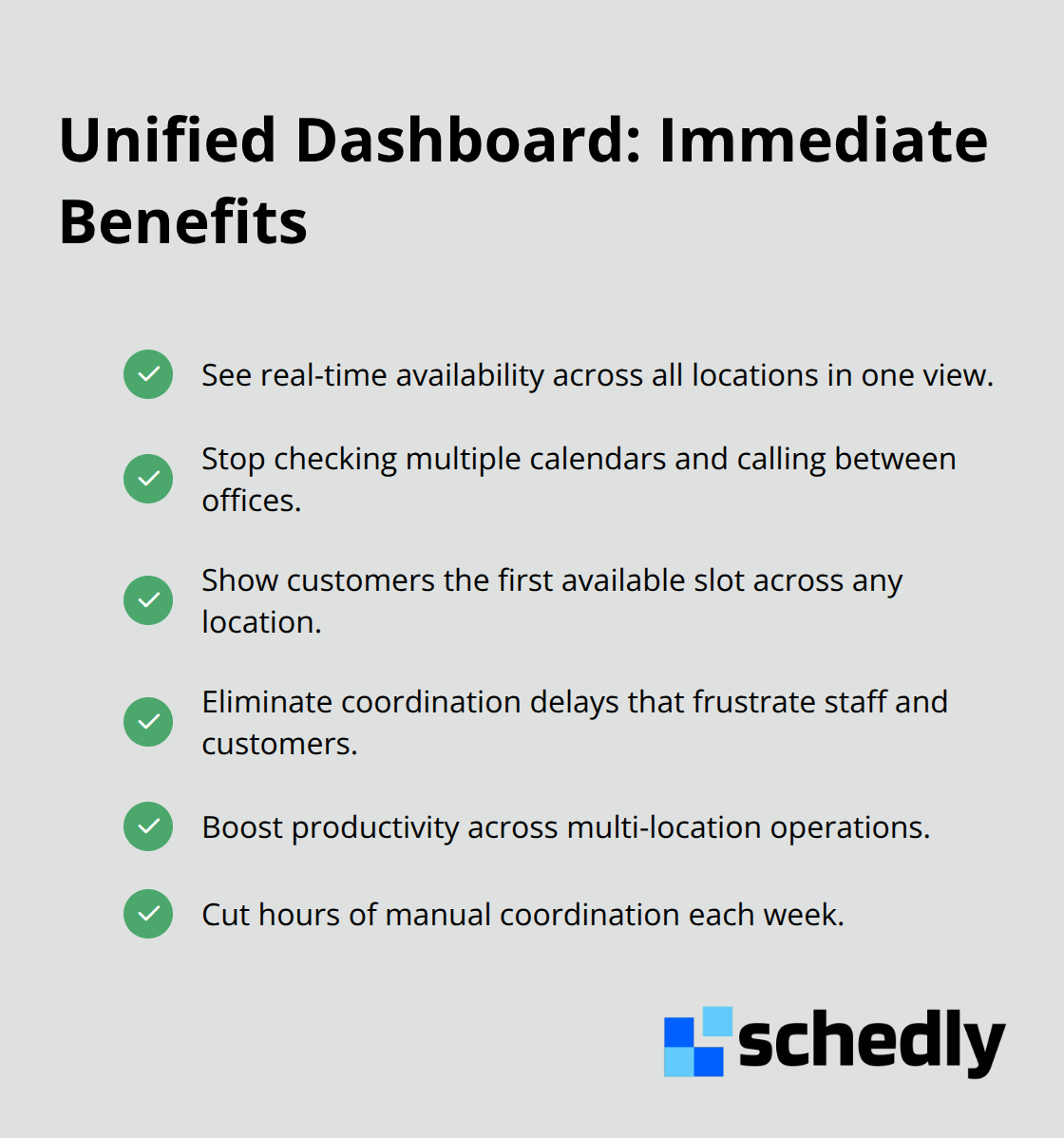
A centralized scheduling system replaces fragmented tools with one unified dashboard that displays real-time availability across all your locations simultaneously. Your front desk staff no longer check multiple calendars or call between offices-they see every practitioner, classroom, service bay, or resource at a glance. When a customer calls or books online, the system shows them the first available slot across any location that matches their needs. This immediate visibility eliminates the coordination delays that currently frustrate both staff and customers.
Real-Time Syncing Prevents Conflicts
Real-time syncing means changes at one location reflect instantly everywhere else, preventing double bookings that currently drain your revenue. When a practitioner marks themselves unavailable or a customer cancels an appointment, every calendar updates immediately. This eliminates the scenario where two schedulers book the same resource at the same time because they worked from outdated information. Staff members no longer discover conflicts after they've already promised the same slot to two different customers.
Role-Based Access Controls Simplify Operations
Role-based access controls let managers see all locations and shift staff between campuses to handle demand spikes, while individual employees view only their own schedule and availability. Customers never see the backend complexity-they simply book at whichever location suits them best. Healthcare networks route patients to the first open appointment regardless of campus, reducing booking friction that costs money at a multi-location practice. Educational institutions automatically allocate classrooms across campuses based on enrollment and instructor availability, eliminating registration conflicts that delay student progression. Automotive dealerships fill service bays faster by assigning technicians across multiple centers based on real-time demand.
Automation Enforces Scheduling Rules
The system enforces scheduling rules automatically, such as preventing double bookings, respecting staff breaks, and maintaining recovery time between appointments. Managers no longer manually check whether a technician has enough time between jobs or whether a classroom sits empty due to poor scheduling. Integrations with Google Calendar, Zoom, Stripe, and Salesforce ensure your scheduling system feeds into the rest of your operations without duplicate data entry. This connected approach transforms scheduling from a daily headache into a systematic advantage.
What Happens When Systems Connect
When your scheduling platform connects to your other business tools, visibility extends beyond just appointments. Customer relationship management systems receive updated booking information automatically. Payment processors capture transaction data without manual entry. Video conferencing platforms sync meeting times with your calendar. This interconnected ecosystem (rather than isolated point solutions) means your team operates from a single source of truth, reducing errors and freeing staff to focus on what matters most. The next step involves understanding which industries benefit most from this centralized approach and how different business types implement these systems to solve their specific challenges.
Who Benefits Most From Centralized Scheduling
Healthcare Networks Streamline Patient Flow
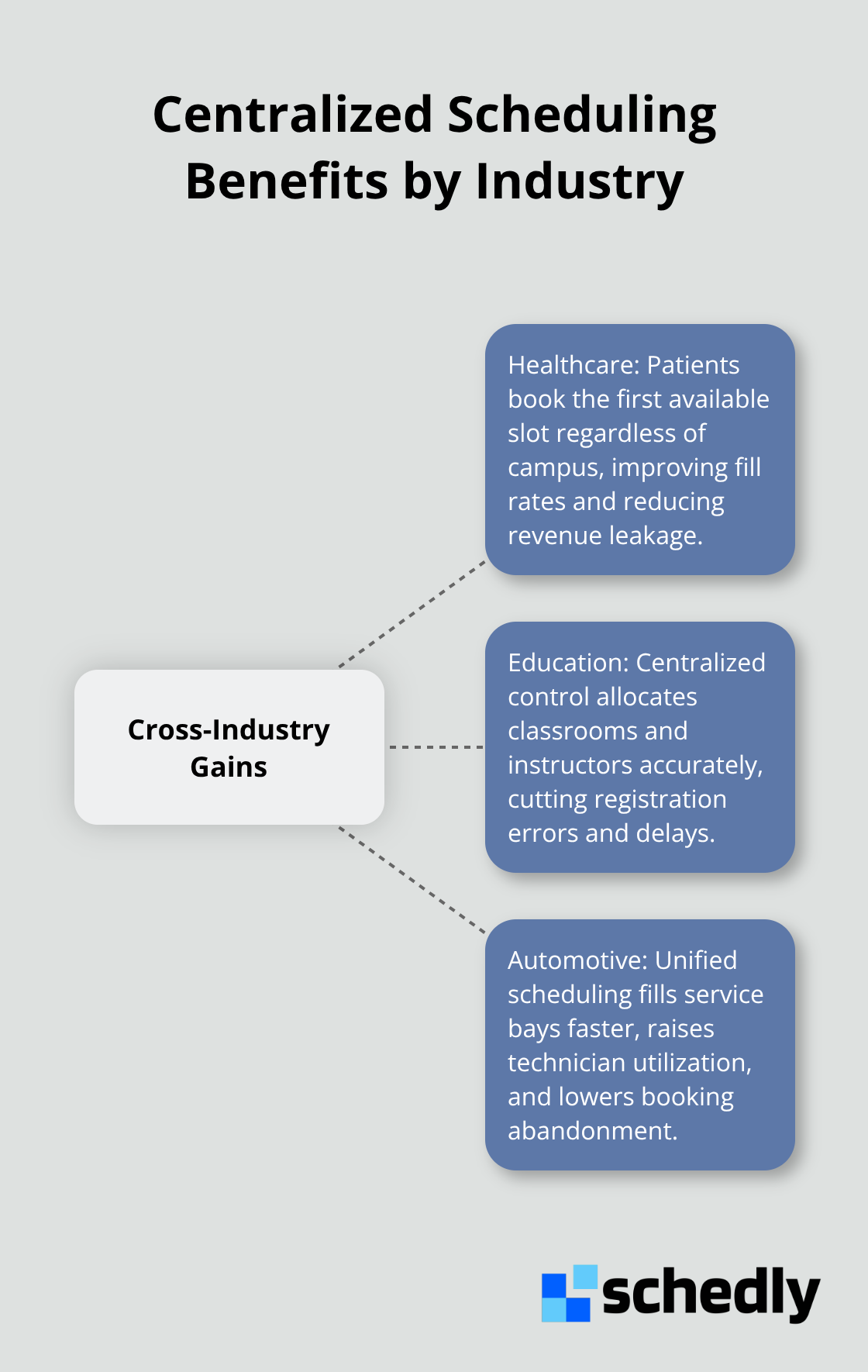
Healthcare networks face one of the most complex scheduling challenges because they operate under strict regulatory requirements while managing patient flow across multiple campuses. A typical five-location healthcare network processes 1,000 patient appointments weekly. When scheduling systems remain disconnected, patients cannot see availability across all clinics, forcing administrative staff to spend hours routing appointments manually. Centralized scheduling eliminates this friction immediately. Patients book at the first available slot regardless of location, which increases appointment fill rates and reduces the revenue leakage from scheduling conflicts. Healthcare providers also gain the ability to route patients to specialists at other campuses without requiring duplicate intake steps, which strengthens patient retention.
Centralized scheduling improves workforce efficiency and can reduce cost while enhancing employee satisfaction. Beyond patient experience, healthcare networks consolidate their revenue cycle management under a single billing team, which reduces administrative overhead and improves claim accuracy. Text-to-pay functionality across locations accelerates collections since patients can settle invoices through mobile payments aligned with their preferred communication method.
Educational Institutions Allocate Resources Efficiently
Educational institutions coordinate vastly different resources than healthcare providers, yet they face identical visibility problems. When students register for courses across campuses, they cannot see which classrooms actually have capacity or which instructors teach at which locations, leading to registration errors and delayed degree progression. Centralized scheduling optimizes allocation of academic resources by centralizing control, eliminating the manual coordination that currently wastes administrative time.
Faculty preferences integrate into the scheduling system, so instructors teach at locations where they prefer to work, which boosts satisfaction and teaching quality. Course demand analytics reveal enrollment trends across campuses, enabling institutions to align cross-campus offerings with student demand rather than guessing. This data-driven approach transforms how institutions plan their academic calendars and resource allocation.
Automotive Dealerships Fill Service Capacity Faster
Automotive dealerships encounter similar problems but with service technicians and bays instead of faculty and classrooms. When a service customer needs maintenance across multiple centers, disconnected systems force longer wait times and reduce customer satisfaction. Centralized scheduling enables real-time tracking and appointment booking, filling capacity faster and improving throughput. Dealerships that implement unified scheduling see faster service times, higher technician utilization, and reduced customer abandonment during the booking process.
The Common Advantage Across Industries
The common thread across all three industries is that centralized scheduling transforms staff from spending hours on manual coordination into focusing on delivering their core service, whether that involves patient care, education, or customer service. Staff members no longer waste energy on workarounds-they concentrate on what they do best. Managers gain real-time visibility into operations across all locations, enabling them to make decisions based on actual data rather than assumptions. This shift from fragmented tools to unified systems creates measurable improvements in both operational efficiency and customer satisfaction.
Final Thoughts
Disconnected scheduling systems waste staff time, frustrate customers, and drain revenue from multi-location businesses. The friction compounds across every location-double bookings pile up, coordination emails multiply, and customers abandon the booking process when they cannot see availability across all sites. This operational chaos is entirely preventable through multi-location scheduling that unifies your operations into one coherent system.
Centralized scheduling eliminates these location-based problems by replacing fragmented tools with one unified system that shows real-time availability everywhere simultaneously. Your staff stops wasting hours on manual coordination and starts focusing on delivering excellent service. Customers book instantly at whichever location suits them best without transfers, holds, or callbacks. Managers gain visibility into operations across all campuses, enabling data-driven decisions instead of guesswork. Healthcare networks reduce scheduling errors by approximately 30% compared to fragmented operations, according to the 2025 KPMG Workforce Efficiency report. Educational institutions eliminate registration conflicts that delay student progression. Automotive dealerships fill service capacity faster and improve customer satisfaction.
Multi-location scheduling is no longer optional for businesses planning to scale. The competitive advantage belongs to organizations that can route customers to available resources instantly, coordinate staff across campuses effortlessly, and make decisions based on real operational data. Businesses that continue relying on disconnected systems fall further behind each quarter as their competitors capture market share through superior customer experience and operational efficiency.