
Schedly resources
Multi Location Scheduling: Keep Every Site Synced In Real Time

Running multiple locations means juggling dozens of schedules at once. When teams work in silos, scheduling conflicts pile up fast, and customers suffer from slow response times.
Multi-location scheduling software fixes this by syncing every site in real time. At Schedly, we've seen businesses cut administrative overhead by hours each week while keeping their teams perfectly coordinated.
Why Multiple Locations Create Scheduling Chaos
Disconnected systems lead to double-bookings
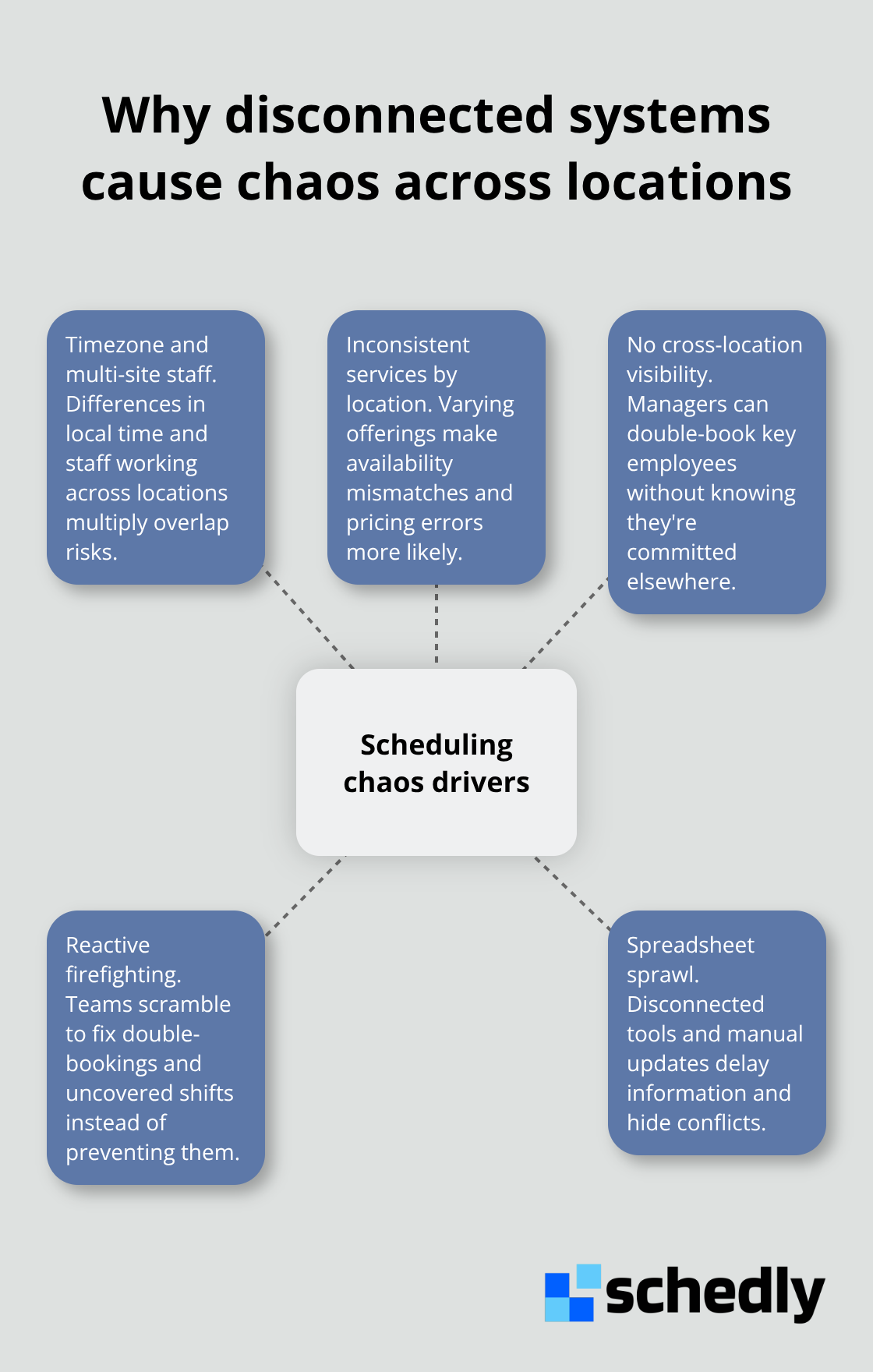
Most businesses managing multiple locations still rely on disconnected systems or spreadsheets to coordinate schedules. When Site A books a contractor and Site B books the same person for the same time slot, nobody knows until it's too late. Add timezone differences, varying service offerings per location, and staff who work across multiple sites, and the scheduling complexity becomes unmanageable. A manager at one location makes a staffing decision without visibility into whether a key employee is already committed elsewhere. The result is double-bookings, uncovered shifts, and frustrated teams scrambling to fix problems reactively instead of preventing them.
Information travels too slowly between sites
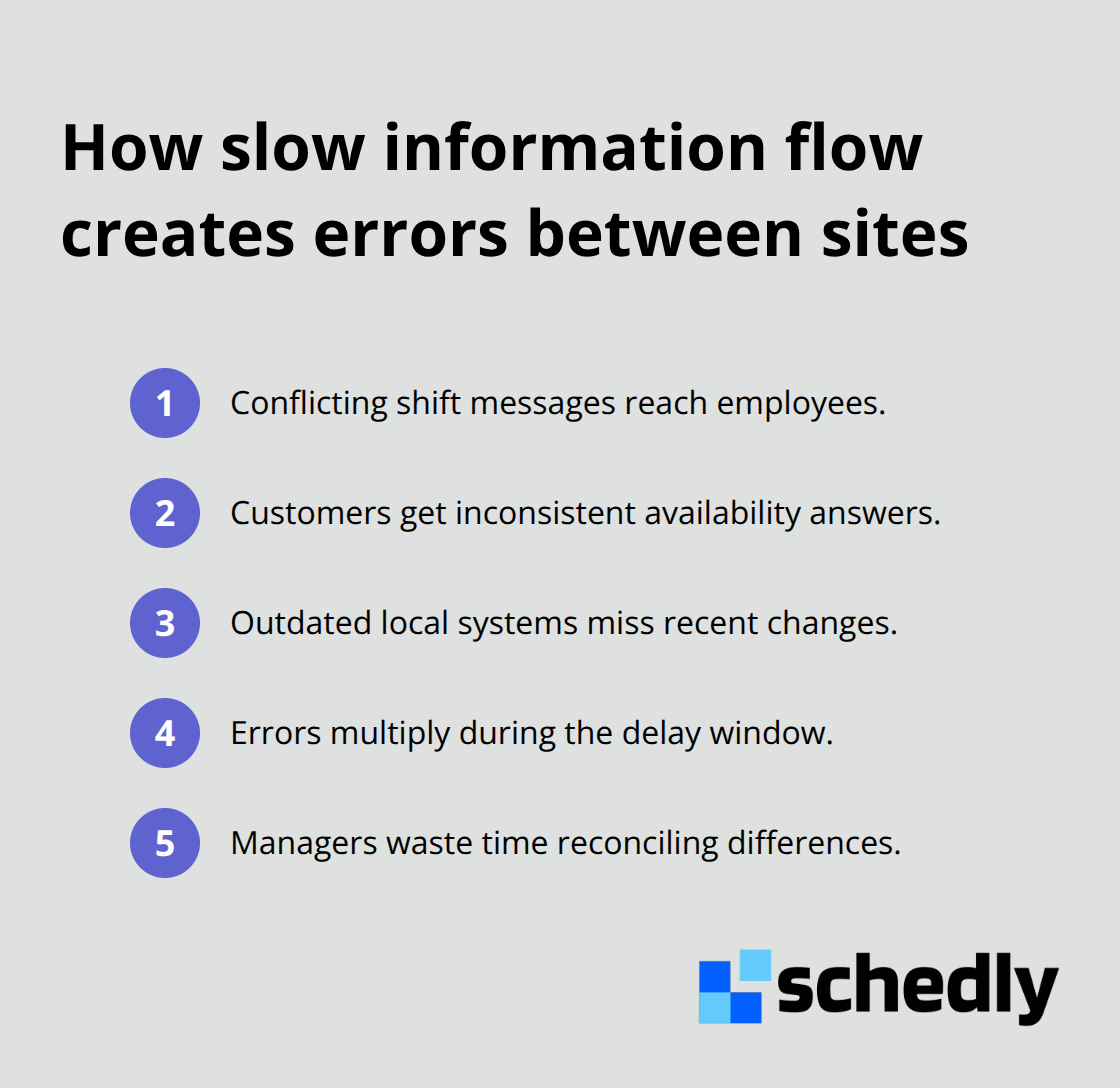
Communication breakdowns happen because information travels slowly between sites. When one location updates a schedule, that change doesn't automatically reach other locations using separate systems or manual processes. Staff scheduled at multiple sites receive conflicting messages about their shifts. Customers calling different locations get inconsistent answers about availability because each site operates from outdated information. The lag between when a change occurs and when all teams learn about it creates a window where errors multiply.
Managers lack real-time visibility into staffing needs
Resource allocation suffers because managers lack real-time visibility into where staff are actually needed. One location might be overstaffed while another faces a critical shortage, but without a centralized view, nobody reallocates workers until service quality already declined. Administrative time balloons as managers spend hours each week manually syncing schedules, sending update emails, and resolving conflicts that could have been prevented. This inefficiency doesn't just waste time-it directly increases labor costs and reduces the flexibility your teams need to respond to unexpected demand spikes or staff absences. The solution requires a system that connects all locations, updates instantly, and prevents conflicts before they happen.
How Multi-Location Scheduling Software Keeps Everything Connected
One source of truth across all your sites
Multi-location scheduling software operates on a single principle: one source of truth for all your sites. Instead of managing separate systems at each location, you get a unified platform where every schedule, staff member, and booking exists in one place. When a manager at your downtown office updates a shift, that change propagates to your suburban location within minutes, not hours or days. Real-time bidirectional calendar sync ensures updates flow between locations within 1–5 minutes, which means staff working across multiple sites see accurate schedules instantly. This speed matters because delays create the exact problems you're trying to solve-a contractor who doesn't know they're scheduled at two locations simultaneously, or a customer who books a service that's already taken, happens because information moved too slowly.
Automated systems prevent conflicts before they happen
The platform eliminates scheduling lag by syncing across all your sites continuously, so conflicts get caught before they damage your operations. Automated conflict detection runs constantly in the background and flags double-bookings immediately. When you attempt to schedule the same employee at two locations during overlapping times, the system blocks the assignment before it causes problems. Timezone conversions happen automatically, so a 2 PM meeting scheduled in New York appears correctly as 11 AM for your Los Angeles team, preventing the scheduling errors that multiply across regions. Location-specific pricing and service offerings integrate directly into the platform, so customers see accurate availability and pricing for each site without manual overrides creating inconsistencies.
Real-time visibility drives better decisions
Staff availability updates across all locations within minutes, meaning your booking system always reflects who's actually free. Managers gain a single command center view showing occupancy, bookings, and utilization broken down by location, enabling rapid identification of understaffed sites before service quality suffers. Data-driven resource allocation becomes possible because you see patterns instantly-afternoon understaffing at one location, for example-so you can rebalance schedules before customers experience delays. The platform's integrations with Google Calendar, Zoom, and payment processors like Stripe mean scheduling data flows across your existing tools without manual data entry, reducing the friction that causes errors to slip through.
These capabilities transform how multi-location businesses operate, but implementation requires understanding what features actually matter for your specific workflow. The real benefits emerge when you match the right platform to your operational needs.
Real-World Benefits When Sites Stay Synced
Managers reclaim hours lost to manual coordination
Multi-location scheduling software eliminates the administrative burden that drains manager productivity. A typical manager at a multi-location business spends 4-8 hours per week on schedule coordination across sites, chasing down availability updates, and resolving conflicts that shouldn't exist. Centralized scheduling cuts this time dramatically because changes propagate instantly and the system blocks conflicts automatically. If you manage three locations with five managers each spending six hours weekly on schedule coordination, that represents 90 hours per week vanishing from your payroll. At an average manager salary, that translates to thousands of dollars monthly in recovered productivity. Beyond time savings, real-time syncing eliminates costly errors that plague disconnected systems-double-bookings that force emergency staffing scrambles, uncovered shifts that require expensive last-minute overtime, and scheduling mistakes that damage your reputation when customers experience service gaps.
Customers experience faster, more accurate responses
Customer experience improves measurably because your teams respond faster when they operate from current information. When a customer calls any location asking about availability, staff see real-time appointment data across all sites instead of guessing or placing callers on hold while they search for answers. A salon with three locations tells a walk-in customer exactly which location has an opening in the next two hours because the booking system reflects live availability across all three sites. Healthcare practices see reduced no-shows because appointment reminders reach the right location and staff accurately, eliminating the confusion that occurs when information lags. Staff flexibility increases substantially because employees working across multiple sites know their actual schedule without contradictory messages from different locations. Open shifts fill faster because the platform broadcasts them to the right workers across all sites simultaneously rather than waiting for a manager to notify each location manually. This speed matters in competitive industries like fitness and salons where customers book based on availability windows measured in hours, not days.
Labor costs align with actual demand patterns
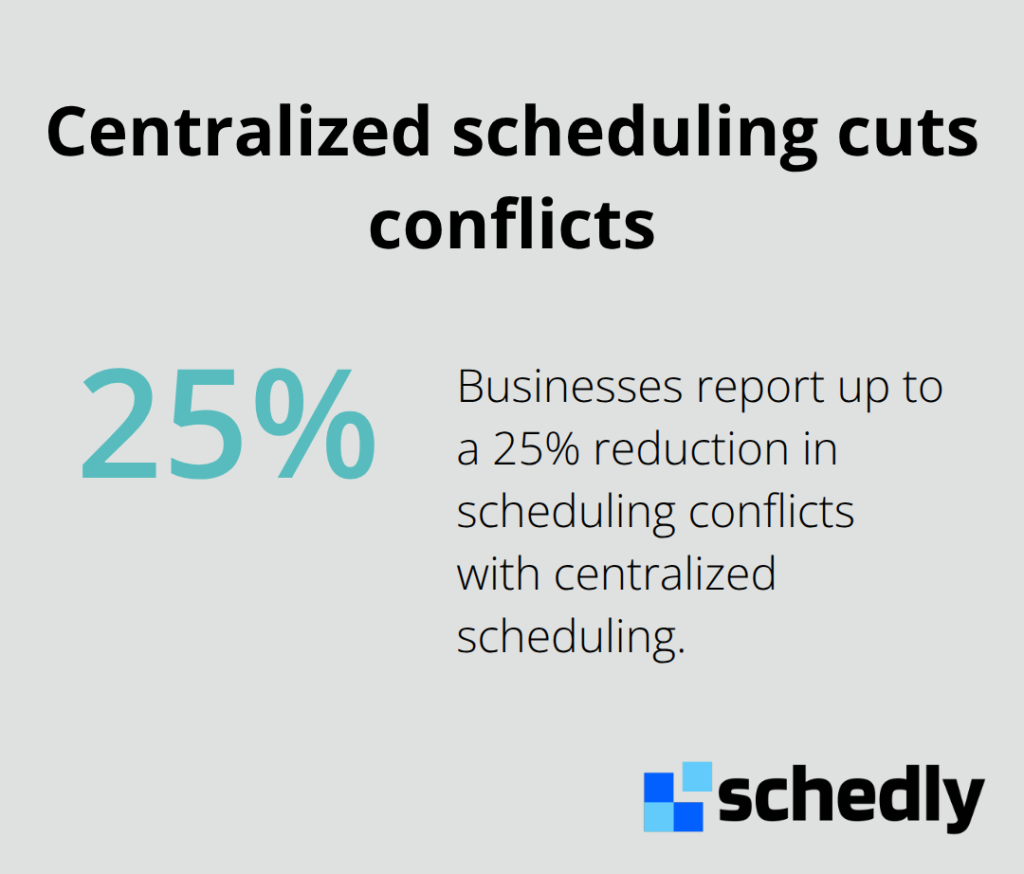
Data shows that businesses using centralized scheduling experience up to 25% reduction in scheduling conflicts because staffing aligns with actual demand patterns rather than guesswork or outdated forecasts. Managers identify understaffed locations instantly through real-time dashboards and reallocate resources before service quality declines.
Final Thoughts
Real-time multi-location scheduling eliminates the operational friction that costs businesses thousands of dollars monthly. When your sites stay synced, managers reclaim hours spent on manual coordination, customers receive faster responses, and labor costs align with actual demand instead of guesswork. The benefits compound across every location you manage because conflicts vanish before they happen, staff work from accurate information, and your teams respond to changes within minutes instead of days.
Test any solution by making a change at one site and verifying it propagates to other locations within minutes. Confirm that location-specific pricing works without manual overrides and that integrations with your existing tools like Google Calendar and payment processors function seamlessly. Request a live demonstration showing how the platform handles your actual coordination challenges, not just generic features (analytics by location matter because they reveal staffing patterns that inform resource allocation decisions).
Evaluate whether your current system handles multi-location coordination efficiently or whether it costs you time and money through manual processes and preventable errors. If you're managing multiple locations and spending hours weekly on schedule coordination, visit Schedly to see how real-time scheduling works for your business.