
Schedly resources
Multi Location Scheduling: Keeping All Teams In Sync
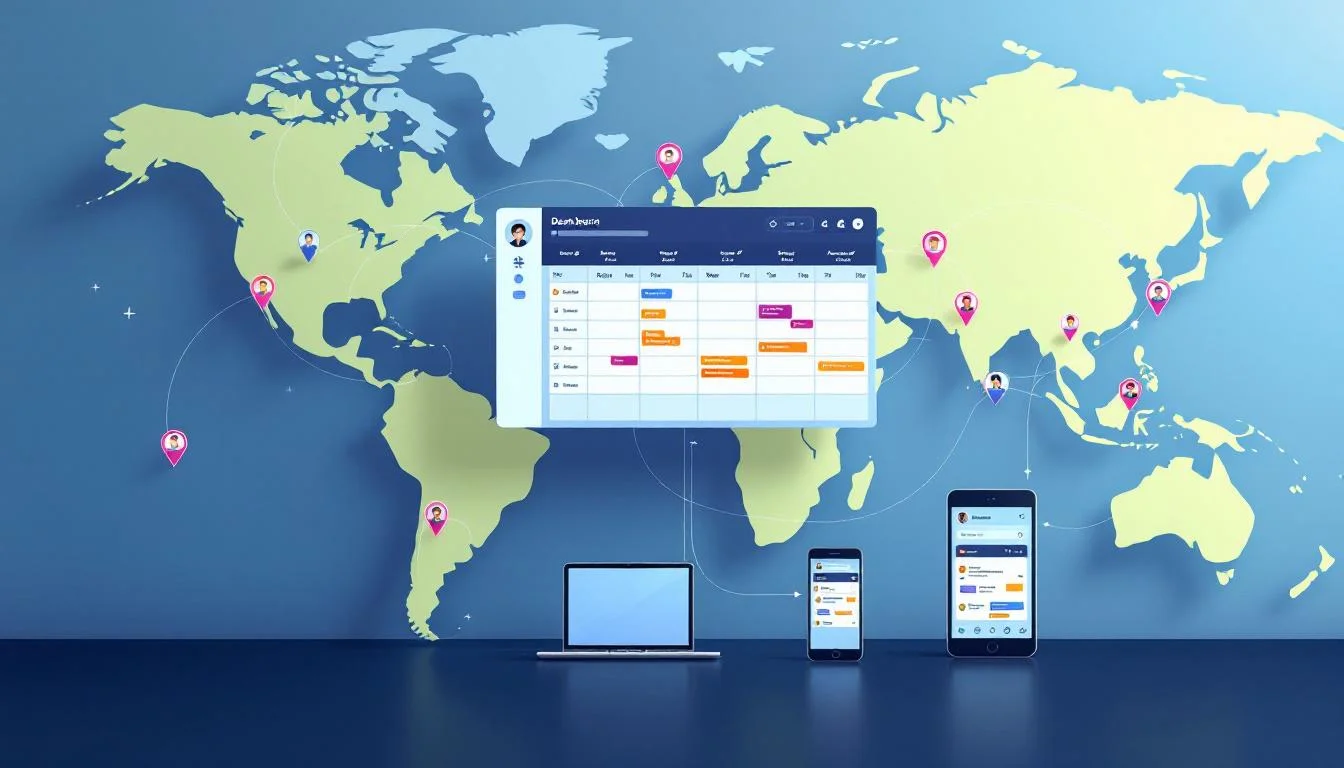
Running multiple locations means juggling dozens of schedules, time zones, and staffing needs at once. Most scheduling tools treat each site as separate, forcing managers to switch between systems and manually sync information.
At Schedly, we've seen firsthand how this fragmentation creates scheduling conflicts, missed shifts, and frustrated teams. A centralized multi-location scheduling approach fixes these problems by giving you one place to manage all your operations.
Why Separate Systems Sabotage Multi-Location Operations
The Breakdown When Tools Don't Connect
Single-location scheduling tools were built for one place with one team. When you add a second location, these systems break down fast. Managers maintain separate calendars, manually copy staff availability between platforms, and hope the information stays current. Harvard Business Review found that professionals spend over ten hours per week in meetings, and coordination overhead across locations burns even more time. With disconnected systems, a customer trying to book at your second location sees outdated availability because the calendar hasn't synced from your first site. Staff members miss shift assignments posted in one system while checking another. Inventory intended for location B gets assigned to location C because nobody has a unified view of what's where.
How Fragmentation Damages Revenue and Operations
These aren't minor inconveniences. Timezone misconfigurations and manual data entry create cascade errors that affect customer experience, staff morale, and revenue. A salon with three locations using separate booking platforms loses a customer entirely because one location's online calendar shows booked slots that were actually cancelled an hour ago. Revenue suffers when customers can't find available times, staff turnover increases when schedules remain chaotic, and leadership loses visibility into what's actually happening across the business.
The real damage happens silently. When systems don't talk to each other, you can't see patterns. Which location is understaffed? Which services are overbook? Where do customers wait longest? Without centralized data, every location operates as an island, and leadership makes decisions based on incomplete information. A healthcare practice with two clinics double-books the same provider across locations because the scheduling system doesn't check availability in real time. A real estate brokerage wastes hours coordinating open houses across offices because agents must manually confirm availability in separate tools.
What Multi-Location Businesses Actually Need
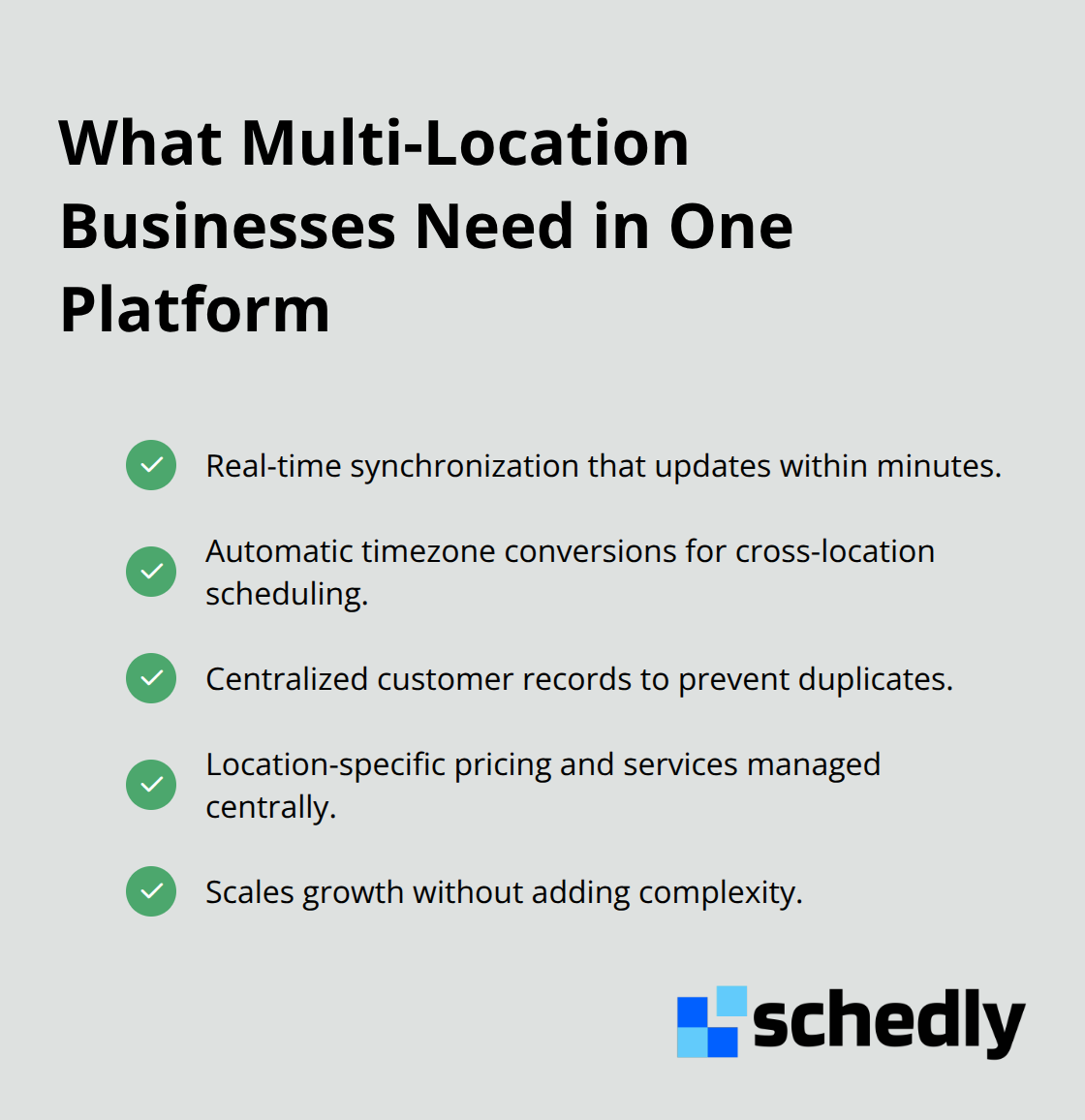
Multi-location businesses require real-time synchronization that updates within minutes. Timezone conversions must happen automatically so a 2 PM meeting in New York doesn't become a scheduling nightmare for the London team. Centralized customer records prevent duplicate files and ensure continuity. Location-specific pricing and service offerings must coexist in one platform without creating confusion.
The next section explores how modern multi-location scheduling software addresses each of these challenges and what separates effective platforms from those that merely add more complexity to your operations.
How the Right Platform Unifies Your Operations
Consolidating Everything Into One Command Center
A modern multi-location scheduling platform consolidates everything into one command center where managers see all locations, all staff, and all bookings simultaneously. Real-time bidirectional calendar synchronization updates within one to five minutes when changes occur, cutting double-booking risk compared with systems that poll every fifteen minutes. This speed matters because a cancellation at your downtown clinic needs to appear instantly at your satellite location so the next available appointment slot opens up for the customer waiting online. Timezone conversions happen automatically, so when your New York team schedules a meeting at 2 PM, your London staff sees it correctly adjusted without manual recalculation.
Eliminating Cascade Errors Before They Happen
Fast sync speeds eliminate the cascade errors that plague disconnected systems, where staff members show up for shifts that were already reassigned or customers book slots that disappeared an hour ago. The platform tracks location-specific pricing and service offerings without confusion, so your premium services cost differently at location A than location B, and that pricing logic stays consistent across all booking channels. Automated conflict resolution prevents double bookings before they happen. The system checks provider availability across all locations in real time, so when a customer requests an appointment, they see only genuinely open slots.
Making Resource Allocation Data-Driven
Resource allocation becomes data-driven rather than guesswork. If location C consistently runs short on staff during afternoons, the system flags this pattern so you can rebalance scheduling before service quality drops. Inventory transfers between locations happen in real time with pre-selected reasons, giving you visibility into what's actually moving where instead of discovering stock shortages mid-shift. Centralized analytics dashboards show occupancy rates, booking patterns, and utilization metrics broken down by location, so leadership spots underperforming sites immediately.
Turning Insights Into Action
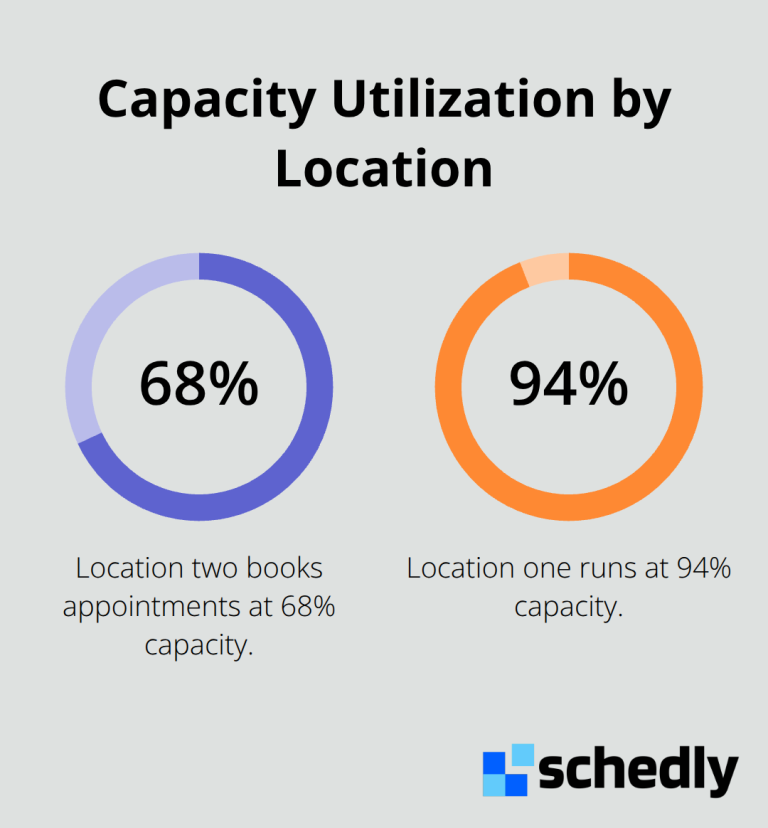
A healthcare practice with three clinics can now see that location two books appointments at 68 percent capacity while location one runs at 94 percent, triggering a reallocation decision before patient wait times become a complaint. Integration with your existing tools like Google Calendar, Zoom, and Stripe means scheduling data flows seamlessly into your wider business ecosystem without manual data entry or exports. These integrations transform how your teams coordinate across sites, moving from reactive firefighting to proactive management based on real operational data.
What Makes a Multi-Location Platform Actually Work
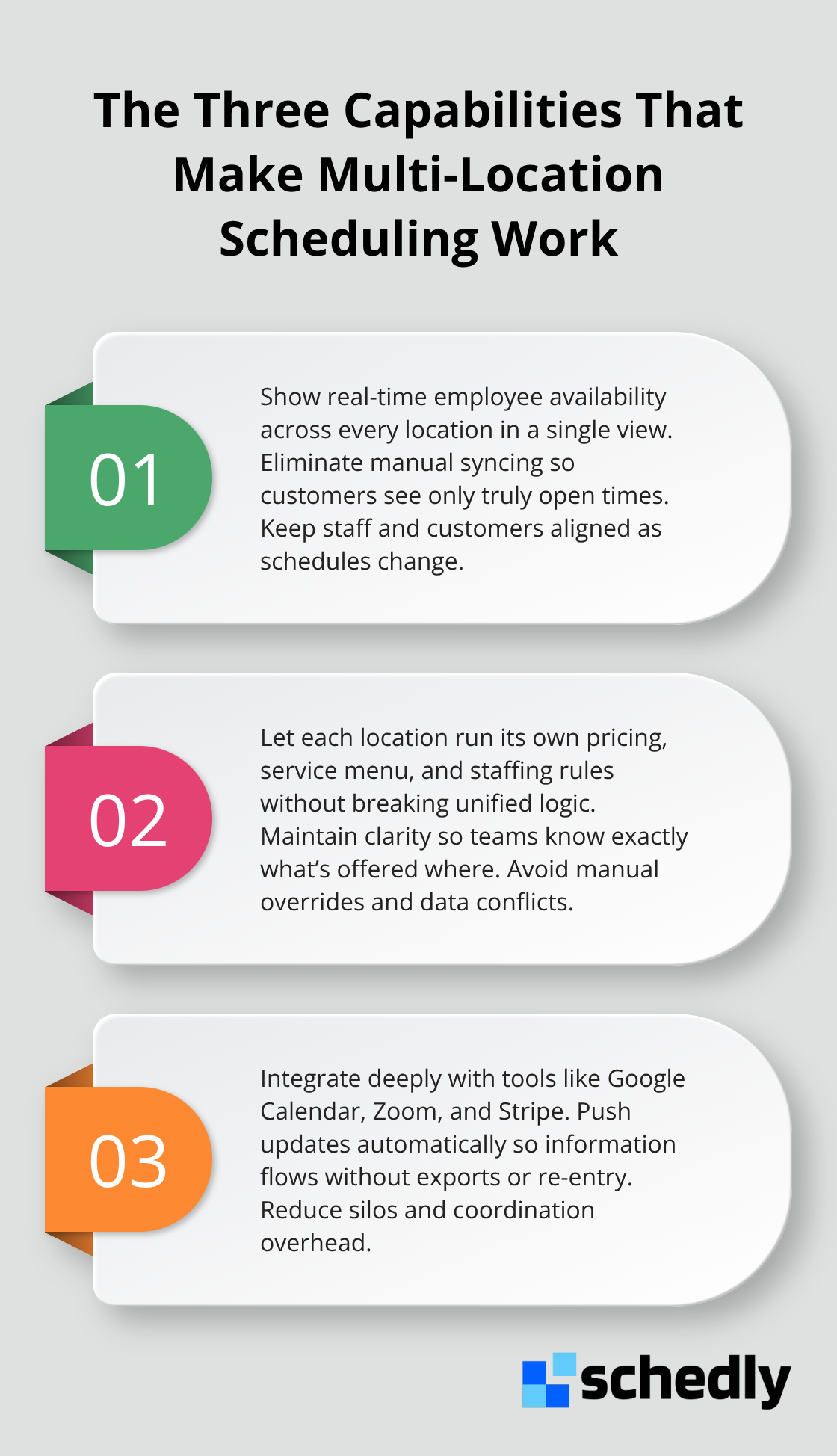
The difference between a platform that merely adds complexity and one that genuinely solves multi-location scheduling comes down to three core capabilities that must work together seamlessly. First, your system needs to display real-time employee availability across every location simultaneously, not as separate views you toggle between. Second, each location must operate with its own pricing, service menu, and staffing rules without breaking the unified scheduling logic. Third, your platform must connect with the tools your team already uses daily-Google Calendar, Zoom, Stripe, and similar services-so information flows automatically instead of requiring manual updates.
Real Availability Across All Locations Without Manual Syncing
When a customer books online at your second location, they need to see which staff members are genuinely available right now, not which ones were available when the calendar last refreshed. Your system must track employee availability across locations and update it constantly as schedules change. A salon manager assigns a stylist to a new client at location A at 2:47 PM, and that stylist no longer appears as available at location B when a customer browses appointment times online by 2:49 PM. This speed matters enormously because slow sync creates the exact problem you're trying to solve-customers book slots that actually aren't available, staff gets confused about actual assignments, and you're back to manual conflict resolution. Your platform should sync availability changes within two to five minutes at most. Anything slower than that introduces enough delay to cause double bookings and customer frustration.
Location-Specific Services and Pricing Without System Confusion
A healthcare practice charges different fees at its downtown clinic than its satellite location. A fitness facility offers premium personal training rates at the main gym but discounted rates at the airport location. A legal firm prices consultations differently based on which partner leads the session and which office handles the meeting. Your scheduling system must support all these scenarios simultaneously without creating data conflicts or forcing manual overrides. The platform lets you define service menus per location, apply location-specific pricing rules, and manage those differences from one central control panel. When a customer books at location B, they see location B's pricing. When staff members view the schedule, they see which services are offered at their location and what those services cost. The system doesn't get confused about whether a service exists at location C or what its price should be. Integration with your payment processor like Stripe ensures the correct amount charges based on location and service selection, eliminating the accounting nightmare of manual corrections.
Connecting Your Existing Tools So Data Flows Automatically
Your team lives in Google Calendar, Zoom, and Salesforce. Your scheduling platform should feed into those tools, not compete with them. When you create an appointment in your multi-location scheduler, it automatically appears on the provider's Google Calendar with the correct timezone conversion. When you integrate with Zoom, meeting links generate automatically for virtual appointments. When you connect Salesforce, customer booking data enriches your CRM without anyone typing information twice. This integration approach eliminates the data silos that plague multi-location operations, where information gets stuck in one system and never reaches the tools your team actually uses. A real estate brokerage that syncs its scheduling platform with Google Calendar and Zoom can instantly see agent availability across all offices and send meeting links to clients without manual setup. A consulting firm that integrates scheduling with Salesforce tracks which consultants booked which clients and uses that data to improve resource allocation across locations.
Final Thoughts
Multi-location scheduling stops being optional the moment you operate from more than one location. Fragmented systems cost you revenue, staff satisfaction, and operational visibility-problems that compound as you add locations. Platforms that sync availability across all sites in real time, support location-specific pricing without manual overrides, and integrate with Google Calendar and Zoom transform how your teams coordinate, moving you from reactive firefighting to proactive management based on actual data.
When you evaluate a multi-location scheduling solution, test the sync speed by making a change at one location and confirming it appears at another within minutes. Verify that location-specific pricing works without manual workarounds and that integrations with your existing tools function smoothly. Ask for a demonstration focused on your actual workflow rather than generic features, so you see how the platform handles your specific coordination challenges.
We at Schedly built a platform designed for multi-location operations across real estate, healthcare, salons, fitness, and other industries. The software automates booking, handles location-specific pricing and services, syncs with Google Calendar and Zoom, and provides analytics that show performance metrics broken down by location. Explore how Schedly simplifies multi-location scheduling and eliminates the coordination complexity that separate systems create.