
Schedly resources
No Show Prevention Tips That Actually Work
No-shows cost businesses time, money, and customer relationships. At Schedly, we've seen firsthand how a single missed appointment can disrupt schedules and damage trust.
The good news? No show prevention tips that actually work exist, and they're simpler to implement than you might think. This guide walks you through proven strategies that reduce no-shows and keep your business running smoothly.
Why Appointments Get Missed
Forgetfulness drives most no-shows, and the data proves it. Research from the VA system found that longer gaps between scheduling and the actual appointment sharply increase no-show risk. Same-day appointments have nearly zero no-shows at around 2%, while bookings made 15 or more days in advance show no-show rates near one-third. Time erodes memory. Patients schedule an appointment weeks ahead, life happens, and they simply forget. This isn't a character flaw-it's how human memory works. The scheduling gap creates a retention problem that generic reminders alone won't solve because many patients never receive or process those reminders in the first place.
The Gap Between Booking and Attendance
Booking lead times fundamentally shape whether patients show up. A patient who books three weeks out faces competing calendar demands, schedule changes, and the natural tendency to deprioritize future commitments. The VA data reveals that clinics with the highest no-show rates often scheduled appointments far in advance without active confirmation closer to the date. Clinics that reduced their average booking window and offered same-day or next-day slots saw dramatic attendance improvements. This doesn't mean eliminating advance bookings entirely, but it does mean creating pathways for patients to schedule closer to when they actually need service. Shorter lead times directly translate to higher show rates because the appointment remains fresh in a patient's mind.
Communication Breakdown Before the Appointment
Poor communication channels cause another major wave of no-shows. Patients miss appointments because they never received a reminder, received it in a format they ignore, or lacked a simple way to confirm they'd attend. SMS messages reach patients fastest-about 95% of texts are read and answered within three minutes. Yet many practices still rely solely on email or voice calls, missing patients entirely. The VA study on centralized phone systems showed that implementing structured reminder calls reduced no-shows from 16.3% to 15.2% in just one year. Single-channel reminders fail. Patients have different preferences and communication habits. Some ignore emails, others don't answer calls. A multi-channel reminder approach using text, email, and voice creates redundancy and ensures the message lands.
The Confirmation Problem
Many reminders are one-way broadcasts rather than interactive confirmations. Patients can't respond directly to reschedule or confirm, forcing them to make a separate phone call or log into a portal. This friction causes many to skip the appointment rather than navigate the confirmation process. When patients can confirm, cancel, or reschedule directly from a reminder message without staff intervention, attendance rates improve significantly. The ability to respond in seconds removes barriers that otherwise lead to no-shows. This shift from passive notification to active engagement transforms how patients interact with their appointments and whether they actually show up.
What Actually Stops No-Shows
Multi-Channel Reminders Beat Single-Channel Every Time
Automated reminders work, but only when you layer them correctly. A single email notification sent days before an appointment fails because patients forget or never see it. The VA healthcare system discovered that centralized phone reminder calls reduced no-shows within one year, proving that human contact matters. However, phone calls alone don't capture everyone-some patients prefer text, others email. SMS reminders hit differently: about 95% of texts reach patients and get read within three minutes, making them the fastest way to connect. The real power emerges when you combine channels. Send an SMS first, follow up with email, and add a voice call for high-value appointments. This redundancy ensures your message reaches patients regardless of their communication habits.
Make Confirmation Frictionless
Standard reminders tell patients about their appointment but force them to call your office or log into a portal to confirm. That extra step kills attendance. Bidirectional SMS reminders change everything-patients confirm, reschedule, or cancel directly from the text message in seconds. Research from addiction treatment clinics showed that streamlining the confirmation process reduced no-shows significantly. When patients respond instantly without leaving their phone, barriers disappear. The friction vanishes, and so do the no-shows.
Policies Work Best With Prevention
No-show policies matter, but they're secondary to prevention. Clinics that implemented clear cancellation policies with $25–$30 penalties saw modest improvements, yet those same clinics saw dramatic gains when they paired policies with better reminders and confirmation systems. Penalties alone frustrate patients; they work only when combined with genuinely convenient ways to reschedule. The data is clear: make it easier to confirm than to ignore, and no-show rates plummet.
Technology Removes the Guesswork
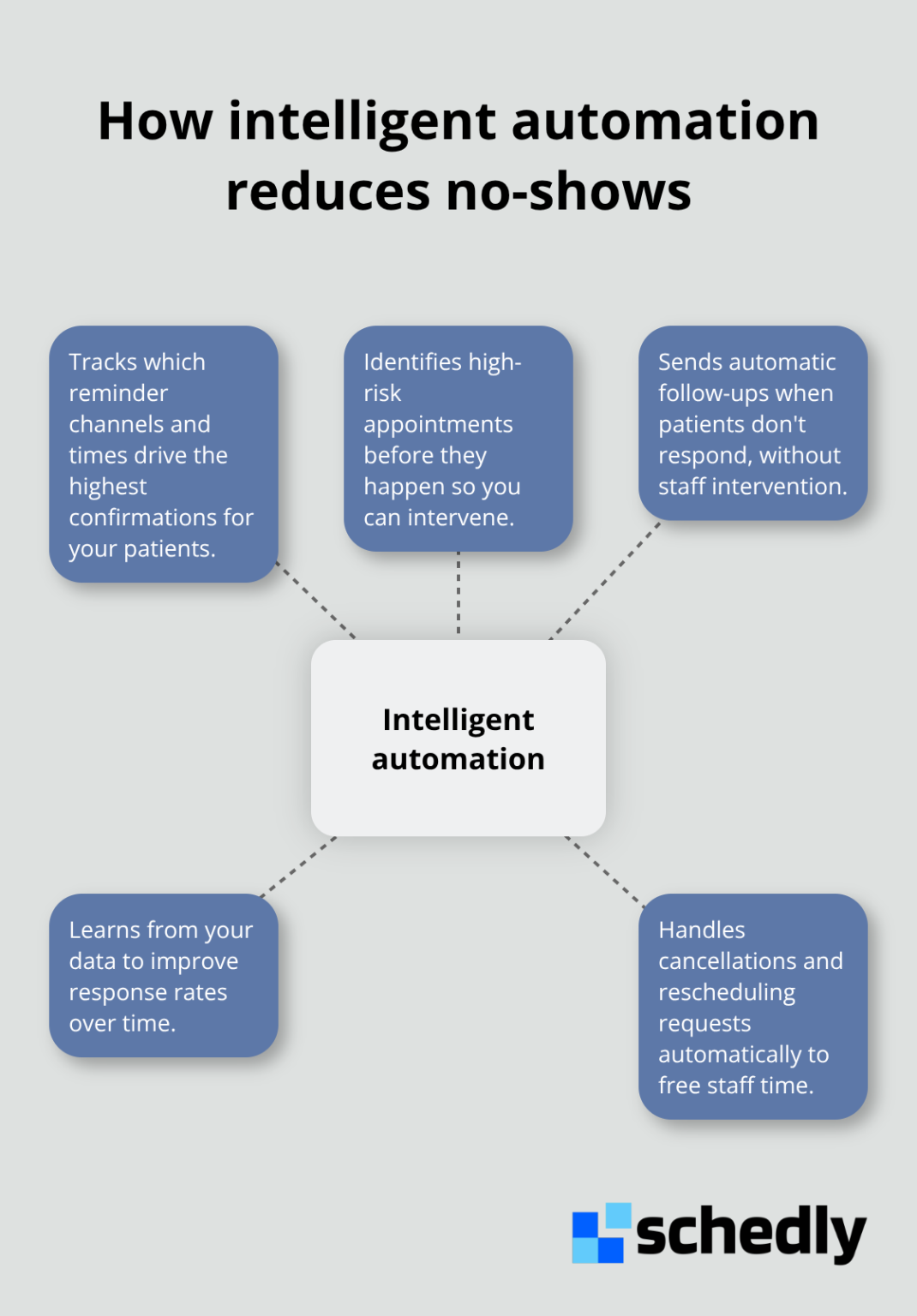
Scheduling software that integrates reminders, confirmations, and analytics transforms how you prevent no-shows. These platforms track which reminder channels work best for your patient base, identify high-risk appointments before they happen, and automatically send follow-ups when patients don't respond. The system learns from your data-which times of day see the most confirmations, which patient segments need extra touchpoints, which communication methods drive the highest response rates. This intelligence lets you stop guessing and start acting on what actually works for your specific business.
The foundation is now in place. You understand why no-shows happen and what stops them. The next step is choosing the right tools to automate these strategies at scale.
Automation Handles What Manual Systems Miss
Why Manual Reminders Fail at Scale
The scheduling software you choose determines whether your no-show prevention strategy scales or collapses under its own weight. Manual reminder systems fail because they require staff to remember to send reminders, select the right contact method, and follow up when patients don't respond. A hospital processing 78,000 appointments monthly across multiple clinics cannot rely on humans to manage this workflow. Automated platforms eliminate manual bottlenecks in appointment reminders by sending reminders at the exact moment you specify, switching channels when patients don't engage, and collecting confirmation data without staff intervention.
The difference between a system that reduces no-shows by 5% and one that cuts them by 25% often comes down to whether reminders happen automatically or depend on someone remembering to send them. Staff time spent on manual outreach represents a hidden cost that most practices never calculate. Automation reclaims that time and redirects it toward patient care.
How Intelligent Automation Works
Scheduling software that integrates reminders, confirmations, and analytics transforms how you prevent no-shows. These platforms track which reminder channels work best for your patient base, identify high-risk appointments before they happen, and automatically send follow-ups when patients don't respond. The system learns from your data-which times of day see the most confirmations, which patient segments need extra touchpoints, which communication methods drive the highest response rates.
After two months of operation, you'll know that your morning appointments need SMS reminders while evening slots perform better with voice calls. This intelligence transforms prevention from guesswork into precision. The software handles cancellations and rescheduling requests automatically, freeing your staff from phone tag and allowing them to focus on patients who actually show up.
Real-Time Confirmations Drive Attendance
Real-time confirmation requests accelerate response rates. When patients can confirm directly from their phone without logging into a portal or making a call, response rates jump dramatically. A hospital that piloted AI-assisted scheduling improved attendance rates after deploying bidirectional confirmations alongside traditional reminders. The same system reduced no-shows enough to increase monthly revenue from around $20,600 in July to approximately $161,000 by December, with projections of $1.7 million annually once fully rolled out.
Those numbers reflect what happens when friction disappears from the confirmation process. Patients who previously would have ignored a one-way reminder now respond instantly because confirmation requires seconds, not minutes of their time. Integration with your existing calendar system means confirmations flow seamlessly into your schedule, and overbooking becomes a strategic tool rather than a chaos management tactic. When high-risk patients confirm, you know you have them. When they don't respond after multiple reminders, you can fill that slot with a waitlist patient or schedule a substitute appointment to maintain capacity utilization.
Final Thoughts
The no-show prevention tips that actually work share one thing in common: they remove friction from the patient experience while automating what humans forget to do. Multi-channel reminders reach patients regardless of their communication preferences, bidirectional confirmations let patients respond instantly without calling your office, and clear policies set expectations without frustrating patients who genuinely want to attend. Together, these strategies transform how your business operates and reduce no-shows at scale.
The financial impact speaks for itself. A hospital that implemented AI-assisted scheduling saw monthly revenue jump from $20,600 to $161,000 within five months, with annual projections reaching $1.7 million. Automated reminders also eliminate 120+ manual phone calls per month, freeing your team to focus on actual patient care instead of administrative work. Your schedule runs smoothly because slots fill predictably, and your staff spends less time scrambling to fill gaps.
Start by auditing your current reminder system and identifying where friction exists in your confirmation process. We at Schedly built our platform specifically to handle no-show prevention through automated reminders, real-time confirmations, and analytics that learn from your data. Your business deserves a system that works as hard as you do.