
Schedly resources
Payments for Appointments Streamlined With Modern Gateways
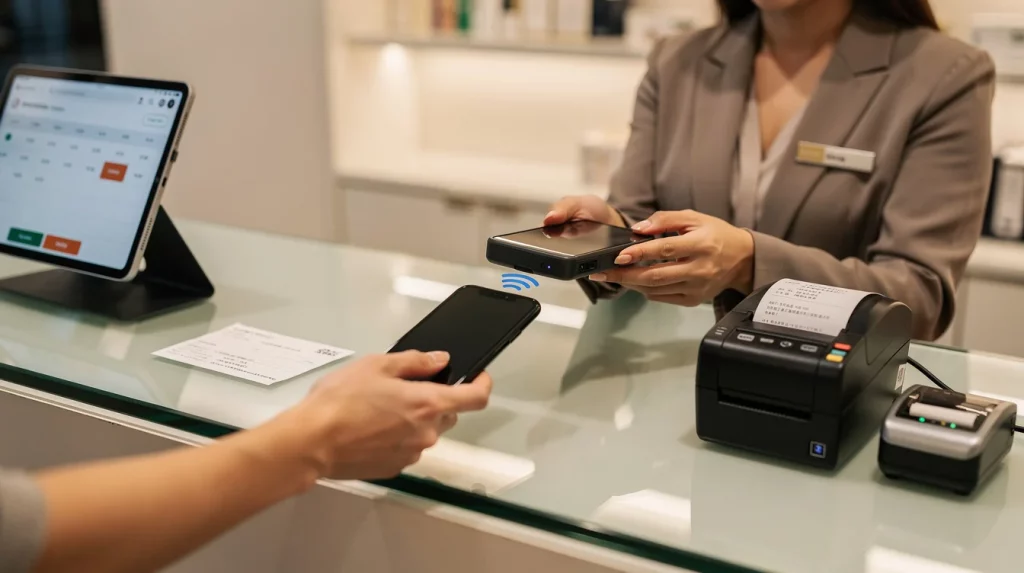
Appointment-based businesses lose thousands of dollars every year to no-shows and unpredictable cash flow. When customers commit financially at the moment of booking, behavior changes.
At Schedly, we've seen how payments for appointments transform the way service providers operate. Modern payment gateways make this transformation simple, secure, and seamless for businesses of any size.
Why Payment Processing Matters for Appointment Businesses
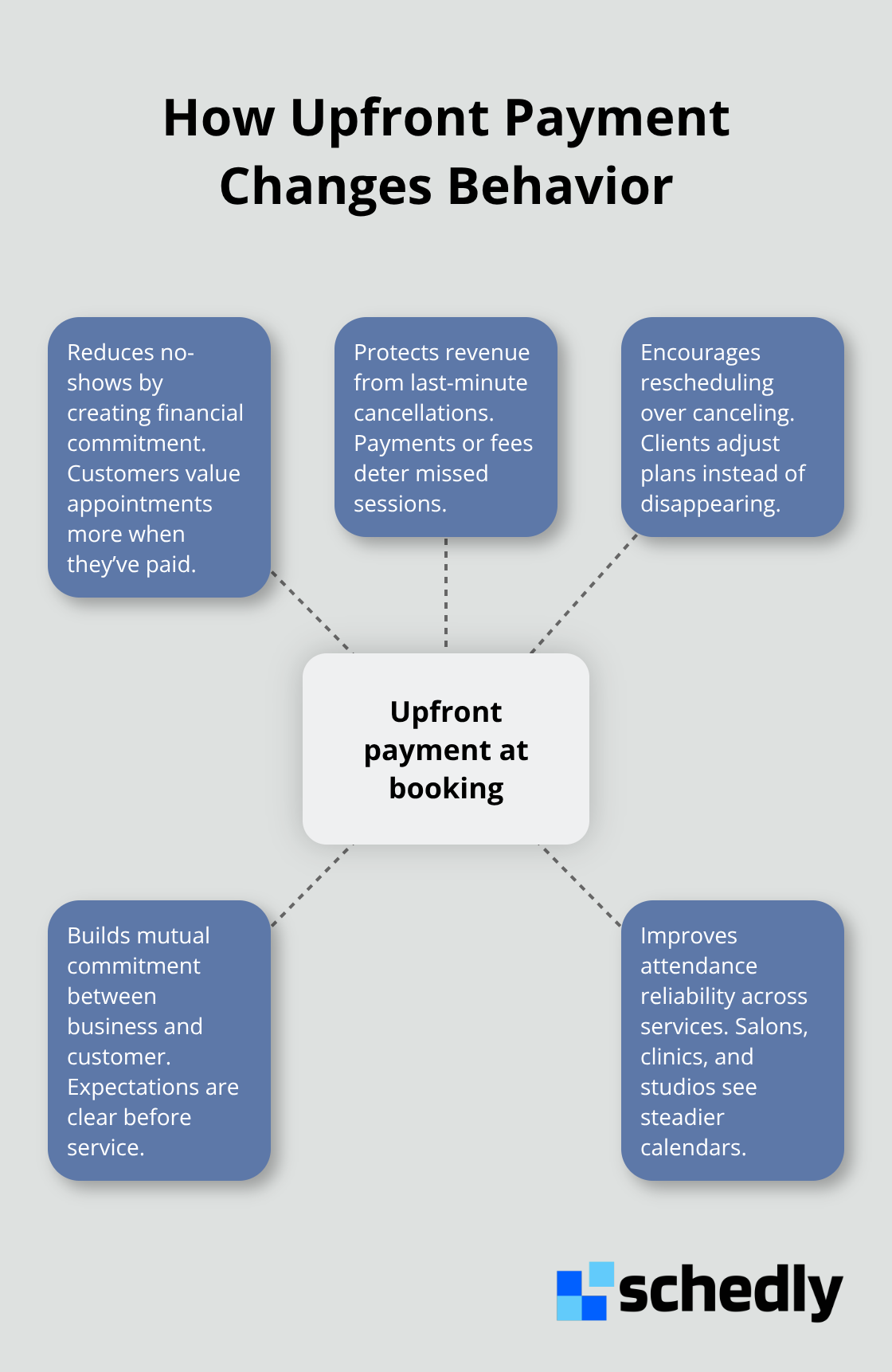
Upfront payment at booking fundamentally changes customer behavior. When someone commits financially before their appointment, they show up. The data backs this up: businesses that collect payment at booking see no-show rates drop significantly compared to those invoicing after service delivery. This isn't about being aggressive with customers. It's about creating mutual commitment. Customers who pay upfront have skin in the game. They're more likely to attend, and if they need to cancel, they reschedule rather than disappear.
Payment Capture Protects Your Revenue
No-shows cost appointment-based businesses thousands annually. A dentist with a typical $150 appointment loses that revenue instantly when a patient doesn't show. Multiply that across a week or month, and the damage compounds. Collecting payment at booking creates a financial incentive for attendance. Some businesses implement automatic no-show fees, which enforce themselves without awkward follow-up conversations. Others simply hold the payment as confirmation. Either way, the psychology shifts. Customers treat booked appointments differently when money has changed hands. Research shows that prepayment reduces no-shows compared to post-service invoicing. For salons, personal training facilities, and consulting firms, this protection matters enormously.
Cash Flow Becomes Predictable
Service businesses thrive on predictable revenue. When you invoice after delivery, you wait for payment. Some clients pay immediately. Others take weeks. A few never pay at all. This creates cash flow gaps that make staffing and budgeting decisions difficult. Payment gateways like Stripe and PayPal settle funds into your account within 24 to 48 hours of booking. You know exactly what revenue arrives. This predictability lets you hire staff with confidence, plan inventory, and invest in growth. A real estate agency that books property showings through a scheduling platform with integrated payments knows their revenue stream before the week starts. They can allocate resources accordingly. That's not possible with post-service invoicing.
Trust and Professionalism Signal Quality
Customers expect modern businesses to accept payments seamlessly. A branded payment experience inside your scheduling platform signals professionalism and trustworthiness. When a customer books an appointment and completes payment without leaving your platform, they experience a cohesive, professional interaction. They receive instant confirmation. They see their receipt immediately. This reduces anxiety about whether the appointment is actually booked. Customers trust businesses that handle their financial information securely and transparently. Payment gateways that comply with PCI standards use encryption to protect customer data, and displaying security badges during checkout reassures clients. This trust translates to repeat bookings and referrals. A healthcare provider offering seamless payment processing at booking builds patient confidence. A fitness studio with integrated payments demonstrates they're organized and professional. These details matter in customer decision-making.
Implement Payment Gateways That Match Your Needs
The right payment gateway transforms your appointment system from a scheduling tool into a complete revenue engine. Stripe and PayPal both integrate directly into modern scheduling platforms, allowing customers to pay without friction. These gateways support multiple payment methods (credit cards, digital wallets like Apple Pay and Google Pay) and handle currency conversion for international clients. They also manage security compliance, so you don't store sensitive card data on your servers. When you select a gateway, prioritize one that settles funds quickly, supports your preferred payment methods, and offers transparent fee structures. The integration should feel seamless-customers pay inside your booking flow, not on an external page. This cohesion matters. Platforms like Schedly offer integrated payment processing that keeps the entire experience branded and smooth, eliminating the friction that causes booking abandonment.
What Makes Modern Payment Gateways Reliable
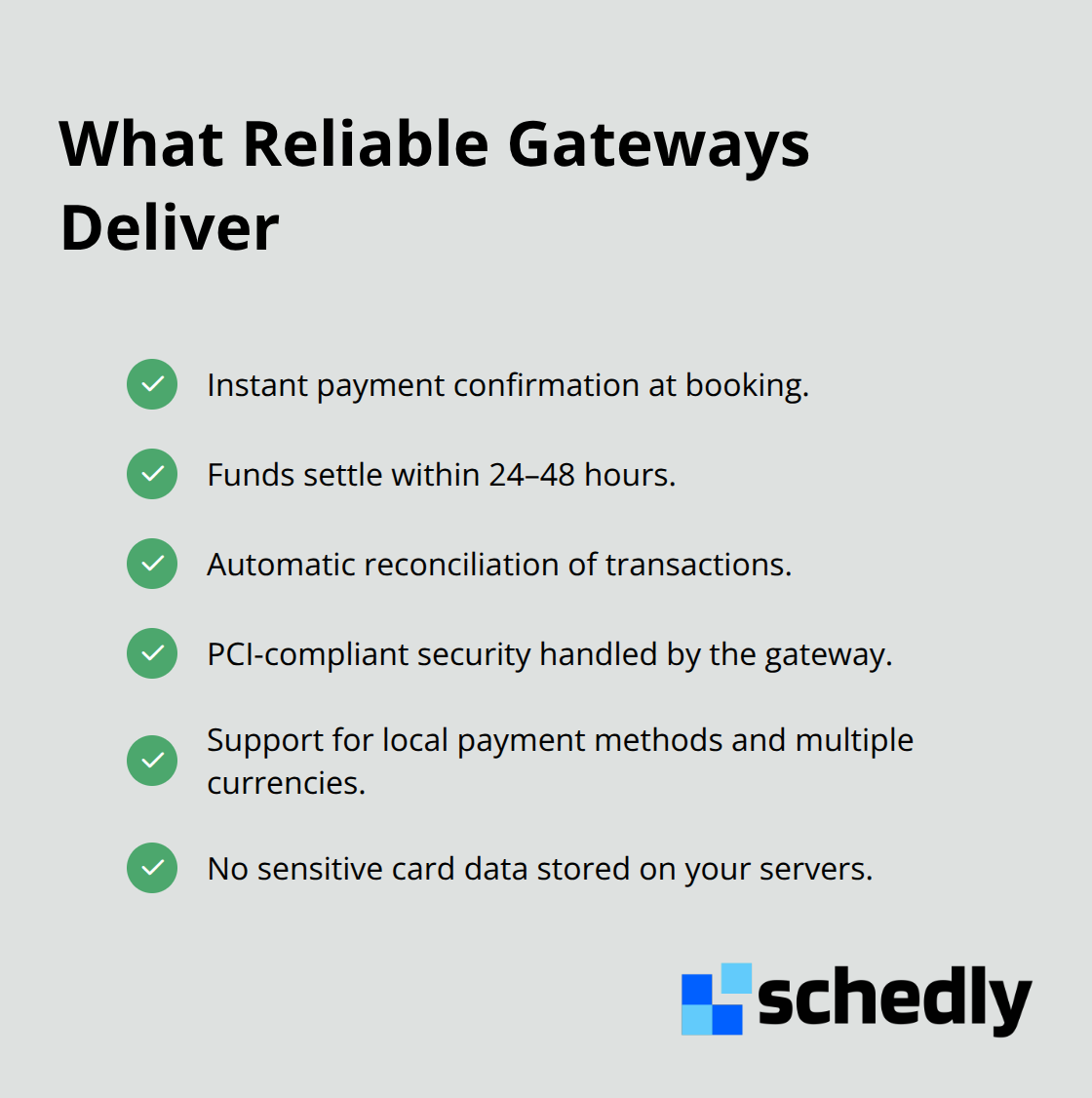
Stripe and PayPal have become the standard for appointment scheduling because they handle the technical complexity that most businesses want to avoid. Both platforms integrate directly into scheduling software, meaning customers enter payment information once during booking and never leave your branded experience. Stripe processes over $1.4 trillion annually across millions of businesses, and PayPal handles similar volume with established trust in the market. When you connect either gateway to your scheduling platform, customers receive instant payment confirmation, and funds settle into your business account within 24 to 48 hours. This speed transforms your cash flow from a guessing game into a predictable stream. The integration also means automatic reconciliation-every transaction records itself in one place, which eliminates manual data entry and the errors that come with it. Stripe supports local payment methods across multiple currencies, which matters if you serve international clients. PayPal offers similar breadth. For a real estate agency that books property showings with international investors or a fitness studio with clients traveling abroad, this capability prevents payment friction at the moment of commitment. Neither platform requires you to store sensitive card data on your servers. The gateways encrypt all information and maintain PCI compliance, which shifts security responsibility away from your business.
Security That Protects Your Business
Payment security isn't optional-it's the foundation of customer trust. Stripe and PayPal both use encryption and tokenization, which converts sensitive payment data into secure tokens that your system never touches directly. This architecture prevents the data breaches that plague businesses that handle raw card information. Both platforms meet PCI DSS standards, the payment card industry's security baseline. When you display security badges during checkout (the padlock icons and verification marks), customers see proof that their financial information is protected. This visual signal reduces abandonment at the final moment. A healthcare provider that handles patient payments needs this assurance. A salon that manages client credit cards for standing appointments cannot afford security lapses. The gateways also monitor transactions in real time, which flags suspicious patterns before fraudulent charges process. This fraud detection runs automatically, and it protects your revenue without requiring your staff to investigate suspicious activity. The responsibility for compliance falls on the gateway provider, not on your business, which simplifies your operations significantly.
Currency and Payment Method Flexibility
Accepting only credit cards limits your customer base unnecessarily. Stripe processes payments through Apple Pay, Google Pay, and traditional cards from the same interface. PayPal integrates its wallet alongside card payments. This variety matters because different customer segments prefer different methods. Younger customers often prefer digital wallets. International clients expect local payment options. A personal training facility with a diverse client base can accept whatever payment method fits each customer, which removes barriers to booking. Multi-currency support means you don't need separate payment systems for different markets. Stripe handles currency conversion automatically and displays prices in the customer's local currency if you enable that feature. A consulting firm that serves clients across Europe, North America, and Asia can operate one integrated payment system instead of juggling multiple gateways. PayPal offers similar capabilities with automatic currency handling. This simplification reduces administrative overhead and prevents the confusion that occurs when customers see unexpected currency conversions at checkout. The result is higher booking completion rates because customers complete payment without friction or surprise. These capabilities position your business to accept payments from anywhere, which opens doors to growth you haven't yet explored.
Setting Up Payments That Actually Work
Selecting the right payment gateway matters far more than most businesses realize. Stripe and PayPal dominate the market because they integrate directly into booking software without requiring custom development, but the decision shouldn't stop there. Start by testing both gateways with your actual booking flow before committing. Stripe settles funds within 24 hours and charges 2.9% plus $0.30 per transaction for standard card processing. PayPal charges similar rates but may offer different settlement speeds depending on your account type. For a salon processing 50 appointments weekly at $80 average value, the difference between gateways amounts to roughly $150 monthly. That's significant enough to warrant comparison.
More importantly, verify that whichever gateway you choose integrates seamlessly with your scheduling platform. Payment processing should connect directly inside the booking flow, meaning customers never navigate to an external payment page. This integration matters because every redirect increases abandonment. Studies show that booking completion rates drop measurably when customers leave your branded environment.
Automate Payment Collection at Booking
Payment timing determines whether you capture revenue or lose it. Collect payment at the moment of booking, not after service delivery, and you change the entire financial dynamic. Configure your system to require payment before appointment confirmation, not as an optional step customers can skip. A healthcare clinic that makes payment optional sees roughly 15-20% of patients skip it, creating follow-up work and cash flow delays. Making it mandatory eliminates this friction entirely.
Set up automatic payment reminders that trigger 24 hours before appointments, since reminders reduce no-shows by improving appointment management. Pair reminders with a clear cancellation policy displayed during booking. Customers who see upfront that cancellations within 48 hours incur a fee reschedule rather than abandon appointments. Configure your gateway to hold refunds for cancelled appointments automatically, which removes the need for manual processing and prevents disputes.
If your business operates with deposits, structure them as a percentage of total service cost rather than a flat amount. A personal training facility charging $50 per session might require a 50% deposit at booking, lowering the barrier to commitment while still protecting revenue. For recurring appointments or packages, enable automatic recurring charges so customers don't need to re-enter payment information for each session. This reduces friction and improves retention significantly compared to manual payment requests.
Design Policies That Protect Revenue Without Frustrating Customers
Refund and cancellation policies only work when customers understand them before paying. Display your policy clearly during the booking process, not buried in terms and conditions. State it plainly: cancellations within 48 hours forfeit the appointment fee, or cancellations receive a full refund if made more than 48 hours in advance. Ambiguity creates disputes. Clear policies eliminate them.
Implement automatic enforcement through your payment gateway so no-show fees and cancellation charges process without manual intervention. A fitness studio that manually processes no-show fees spends administrative time on awkward follow-ups. Automation handles this silently and fairly. Configure your system to issue instant refunds for approved cancellations, which demonstrates professionalism and builds customer goodwill. Real estate agents who process refunds immediately for cancelled property showings see higher client satisfaction and more repeat bookings than those who delay.
Allow customers to reschedule without losing their payment, which encourages them to adjust rather than cancel outright. If a customer moves their appointment from Tuesday to Thursday, their payment transfers automatically. This protects your calendar from gaps while respecting customer flexibility. For services where deposits make sense, clearly state what happens to deposits if customers reschedule versus cancel. A consulting firm might retain 25% of deposits for rescheduled calls but refund deposits entirely if cancellations occur beyond a reasonable notice window. These distinctions matter because they signal fairness. Customers accept fees when policies feel reasonable and transparent.
Final Thoughts
Payments for appointments transform how service businesses operate. Businesses that implement payment processing at booking see immediate results: fewer no-shows, predictable cash flow, and customers who treat their commitments seriously. Modern payment gateways like Stripe and PayPal remove the technical barriers that once made this seem complicated, and they connect directly into scheduling software so customers pay inside your branded experience without friction.
The real competitive advantage comes from treating payments as part of your customer experience, not as an afterthought. When payment processing feels seamless, customers complete bookings faster, show up more reliably, and trust your business more deeply. Healthcare providers, salons, fitness studios, and consulting firms all report the same pattern: integrated payment processing drives growth across industries.
Schedly integrates Stripe and PayPal directly into the booking flow, automates payment collection, manages refund policies, and provides the analytics you need to track revenue. Your customers experience a professional, cohesive journey from booking to payment to confirmation, while your business gains the cash flow predictability and no-show protection that drives growth.