
Schedly resources
Payments for Bookings: Simplify Your Scheduling Revenue
Payments for bookings are the backbone of any scheduling business. Without a reliable payment system, you lose revenue, deal with no-shows, and struggle to build customer confidence.
At Schedly, we've seen firsthand how the right payment setup transforms a booking operation. It's not just about collecting money-it's about creating a professional experience that keeps customers coming back.
Why Payment Processing Matters for Booking Systems
Upfront payments at booking time eliminate the financial uncertainty that plagues scheduling businesses. When customers pay during the booking process instead of at service time, you lock in revenue immediately and remove the risk of no-shows draining your calendar. The appointment scheduling software market is projected to reach 1.9 billion dollars by 2034, driven largely by demand for integrated payment solutions that streamline both bookings and cash collection. The shift toward integrated systems isn't optional anymore-it's what separates thriving scheduling operations from those stuck managing scattered payment records and chasing unpaid invoices.
Upfront Payments Stop No-Shows Dead
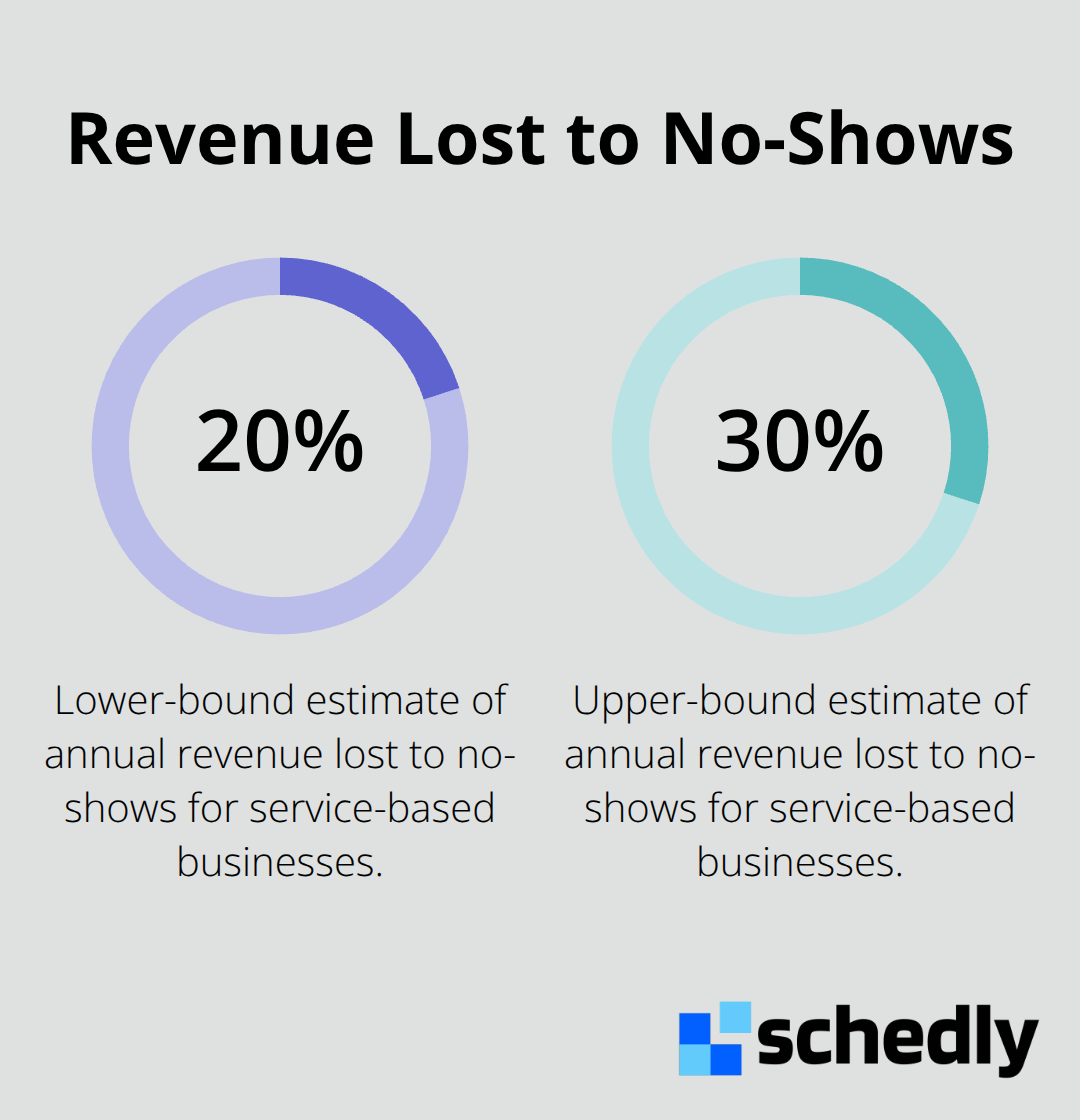
No-shows cost service-based businesses an estimated 20 to 30 percent of their revenue annually. When customers pay upfront, they have financial skin in the game, and cancellation rates drop dramatically. Practices that collect payment at the point of care see measurable improvements in appointment attendance and cash flow stability. A payment requirement at booking also lets you enforce meaningful cancellation policies-customers who've already paid understand the terms and are far less likely to disappear.
Cash Flow Improves When Payment Happens Now
Collecting payment after a service is completed stretches your [cash conversion cycle](https://www.investopedia.com/terms/c/cashconversioncycle.asp] and creates administrative overhead. Every unpaid invoice requires follow-up, and many never get collected. When payment happens during booking, your cash position strengthens immediately, giving you working capital to reinvest in your business, cover payroll, or handle unexpected expenses. For small teams especially, this matters enormously-you're not waiting weeks for payment or writing off bad debt.
Trust Builds Through Professionalism
A seamless book-and-pay experience signals competence and stability to your customers. They see a branded booking page, complete their booking in seconds, receive instant confirmation, and know exactly what they've paid for. This consistency builds confidence that you're organized and serious about your business. Customers who experience friction (separate booking forms, payment links sent via email, unclear pricing) question whether they're working with a professional operation. The integrated approach eliminates those doubts before they form and sets the stage for how you'll handle payment methods and customer expectations moving forward.
What Payment Methods Your Booking System Must Support
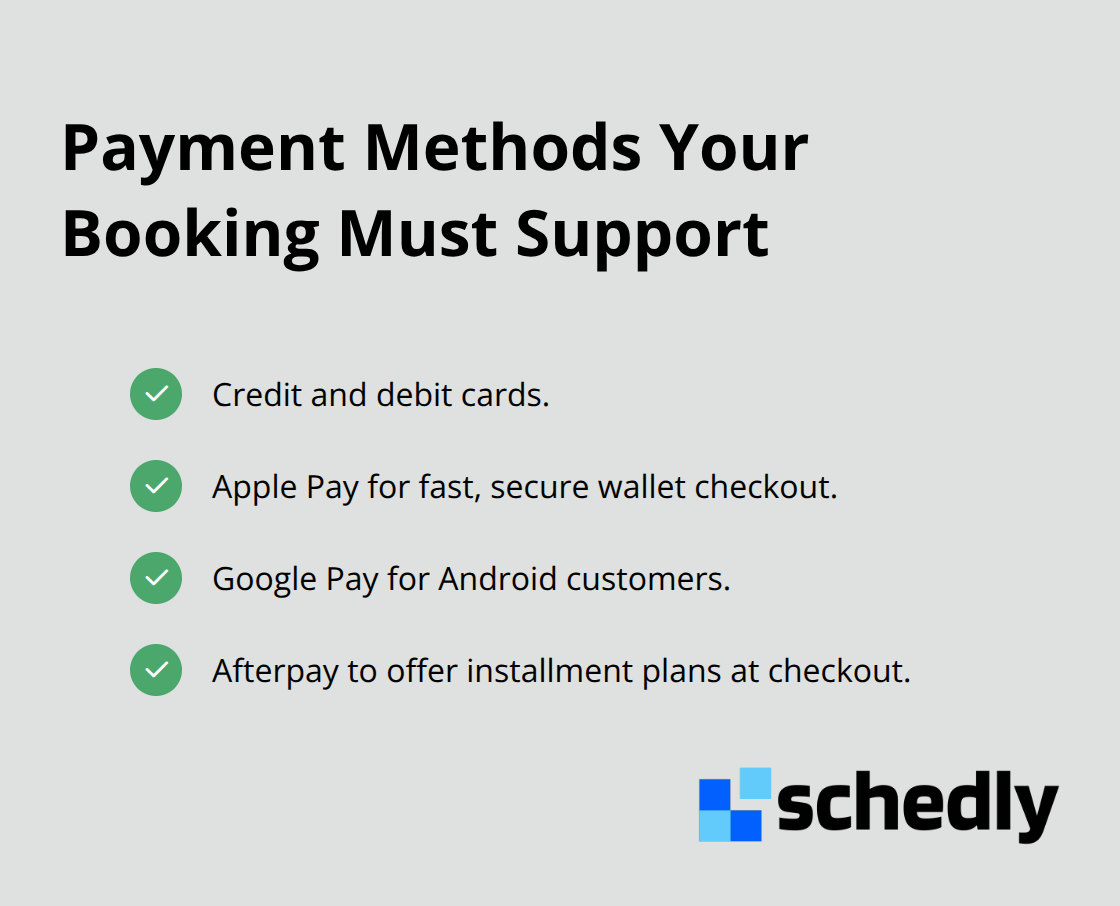
Your customers expect multiple ways to pay, and offering only one option costs you bookings. Credit and debit cards remain the foundation, but digital wallets like Apple Pay and Google Pay are no longer optional-they're baseline expectations. Digital wallet adoption has grown significantly, with mobile payment methods now accounting for a substantial portion of online transactions. When you accept cards, wallets, and emerging methods like Afterpay in a single booking interface, you remove friction at the moment customers commit to your service.
Cards and Digital Wallets Drive Conversions
Processing fees vary slightly by method. Online card transactions typically run around 2.9% plus $0.30 with providers like Stripe or Square, while in-person tap payments cost closer to 2.6% plus $0.15.
Installment Plans Reduce Purchase Hesitation
Flexible payment options like installment plans deserve serious consideration if your services command higher price points. Afterpay lets customers spread payments over time while you collect upfront, protecting your revenue while reducing hesitation for expensive bookings. For service-based businesses, prepaid packages work even better-customers pay for multiple sessions in advance, you secure cash immediately, and they become psychologically committed to showing up. This approach transforms your booking system from a transaction processor into a revenue engine that locks in cash before you deliver a single service.
Embedded Payments Eliminate Reconciliation Work
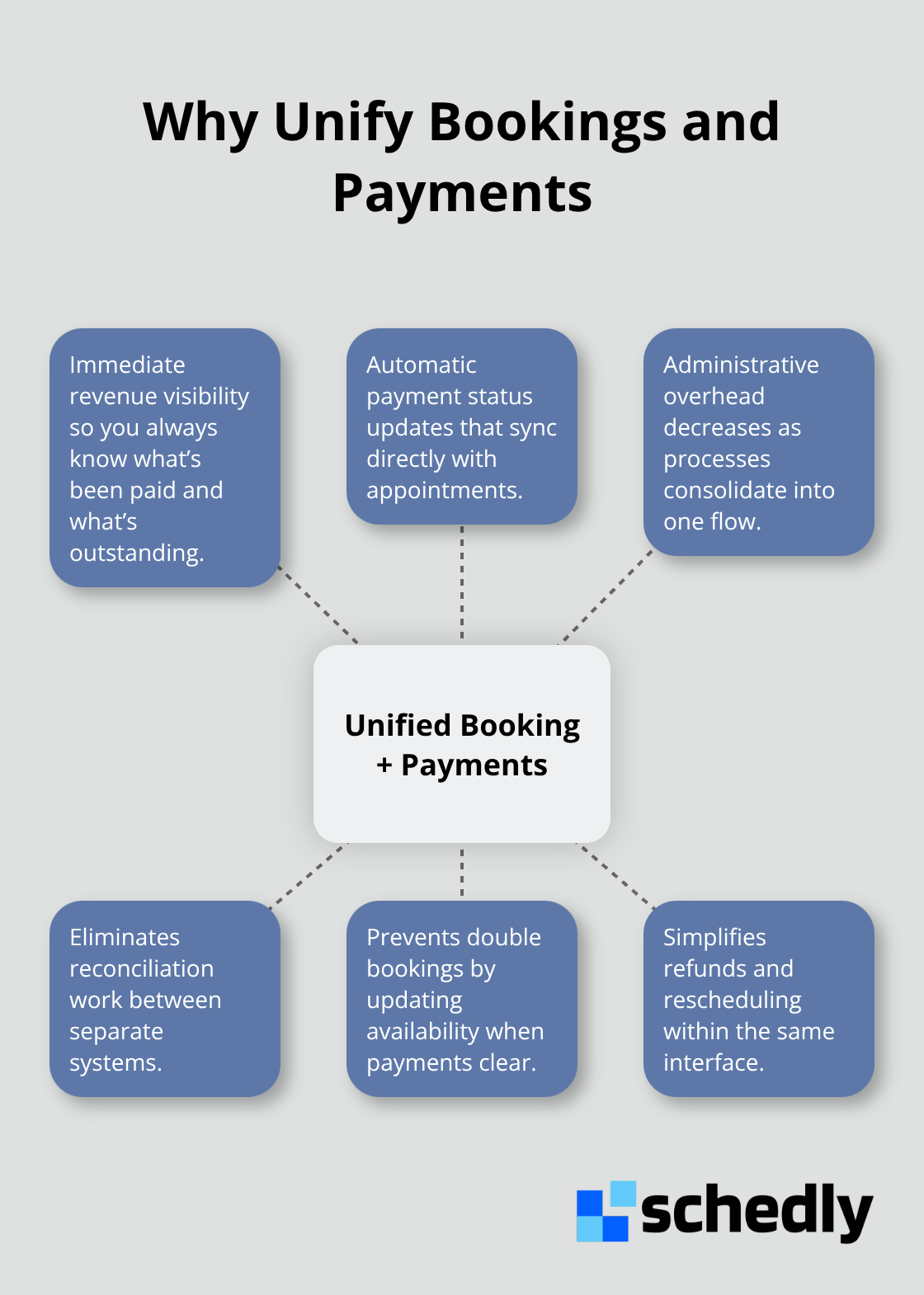
The key is embedding these payment choices directly into your booking flow rather than handling them separately. When payment happens within the scheduling interface, your customers experience one seamless journey from availability selection to confirmation. Your administrative overhead drops dramatically because there's nothing to reconcile later. This integration also means your payment data lives alongside your booking data, giving you a complete picture of which services drive revenue and which time slots convert best. With this visibility, you can identify which payment methods your customers prefer and which pricing strategies actually work. The next challenge surfaces when you try to implement these systems securely-payment processing introduces compliance requirements and security standards that many booking platforms overlook entirely.
Common Payment Processing Challenges and How to Solve Them
Most scheduling businesses hit three walls when they try to connect payments to bookings. The first is technical: your booking software and payment processor don't talk to each other cleanly, forcing manual reconciliation and creating gaps where transactions get lost or duplicated. The second is security: payment processing carries compliance obligations that catch business owners off guard, and one mistake exposes customer data or creates liability that costs far more than the revenue you collected. The third is operational: refunds, disputes, and rescheduling become administrative nightmares when payments and bookings live in separate systems. These aren't theoretical problems-they're the reason many small service businesses give up on integrated payments and retreat to collecting cash or checks after the appointment ends. Each obstacle has a straightforward solution.
Integration Eliminates Reconciliation Work
Tight integration between booking and payment systems removes the reconciliation trap entirely. When your scheduling platform includes Stripe or PayPal payment processing built directly into the interface, transactions sync automatically with appointments. Your customer books a service, pays in that same flow, and the payment record attaches to the booking immediately. No separate invoicing, no manual entry, no wondering whether a customer actually paid or just clicked away.
Real-time availability management paired with automatic payment status updates prevents double bookings because your calendar updates the moment a payment clears. You see which time slots are genuinely booked and paid versus which ones are still available, eliminating the confusion that costs you revenue when you accidentally oversell a slot or leave inventory open because you thought a payment was pending.
Test any booking platform's payment integration before committing: can you see payment status directly in the calendar view? Does a failed payment automatically reopen the time slot? Does the system send payment confirmation automatically? If the answer to any of these is no, the platform will create more work than it saves.
Security Standards Protect Your Business and Customers
Payment Card Industry Data Security Standard compliance isn't optional-it's the law, and violations carry fines starting at $5,000. Reputable payment processors like Stripe or Square handle most of the heavy lifting for you. These platforms maintain PCI compliance, encrypt data in transit, and absorb liability for data breaches on their end.
Your responsibility is narrower: never store unencrypted card data, use HTTPS for your booking page, enable two-factor authentication for admin accounts, and keep your booking software updated. Many small businesses assume they're too small to attract hackers-that assumption costs them thousands when a breach happens.
Require your booking platform provider to document their security practices, including encryption methods, access controls, and backup procedures. Ask specifically whether they conduct regular security audits and penetration testing. A provider who hesitates or provides vague answers is a red flag. Your customers trust you with their payment information and personal data; that trust evaporates instantly if their information leaks, and you'll spend far more on damage control than you ever would have spent implementing proper security from the start.
Refunds and Rescheduling Simplify With Unified Systems
Refund processing becomes simple when your booking platform and payment processor are unified. A customer cancels their appointment with enough notice to qualify for a refund-you process the refund from within your booking calendar, and the payment reverses automatically. The customer sees the refund hit their account within two to three business days (depending on their bank). No separate refund portal, no manual spreadsheet tracking, no forgotten refunds that damage your reputation.
Rescheduling works equally smoothly: the customer moves their appointment to a different time slot within the same booking interface, and the payment stays attached to the new appointment. If you need to adjust the price because they're moving to a premium time slot, the system calculates the difference and either charges them the additional amount or issues a partial refund. When these processes happen manually, you create opportunities for error and customer frustration. One forgotten refund or a rescheduled appointment that doesn't retain its payment record generates a complaint or a chargeback that costs you money and reputation.
Final Thoughts
Payments for bookings aren't a separate concern bolted onto your scheduling system-they're the foundation that determines whether your business thrives or struggles. Upfront payments eliminate no-shows, strengthen cash flow immediately, and signal professionalism to every customer who books with you. When you accept the payment methods your customers actually use (cards, digital wallets, installment plans), you remove friction at the exact moment they're ready to commit.
The real shift happens when you stop managing bookings and payments as separate processes. A unified system where customers book and pay in one seamless flow transforms your operation, giving you immediate revenue visibility, automatic payment status updates, and administrative overhead that actually decreases instead of growing with your business. Integration between your booking system and payment processor eliminates reconciliation work, prevents double bookings, and simplifies refunds and rescheduling.
We at Schedly built our platform around this reality-our scheduling software integrates secure payment processing through Stripe and PayPal directly into your branded booking page, giving your customers a professional experience while you collect payment instantly. Visit Schedly to see how integrated payments and scheduling work together.