
Schedly resources
Rapid Booking Page Setup For Instant Client Access
Your booking page is often the first real interaction a prospect has with your business. At Schedly, we've seen that clients who set up their rapid booking page setup within minutes start converting leads faster than those who delay.
The difference between a prospect booking with you or moving to a competitor often comes down to friction. When your scheduling system is ready immediately, you remove the biggest barrier between interest and action.
Why Speed Matters in Client Booking
Prospects Decide in Seconds
The moment a prospect lands on your scheduling page, they've already formed an opinion about your business. The global market for online booking platforms was valued at US$1.4 Trillion in 2024 and is projected to reach US$3.0 Trillion by 2030, which means competition for client attention has intensified dramatically. If your booking page takes longer than two minutes to navigate, you've already lost them to a competitor who offers instant access. Clients no longer tolerate friction in the booking process.
They expect to see availability in real time, confirm their appointment within seconds, and receive instant confirmation without back-and-forth emails. When a prospect needs to schedule something, they want it done now, not tomorrow. This expectation has become the baseline standard across industries.
The Cost of Delayed Setup
Every day your scheduling system isn't live costs you tangible revenue. Prospects move to competitors who have their systems ready, and you never hear from them again. Forbes Advisor evaluated scheduling apps and found that platforms offering rapid setup with quick-start templates and embeddable booking widgets significantly outperform those requiring lengthy configuration.
A client who books with you today doesn't book with your competitor. The first impression your booking page creates directly impacts whether someone follows through with a purchase. When you set up your booking page in minutes rather than days, you eliminate the administrative bottleneck that kills deals.
Mobile-First Design Drives Conversions
Mobile-first design matters more than ever. Booking systems in 2026 are mobile-first and omnichannel, meaning clients book, reschedule, or pay from any device. If your page isn't optimized for mobile, you turn away a significant portion of your prospects.
Real-time availability with instant confirmation prevents double bookings and speeds up client access. This feature is no longer optional; it's essential. The platforms that win are the ones that had their booking pages ready to accept customers from day one.
What Sets Winners Apart
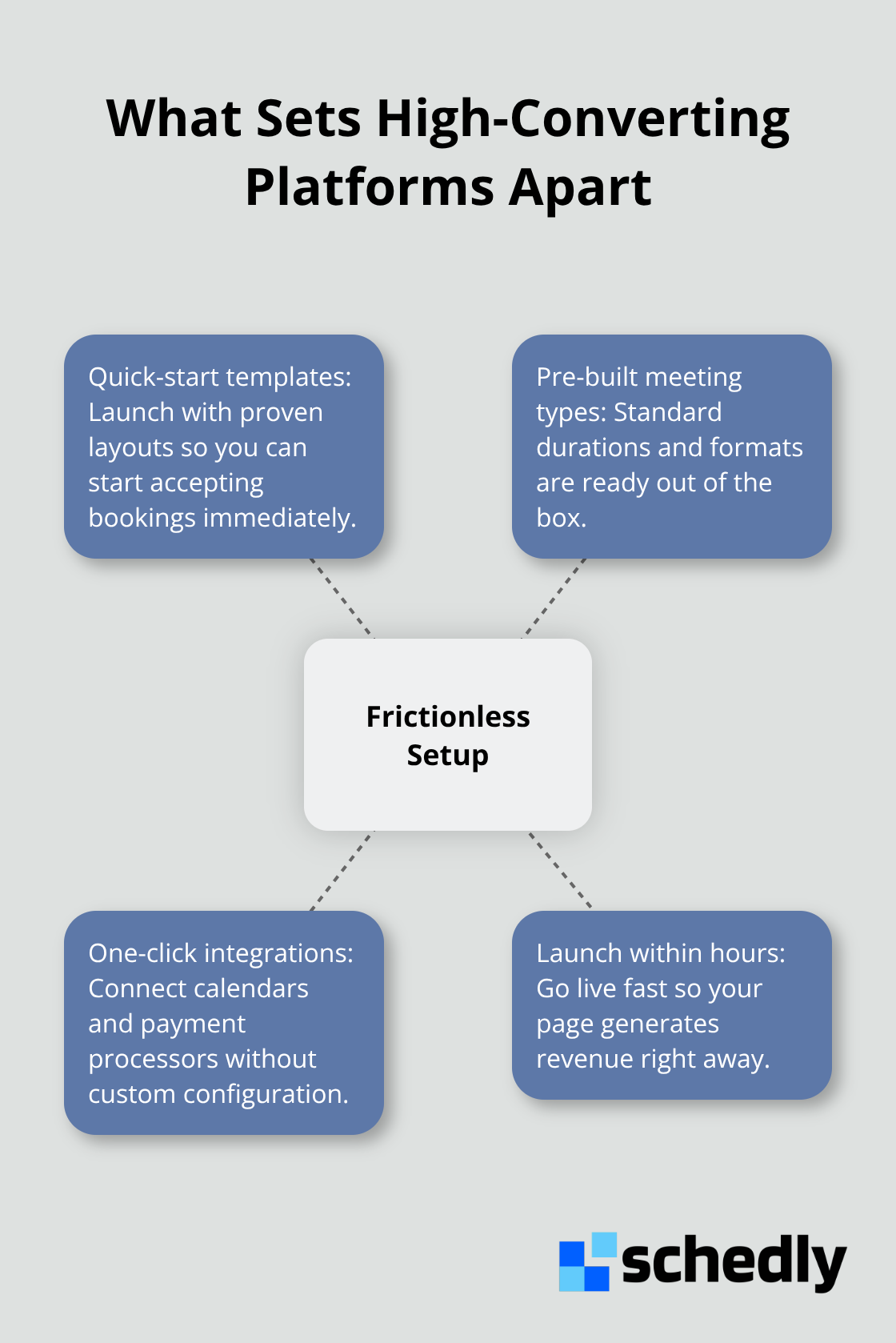
The platforms that capture client attention share one critical trait: they eliminate setup friction. Quick-start templates, pre-built meeting types, and one-click integrations with calendars and payment processors allow you to launch within hours. Your booking page becomes a revenue-generating tool immediately, not a project that sits on your to-do list for weeks.
The next step is understanding exactly how to build that page so it converts prospects into confirmed appointments.
How to Launch Your Booking Page Without Technical Headaches
Select a Platform Built for Speed
The right platform removes complexity from setup entirely. Calendly, Acuity Scheduling, and Setmore all offer pre-built templates that let you go live in under an hour. Forbes Advisor's evaluation of 18 scheduling apps found that platforms with quick-start templates and embeddable booking widgets dramatically accelerated time-to-revenue compared to solutions requiring custom configuration. The key is choosing a platform where templates come standard, not as an expensive add-on. You get a branded scheduling page ready for customization immediately, without needing a developer or design background.
Build Your Meeting Types in Minutes
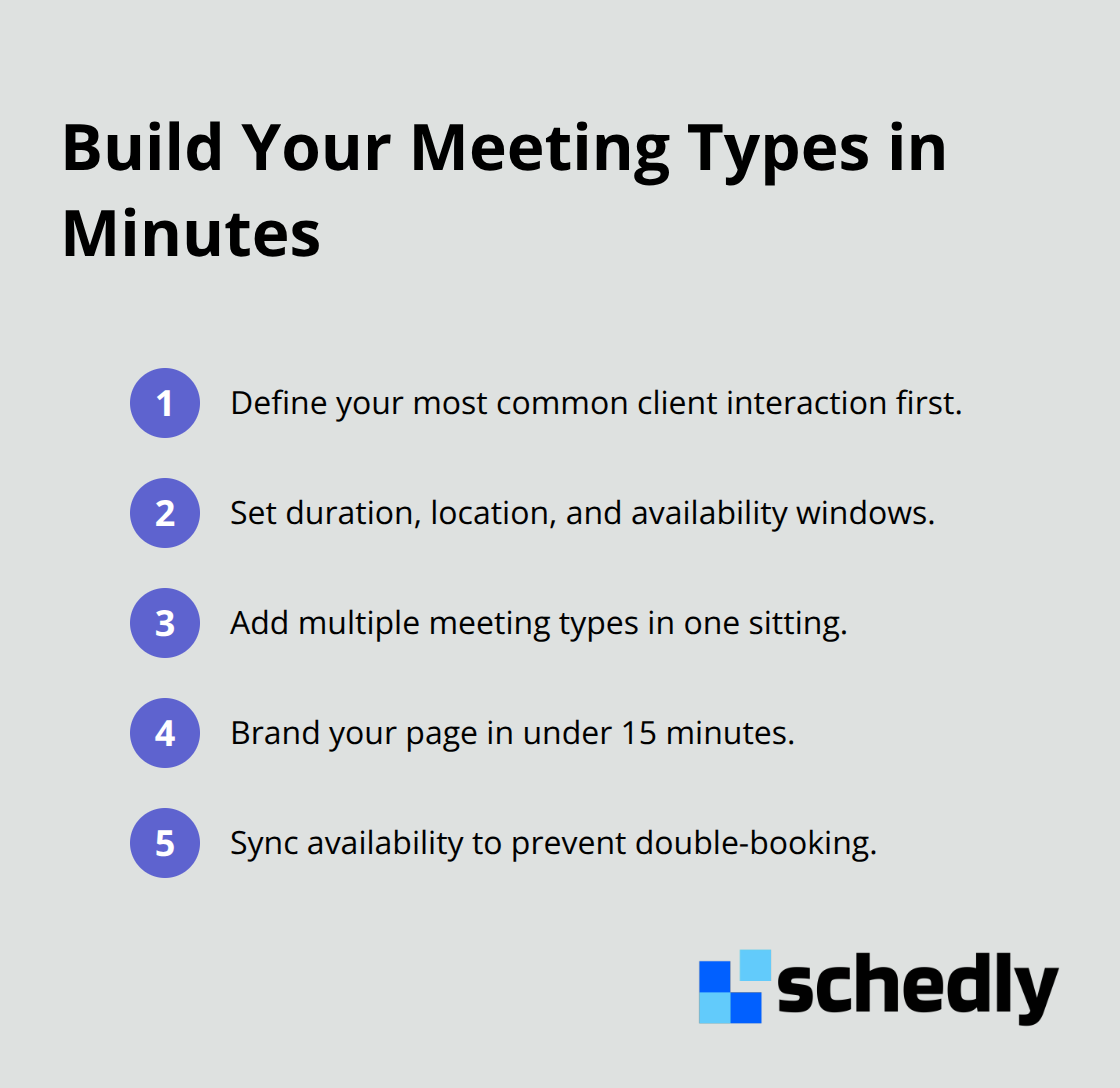
Start with a meeting type that matches your most common client interaction, then set the duration, location, and availability windows. Most platforms let you add multiple meeting types within minutes, so a consultant might create a 30-minute discovery call, a 60-minute strategy session, and a 15-minute follow-up slot all in one sitting. Customization takes no more than 15 minutes: upload your logo, choose your brand colors, write clear service descriptions, and set your time zone. Real-time availability syncs with your existing calendar, preventing the double-booking nightmare that kills client trust.
Connect Payment and Calendar Systems
Payment processing and calendar integration are non-negotiable, not nice-to-haves. Leading platforms integrate with Stripe and PayPal, allowing clients to pay during booking rather than in a follow-up invoice. Your platform must connect directly to Google Calendar, Outlook, or your existing calendar system so appointments appear automatically without manual entry. This integration eliminates the administrative work that slows down your team and prevents scheduling conflicts.
Automate Availability and Preparation Time
When a client books at 2 PM on your page, that time slot vanishes from your calendar instantly, and your team sees the confirmed appointment without lifting a finger. Buffer time settings let you block time before and after each appointment for preparation or notes, which is essential for service-based businesses. Lead time settings control how far in advance clients can book, preventing same-day scrambles when you need preparation time. After connecting these core integrations, your booking page generates revenue immediately without additional setup work.
The final piece is optimization-making sure your page doesn't just work, but converts every visitor into a scheduled appointment.
Converting Visitors Into Confirmed Bookings
Your booking page is live, but traffic doesn't automatically convert to appointments. The difference between a page that sits idle and one that generates consistent bookings comes down to three tactical decisions: how your page looks on mobile devices, how clearly you communicate what clients are actually paying for, and where you position your call-to-action so prospects can't miss it.
Mobile Responsiveness Drives Bookings
Mobile devices now account for the majority of booking traffic, and platforms built for 2026 recognize this reality. If your page doesn't work seamlessly on a phone, clients abandon it within seconds and book elsewhere. Test your booking page on your own phone right now-if navigation feels clunky or if payment fields are cramped, your conversion rate is already suffering.
Acuity Scheduling and Setmore both prioritize mobile-first design, which means buttons are large enough to tap easily, forms don't require horizontal scrolling, and payment processing completes in three taps or fewer. Your prospects expect to book from their phones without friction.
Transparent Pricing Eliminates Cancellations
Your service descriptions matter far more than you think. Vague descriptions like "consultation" or "meeting" create friction because prospects don't know what they're actually booking. Instead, write specific descriptions: "30-minute discovery call to identify your business needs and explore solutions" or "60-minute strategy session where we build a custom roadmap for your goals." Include what happens before the call, what happens during it, and what the client receives afterward.
Clear pricing eliminates the biggest reason clients cancel: surprise costs. If your booking page shows a price, clients know exactly what they're committing to and rarely cancel due to cost shock. Platforms like Calendly and Setmore let you display pricing directly on each meeting type, which reduces cancellations by removing the guesswork.
Strategic Call-to-Action Placement Converts Prospects
Your call-to-action placement determines whether prospects actually complete the booking. The most effective placement is above the fold on mobile and directly next to your meeting type descriptions on desktop-not buried at the bottom of the page where clients scroll past it. Try action-oriented language that matches your industry: "Schedule your consultation," "Book your appointment," or "Reserve your spot." The worst mistake is making your call-to-action passive or generic.
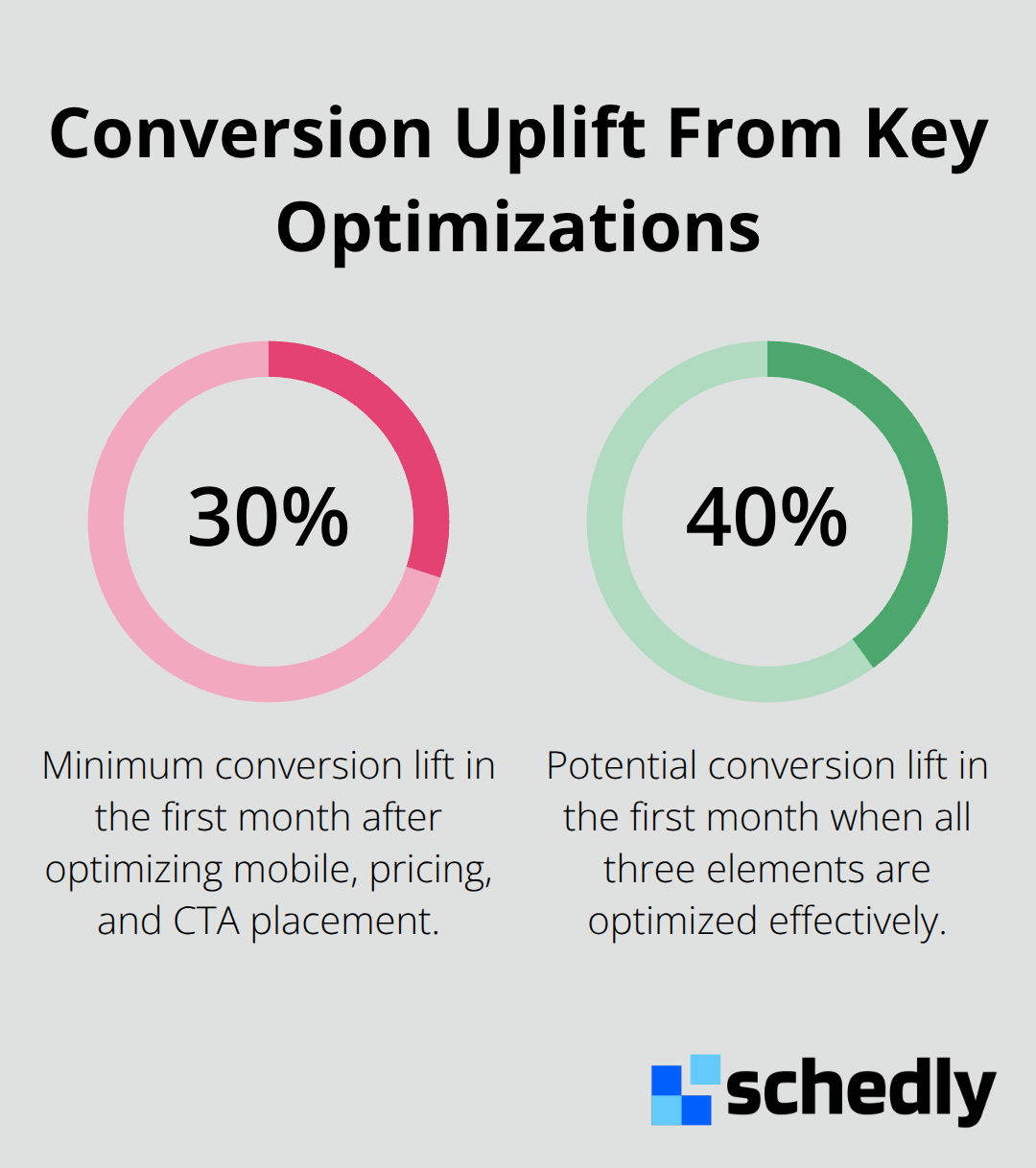
Test different placements for two weeks, then stick with whichever converts higher. Businesses that optimize these three elements (mobile responsiveness, pricing transparency, and strategic button placement) see booking conversion rates jump by 30 to 40 percent within the first month. Your booking page isn't just a scheduling tool; it's a sales page that either captures or loses revenue every single day.
Final Thoughts
Your rapid booking page setup transforms how clients interact with your business, and the market rewards speed relentlessly. Prospects land on your page, see real-time availability, confirm their appointment in seconds, and your team receives automatic calendar updates without lifting a finger. This efficiency compounds into more revenue, which means more resources to improve your service and scale your business.
The businesses winning right now launched their booking pages fast and optimized them without stopping. Speed eliminates the friction that kills deals, and when prospects see transparent pricing, mobile-friendly design, and instant confirmation, they book. The global booking market will reach US$3.0 Trillion in 2030 because companies finally understand what clients have always wanted: instant access without back-and-forth emails or phone tag.
Start converting leads today with Schedly, which automates your entire booking process with 24/7 online scheduling, secure payments, and integrations that sync with your existing tools. Your booking page isn't a side project-it's your primary revenue engine. Treat it that way and watch your conversion rates climb.