
Schedly resources
Real Estate Showings Scheduling: Faster Bookings For Realtors

Real estate agents lose deals every single day because they're stuck answering emails and managing calendars instead of closing sales. A showing that takes three days to book is a showing you'll probably lose to a competitor.
At Schedly, we've seen firsthand how real estate showings scheduling transforms agent productivity. When agents automate their booking process, they reclaim hours each week to focus on what actually matters: building relationships and closing deals.
Why Manual Scheduling Kills Your Real Estate Business
Email Chains Destroy Deal Momentum
Email threads about showing times create a cascade of delays that cost agents money. A buyer interested in a property emails the listing agent asking for availability. The listing agent checks with the homeowner, waits for a response, then emails back with three time slots. The buyer's agent replies suggesting one slot but needs to confirm with their client. Meanwhile, another buyer contacts the listing agent directly, creating duplicate conversations and conflicting information.
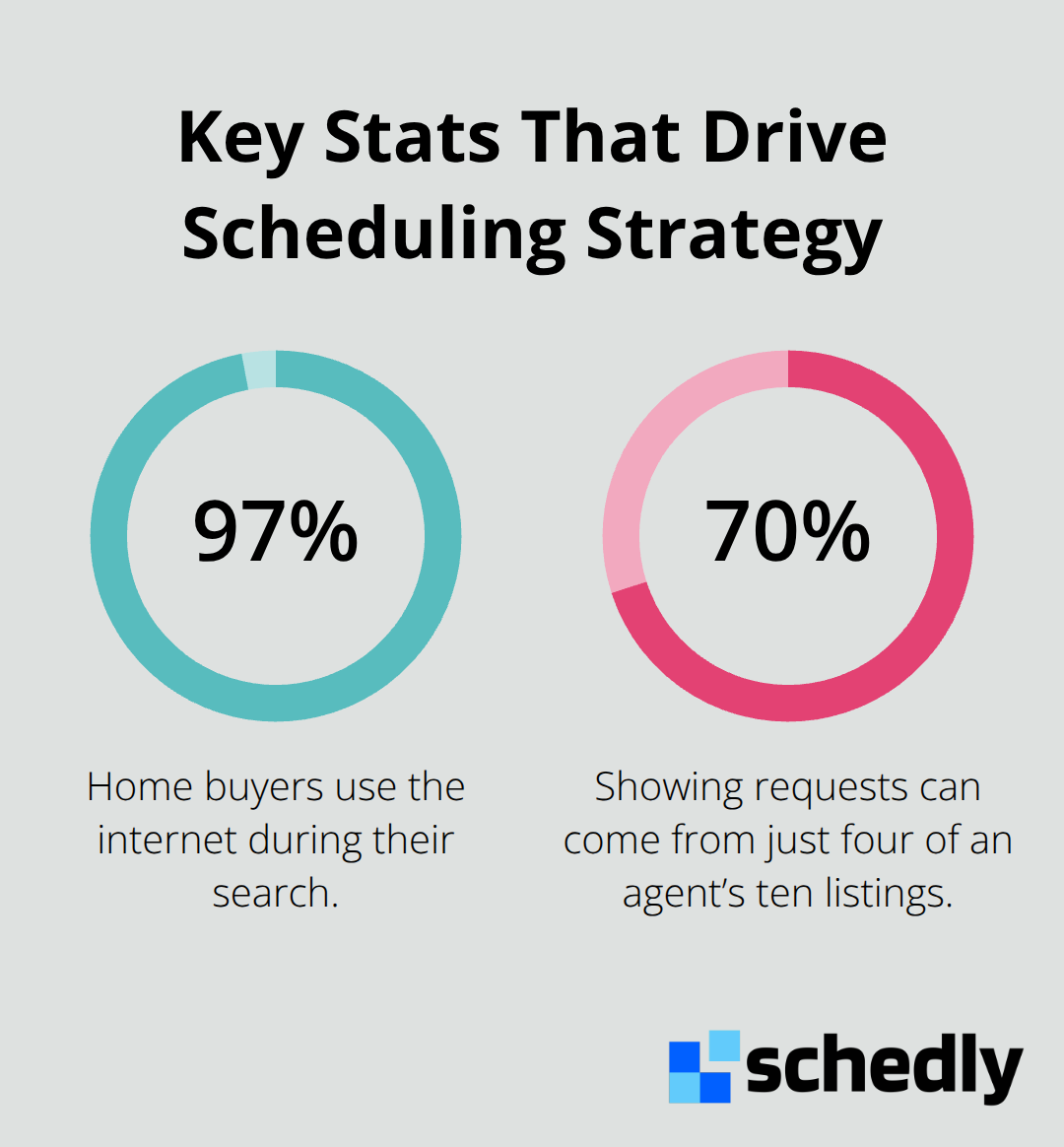
According to the National Association of Realtors 2024 Profile of Home Buyers and Sellers, 97 percent of home buyers use the internet during their search. These buyers expect to schedule viewings instantly, not wait for email chains to resolve. When your showing takes three days to book, that buyer has already moved on to a property with faster access.
Agents who rely on back-and-forth communication lose competitive advantage immediately. The listing sits longer. The buyer contacts a different agent. The deal disappears.
Speed Determines Who Wins the Deal
Real estate agents spend less than half their working hours on actual client interaction when they manage scheduling manually. The rest goes to calendar coordination, email management, and phone tag. Every hour spent arranging a showing is an hour not spent prospecting, negotiating, or building relationships that generate future referrals.
In competitive markets, showings booked within 24 hours often result in offers the same day. A three-day delay means missing that window entirely. Occupied properties require advance notice (typically 24 hours), and homeowners often have limited availability windows. When your scheduling system forces buyers to work around your constraints instead of adapting to theirs, you lose.
Administrative Tasks Multiply Across Your Team
One agent double-books because calendar systems don't sync. Another misses a showing because the confirmation email landed in spam. A third spends 20 minutes per inquiry asking basic questions that should have been collected at booking time. These small inefficiencies compound across dozens of properties and buyers each week, creating a productivity drain that directly impacts revenue.
The real problem isn't any single mistake-it's the pattern. Manual coordination creates friction at every step (confirmation delays, missing information, scheduling conflicts). Agents who automate these workflows reclaim those hours and redirect them toward activities that actually close deals. The agents who move fastest capture the best opportunities, and the ones stuck in email threads fall behind.
This is where modern scheduling transforms everything.
How Digital Scheduling Eliminates Booking Friction
Real-Time Availability Replaces Email Delays
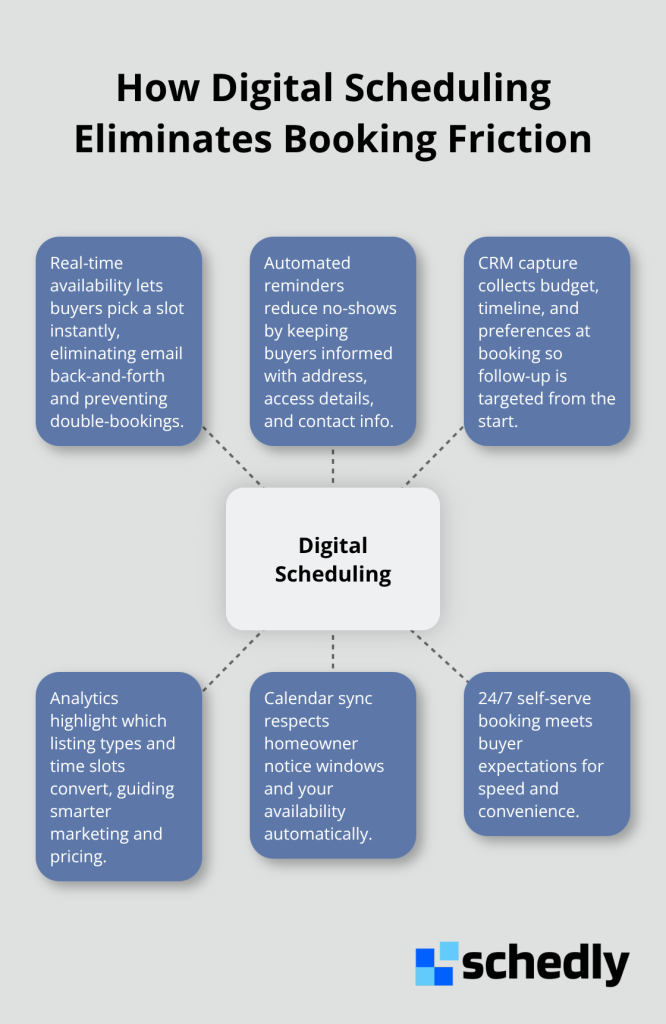
Booking software replaces email chaos with a direct path from interest to confirmed showing. When a buyer lands on your listing page or website, they see your availability in real time and book a slot instantly without waiting for you to respond. The system syncs with your personal calendar automatically, preventing double-bookings and eliminating the manual back-and-forth that wastes hours every week. The moment a buyer books, your homeowner receives a notification, you receive confirmation, and everyone knows exactly when the showing happens. No ambiguity. No delays.
Occupied properties often require 24-hour notice, but digital booking captures that requirement upfront. Homeowners see requests only during their approved windows and can approve or decline instantly rather than waiting for an email response.
Automated reminders cut no-shows and Keep Schedules Productive
Reminders sent the day before and a few hours before the showing keep your schedule productive and your clients accountable. When buyers receive a text or email reminder with the property address, access instructions, and agent contact information, they show up on time instead of forgetting or canceling last-minute. This simple automation protects your revenue by ensuring booked slots actually convert to showings.
Buyer Data Flows Into Your CRM Automatically
Your CRM captures buyer details at booking time-budget, timeline, preferences, whether they're working with another agent-so you don't waste 20 minutes per inquiry asking questions you should have answered during signup. This collected data flows directly into your client management system, giving you a complete profile before the showing even begins. You can then segment your follow-up, prioritize serious buyers, and track which properties generate the most interest and inquiries.
Analytics reveal what Drives Your Revenue
The analytics dashboard reveals total bookings, which listing types convert fastest, and whether weekends or weekday slots drive your revenue. Armed with this data, you adjust your strategy, list more properties in high-performing categories, and stop wasting energy on showings that rarely convert. This shift from guesswork to data-driven decisions separates agents who scale from those who plateau.
When your scheduling system handles the logistics automatically, your team focuses entirely on what moves deals forward. The next step is understanding how this productivity gain translates into real competitive advantage in your market.
What Agents Actually Do With Their Freed-Up Time
Reclaimed Hours Translate to Closed Deals
When agents stop drowning in scheduling logistics, they redirect those reclaimed hours toward activities that close deals. Automation flips this equation. An agent who previously spent time on calendar coordination, email confirmation, and rescheduling suddenly has hours per week available for prospecting, negotiating contracts, and nurturing buyer relationships that generate repeat business and referrals.
This isn't theoretical productivity gain-it's measurable revenue impact. Agents who automate showings scheduling report closing more deals within the same timeframe because they remain present during critical moments: following up with buyers immediately after a showing, addressing seller concerns without delay, and positioning themselves as responsive partners rather than administrative bottlenecks.

Speed and Responsiveness Create Competitive Separation
The competitive advantage compounds quickly. While one agent types confirmation emails, another already makes a follow-up call with a buyer who loved the property. Speed and responsiveness separate top producers from average agents in most markets.
An agent who responds to showing requests within hours instead of days captures more serious buyers. Those buyers perceive faster agents as more professional and committed to their needs. This perception translates into higher conversion rates and stronger client loyalty. The agent who moves fastest wins the deal, and the ones stuck in email threads fall further behind each week.
Data Reveals Your True Revenue Drivers
Your scheduling system captures every showing request, completion rate, and buyer inquiry, then displays this information in an analytics dashboard showing total bookings, which property types convert fastest, and whether weekend slots or weekday evenings generate more activity. An agent managing ten listings discovers that four generate 70 percent of showing requests-information that should influence how aggressively they market new properties in similar categories.
If Tuesday afternoons consistently underperform while Saturday mornings book solid, you adjust your listing strategy and pricing expectations accordingly. This shift from intuition to measurement changes how agents allocate time and resources. Instead of spreading energy equally across all listings, agents concentrate marketing effort on high-performing property types and adjust pricing on slower movers faster.
Strategic Adjustments Improve Your Bottom Line
The result: reduced days on market, fewer price reductions, and higher final sale prices for the properties that matter most to your business. Agents who leverage scheduling data make smarter decisions about which properties to list, how to price them, and where to invest marketing dollars. This data-driven approach eliminates wasted effort on listings that rarely attract serious buyers and maximizes returns on your most valuable inventory.
Final Thoughts
Real estate showings scheduling software transforms how agents compete in today's market. Buyers expect instant booking access, and agents who deliver it win deals while those managing calendars manually fall further behind each week. The competitive advantage belongs to agents who automate their scheduling workflows and redirect that reclaimed time toward closing deals and building relationships.
You need a platform that handles 24/7 online booking, prevents double-bookings through automatic calendar sync, and captures buyer details upfront so you don't waste time on discovery calls. The system should send automated reminders to reduce no-shows, collect feedback after each showing, and provide analytics that reveal which properties and time slots generate the most activity. Integration with your existing tools-Google Calendar, Zoom for virtual showings, and your CRM-ensures the system fits seamlessly into your workflow instead of creating more work.
Schedly automates your booking process, syncs with your calendar to eliminate conflicts, captures client data at signup, and provides an analytics dashboard showing total bookings and which property types convert fastest. The agents winning deals today aren't the ones with the most listings-they're the ones who respond fastest and keep their schedules productive. Real estate showings scheduling software makes that possible.