
Schedly resources
Real Estate Showings Scheduling: Streamline Property Tours For Agents

Real estate agents waste hours juggling property showings across multiple locations, coordinating with buyers, and chasing no-shows. The manual back-and-forth drains time that could go toward closing deals.
At Schedly, we've seen how the right scheduling software transforms this chaos into a streamlined operation. Automated booking systems, 24/7 availability, and data-driven insights let agents focus on what matters: selling properties.
The Real Cost of Unorganized Showing Coordination
Administrative Burden Drains Agent Productivity
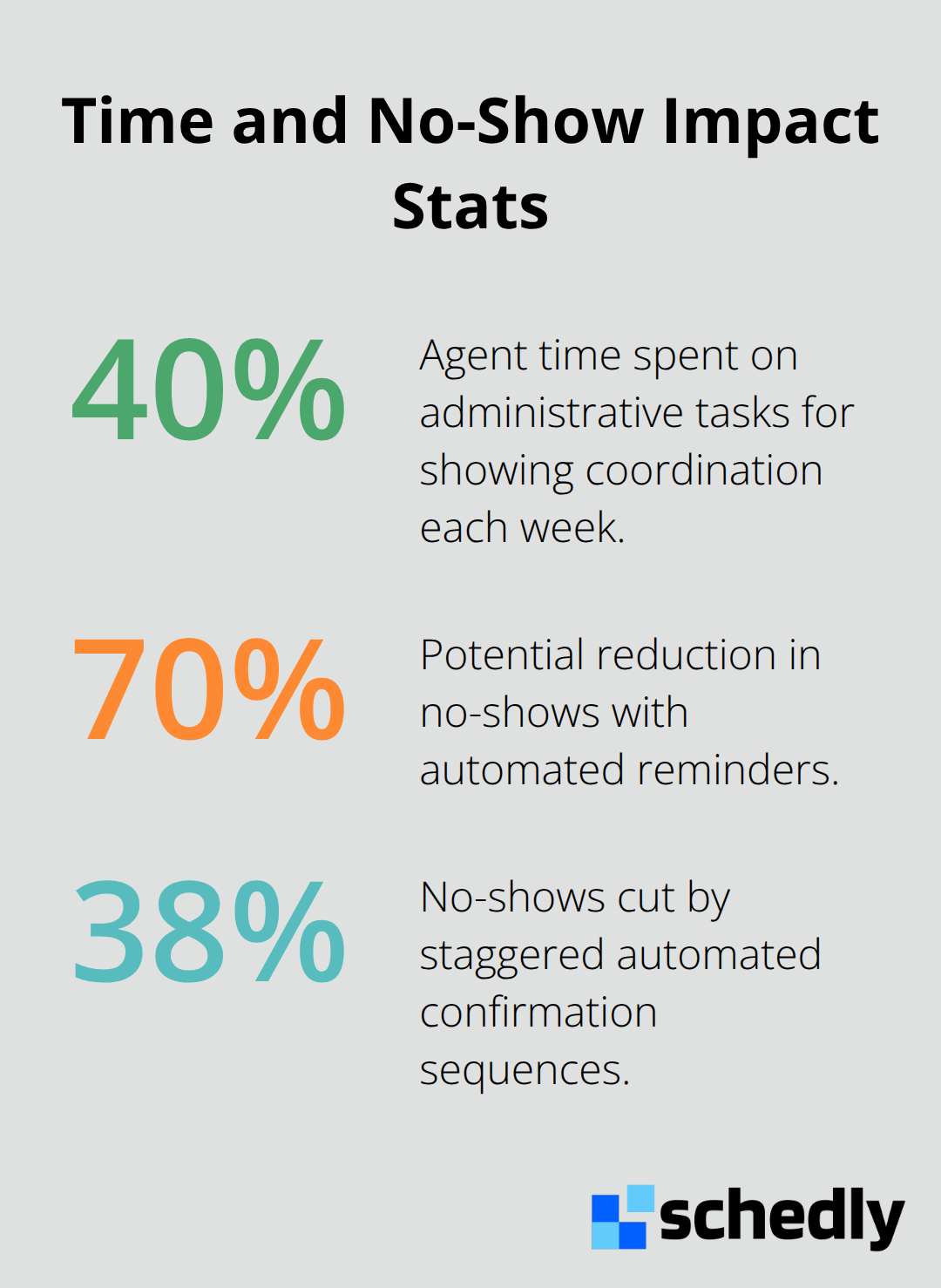
Agents spend up to 40% of their time on administrative tasks related to showing coordination. That's roughly 16 hours per week lost to back-and-forth emails, phone calls, and calendar conflicts instead of qualifying leads or negotiating offers. The problem compounds when managing multiple properties across different neighborhoods.
No-Shows Eliminate Deal Opportunities
No-shows represent another massive drain on agent productivity. Automated reminders reduce no-show rates by up to 70%, which means agents currently operating without automation lose roughly 3 out of every 10 scheduled showings. That's three missed opportunities to present a property, answer buyer questions, or move someone closer to an offer. The average buyer views 10 to 12 properties before making an offer, so every showing counts.
Team Fragmentation Creates Booking Chaos
Coordinating between multiple agents on a team creates significant friction. When showing requests come through email or text, information gets lost, duplicate bookings happen, and follow-ups fall through cracks. A buyer might call one agent while another handles the listing, and neither has visibility into what the other promised or when. This fragmentation means some properties sit unshown for days while others get triple-booked.
Unqualified Buyers Waste Valuable Time
Adding qualified buyer requirements makes scheduling even more complex. Agents often waste time showing properties to unqualified buyers, then scramble to reschedule when pre-approvals don't materialize. Without a systematic way to collect buyer information upfront, agents can't prioritize their schedule around serious prospects. The result is a calendar packed with low-probability showings while high-potential buyers wait in a queue. These inefficiencies don't just cost time-they cost deals.
How Scheduling Software Transforms Real Estate Operations
Automation Eliminates the Weekly Time Drain
Scheduling software eliminates administrative burden that consumes significant time each week. Instead of managing spreadsheets, email threads, and phone tag, agents input property details once, set availability windows, and let the system handle buyer requests around the clock. Buyers can book showings at midnight on a Sunday without the agent lifting a finger. The software automatically syncs with Google Calendar, Outlook, or iCloud, preventing the double-bookings that plague manual coordination.
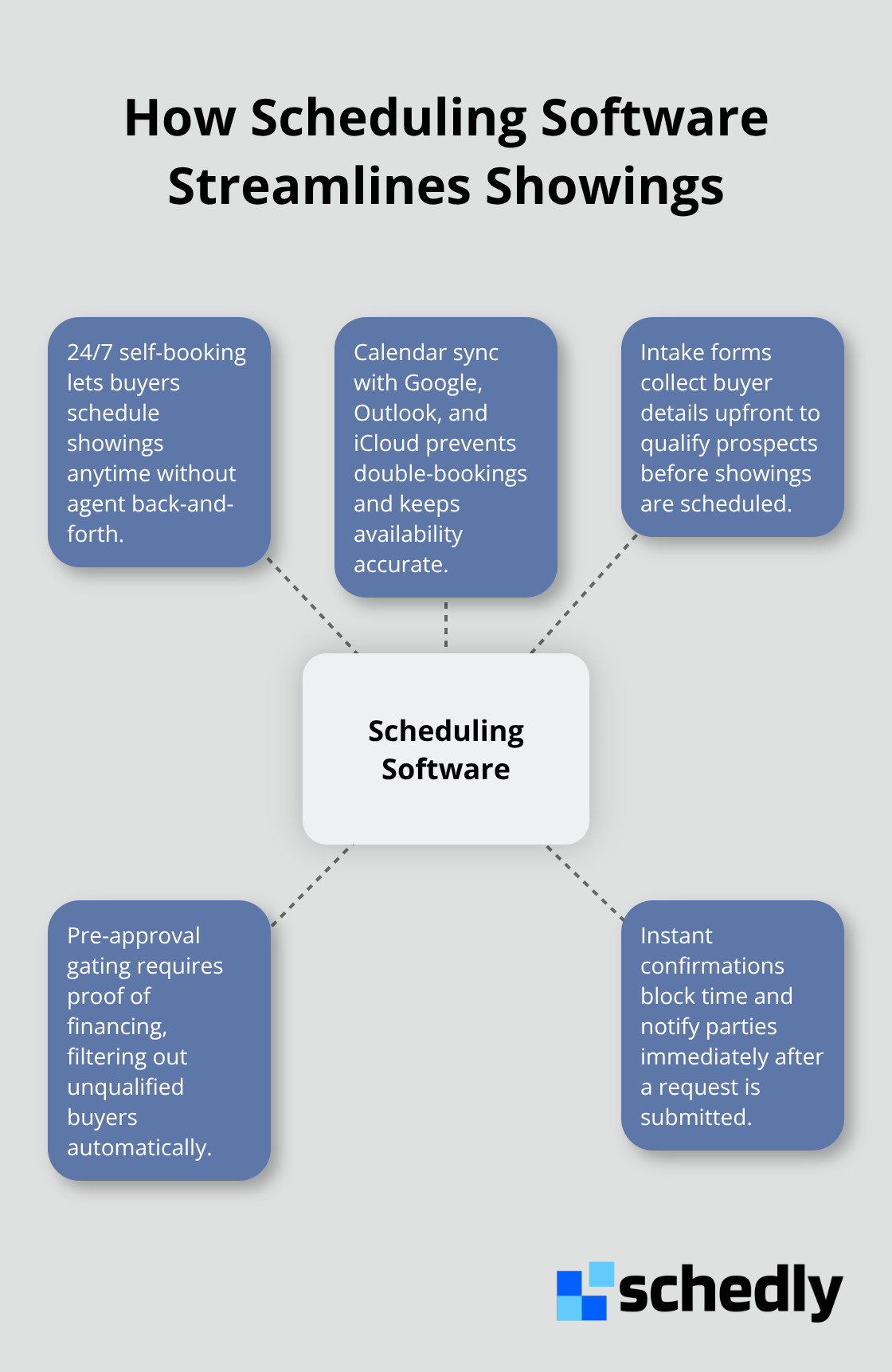
When a buyer submits a showing request, the system instantly checks availability, sends confirmation emails, and blocks time on the agent's calendar. This automation removes the friction that currently costs agents significant time each week. Beyond basic booking, the best platforms collect buyer information upfront through intake forms. Agents can require pre-approval letters before scheduling, automatically filtering out unqualified prospects and eliminating wasted showings.
Real-Time Data Reveals Your Best Opportunities
Analytics dashboards optimize agent schedules by revealing which neighborhoods generate the most showings, what time slots book fastest, and which properties attract qualified buyers. An agent managing five listings across different price points can see that weekend mornings book faster than weekday afternoons, so they adjust availability accordingly. The system tracks no-show patterns, helping agents identify which buyers cancel frequently and adjust their follow-up strategy.
Centralized CRM integration means every showing interaction-feedback, buyer questions, objections-lives in one place tied to specific properties and clients. When an agent schedules a follow-up, they instantly recall whether the buyer loved the kitchen or worried about the foundation. This continuity strengthens client relationships and accelerates decision-making. Agents who embrace these tools report measurable improvements: response times drop from hours to minutes, showings booked per week increase, and appointment conversion rates climb.
Strategic Scheduling Maximizes Agent Efficiency
The data also reveals your best-performing time slots and client types, letting you ruthlessly eliminate low-probability bookings and focus energy where it matters most. Buffer time management between property showings accounts for travel and note-taking, preventing the rushed, unprofessional experience that loses deals. Strategic time slots (offering specific windows rather than open-ended availability) give buyers structure while protecting your schedule from endless back-and-forth negotiation.
These operational improvements compound quickly. Agents spend less time coordinating and more time qualifying leads, presenting properties, and moving buyers toward offers. The next step involves implementing these systems strategically across your team and measuring which practices deliver the fastest results.
How to Set Up Showing Windows That Actually Work
Define Specific Time Slots to Control Your Schedule
Strategic showing windows separate agents who close deals from those stuck in scheduling chaos. Rather than offering open-ended availability that invites endless negotiation, agents should define specific time slots: 10 AM, 12 PM, 2 PM, 4 PM. This structure protects your schedule while giving buyers clear options. Adding 15 to 30 minutes of buffer time between showings accounts for travel between properties and time to document buyer feedback. An agent showing five properties across two neighborhoods needs realistic travel time built in, not back-to-back appointments that force rushing through client conversations.
Cluster Properties Geographically to Reduce Travel Time
Geographic clustering amplifies efficiency significantly. Group showings in the same neighborhood on the same day rather than scattering them across town. This reduces travel time substantially and lets you present multiple properties to serious buyers without wasting hours on the road. Weekend optimization matters too since buyers typically view 10 to 12 properties before making an offer, and most schedule viewings on Saturdays and Sundays. Reserve prime weekend slots for pre-qualified buyers while offering weekday slots to less serious prospects. This tiering system ensures your best time goes to your best opportunities.
Reduce No-Shows With Automated Confirmation Sequences
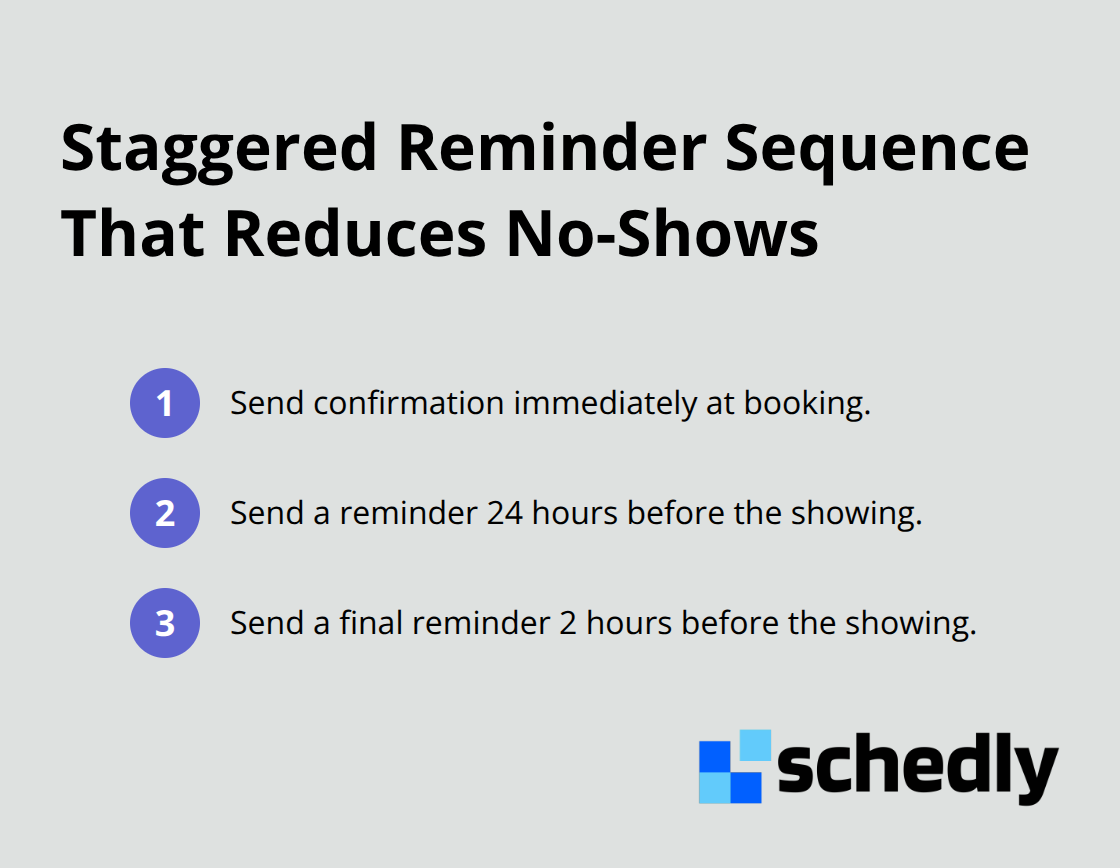
Automated reminders transform no-show rates from a liability into a competitive advantage. Confirmation sequences work best when staggered: one at booking, another 24 hours before, and a final reminder 2 hours before the showing.
Use Analytics to Reposition Underperforming Listings
Analytics dashboards show exactly when your listings attract the most qualified traffic, which neighborhoods generate the fastest bookings, and whether certain buyer profiles convert better on specific properties. An agent managing listings across different price points can see that $400,000 homes book faster on Thursday evenings while $800,000+ properties attract serious buyers on Saturday mornings. Use this intelligence to adjust your showing windows strategically. Properties sitting unshown for weeks often need repositioned time slots rather than price reductions. When data shows a listing gets browsed heavily but rarely booked, shifting availability to peak demand hours often generates showings that were previously missed.
Final Thoughts
The scheduling chaos that consumes agent time and kills deals doesn't require complex solutions. Real estate showings scheduling transforms when you eliminate manual coordination bottlenecks through automation, redirecting the 16 hours agents spend weekly on emails and calendar conflicts toward qualifying leads and closing offers. The system handles buyer requests around the clock, syncs across calendars automatically, and collects buyer information upfront to filter unqualified prospects before they waste your time.
Data-driven insights separate high-performing agents from those stuck in reactive mode. Analytics reveal which neighborhoods generate the fastest bookings, what time slots attract serious buyers, and which properties need repositioned availability windows (an agent managing multiple listings across different price points can see exactly when to open their calendar for maximum impact). This intelligence transforms scheduling from a defensive chore into an offensive strategy that accelerates deal velocity.
Real estate teams scale efficiently when showing coordination stops consuming bandwidth. Geographic clustering reduces travel time, strategic time slots protect your schedule, and automated reminders cut no-show rates by up to 70%, so response times drop, showings booked per week increase, and conversion rates climb. Schedly automates the booking process, syncs with your existing calendars, collects buyer details through customizable intake forms, and provides analytics dashboards that reveal your best opportunities.