
Schedly resources
Real Time Analytics for Instant Insights

Businesses that wait for weekly reports are already behind. Real-time analytics lets you spot trends, catch problems, and seize opportunities the moment they happen.
At Schedly, we've seen firsthand how companies that act on instant data outpace their competitors. This guide shows you exactly how to build that capability into your business.
What Real-Time Analytics Actually Means
Real-time analytics processes data the instant it enters your system instead of waiting for batch jobs to run hours or days later. Your dashboards show what's happening right now, not what happened last week. The difference sounds simple, but it transforms how fast you can react. According to Gartner, more than 50% of business systems will make decisions based on real-time context data within this year-this isn't a future trend anymore, it's already the standard for competitive businesses. When your inventory system updates in real-time, you stop overselling products. When your fraud detection runs continuously, you catch suspicious transactions before they complete. When your supply chain visibility updates by the minute, you know exactly where every shipment is and can reroute instantly if problems emerge. The speed difference between real-time and traditional batch analytics isn't just faster-it's the difference between acting on opportunities and reacting to disasters.
How data flows in real-time systems
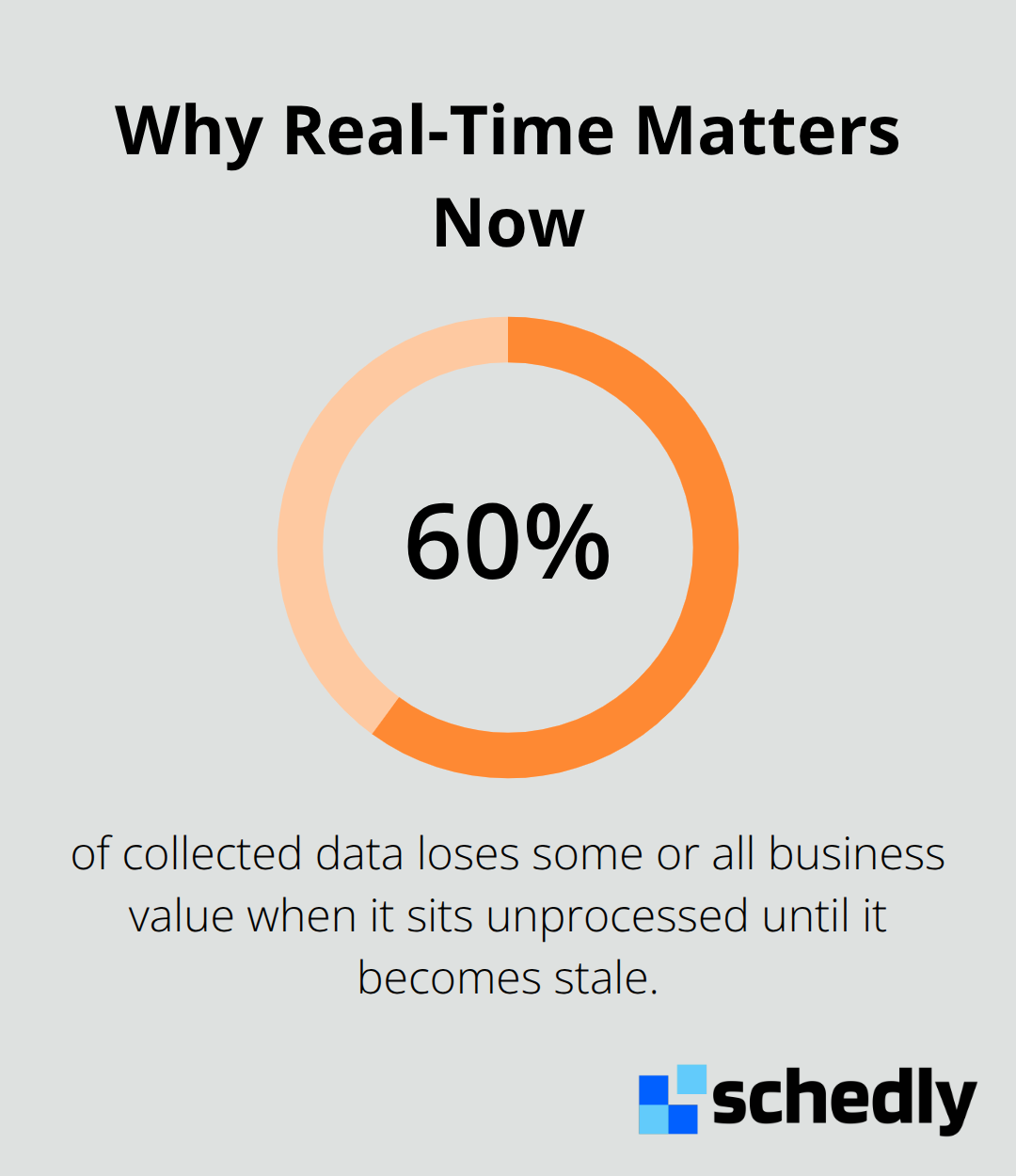
Real-time data collection uses event-driven architectures that capture information as it happens. IoT sensors on manufacturing equipment send signals the moment temperature or vibration changes. Point-of-sale systems record each transaction instantly. Mobile apps track user behavior as it occurs. These data streams feed into event streaming platforms that enable software to understand, react to, and operate as events occur. Once data arrives, the system applies rules, machine learning models, or statistical analysis immediately, then pushes alerts or automated actions without waiting for a human to query the system. This matters because 60% of data collected today loses some or all business value according to industry analysis, mostly because it sits unprocessed until it becomes stale. Real-time systems extract value from data while it's still relevant.
Why traditional analytics can't keep up
Batch analytics processes data on a schedule-maybe nightly, maybe weekly. You run a report, wait for results, then make decisions based on information that's already outdated. In fast-moving environments like stock markets or e-commerce during demand spikes, minutes-old data costs money. A sudden surge in a product variant means you should scale production immediately, but batch reports won't tell you about it until tomorrow. Real-time analytics lets you capitalize on demand spikes as they happen. The competitive advantage isn't marginal-companies using real-time visibility outpace competitors because they operate on current information while others operate on historical snapshots. This is especially critical in supply chains where inefficiencies produce significant losses annually, many of which could be prevented with real-time visibility of inventory and demand signals.
Where real-time analytics creates the biggest impact
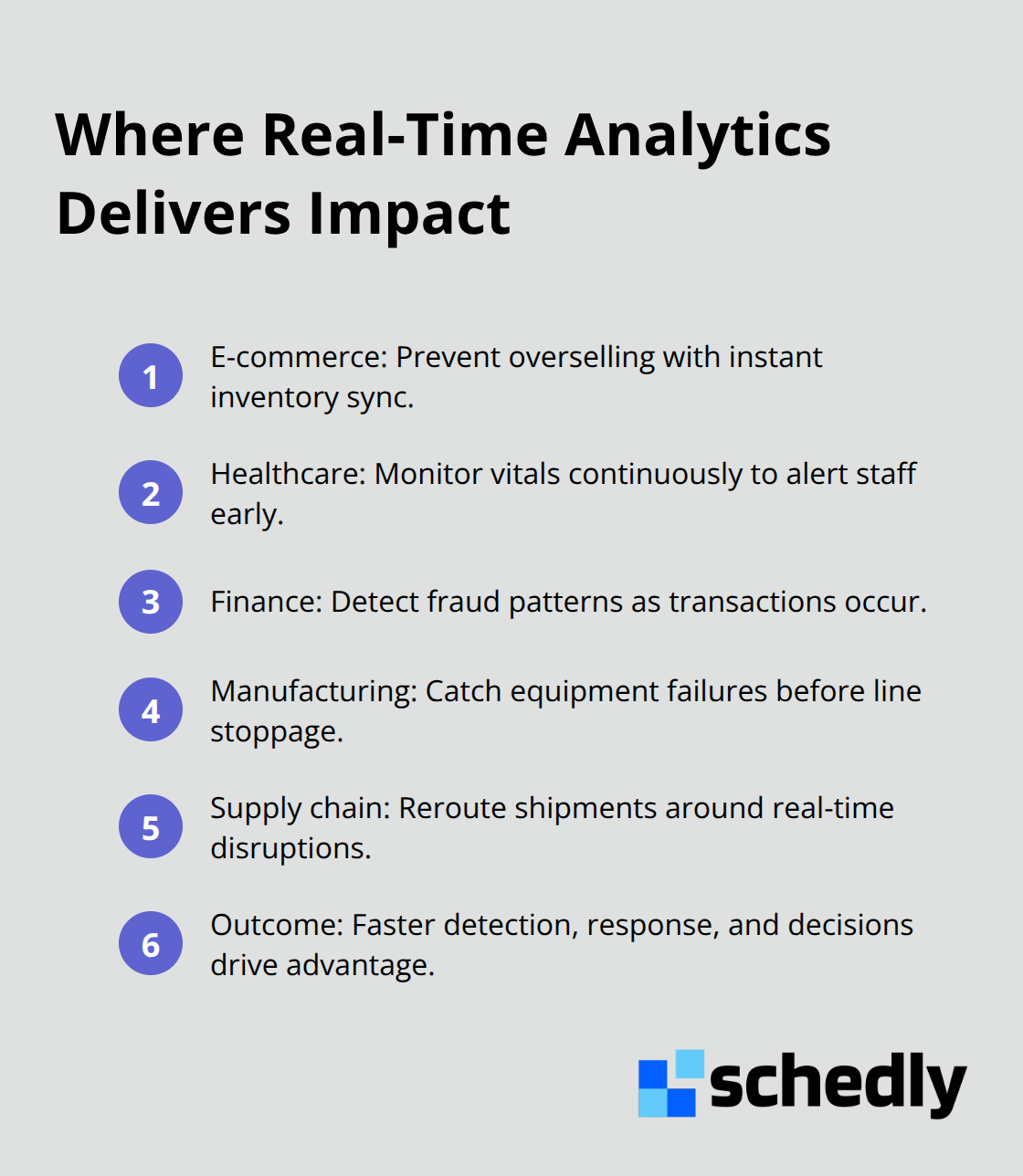
Different industries face different pressures, and real-time analytics solves specific problems in each one. E-commerce platforms prevent overselling when inventory updates instantly across all channels. Healthcare systems monitor patient vitals continuously and alert staff to deterioration before emergencies occur. Financial institutions detect fraud patterns as transactions flow through their systems rather than discovering them days later during reconciliation. Manufacturing facilities catch equipment failures before they halt production lines. Supply chain managers reroute shipments around disruptions in real-time instead of discovering problems after delays have already cost customers.
Where Real-Time Analytics Delivers the Biggest Returns
E-Commerce: Stopping Overselling Before It Happens
E-commerce platforms lose millions annually to overselling, but real-time inventory systems prevent overselling entirely. When a customer purchases the last unit of a product, that information updates across every sales channel instantaneously-your website, mobile app, and marketplace listings all reflect zero stock within seconds. Without real-time visibility, multiple customers complete purchases for items already sold, forcing refunds, damaging reputation, and creating costly fulfillment chaos. Retailers using real-time analytics also track hour-by-hour sales performance, customer service metrics, margins, and shipping times simultaneously, enabling them to spot underperforming products mid-day and adjust pricing or promotions before the day ends. E-commerce demand spikes happen fast-a trending product on social media can surge 300% in hours-and only real-time systems let you scale production or procurement quickly enough to capture that opportunity. Traditional batch reporting tells you about yesterday's trend when the buying window has already closed.
Healthcare: Detecting Patient Deterioration in Minutes
Healthcare organizations face a different but equally critical challenge: patient deterioration happens in minutes, not hours. Real-time monitoring systems track vital signs continuously and alert clinicians immediately when oxygen levels drop, heart rate becomes irregular, or other warning signs emerge. This early detection prevents emergencies that would otherwise require intensive care interventions, reducing hospital readmissions and improving survival rates. Clinicians act on current data rather than waiting for scheduled check-ins, transforming patient outcomes through speed alone.
Finance: Catching Fraud as Transactions Occur
Financial institutions operate in an environment where fraudsters exploit windows of minutes before detection. Real-time analytics correlates transactional data, market prices, and trading patterns to identify suspicious activity as it occurs rather than discovering manipulation days later during reconciliation. Banks using advanced real-time techniques like Generative Adversarial Networks can distinguish legitimate transactions from manipulated ones with greater accuracy than traditional batch fraud detection. Detection speed directly translates to loss prevention.
Supply Chain and Manufacturing: Visibility Prevents Cascading Failures
Supply chains represent another critical use case-when you know exactly where every shipment is and can see demand fluctuations as they happen, rerouting becomes possible before disruptions cascade into customer delays. Manufacturing facilities catch equipment failures through real-time sensor data before production halts completely, reducing downtime costs that can exceed thousands of dollars per hour on high-volume lines. These industries share one characteristic: real-time visibility transforms reactive problem-solving into proactive prevention, which means the next step involves choosing the right platform to make this visibility possible.
Building Your Real-Time Analytics Stack
Assess Your Speed Requirements First
The right platform matters more than you think. Many businesses choose analytics tools based on features they'll never use, then struggle when they need to integrate messy data sources or train teams on complex interfaces. Start by assessing your actual latency requirements-do you need updates every second, every minute, or every five minutes? A healthcare provider monitoring patient vitals needs sub-minute responsiveness, while an e-commerce platform analyzing daily sales trends might function perfectly with five-minute updates. Gartner research emphasizes that determining optimal timing upfront prevents overengineering expensive systems you don't actually need.
Select Platforms That Connect Your Data Sources
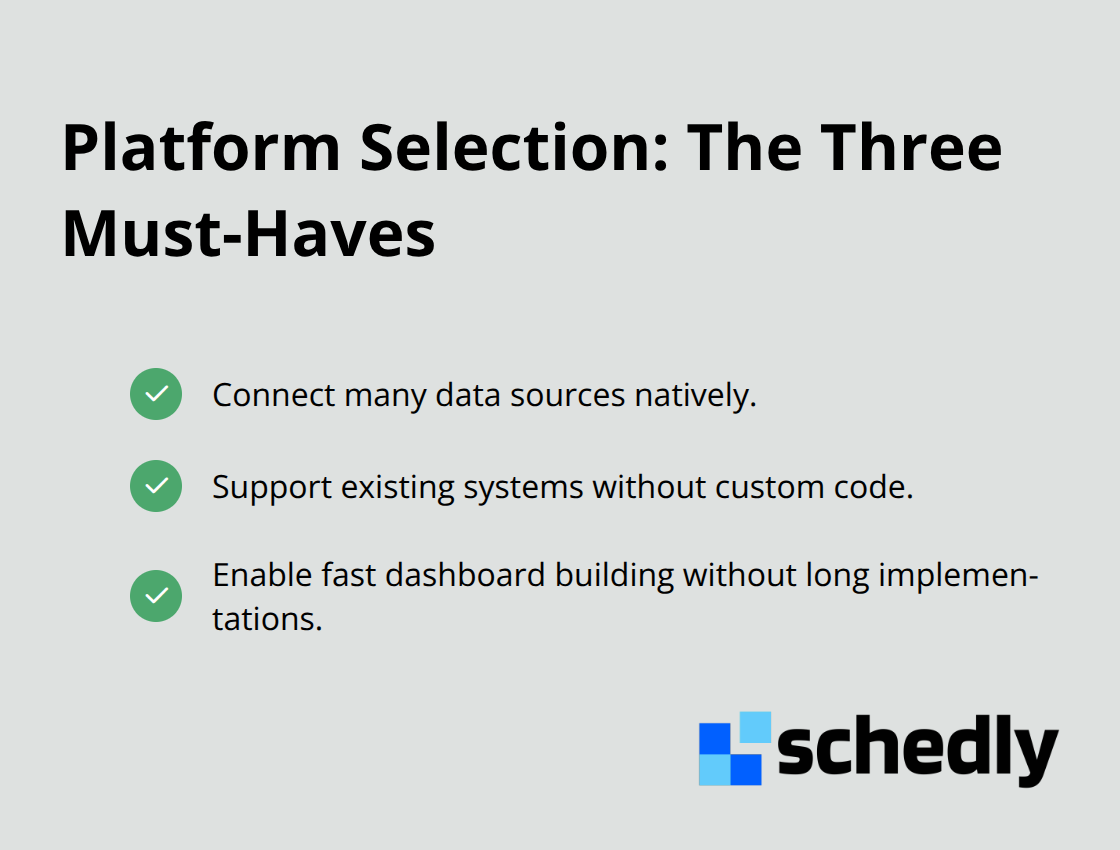
Once you know your speed requirements, evaluate platforms based on three criteria: how many data sources they connect natively, whether they support your existing systems without custom coding, and how quickly your team can build working dashboards without months of implementation. Platforms like Confluent handle 150+ data sources across hybrid and multi-cloud environments with pre-built connectors, meaning you spend weeks integrating rather than months.
Building Event-Driven Architecture That Captures Everything
Integration complexity kills real-time projects more often than poor platform choice. You need event-driven architecture that captures data from IoT sensors, point-of-sale terminals, mobile apps, and transactional systems simultaneously, then routes everything to your analytics engine with millisecond latency. This demands templates and pre-configured workflows rather than custom development for each connection. Once data flows into your system, continuous query engines process ultra-fast streams and maintain live data tables that answer ad-hoc questions without rerunning entire analyses.
Train Your Team on Alert Interpretation and Response
Your team won't adopt real-time analytics if they can't interpret what the dashboards show them. Training should focus on reading continuous alerts rather than traditional report literacy-your people need to understand that a sudden spike in transaction volume or a drop in equipment vibration readings demands immediate investigation, not tomorrow's review. Set thresholds carefully using management-by-exception principles, where only genuinely critical anomalies trigger alerts; excessive notifications create fatigue and blind people to real problems. Automated workflows can execute immediate corrective actions when specific conditions occur, but human oversight remains essential-secondary analytic components should verify that decisions make sense before execution. This combination of automation and human judgment prevents costly mistakes while capturing the speed advantage real-time systems provide.
Conclusion
Real-time analytics transforms how businesses operate by replacing delayed decision-making with immediate action. Companies winning today act on current information while competitors still analyze yesterday's reports. Speed creates competitive advantage because opportunities and problems don't wait for weekly reviews.
The practical impact spans every industry-e-commerce platforms prevent revenue loss through instant inventory updates, healthcare providers catch patient deterioration before emergencies occur, financial institutions stop fraud as transactions flow through their systems, and manufacturing facilities avoid costly downtime by detecting equipment failures in real time. Supply chains reroute shipments around disruptions before delays cascade to customers. These measurable improvements in revenue, safety, and operational efficiency prove that real-time analytics delivers tangible results. Start building your real-time analytics capability by evaluating your speed requirements and selecting platforms that fit your actual needs, then train your team to interpret continuous alerts and respond appropriately.
At Schedly, we understand that scheduling and booking decisions benefit from current data too. Our analytics dashboard provides business performance insights that help you track key metrics and make data-driven decisions about your operations. The businesses that move first establish advantages that take competitors years to match.