
Schedly resources
Real-Time Analytics Insights: Turn Data Into Action
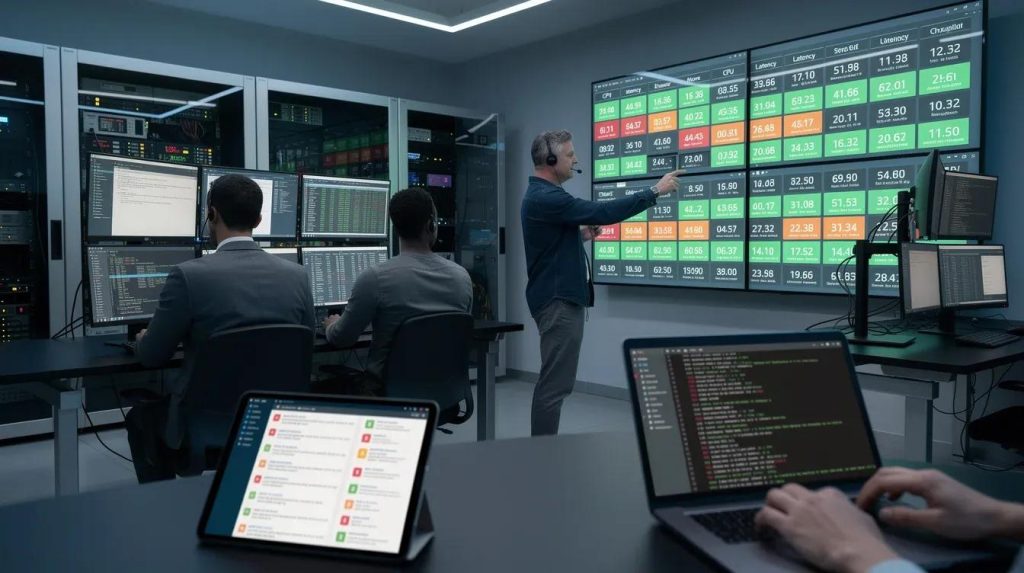
Most businesses are sitting on data that could change their operations today, but they're waiting for reports that arrive tomorrow. Real-time analytics insights let you spot problems and opportunities the moment they happen, not hours or days later.
At Schedly, we've seen how companies that act on live data outpace their competitors. The difference isn't just speed-it's the ability to make decisions when they actually matter.
Why Real-Time Data Changes Everything
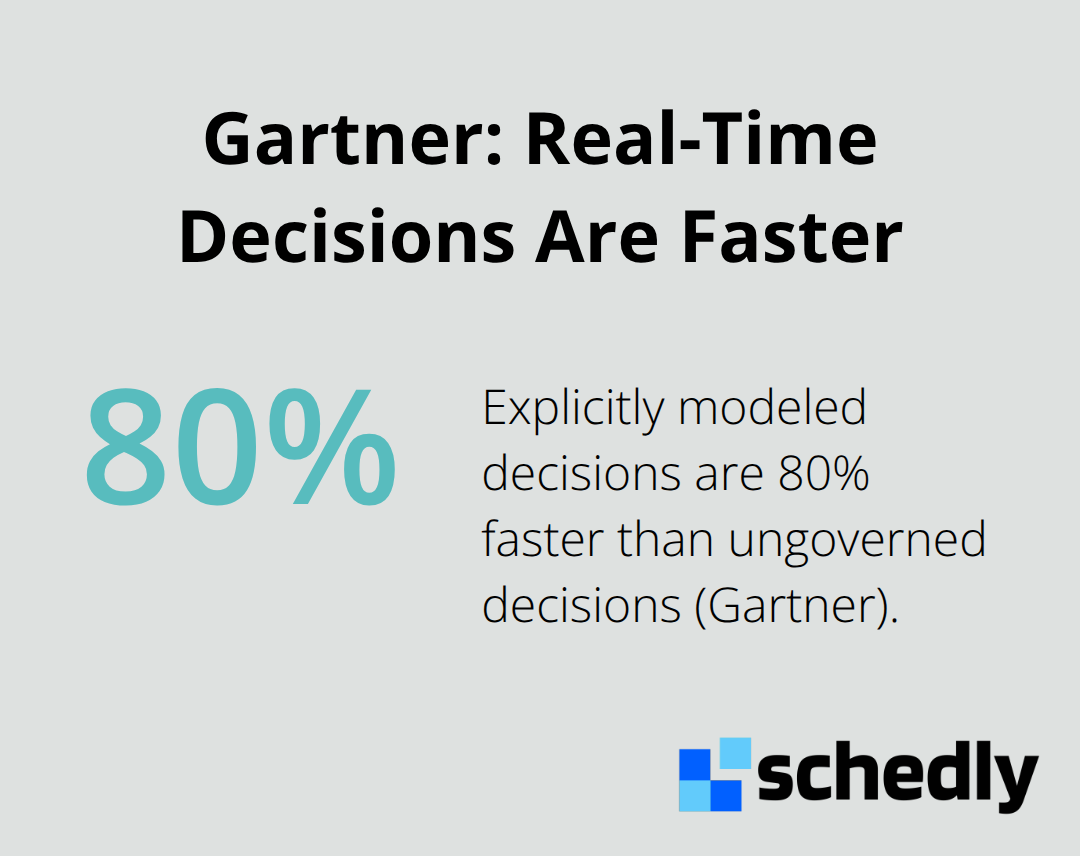
Gartner predicts explicitly modeled business decisions will be five times more trusted and 80% faster than ungoverned decisions, yet most organizations still rely on reports that arrive hours or days after events occur. This gap between what happens and when you know about it costs money. In supply chains alone, the UK faced nearly $2 billion in losses due to inefficiencies that real-time visibility could have prevented. When you wait for yesterday's data, you're already behind.
A retailer using batch analytics discovers that inventory is misaligned with demand after the sales opportunity vanishes. A manufacturer learns about equipment failure when customers complain about delayed shipments. A financial institution detects fraud after transactions have already processed. Real-time analytics eliminates this lag entirely. You see problems the moment they emerge, not when they've already caused damage. This isn't about having more data-it's about acting on the data you have before conditions change.
Speed Creates Competitive Separation
Companies operating on real-time insights outpace those waiting for traditional reports because timing determines outcomes. A supply chain team using live data reroutes shipments before a storm hits, while competitors still read yesterday's weather forecast. Marketing teams adjust ad spend in real time and shift budget to top-performing channels within hours, not weeks. Customer service teams with live sentiment analysis catch dissatisfied customers immediately and resolve issues before they post negative reviews.
The speed advantage compounds because your competitors aren't just slower-they're making decisions based on outdated conditions. Netflix ingests roughly 2 million events per second to monitor playback quality in real time and enable immediate adjustments that prevent customer churn. Most businesses haven't even started collecting data at that scale. The gap between real-time operators and batch processors isn't marginal. It's the difference between leading your market and playing catch-up.
Operational Decisions Require Current Information
Real-time analytics enables decisions that simply cannot wait. A warehouse manager needs to know inventory levels now, not at end of day, to allocate stock to urgent orders. A healthcare provider monitors patient vitals and must detect deterioration within seconds to intervene effectively. A fraud detection system analyzes transactions as they occur and stops money loss instantly, while batch processing catches it after damage is done.
These aren't theoretical scenarios-they're how operations actually function when data velocity matters. Manufacturing facilities use real-time IoT sensor data to monitor actual equipment condition for predictive maintenance. Fleet managers monitor fuel consumption and driver behavior in real time and optimize routes immediately, cutting delivery time and fuel waste simultaneously. The actionable window for many decisions is measured in minutes or seconds, not the hours required for traditional analytics pipelines. Once that window closes, the insight becomes useless.
Why Implementation Matters Now
Organizations that delay real-time adoption fall further behind each quarter. Your competitors who act on live data today will own market position tomorrow. The infrastructure to support real-time analytics exists now-the question is whether you'll build it or watch others capture the advantage. The next section shows you exactly how to implement real-time analytics in your operations, starting with the tools and platforms that fit your business.
Building Real-Time Analytics Into Your Operations
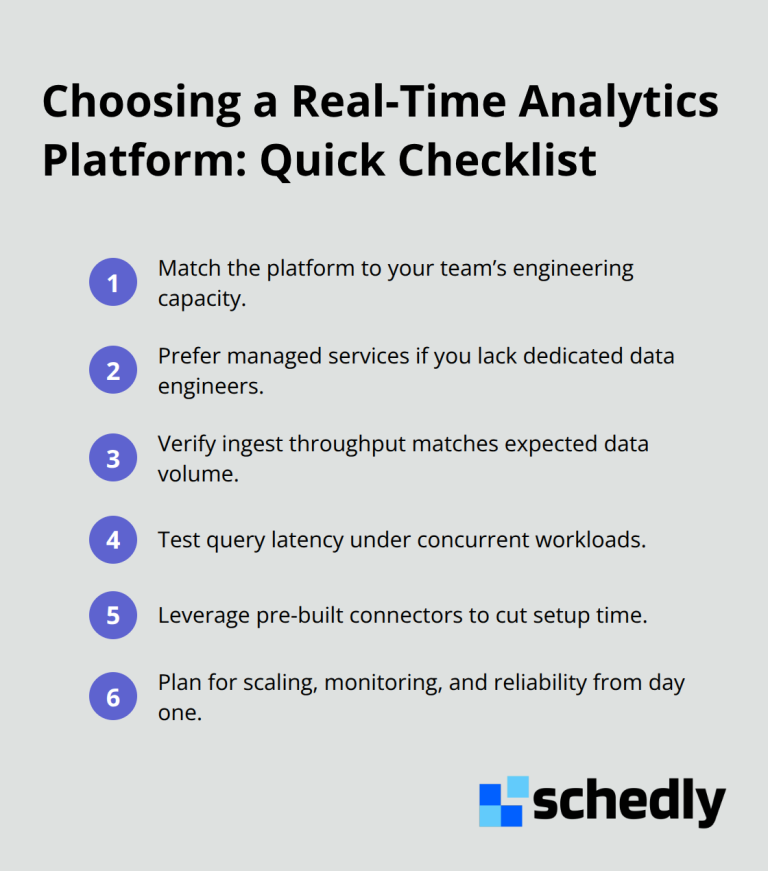
Selecting the right platform determines whether implementation accelerates decisions or creates bottlenecks. Apache Kafka processes massive data streams-Confluent manages over 5 million events per second across thousands of clusters-but demands significant engineering expertise to set up and maintain. ClickHouse-based platforms like Tinybird ingest up to 20+ MB per second and handle 1000 requests simultaneously, delivering faster results for teams without deep infrastructure experience. If your organization lacks dedicated data engineers, a managed platform with pre-built connectors saves months of development time. Striim connects to 150+ data sources and loads nearly 100 million events daily without custom coding, which matters when your team needs results in weeks, not quarters. The platform you select determines whether implementation takes three months or three weeks, so evaluate based on your team's technical depth, not just feature lists.
Connect Every Data Source That Matters
Real-time analytics fails when data collection remains incomplete or delayed. Map every system that holds operational data-your POS system, inventory database, CRM, IoT sensors, payment processors, and customer interaction logs all generate signals that matter. Most businesses collect only 30-40% of available data because they focus on what's easiest to reach rather than what's most valuable. A retailer monitoring only sales data misses inventory shrinkage signals that sensors could detect. A manufacturer tracking only equipment output misses vibration and thermal data that predict failures days in advance. Set up direct connections from source systems to your analytics platform instead of exporting reports manually. When data moves directly from transaction systems to your real-time database, latency drops from hours to seconds. Your team learns about problems the moment operational systems detect them, not when someone remembers to run a report.
Build Dashboards Around Decisions, Not Metrics
Real-time dashboards fail when teams don't know what to do with the information. A dashboard showing 500 metrics overwhelms operators and causes decision paralysis. Instead, structure dashboards around specific operational decisions-inventory reallocation, equipment maintenance scheduling, customer escalation triggers, fraud alerts. Assign ownership for each dashboard to one person or team so someone takes action when thresholds are breached. Netflix monitors playback quality in real time because every degradation directly impacts viewer retention, and their teams know exactly which systems to adjust when metrics shift. Your organization needs the same clarity. Define what each metric means, what constitutes a problem, and who responds when alerts trigger. Without this structure, real-time data becomes noise.
Train Teams to Act on Insights Immediately
Operators need to interpret dashboards within their first week, not after three months of confusion. Teams that see data but lack decision authority waste the speed advantage real-time analytics provides. Give teams authority to act on insights they monitor daily, and their response times compress from hours to minutes. A warehouse manager with real-time inventory visibility and the power to reallocate stock responds to urgent orders instantly. A maintenance team with sensor alerts and authorization to schedule repairs prevents equipment failures before they cascade through production. The infrastructure matters, but human decision-making authority matters more. When operators hesitate because they lack permission to act, the real-time advantage disappears. Your next step involves selecting the specific tools and platforms that fit your operational needs and technical capabilities.
Where Real-Time Analytics Delivers Immediate Business Impact
Retail and E-Commerce: Inventory Alignment That Prevents Lost Sales
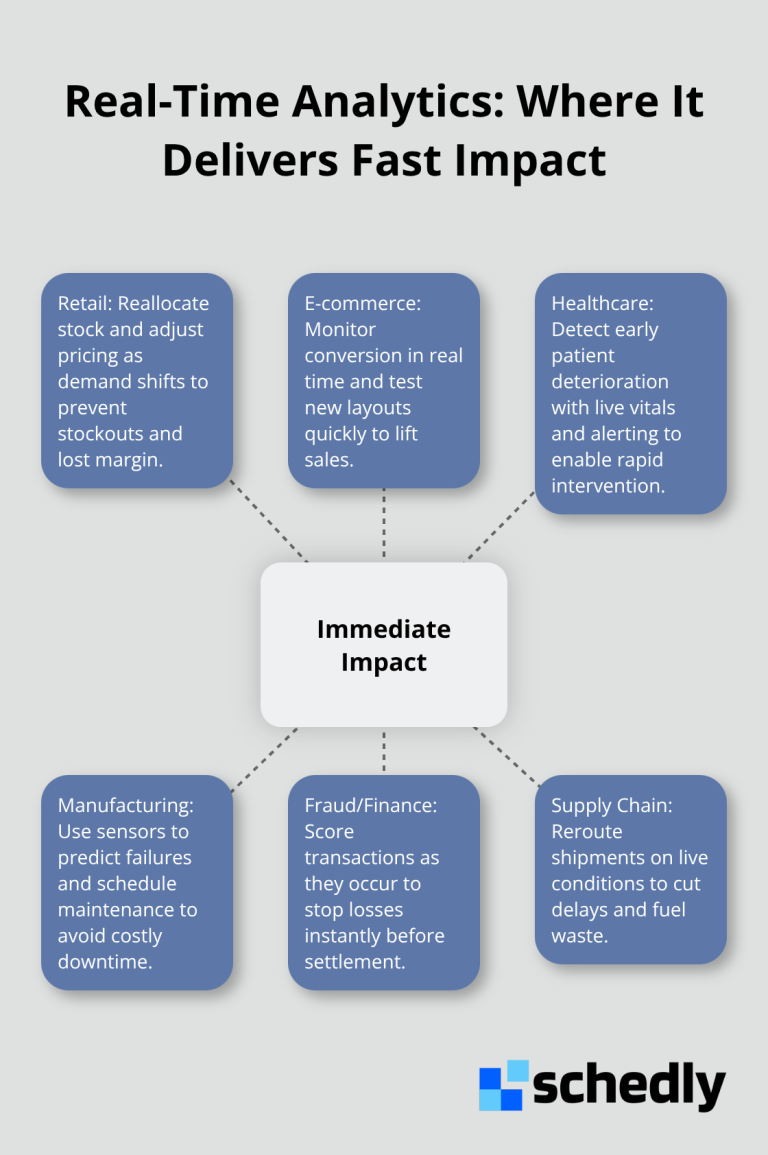
Retail organizations hemorrhage revenue when inventory misalignment goes undetected. A store with excess stock in slow-moving items while bestsellers sit empty loses sales and margin simultaneously. Real-time analytics connects point-of-sale data, inventory systems, and demand signals to surface these gaps within minutes instead of waiting for end-of-day reports. Target uses real-time inventory visibility to reallocate stock between locations before demand shifts, preventing stockouts that would otherwise send customers to competitors.
When a product trends on social media, retailers with real-time dashboards adjust pricing and promotional spend within hours, while traditional retailers miss the window entirely. E-commerce platforms monitoring conversion rates across product pages catch underperforming layouts and test replacements immediately, compressing iteration cycles from weeks to days. The practical advantage compounds because each decision cycle completed faster than competitors generates more data and learning advantage. Retailers that implement real-time analytics typically see inventory turnover improve by 15-20% within the first year because they stop guessing about what customers want and start responding to what they're actually buying.
Healthcare: Patient Monitoring That Prevents Deterioration
Healthcare providers operating without real-time patient monitoring accept preventable harm as normal. A patient's condition deteriorates over minutes, but batch reporting systems detect the change hours later when damage has cascaded. Hospitals implementing real-time patient monitoring with automated alerts catch early deterioration and enable intervention before critical events occur. Equipment failures in operating rooms cause surgical delays that compound costs and patient risk, yet many facilities still rely on maintenance schedules rather than real-time sensor data.
Manufacturing: Predictive Maintenance That Stops Unplanned Downtime
Manufacturing plants with vibration sensors and thermal imaging detect equipment problems days before failure occurs, preventing unplanned downtime that costs thousands per hour. A single equipment failure in automotive manufacturing can halt production lines affecting dozens of workers and hundreds of units, yet predictive maintenance with IoT sensor monitoring identifies bearing wear or thermal stress before failure happens. Companies implementing real-time analysis report 25-30% reduction in unplanned maintenance costs because they transition from reactive repair to planned replacement. The operational reality is stark: organizations that wait for problems to announce themselves through failure accept massive inefficiency as their baseline cost structure.
Final Thoughts
Real-time analytics insights transform how businesses operate by eliminating the gap between what happens and when you know about it. The companies winning in their markets today aren't those with the most data-they're the ones acting on data before conditions change. Speed creates separation, and that separation compounds every quarter as you expand real-time visibility across more operational areas.
Starting your real-time analytics journey doesn't require overhauling your entire infrastructure overnight. Identify one operational decision that costs you money when delayed-inventory misalignment, equipment downtime, customer churn, or fraud losses. Map the data sources that inform that decision, select a platform that fits your team's technical capability, connect your data sources directly to eliminate manual reporting, and build a dashboard around that specific decision with clear ownership. We at Schedly understand how operational decisions depend on current information, and our scheduling software includes an advanced analytics dashboard that tracks key metrics in real time to help your business monitor performance and act instantly.
Organizations that implement real-time analytics this quarter will have three months of learning advantage by year-end. The competitive advantage belongs to those who move first and identify which operational decision matters most to your bottom line.