
Schedly resources
Recurring Payments Processing: Automate Billing and Cash Flow

Recurring payments processing is broken for most businesses. Manual billing creates delays, errors pile up, and cash flow becomes unpredictable.
At Schedly, we've seen firsthand how automation transforms payment operations. When you set up the right system, your revenue becomes stable, your team stops drowning in admin work, and customers actually enjoy the billing experience.
How Recurring Payments Actually Work
Recurring payments operate on a simple principle: a customer authorizes a charge once, and your payment processor handles everything else automatically on a schedule you define. The authorization happens through tokenization, where the payment gateway securely stores a token representing the customer's card or bank account instead of storing the actual card data itself. This token gets used for every subsequent charge, eliminating the need for customers to re-enter their details each time. PCI DSS Level 1 compliance keeps this stored data encrypted and protected from fraud. When you set up recurring payments correctly, the system charges on your defined schedule-weekly, monthly, annually, or custom intervals-without any manual intervention from your team.
The Authorization and Processing Cycle
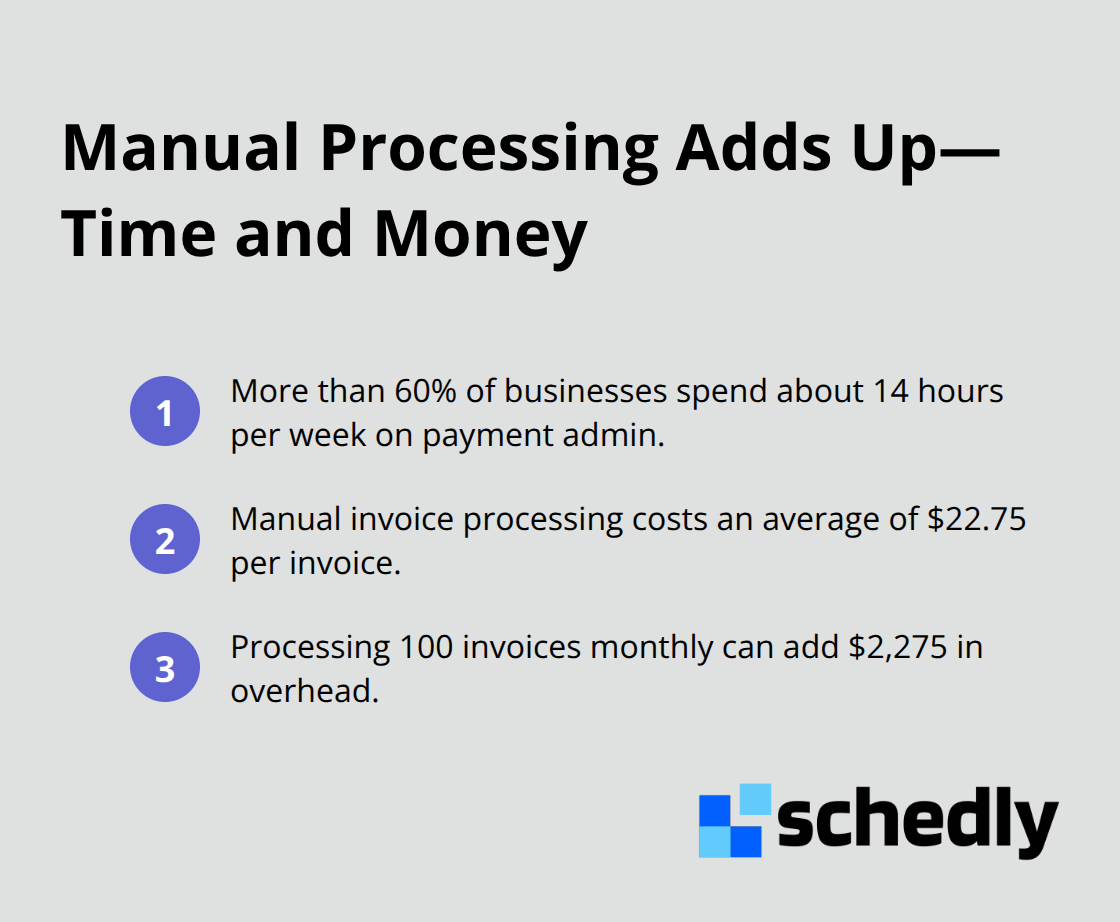
The first charge works like a standard payment: the customer provides their card or bank details, the gateway validates it, and the processor moves money from their account to yours. After approval, the gateway creates that token and stores it securely. For every charge that follows, the system simply references the token instead of requesting fresh payment information. This is where automation actually saves money. According to Medius, the average cost to process a single invoice manually sits at $13.11. When you automate recurring charges, you eliminate the data entry, manual reconciliation, and follow-up work that drives this cost up. More than 60% of businesses spend roughly 14 hours per week on payment-related administrative tasks, according to QuickBooks. Automated recurring payments cut that time dramatically because your team isn't manually entering data or chasing late payments anymore.
Integration with Your Payment Infrastructure
Your payment processor connects directly to your banking system and handles everything from charge timing to failed payment recovery. When a payment fails, smart retry systems activate automatically. Failed payments get handled with dunning emails that guide customers to update their payment method without you lifting a finger. Modern processors like Stripe use machine learning-driven retry systems to optimize recovery rates. The processor also handles tax and VAT automation across jurisdictions, meaning you don't have to manually calculate different tax rates for each location or customer. This matters significantly if you operate across multiple regions. Your payment processor integrates with your accounting system to record every charge automatically, so reconciliation becomes straightforward instead of a nightmare.
Payment Methods That Match Your Customer Base
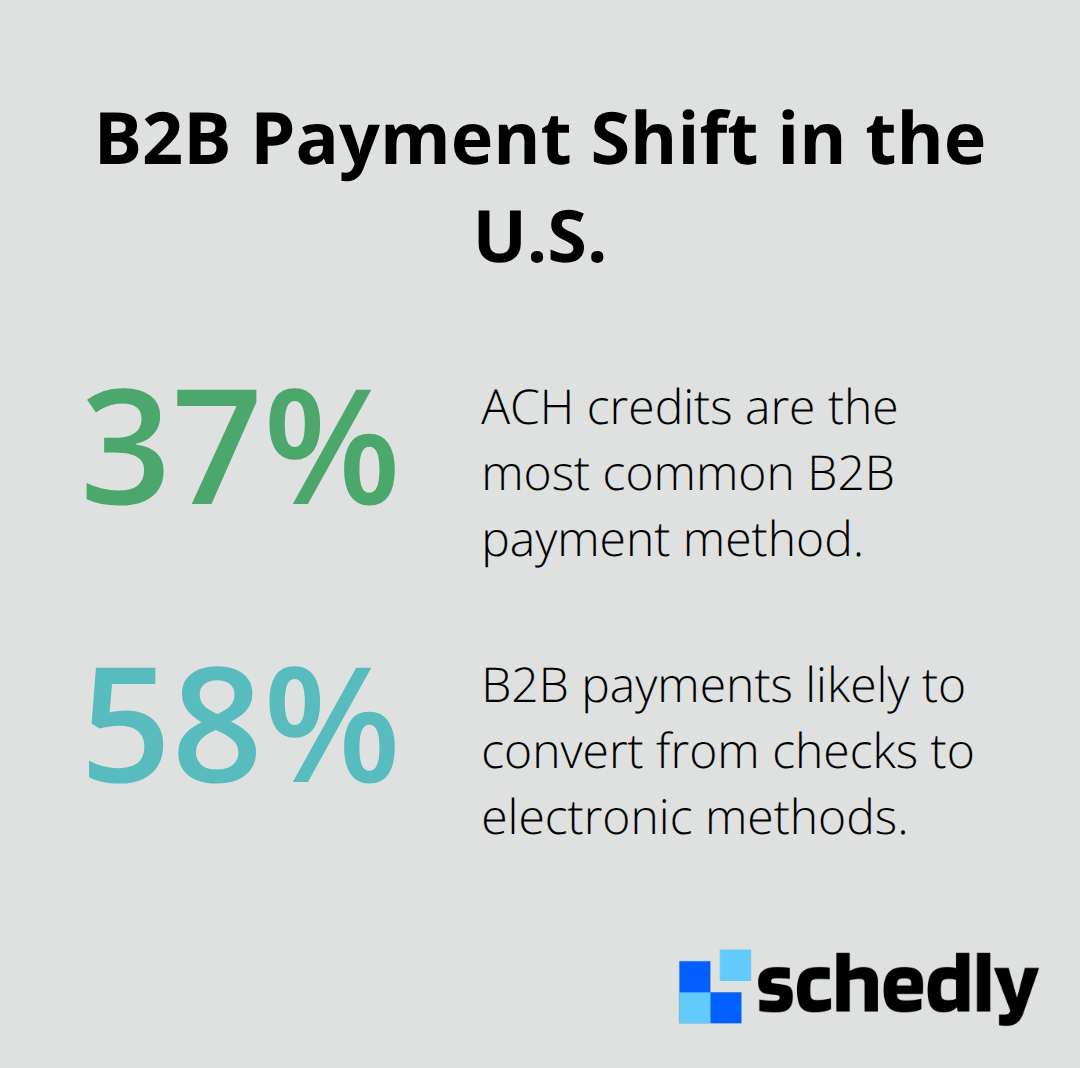
When you choose your processor, verify it supports the payment methods your customers actually use-not just credit cards. According to the Association for Financial Professionals, ACH credits are the most common B2B payment method at 37%, followed by checks at 25%. If you handle B2B transactions, supporting ACH directly impacts your collection success. The shift toward digital payments continues to accelerate.
Compliance and Security Across Regions
Payment processors handle the compliance burden that would otherwise fall on your shoulders. They manage PCI DSS requirements, GDPR obligations, and tax reporting across multiple jurisdictions automatically. This means your team doesn't have to track regulatory changes or worry about data breaches. The processor's security framework protects both your business and your customers, which builds trust in your billing operations. When you move to the next phase-actually implementing these systems-you'll need to evaluate which processor aligns with your specific payment methods, customer base, and compliance requirements.
Why Automation Cuts Your Admin Burden and Stabilizes Revenue
The Real Cost of Manual Payment Processing
Automation transforms how your finance team spends its time. When recurring payments run on schedule without manual intervention, your staff stops processing invoices and chasing payments. According to QuickBooks, more than 60% of businesses spend roughly 14 hours per week on payment-related administrative tasks. That's nearly two full workdays per week dedicated to work that a system can handle automatically.
Automation eliminates this entirely. Your team no longer enters payment details, reconciles accounts manually, or sends reminder emails. Instead, the system charges customers on schedule, records transactions automatically, and flags failures for immediate recovery. This shift frees your finance department to focus on strategy, customer relationships, and growth initiatives instead of repetitive data entry.
Why Error Rates Plummet with Automated Systems
The error rate drops dramatically because machines don't miss due dates, transpose account numbers, or forget to apply the correct tax rate. One failed manual entry can cascade into reconciliation nightmares that take hours to untangle. Automated systems eliminate that friction entirely. Your accounting team gains complete visibility into payment status in real time. Every charge appears in your system instantly, eliminating the lag that occurs when you wait for bank statements. This visibility enables accurate forecasting and reduces the surprises that derail financial planning.
How Predictable Cash Flow Changes Your Business
Predictable cash flow changes how you run your business. When customers authorize recurring charges, you know exactly when money arrives and can forecast revenue with confidence. This stability matters for payroll planning, inventory management, and growth investments. Businesses that shift to recurring payments report improved collection rates because the system handles retry logic automatically. Failed payments get caught immediately, and dunning workflows guide customers to update their payment methods without manual follow-up.
Accelerating Settlement with Modern Payment Methods
The Association for Financial Professionals reports that ACH credits represent a significant portion of B2B payments, yet many businesses still rely on checks and manual wire transfers that take days to clear. Switching to automated ACH and card processing accelerates your settlement timeline significantly. Money lands in your account faster, which improves cash position and reduces reliance on external financing. Your payment processor handles the complexity of multiple payment rails (cards, ACH, wire transfers) so you capture revenue from all customer segments without operational headaches.
The Customer Experience Advantage
Customers also benefit from the seamless experience. They authorize once and never think about billing again. No more expired payment methods causing failed charges, no more manual invoices cluttering their inbox, no more confusion about what they're being charged for. The friction disappears, and retention improves because the billing process becomes invisible rather than frustrating. This customer satisfaction directly impacts your bottom line through reduced churn and increased lifetime value. With your internal operations streamlined and your customers happier, you're ready to evaluate which payment processor and implementation approach actually fits your business model.
Building Your Recurring Payment System Right
Select a Processor That Matches Your Payment Methods
The right payment processor determines whether your recurring billing runs smoothly or becomes a source of constant friction. Most businesses make this decision based on cost alone, which is a mistake. You need a processor that handles your specific payment methods, scales with your customer base, and integrates cleanly with your existing systems.
Start by listing the payment methods your customers actually use. If you operate in B2B, ACH matters significantly since ACH represents 37% of B2B payments according to the Association for Financial Professionals. If you serve international clients, you need a processor that handles cross-border transfers without punishing you with unfavorable exchange rates. Verify the processor supports card payments, ACH, wire transfers, and ideally virtual cards.
Prioritize Direct Integration with Your Accounting Systems
Test the payment gateway integration with your accounting software before committing. A processor that connects directly to your ERP or accounting system eliminates manual reconciliation entirely. According to Medius, the average cost to process a single invoice manually sits at $13.11. When your processor integrates directly with your accounting platform, that cost drops to near zero because transactions post automatically.
Look for processors that offer machine learning-driven retry logic for failed payments. Stripe's approach to failed payment recovery uses ML to optimize when retries happen, which significantly improves recovery rates compared to static retry schedules. Your processor should also handle tax and VAT automation across jurisdictions automatically. If you operate across multiple states or countries, manual tax calculation becomes a compliance nightmare. The processor should generate compliant invoices, send automated payment reminders, and provide detailed reporting on subscription metrics like churn and active accounts.
Communicate Billing Schedules With Complete Transparency
Once you've selected your processor, your implementation succeeds or fails based on how clearly you communicate billing schedules to customers and how rigorously you monitor compliance. Set up transparent billing schedules that customers understand before they authorize the first charge. Clearly state the charge amount, frequency, and cancellation terms. Ambiguous billing language drives chargebacks and customer disputes that waste your team's time.
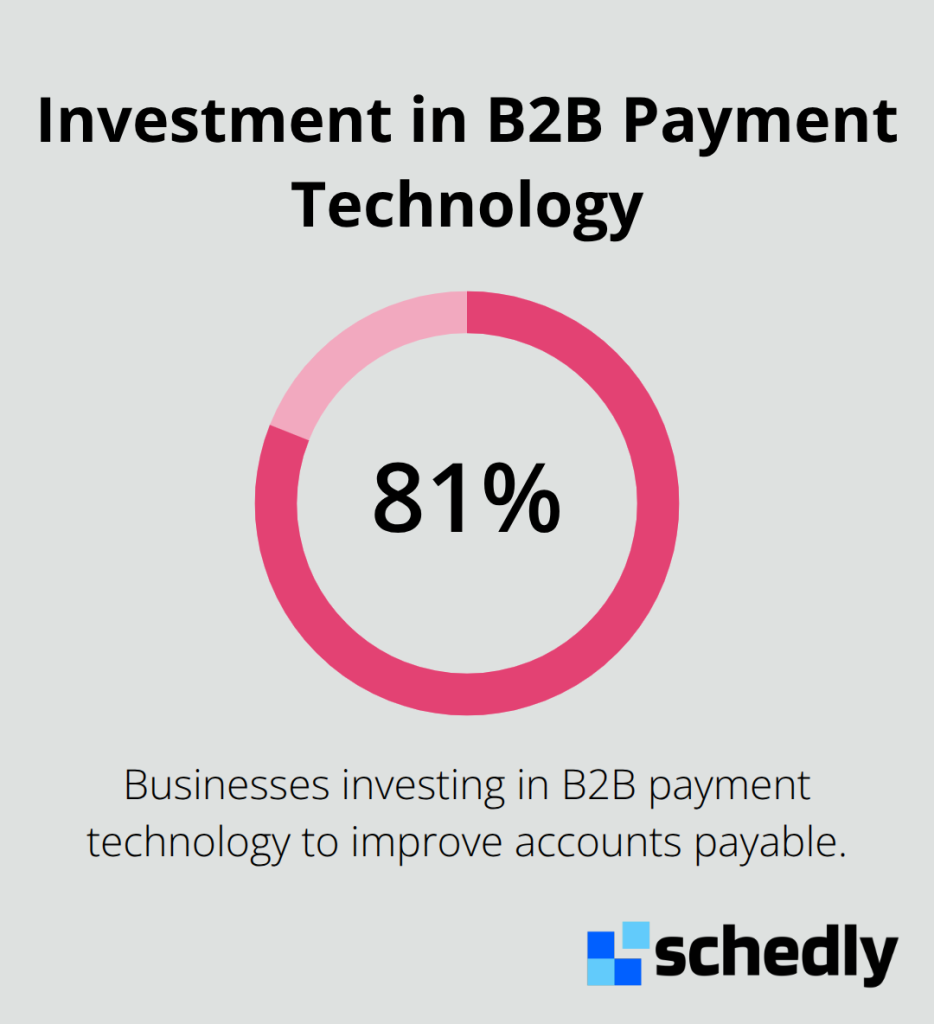
Automate your billing communications so customers receive invoices and payment confirmations on schedule without manual effort from your team. Pymnts data shows that 81% of businesses are investing in B2B payment technology specifically to improve accounts payable processes. Part of that investment involves communication automation that keeps customers informed without creating extra work.
Configure Automated Payment Notifications
Configure your processor to send payment receipts immediately after each charge clears, payment reminders before charges occur, and notifications when payment methods are about to expire. This proactive communication prevents failed charges and reduces customer support inquiries about unexpected billing. Customers who receive advance notice of upcoming charges experience fewer payment failures and report higher satisfaction with your billing process.
Monitor Compliance as an Ongoing Operational Task
Treat compliance monitoring as an ongoing operational task, not a one-time setup. Your processor handles the heavy lifting around PCI DSS and GDPR, but you still need to verify that your implementation remains compliant as your business grows. Review your payment data storage practices quarterly. Confirm that your processor maintains Level 1 PCI DSS certification and that you're not storing raw payment data anywhere in your systems.
If you accept payments from multiple regions, verify that your tax reporting aligns with local requirements in each jurisdiction. The cost of a compliance failure far exceeds the effort required to monitor this quarterly. Schedule a quarterly compliance review with your finance and operations teams to catch any gaps before they become problems.
Final Thoughts
Recurring payments processing eliminates the operational chaos that defines manual billing. Your team stops wasting time on data entry and payment chasing. Your cash flow becomes predictable instead of erratic, and your customers experience frictionless billing that strengthens loyalty.
Automation delivers measurable results that impact your bottom line immediately. Businesses that implement recurring payment systems report faster settlement times, lower administrative costs, and improved collection rates. The average invoice processing cost of $13.11 drops dramatically when your system handles charges automatically, and more than 60% of businesses currently spend 14 hours weekly on payment tasks that automation eliminates entirely.
If you handle customer scheduling alongside recurring billing, Schedly automates the entire booking and payment workflow, combining 24/7 online scheduling with secure payment processing through Stripe and PayPal. This integration eliminates the friction between scheduling and billing entirely, so your customers authorize once and your revenue arrives on schedule without manual intervention from your team.