
Schedly resources
Salon Appointment Analytics: Personalize Your Client Experience
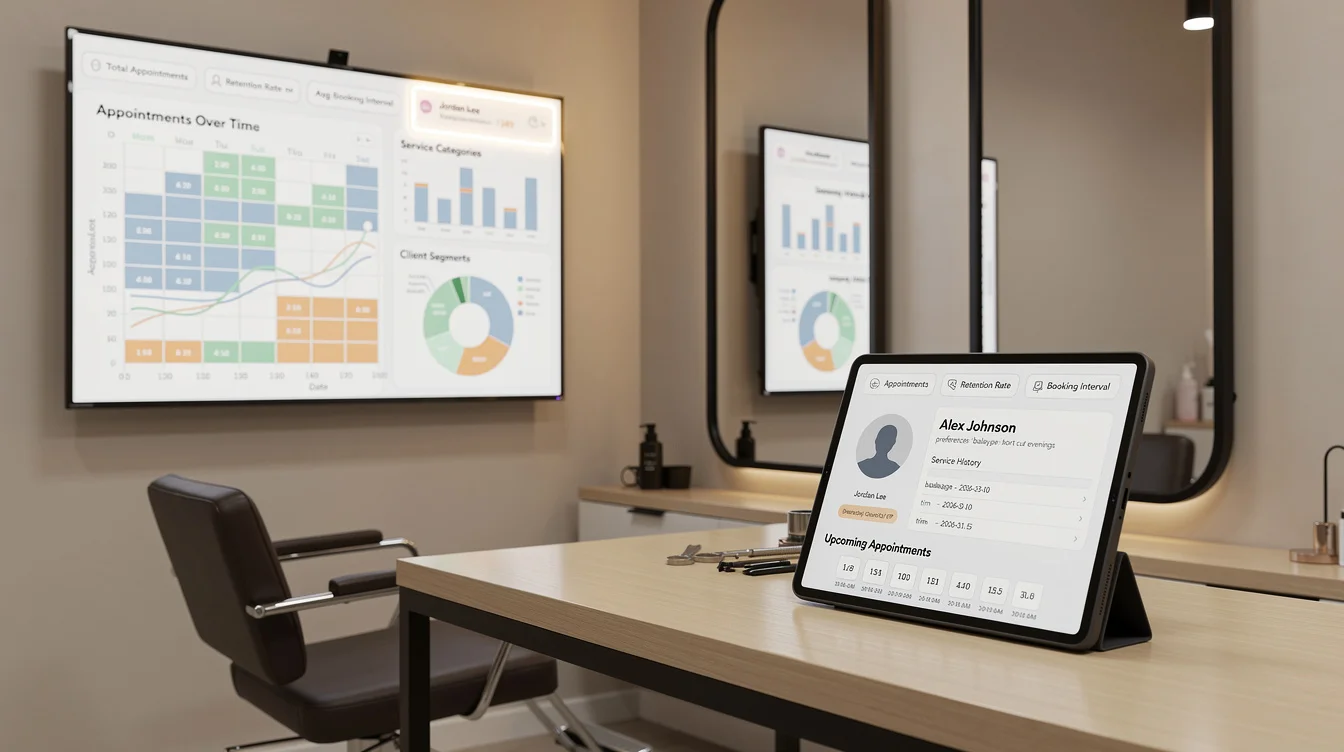
Salons that track client data see measurable results. Better booking patterns, higher retention rates, and smarter service recommendations all come from understanding what your clients actually want.
At Schedly, we've seen how salon appointment analytics transform the way stylists and owners connect with their customers. The data is there-you just need to use it.
Why Salon Analytics Matter for Client Experience
Analytics reveal what your clients actually do, not what you think they do. When you track appointment data, you stop guessing about client preferences and start acting on facts. A salon that knows 60% of its color clients rebook every six weeks can send reminders at week five, not week eight when the appointment slot is already booked elsewhere. You see which services drive revenue, which time slots stay empty, and which clients are at risk of leaving. This isn't about collecting data for its own sake-it's about making your team more effective at every client interaction. Without analytics, you run your salon on habit and hope.
The Real Cost of Ignoring Booking Data
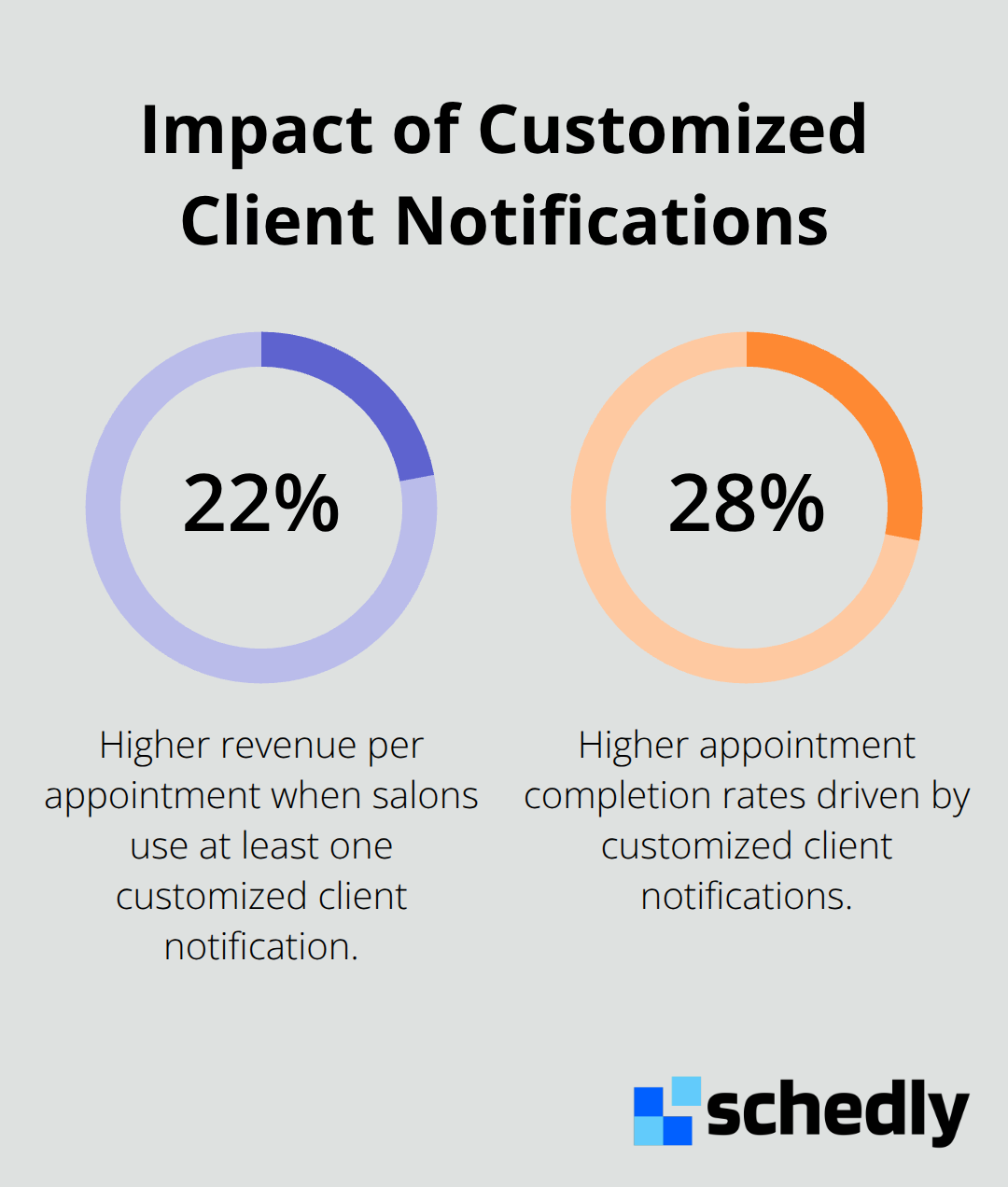
Salons that ignore booking data waste thousands annually on missed opportunities. The average value of cancelled or no-show appointments for a salon reaches almost $100,000 per year. That number drops significantly when you use appointment reminders and understand when clients typically book. Beyond no-shows, you lose revenue when stylists lack visibility into client history. A client who buys the same product every six weeks won't receive a proactive recommendation if your team can't see that pattern. Boulevard data shows that salons using at least one customized client notification yield 22% higher revenue per appointment, along with 28% higher appointment completion rates.
Peak Hours and Service Demand Shape Your Schedule
Your peak hours aren't random, and neither is which services clients request during those times. Analytics platforms track when bookings cluster and which services drive those peaks. If you see that Saturday mornings fill with color services but Tuesday afternoons stay quiet, you can adjust pricing, staffing, or marketing to smooth demand. Some salons discover that certain stylists have waiting lists for specific services while others sit idle-data makes these imbalances visible and actionable. You can also identify when clients typically rebook after a service, which helps you predict future demand and avoid overstaffing or understaffing. This level of insight lets you make staffing decisions based on facts rather than guessing whether next month will be busy.
Retention and Churn: The Numbers That Matter
Client retention directly affects your bottom line, yet most salon owners don't track churn rates systematically. A regular client who visits every six weeks represents thousands in annual revenue, yet one missed reminder or poor experience can push them to a competitor. 71% of consumers expect personalized interactions, and 76% feel frustrated when they don't receive them. When you track which clients haven't booked in months, you can launch reactivation campaigns before they're gone for good. Analytics also reveal patterns in why clients leave-cancellation reasons, feedback scores, and time between visits all signal trouble. Emotionally connected customers are over five times more likely to repeat purchases and more likely to recommend a brand. This means your analytics should track not just bookings, but satisfaction signals too.
Turn Data Into Action
A salon that knows its retention rate and actively works to improve it will always outpace competitors flying blind. The next step is learning how to transform this raw data into personalized experiences that keep clients coming back. Your analytics reveal the patterns; now you need the right strategies to act on them.
How to Turn Client Data Into Real Revenue
Segment Clients to Match Their Actual Behavior
Raw data means nothing without a plan to act on it. The salons winning right now aren't just collecting information-they're using it to make every client feel seen. Start by grouping your clients into segments based on what they actually do, not assumptions.
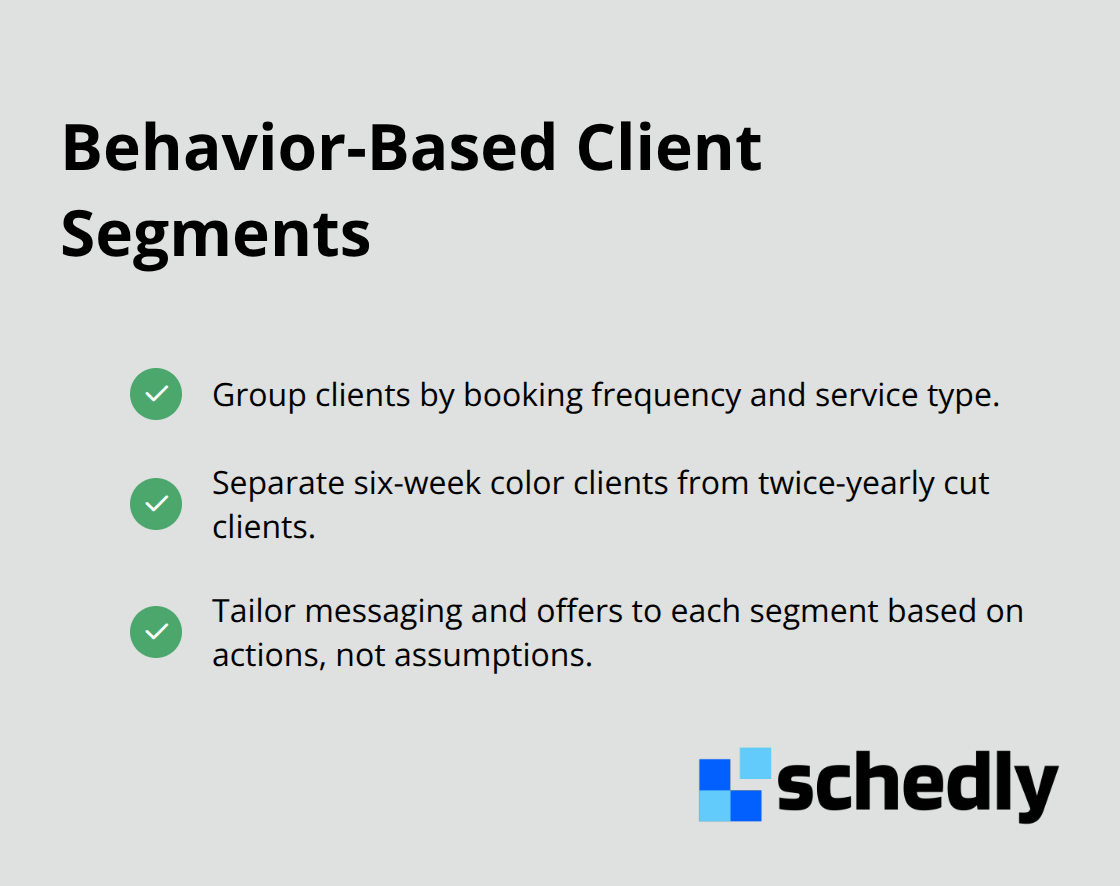
A color client rebooked at week five with a specific product recommendation generates more revenue than a generic reminder sent at random times. A client who buys keratin treatments monthly should see product offers tied to that service, not unrelated upsells. McKinsey research shows 67% of consumers spend more when personalization reflects their actual needs. Your data reveals these patterns instantly-you just need to organize it.
Build Profiles That Enable Smarter Recommendations
Build client profiles that capture service history, product purchases, and visit frequency. This isn't busy work; it directly enables your team to make smarter recommendations during appointments. When a stylist can see that a client has purchased the same shampoo for the past year, they can suggest the new version or a complementary product without wasting time on irrelevant pitches.
Train your team to reference these profiles before each appointment and use them during consultations. The conversation shifts from guessing to knowing. A stylist who accesses client history before the appointment walks in prepared, not scrambling to remember details. This preparation translates directly into higher retail sales and stronger client relationships.
Time Your Messages to Match Client Patterns
Timing transforms everything. Customized client notifications yield 22% higher revenue per appointment and 28% higher appointment completion rates. But generic messages don't count-the notification must align with that specific client's behavior. If your data shows a client typically rebooks three weeks after their last appointment, send a reminder at day 19, not day 28.
If someone hasn't visited in four months and historically comes every six weeks, a reactivation message now beats waiting another month. Automated systems handle this at scale, removing the burden from your staff while keeping the personal touch. Segment your messaging too: a client with a six-week color cycle needs different timing and offers than a regular maintenance client.
Test Messages and Refine What Works
Test different messages and track which ones drive bookings. Some clients respond to convenience messaging (save your spot now), while others respond to product offers or loyalty rewards. Your software analytics show open rates and booking conversion, so you can refine what works. A salon using targeted reminders and offers sees measurable jumps in appointment completion and retail sales.
The alternative-sending the same generic message to everyone at the same time-leaves thousands on the table. Your data already tells you exactly when and how to reach each client. The question is whether you'll act on it. Once you master timing and segmentation, the next step involves understanding which specific offers and recommendations actually move clients to book and purchase.
Making Analytics Work in Your Salon
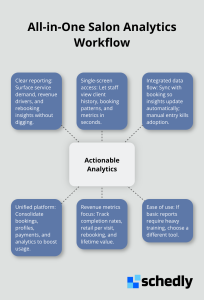
The software you choose determines whether your data becomes actionable or sits unused. A platform without clear reporting forces your team to hunt through screens for insights, which means most staff never use the data at all.
Give Your Team Instant Access to Client Data
Your staff won't personalize experiences if they can't quickly see client history, so empower them with instant access during appointments. A stylist should spend seconds pulling up a client card, not minutes navigating menus. Train your team to use client profiles before each appointment, not as an afterthought. Show them how seeing that a client purchases keratin products monthly leads to natural upselling conversations, not pushy tactics. When stylists reference client cards before walking in, they arrive prepared instead of scrambling to remember details.
Track Metrics That Actually Matter
Measure what moves the needle: track which stylists convert the most retail sales, which time slots have the highest no-show rates, and which client segments rebook fastest. If you notice Tuesday afternoons stay empty while Saturday mornings overflow, adjust your staffing or pricing to match demand. SMS reminders can reduce no-shows by 38–50%, so even small improvements in these metrics compound quickly. A 5% reduction in no-shows translates to thousands in recovered revenue annually.
Align Staff Incentives With Data
Set targets for your team around metrics that matter-rebooking rates, retail conversion, appointment completion-and tie incentives to these numbers. Staff respond to clear expectations backed by data, not vague requests to work harder. Review your analytics weekly with your team so they see how their actions affect the numbers. This transparency builds accountability and shows staff exactly how their work generates revenue. When stylists understand that a 10% improvement in rebooking rates directly impacts their earnings, behavior shifts immediately.
Final Thoughts
Analytics transform client relationships from transactional to personal. When you track appointment patterns, service preferences, and purchase history, you stop treating clients as anonymous bookings and start treating them as individuals with specific needs. A client who sees that you remember their six-week color cycle and proactively sends a reminder at the right time feels valued, not marketed to.
The salons winning right now aren't the ones with the fanciest decor or the most stylists. They're the ones using salon appointment analytics to make every interaction count. Start small if you need to-pick one metric that matters most to your business, whether that's reducing no-shows, increasing retail sales, or improving rebooking rates. Once your staff sees how data drives revenue, adoption accelerates naturally.
The long-term benefit of data-driven decision making extends far beyond this quarter. Salons that systematize personalization through analytics build client lifetime value that compounds year after year. Schedly's scheduling software automates reminders, manages bookings across locations, and surfaces the insights you need to personalize every client experience. Your data already exists in your booking system-the question is whether you'll extract insights from it and act on those insights consistently.