
Schedly resources
Secure Online Payments: Best Practices For Safe Transactions
Payment fraud costs businesses billions annually. At Schedly, we've seen firsthand how a single security breach can damage customer trust and drain resources.
Secure online payments aren't optional anymore-they're a requirement. This guide covers the threats you face, the systems that protect you, and how to implement them across your business model.
What Threats Put Your Payment Data at Risk
How Attackers Target Your Customers
Fraud against payment systems takes many forms, and understanding the specific attacks targeting your business matters more than knowing general threat categories. Phishing attacks remain remarkably effective because they exploit human behavior rather than technical vulnerabilities. Attackers send fake payment confirmation emails or SMS messages that appear legitimate, directing customers to fraudulent websites where login credentials and card details are harvested. Card-not-present fraud occurs when criminals use stolen card numbers for online transactions. According to the Federal Trade Commission, identity theft complaints reached over 2.6 million in 2023, with payment fraud representing a significant portion of those cases. Man-in-the-middle attacks intercept data traveling between your customer's device and your payment gateway, though this risk drops dramatically when you implement SSL/TLS encryption.
The Ransomware Threat to Small Businesses
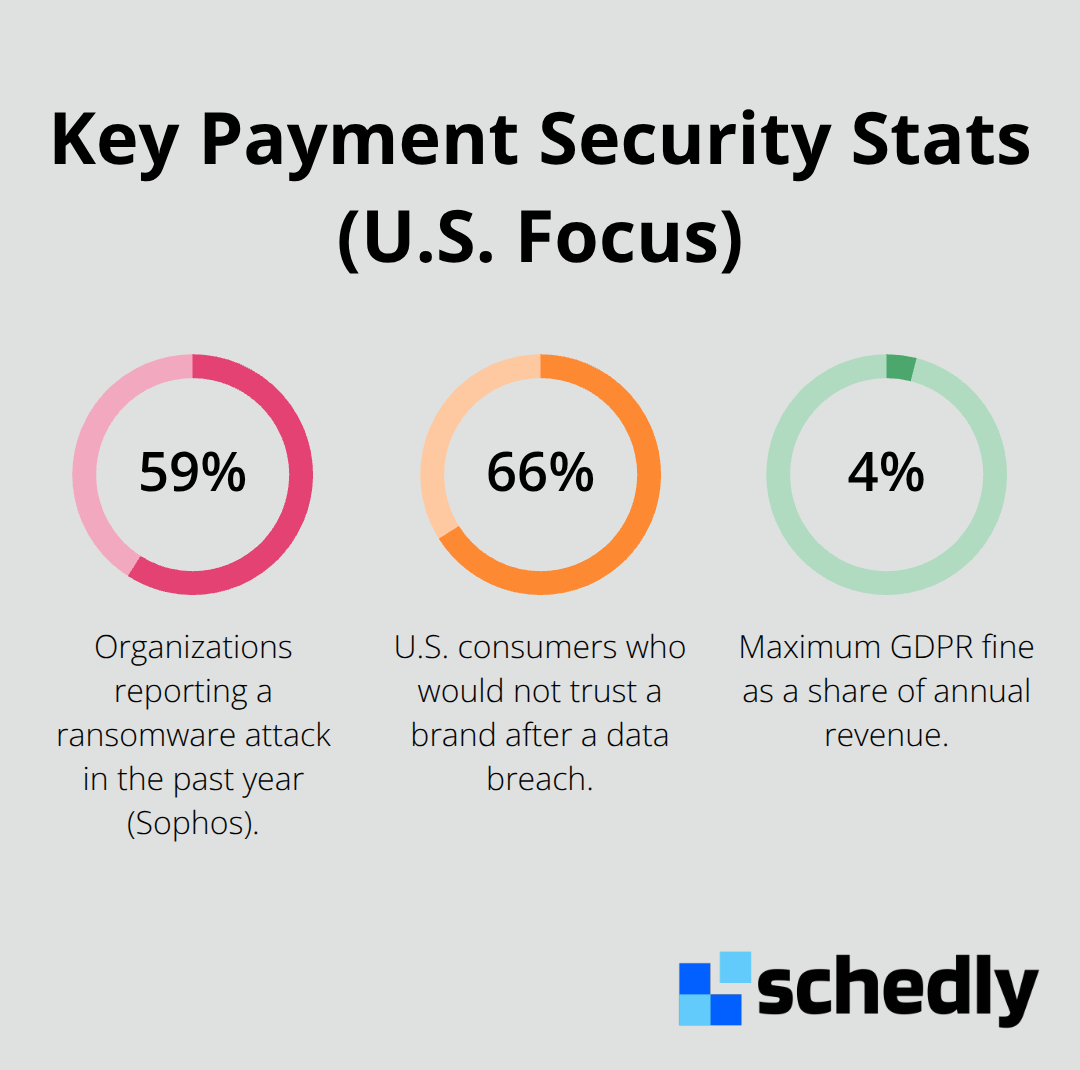
Ransomware poses an escalating threat to small businesses specifically. Sophos reported that 59% of organizations experienced ransomware attacks in the past year, often targeting payment systems to maximize damage and extortion pressure. These attacks lock your systems until you pay a ransom, and attackers frequently target payment infrastructure because it directly impacts revenue and customer trust.
How Payment Data Gets Compromised
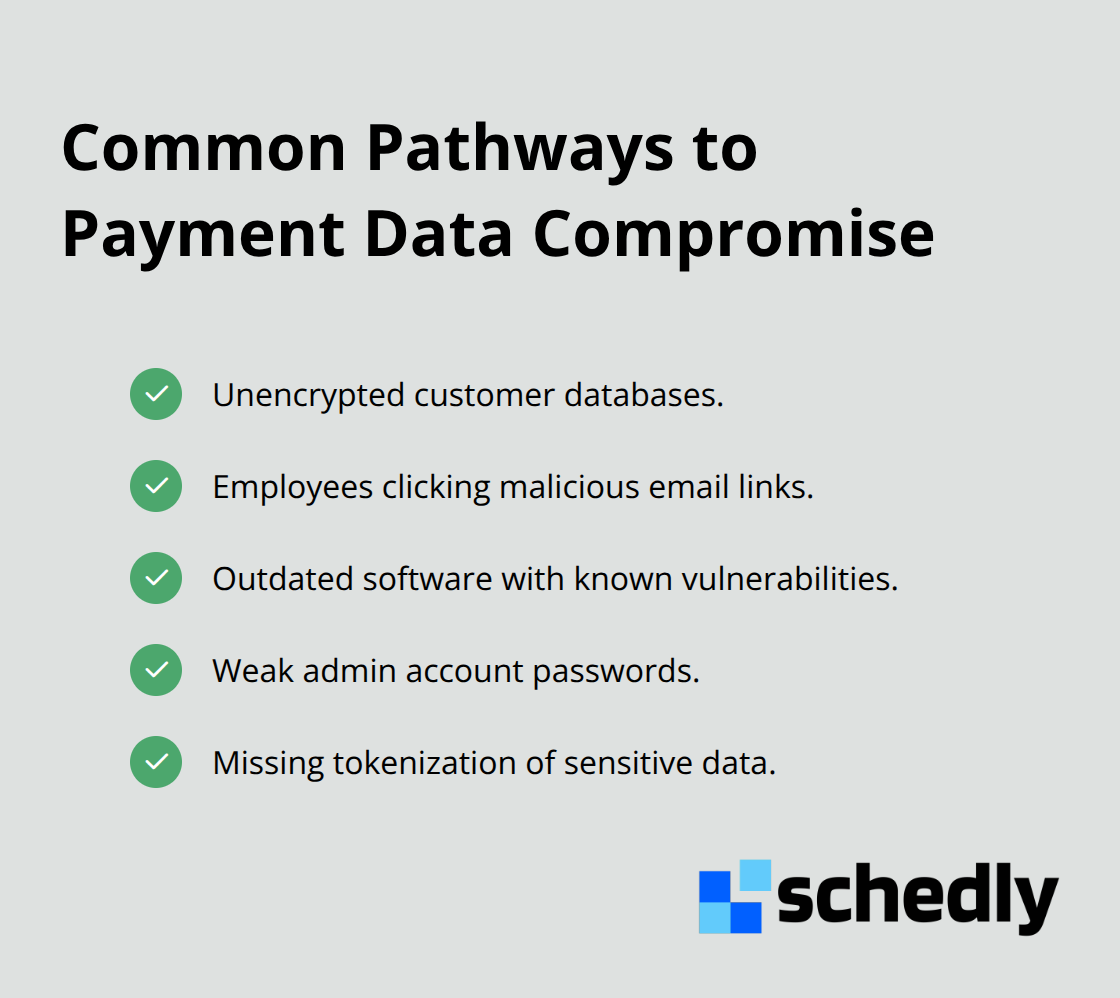
Your payment data gets compromised through several concrete pathways: unencrypted databases storing customer information, employees clicking malicious links in emails, outdated software with known vulnerabilities, weak passwords for admin accounts, and payment systems that fail to tokenize sensitive data before storage. Each of these vulnerabilities represents a real entry point that attackers actively exploit.
The Financial Impact of Payment Breaches
The financial impact of payment breaches extends far beyond the immediate transaction loss. The global average cost of a data breach reached approximately 4.5 million dollars in 2023, but in the United States that figure climbs to nearly 9.5 million dollars per breach according to IBM's annual data breach report. Beyond direct costs, about 66% of U.S. consumers say they would not trust a brand after experiencing a data breach, which translates directly into lost revenue and damaged reputation.
Why Comprehensive Security Solutions Matter
These numbers explain why merchants increasingly demand comprehensive security solutions rather than relying on basic protections. A single breach can cost millions and destroy customer relationships that took years to build. The threats are real, the costs are substantial, and the stakes for your business are high. Understanding these risks sets the foundation for implementing the protective systems that actually work.
How to Build a Secure Payment Infrastructure
Select a PCI DSS Level 1 Certified Payment Gateway
Choosing the right payment gateway matters more than most businesses realize. PCI DSS Level 1 certification should be your non-negotiable requirement, not a nice-to-have feature. This certification represents the highest security standard and the PCI DSS defines security requirements to protect environments where payment account data is stored, processed, or transmitted.
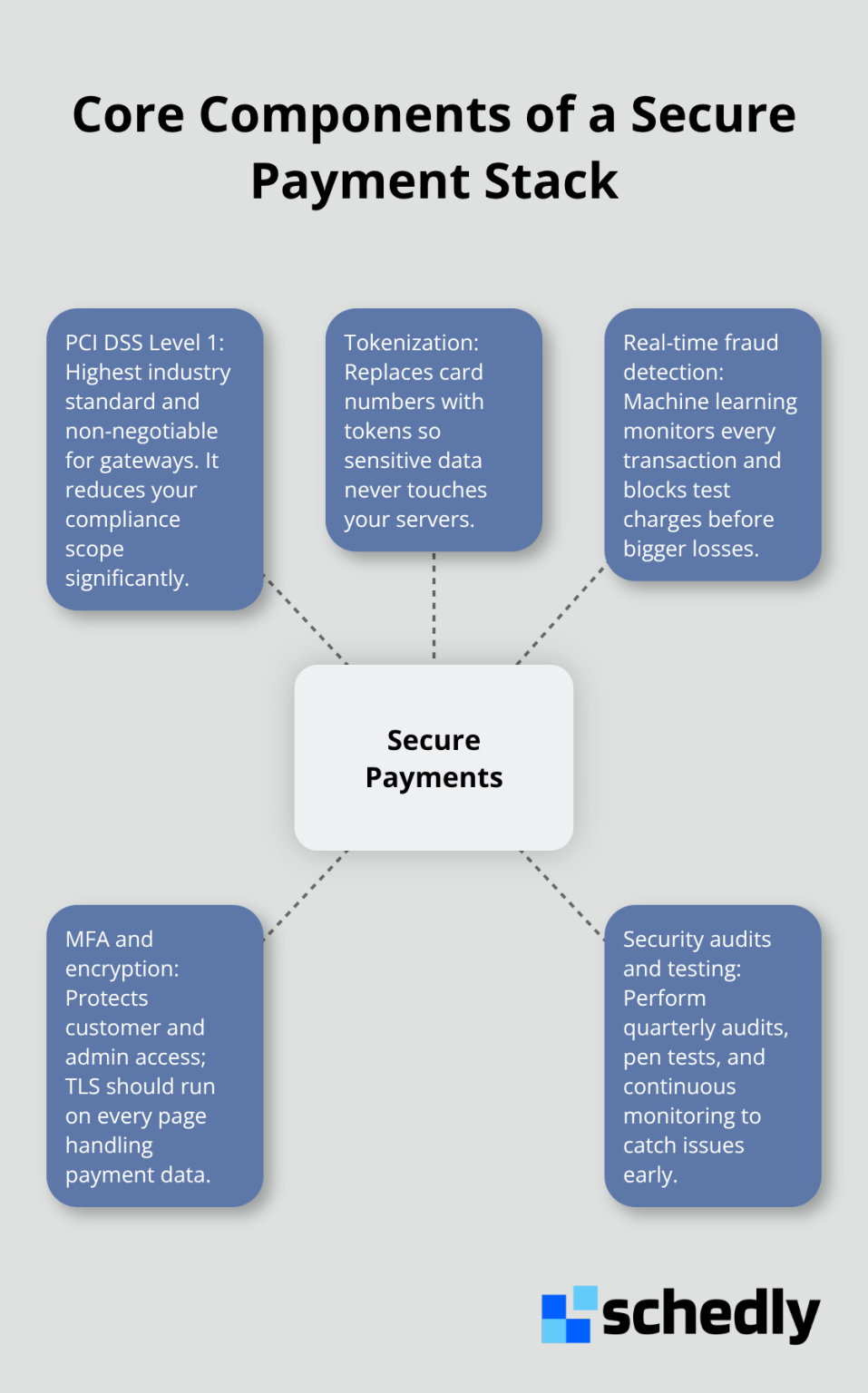
Tokenization replaces card numbers with encrypted tokens that have no value outside your specific merchant environment, dramatically reducing your breach risk and PCI compliance scope. Your payment gateway should also support multiple authentication methods beyond just cards. Digital wallets like Apple Pay and Google Pay add another security layer because they mask actual card numbers and require biometric or PIN verification. Bank transfers through secure redirects work well too, though they require clear customer communication about potential processing delays since human error can interrupt these transactions.
Implement Real-Time Fraud Detection
When you select a gateway, verify that real-time fraud detection runs automatically on every transaction, monitoring for suspicious patterns without requiring manual intervention. This matters because fraudsters test stolen cards with small transactions first, and immediate detection stops them before they attempt larger purchases. Fraud detection systems that leverage machine learning analyze transaction data to identify anomalies faster than human review alone, protecting your revenue stream before losses accumulate.
Deploy Multi-Factor Authentication and Encryption
Multi-factor authentication and encryption form the backbone of transaction security, yet many businesses implement them inconsistently. MFA should protect not just customer accounts but also your internal payment systems and admin dashboards where employees access transaction data. Require employees to use MFA when logging into any payment-related systems, and rotate access credentials quarterly. For customer-facing authentication, MFA during checkout reduces fraud significantly, though it can increase cart abandonment slightly. The tradeoff favors security: about 51% of consumers already view security as critical when choosing payment technologies.
SSL/TLS encryption should run on every page where payment data appears, not just the checkout page. Your certificate should be current and visible in browsers as a padlock icon. Beyond encryption in transit, tokenization handles data at rest by ensuring that even if someone breaches your database, they find only worthless tokens.
Conduct Regular Security Audits and Vulnerability Testing
Security audits and vulnerability testing should happen at least quarterly, not annually. Engage a third-party security firm to conduct penetration testing on your payment systems specifically, and ask them to test for common weaknesses like SQL injection, cross-site scripting, and weak password policies. After each audit, document findings and remediation timelines. Sophos data shows that 59% of organizations experienced ransomware attacks last year, often targeting payment infrastructure, so vulnerability testing directly protects your revenue stream.
Monitor your systems continuously between formal audits using intrusion detection tools that flag unusual access patterns. This ongoing vigilance catches threats faster than waiting for the next scheduled audit. Your payment infrastructure requires the same attention you give to other critical business systems-because payment security directly impacts customer trust and your bottom line. The next chapter explores how different business models implement these protective systems within their specific operational constraints.
How Different Business Models Secure Payments
E-Commerce Retailers and Payment Fraud Prevention
E-commerce retailers face distinct payment security challenges compared to service businesses because transaction patterns, customer data retention, and fraud vectors differ significantly. Online retailers process high volumes of card-not-present transactions, making real-time fraud detection non-negotiable rather than optional. Implement AVS and CVV verification on every transaction without exception-these basic checks catch roughly 70% of fraudulent card attempts before they complete. Your payment gateway should flag transactions from new customers who use rush shipping or make unusually large purchases, since these patterns correlate with stolen card usage.
Tokenization becomes especially critical for e-commerce because you typically store customer payment data to enable one-click checkout on repeat purchases. Never store full card numbers, even encrypted ones. Instead, use your payment gateway's tokenization service so Stripe, PayPal, or your processor handles the sensitive data entirely. This approach reduces your PCI DSS compliance burden from Level 1 to Level 4, dramatically lowering audit costs and security complexity. For high-ticket items above $500, require customer identity verification through account login or government ID checks. This friction point prevents fraud more effectively than any automated system because it forces criminals to abandon transactions when additional verification appears.
Service-Based Businesses and Booking Systems
Service-based businesses operating booking systems face different pressures entirely. Your customers schedule appointments days or weeks in advance, which means payment failures create scheduling chaos and customer frustration. Process payments at booking confirmation time rather than service delivery time, because this approach gives you days to resolve failed transactions before the appointment arrives. This timing prevents the manual follow-up work that drains your team's resources.
Require MFA for customer account access to their payment methods, since account takeovers represent a growing threat for service businesses. If a customer's account gets compromised, fraudsters immediately change payment methods to charge stolen card numbers. MFA adds enough friction to prevent most account takeovers, protecting both your revenue stream and customer data.
Subscription and Membership Models
Subscription and membership models require the strongest payment infrastructure because recurring charges fail frequently due to expired cards, insufficient funds, or customers forgetting they authorized recurring payments. Dunning management becomes critical here: when a recurring payment fails, your system should retry the transaction 3–5 times over several days using different payment methods if the customer has multiple methods on file. This approach recovers 50–65% of failed recurring charges when combining smart retries with customer notification.
When payment failures trigger automatic customer notifications and allow customers to update their payment methods instantly, you eliminate the manual follow-up work that drains your team's time. Schedly integrates secure payment processing directly into its scheduling platform specifically because service businesses need payment and booking systems that communicate seamlessly.
Testing Payment Workflows End-to-End
Quarterly security audits should specifically test your payment workflow end-to-end, not just your payment gateway in isolation. Test what happens when a customer's payment fails, when they update their payment method, when you retry failed charges, and when chargebacks occur. These real-world scenarios reveal vulnerabilities that technical security scans miss entirely. Your payment infrastructure requires the same attention you give to other critical business systems-because payment security directly impacts customer trust and your bottom line.
Final Thoughts
Secure online payments require a multi-layered approach that combines technology, process discipline, and ongoing vigilance. The threats evolve constantly, but the protective systems available today work when you implement them correctly. PCI DSS Level 1 certification, tokenization, multi-factor authentication, and real-time fraud detection form the foundation that actually protects your business and your customers.
Building customer trust happens through consistent, transparent security practices. When customers see the padlock icon, experience smooth checkout flows, and never encounter unauthorized charges, they develop confidence in your business. That trust translates directly into repeat purchases and positive word-of-mouth, while a single breach destroys relationships that took years to build and costs millions in direct expenses and lost revenue.
The specific implementation details matter more than generic security principles, since e-commerce retailers need different protections than service businesses, and subscription models require dunning management that booking systems don't. If you operate a service-based business with booking requirements, Schedly integrates secure payment processing through Stripe and PayPal directly into its scheduling platform, eliminating the complexity of connecting separate systems and reducing manual work that creates security gaps.