
Schedly resources
Self-Service Scheduling Options: Empower Clients To Book On Their Terms
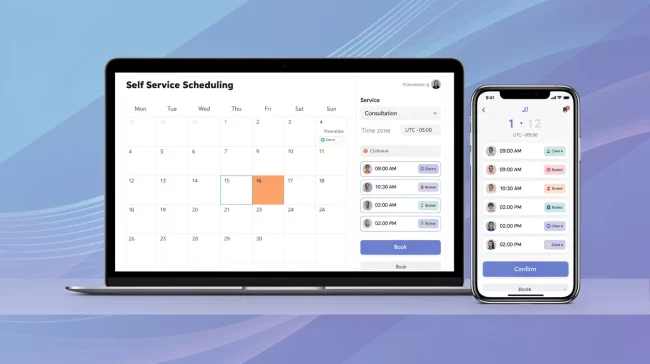
Your clients want to book appointments when it suits them, not when your office is staffed. Self-service scheduling options make this possible, cutting down phone tag and administrative overhead while keeping customers happy.
At Schedly, we've seen firsthand how businesses that offer 24/7 booking capture more appointments and reduce no-shows. This blog post walks you through why self-service scheduling matters and how to implement it effectively.
Why Self-Service Scheduling Matters
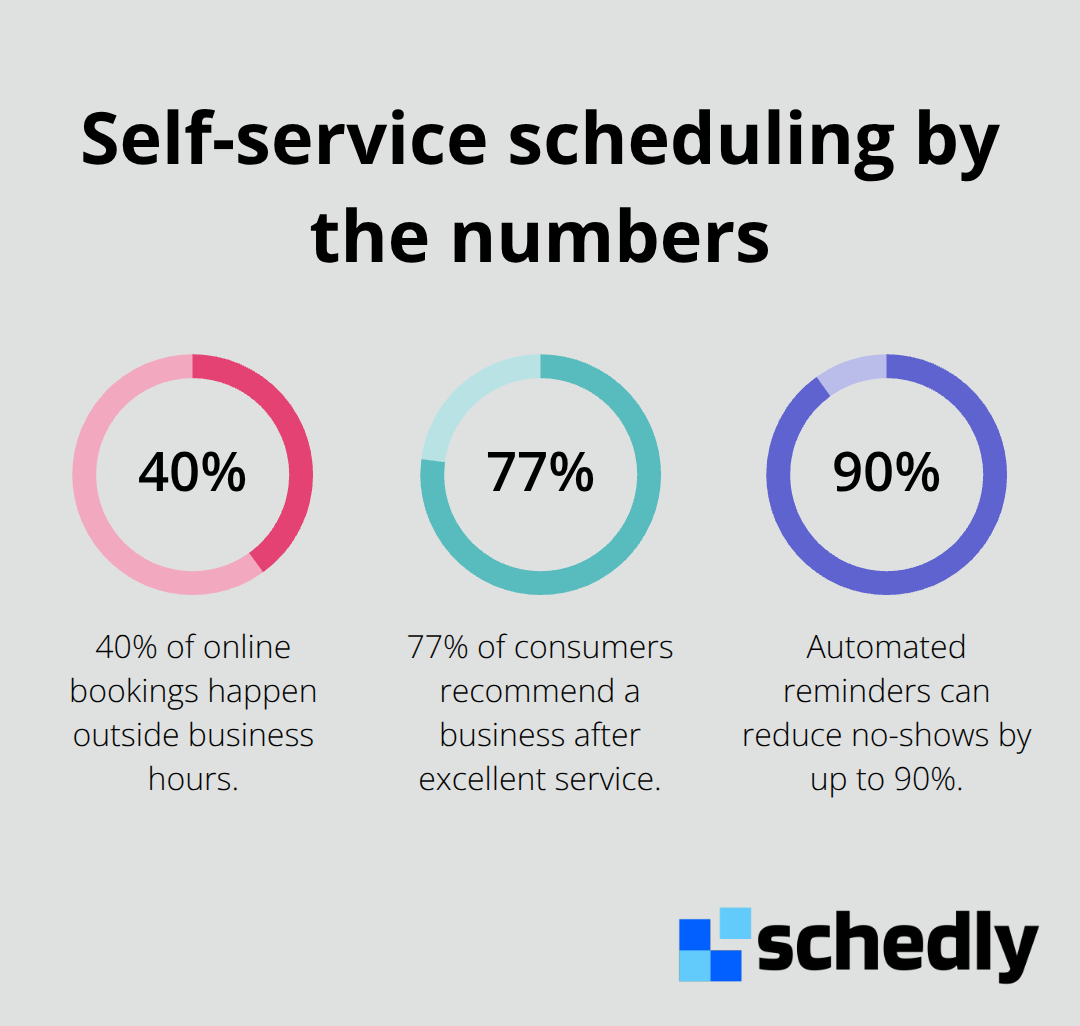
Nearly half of all appointments are now booked online, according to SMB Guide's 2024 scheduling statistics. This shift isn't a preference-it's become an expectation. Your clients want to book at 11 PM on a Saturday, not wait until Tuesday morning to call your office. About 40 percent of online bookings happen outside business hours, which means you're leaving real revenue on the table if you're not available for scheduling around the clock. The businesses winning right now aren't the ones with the fastest phones. They're the ones who let clients book instantly, anytime, anywhere.
Clients Expect Instant Booking Without the Back-and-Forth
Clients hate phone tag. They don't want to call, wait for a callback, negotiate times, and confirm via email. Self-service scheduling eliminates this friction entirely. When a client sees your availability in real time and books a slot instantly, they receive a confirmation immediately. No ambiguity. No double-booking. No follow-up email chains. This simplicity translates directly to satisfaction. Research shows that 77 percent of consumers will recommend a business after receiving excellent service, and a frictionless booking experience sets that tone before the actual appointment even happens. Your scheduling system is often the first interaction a client has with your business.
Automation Reduces Your Team's Workload and Costs
Your team shouldn't spend hours managing appointment requests. With self-service scheduling, clients handle the heavy lifting themselves. They pick their preferred staff member, choose their time slot, and answer intake questions-all without your intervention. Automated reminders reduce no-shows by up to 90 percent, which protects your revenue and prevents wasted capacity. This automation also means fewer scheduling errors, fewer duplicate bookings, and fewer missed appointments. The time your team saves can go toward actually serving clients instead of managing calendars. For businesses operating on thin margins, this efficiency gain is the difference between profitability and burnout.
Real Revenue Sits Outside Your Business Hours
A sizable share of online bookings (about 40 percent) happens outside business hours. This isn't a minor detail-it's a major revenue opportunity. Clients who can't reach you during the day will book with a competitor who offers 24/7 scheduling. When you capture these off-hours appointments, you expand your total bookings without hiring additional staff. The system works while you sleep, turning potential lost sales into confirmed revenue. This is why self-service scheduling isn't just a convenience feature. It's a business multiplier that directly impacts your bottom line.
What Makes a Scheduling System Actually Work
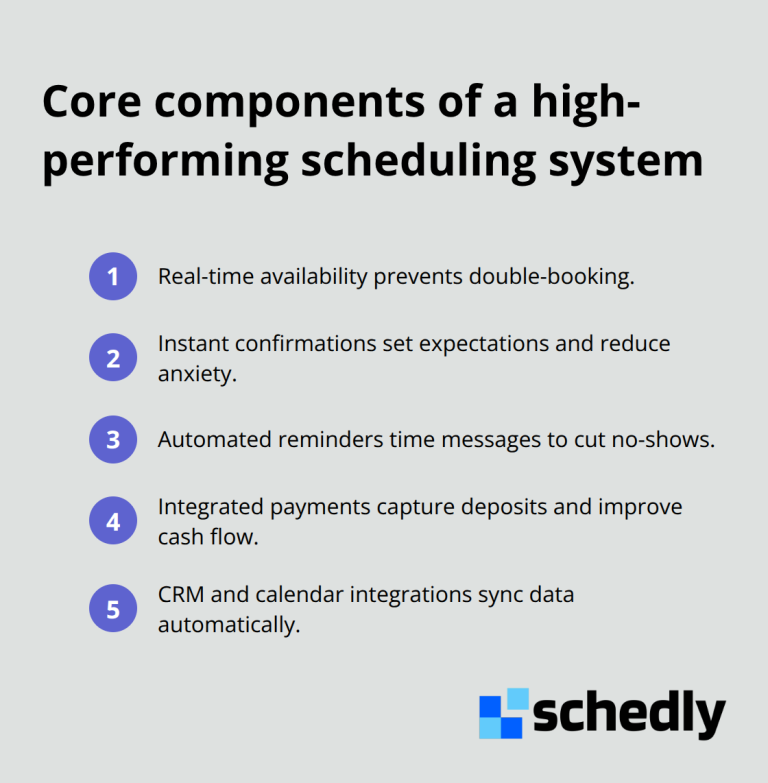
The difference between a scheduling tool that gathers dust and one that transforms your business comes down to execution. A self-service system only works when it solves real problems your clients face every day. The first problem is uncertainty. Clients want to see what's actually available right now, not guess based on outdated information or call to confirm.
Instant Confirmation Sets Clear Expectations
Confirmation messages matter just as much as real-time availability. The moment a client completes their booking, they receive a confirmation with all the details: date, time, staff member, location, and what to prepare. This confirmation sets expectations and reduces anxiety. Clients know exactly what's happening and when, which means they show up on time and come prepared.
Automated Reminders Reduce No-Shows Dramatically
Automated reminders hit clients at the right moment to jog their memory without feeling pushy. A reminder 24 hours before an appointment gives clients enough notice to reschedule if needed, while a second reminder the morning of their appointment catches anyone who might have forgotten. Research shows automated reminders reduce no-shows significantly, which directly protects your revenue and keeps your schedule running smoothly. The key is timing and channel. Email works for some clients, SMS works for others. A good system lets you choose which reminders to send and through which channels, because one-size-fits-all approaches fail. Clients who prefer email will ignore text reminders, and vice versa. After an appointment ends, a quick survey or thank-you message keeps the relationship warm and shows clients their feedback shapes your business.
Collect Payments and Data During Booking
Integrating payments into your booking flow eliminates friction at the worst possible moment. When a client is ready to commit to an appointment, you can collect a deposit or full payment immediately through Stripe, PayPal, or another secure gateway. This protects your revenue by reducing no-shows and improves cash flow because money lands in your account before the appointment even happens. Custom intake questions during booking let clients tell you what they need before they arrive. A salon can ask about hair type and desired style. A consultant can ask about budget and timeline. A healthcare provider can gather medical history. This data flows directly into your CRM, so when the appointment begins, your team already knows the client's situation and can provide faster, more personalized service. Clients appreciate this because it means they don't repeat information they already shared, and your team appreciates it because they can prepare properly instead of scrambling for context.
Integration With Your Existing Tools Matters
A scheduling system that stands alone creates problems instead of solving them. Your booking data needs to connect with your calendar, your payment processor, your CRM, and your communication tools. When these systems talk to each other, your team spends less time transferring information between platforms and more time actually serving clients. This integration also means your analytics dashboard shows you the complete picture: which services generate the most revenue, which time slots fill fastest, and which clients need follow-up. These insights help you make smarter decisions about staffing, pricing, and marketing. The businesses that win with self-service scheduling aren't the ones with the fanciest features. They're the ones whose systems work together seamlessly, creating a smooth experience from the moment a client discovers your availability to the moment they walk in the door.
Where Self-Service Scheduling Delivers the Biggest Impact
Healthcare Practices Reclaim Staff Time for Patient Care
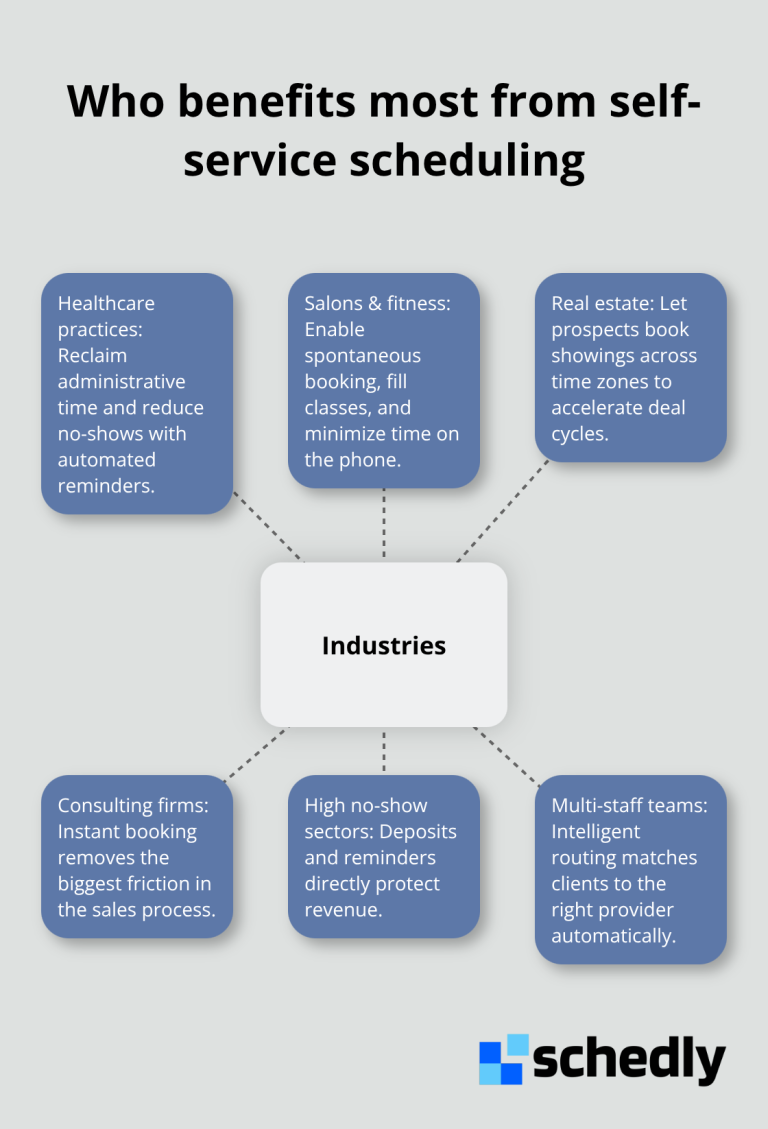
Healthcare practices waste roughly 20 percent of administrative staff time managing appointment requests. Medical offices receive calls from patients who cannot reach anyone, leading to missed appointments and revenue loss. Self-service scheduling solves this problem immediately. Patients book their own appointments, answer intake questions about symptoms or medical history, and receive automated reminders that reduce no-shows. A dermatology practice implementing 24/7 online booking captures patients who decide to schedule at 10 PM instead of waiting until office hours. The practice redeploys staff from phone duty to patient care, improving both efficiency and the patient experience.
Salons and Fitness Centers Operate on Razor-Thin Margins
Salons and fitness centers cannot afford to have someone answering phones all day when clients could book themselves online and select their preferred stylist in seconds. A salon with five stylists loses productivity every time a staff member handles a scheduling call instead of serving a client in the chair. Fitness centers particularly benefit because gym members often book classes or personal training sessions spontaneously. A real-time availability system lets them secure a spot immediately rather than calling ahead. When members can book at midnight on a Tuesday, the facility captures revenue that would otherwise go to a competitor with 24/7 scheduling.
Real Estate and Consulting Firms Close Deals Faster
Real estate and consulting firms close deals based on responsiveness. A potential client in a different time zone who wants to meet with a consultant at 6 AM on Saturday should be able to book that time without sending an email into the void. When consultants publish their availability and let clients pick their own slots, they remove the biggest friction point in the sales process: scheduling the initial meeting. Prospects who experience instant booking perceive the firm as professional and client-focused before the first conversation even happens.
The Universal Problem Across All Industries
The common thread across these industries is that self-service scheduling eliminates the person whose job is managing the calendar. Healthcare practices redeploy staff to patient care. Salons use freed-up time to book more clients or improve the in-chair experience. Real estate agents spend time on property showings instead of email tag. Consulting firms close more deals because prospects do not get frustrated waiting for a callback. The financial impact is measurable. A medical practice that reduces administrative scheduling time by even 10 hours per week saves roughly 500 hours annually, equivalent to a full-time employee. A salon that captures 15 additional bookings per month from off-hours scheduling adds thousands in monthly revenue without hiring anyone.
Which Industries Benefit Most
Industries with high no-show rates benefit most because automated reminders and deposit collection directly protect revenue. Industries with multiple staff members or service providers benefit because intelligent routing directs clients to the right person automatically. Every business that charges for time benefits from removing scheduling friction. The platform handles the scheduling work, integrates with payment systems so deposits protect against no-shows, and connects to CRMs so your team sees client history instantly.
Final Thoughts
Self-service scheduling options transform how businesses operate and how clients experience your brand. Nearly half of all appointments now happen online, and companies that fail to offer 24/7 scheduling lose revenue to competitors who do. Your clients want control over their booking experience, and you gain hours of administrative time back each week when you hand that control to them.
Technology makes this possible, but only when it integrates with the tools you already use. A scheduling system that stands alone creates friction instead of eliminating it. You need real-time calendar syncing, secure payment processing, automated workflows, and analytics that show what actually works-all connected to your CRM, calendar, and payment processor so your team arrives prepared and your business runs smoothly.
Schedly automates the booking process across industries from healthcare to real estate to salons, with branded scheduling pages, secure payment processing, and integrations with Google Calendar, Zoom, and Salesforce. Your clients get the 24/7 booking experience they expect, and your team gets the time back to do what matters.