
Schedly resources
The Evolution of Scheduling Automation: What to Expect in the Next Five Years
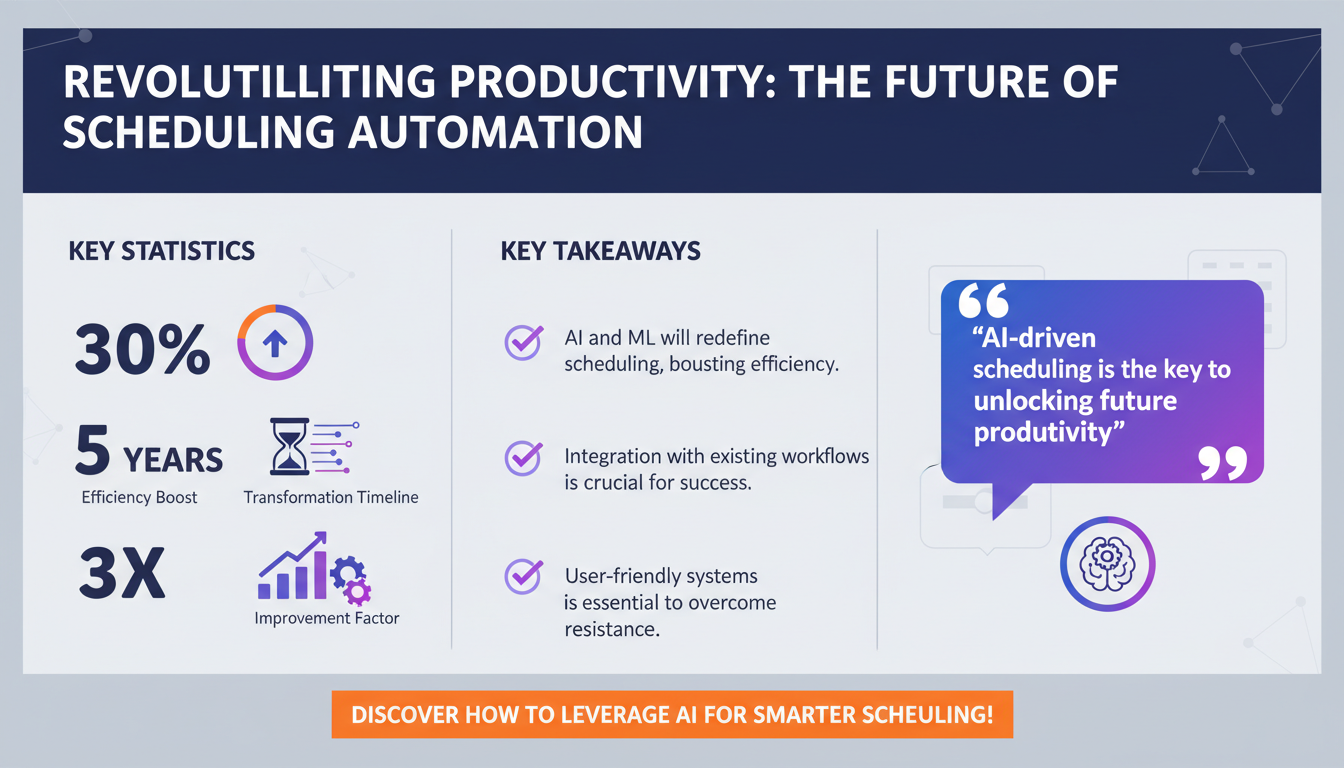
As we stand on the cusp of a new era in productivity technology, the landscape of scheduling automation is poised for transformative change. The integration of artificial intelligence (AI), machine learning (ML), and other cutting-edge technologies is set to redefine how businesses approach scheduling, with significant implications for efficiency and productivity. In this comprehensive analysis, we delve deep into the future of scheduling automation, exploring emerging trends, technologies, and strategies that will shape the industry over the next five years.
Introduction: A New Dawn in Scheduling Automation
The concept of scheduling automation has undergone a significant metamorphosis. Initially, automation involved basic tools that merely served to digitize traditional paper-based schedules. However, with the advent of AI and ML, the paradigm has shifted towards intelligent systems capable of not only managing schedules but optimizing them to enhance productivity. Over the next five years, this evolution is expected to accelerate, bringing profound changes to how businesses operate and how individuals manage their time.

The impetus for this change lies in the increasing complexity of business operations and the need for more agile and responsive scheduling systems. In a world where remote work is becoming the norm, and global teams are the standard, the demand for sophisticated scheduling tools that can accommodate diverse needs is higher than ever. This article will explore how current trends and future innovations in scheduling automation will address these challenges, ultimately transforming the landscape of productivity technology.
The Current State of Scheduling Automation
To understand the future, we must first consider the present. Scheduling automation has evolved significantly over the past decade, driven by advancements in cloud computing and AI. Today, tools like Schedly offer streamlined experiences for businesses looking to improve their productivity through automated scheduling solutions. According to a recent Forrester study, companies using advanced scheduling tools report a 30% improvement in operational efficiency. This trend underscores the importance of automation in modern business strategies.
Despite these advancements, many businesses struggle to fully leverage these tools due to a lack of integration and customization. As noted by Harvard Business Review, the next phase of evolution will focus on seamless integration with existing workflows and enhanced user experiences. The challenge lies in creating systems that not only automate but also integrate with the myriad of tools businesses already use.
Challenges in Current Systems
One of the primary challenges in current scheduling systems is the lack of interoperability. Many organizations use multiple software solutions that do not always communicate effectively with each other. This can lead to scheduling conflicts and inefficiencies. Furthermore, while many scheduling tools offer automation features, they often require significant manual input to function optimally, which can diminish the potential benefits of automation.
Another critical issue is user adaptability. Many employees resist changes in their work processes, especially when new technologies are involved. This resistance can lead to underutilization of the available tools, ultimately affecting the productivity gains automation is supposed to deliver. Therefore, one of the key strategies moving forward will be to develop user-friendly systems that minimize the learning curve and enhance user engagement.
Overcoming Integration Barriers
To overcome these integration challenges, businesses should prioritize the adoption of platforms that offer robust API capabilities, enabling seamless data exchange between disparate systems. By doing so, they can ensure that scheduling tools work harmoniously with other business applications, such as CRM systems and communication platforms, reducing friction and enhancing overall efficiency.
Furthermore, organizations should invest in platforms that offer customization options tailored to their specific workflow needs. By working closely with vendors to customize solutions that fit their unique processes, businesses can maximize the utility of scheduling automation tools, ensuring a smoother transition and greater employee buy-in.
AI and Machine Learning: The New Frontiers
The integration of AI and ML into scheduling tools is not just a possibility; it's an inevitability. These technologies are set to revolutionize the way we think about scheduling by introducing predictive analytics and automated decision-making. According to Gartner's 2026 report, 75% of companies will have incorporated AI into their scheduling processes by 2030.
AI-driven scheduling tools can analyze vast amounts of data to predict optimal meeting times, taking into account factors like participant availability, time zones, and past meeting trends. This predictive capability not only saves time but also enhances decision-making accuracy. Furthermore, ML algorithms can learn from past scheduling patterns to continuously optimize processes, leading to a more intuitive user experience.
Practical Applications of AI in Scheduling
The practical applications of AI in scheduling are extensive. For example, AI can be used to automate the scheduling of client meetings by analyzing the busy schedules of all involved parties and suggesting the best possible times. In healthcare, AI can help optimize the scheduling of patient appointments, reducing wait times and improving service delivery. In education, AI-driven scheduling can assist in organizing classes and exams, ensuring minimal conflicts and optimal resource utilization.
Moreover, AI can assist in workforce management by predicting peak times and suggesting optimal staffing levels. This can be particularly useful in industries like retail and hospitality, where demand can vary significantly. By leveraging AI, businesses can ensure they have the right number of employees available when and where they are needed most.
Enhancing Predictive Capabilities
AI's predictive capabilities extend beyond scheduling optimal times; they can also forecast potential disruptions and suggest contingency plans. For instance, in logistics, AI can analyze traffic patterns and weather forecasts to recommend alternative routes for deliveries, ensuring timeliness despite unforeseen obstacles.
In the corporate environment, AI can assess historical data to predict employee availability based on past behavior, such as preferred working hours and vacation patterns, thus streamlining the scheduling of team meetings and collaborative projects.
Emerging Trends in Scheduling Automation
Several trends are emerging that will shape the future of scheduling automation. One major trend is the rise of hybrid work models, which require more flexible and adaptive scheduling solutions. Deloitte's insights suggest that the demand for hybrid-compatible scheduling tools will increase by 40% in the next five years.

Another trend is the integration of voice-activated assistants into scheduling platforms. As voice technology becomes more accurate and reliable, users will increasingly rely on voice commands to manage their schedules, offering a hands-free, efficient alternative to traditional methods. This trend is supported by the rapid growth in the smart speaker market, which is projected to reach over $30 billion by 2025, according to market research firm Statista.
Impact of Remote Work on Scheduling
The rise of remote work has significantly impacted scheduling automation. With employees working from various locations, the need for tools that can handle complex scheduling across different time zones and work environments has never been greater. Platforms that offer features like automatic time zone adjustments and remote collaboration capabilities are becoming essential.
Furthermore, remote work has blurred the lines between personal and professional time, making it crucial for scheduling tools to offer functionalities that support work-life balance. Features such as personal time blocking and automated reminders for breaks can help employees manage their time more effectively, reducing burnout and increasing productivity.
Pro Tip: Leveraging Voice Technology
Integrating voice technology into scheduling platforms can significantly enhance user experience by allowing for quick, hands-free scheduling. This is especially useful for professionals on-the-go, such as sales representatives or healthcare providers, who need to manage their schedules without being tied to a computer.
To implement voice technology effectively, businesses should ensure that their scheduling tools are compatible with popular voice assistants like Alexa, Siri, or Google Assistant. By doing so, they can provide users with a seamless experience and improve adoption rates.
Contrarian Insights: Rethinking Conventional Scheduling
While many assume that more automation is always better, there are contrarian insights that challenge this notion. Over-reliance on automation can lead to a loss of personal touch and decreased team morale. A Harvard Business Review study found that employees in overly automated environments reported a 20% decrease in job satisfaction.
Balancing automation with human interaction is crucial. Organizations must ensure that automated scheduling enhances rather than replaces human decision-making. By integrating automation in a way that supports rather than dictates, businesses can maintain a personal touch while reaping the benefits of efficiency.
Strategies for Balanced Automation
To achieve a balanced approach to automation, companies should focus on customization and user control. Allowing individuals to override automated decisions when necessary can preserve the human element in scheduling. Additionally, incorporating feedback mechanisms where users can provide input on automated suggestions can help refine the system over time.
Furthermore, it is essential to involve employees in the decision-making process when implementing new scheduling tools. By seeking input from those who will be using the tools daily, organizations can ensure that the solutions meet the actual needs of their workforce, thereby increasing buy-in and reducing resistance.
Expert Insight: Encouraging Human Oversight
While automation excels at handling routine tasks, human oversight is crucial for managing exceptions and providing personalized service. Encouraging employees to review and adjust automatically-generated schedules can help maintain a balance between efficiency and personalization, ensuring that automation serves as a tool rather than a replacement.
Training programs that emphasize the importance of human oversight can empower employees to take ownership of their schedules, fostering a sense of control and satisfaction in their work.
Proprietary Framework: The Schedly SMART Model
To navigate the complexities of scheduling automation, we propose the Schedly SMART Model, a framework designed to optimize scheduling processes through five key principles: Seamless Integration, Measurable Outcomes, Adaptive Learning, Robust Security, and Tailored Customization.
1. Seamless Integration: Ensure that scheduling tools integrate effortlessly with existing systems to enhance workflow efficiency.
2. Measurable Outcomes: Set clear metrics to evaluate the effectiveness of scheduling automation and identify areas for improvement.
3. Adaptive Learning: Utilize AI and ML to continuously learn and adapt to changing scheduling needs.
4. Robust Security: Prioritize data privacy and compliance with relevant regulations to protect sensitive information.
5. Tailored Customization: Allow users to customize scheduling tools to meet their unique requirements, enhancing user satisfaction and engagement.
Implementing the SMART Model
Implementing the SMART Model begins with a thorough assessment of current scheduling processes and identifying areas where automation can provide the most benefit. Businesses should start by integrating scheduling tools with existing systems, ensuring that all data flows seamlessly between platforms.
Next, organizations should establish clear metrics to measure the success of their automation initiatives. These metrics could include reductions in scheduling conflicts, improvements in meeting attendance, and increases in productivity. By regularly reviewing these metrics, businesses can fine-tune their systems to ensure they are meeting their objectives.
Checklist for Successful Implementation
- Integration: Verify compatibility with existing systems.
- Metrics: Define key performance indicators (KPIs) for success.
- AI Utilization: Implement AI tools for predictive analytics.
- Security: Ensure compliance with data protection regulations.
- Customization: Tailor features to user needs and preferences.
By following this checklist, businesses can effectively implement the SMART Model, ensuring a successful transition to automated scheduling systems that enhance productivity and user satisfaction.
Addressing Common Mistakes in Scheduling Automation
As businesses adopt scheduling automation, they often encounter several common pitfalls. A frequent mistake is underestimating the importance of user training. Without adequate training, employees may struggle to use new tools effectively, leading to frustration and reduced productivity.
Another common error is neglecting integration with existing systems. Scheduling tools must work seamlessly with other enterprise software to provide a cohesive user experience. According to McKinsey's research on automation success, businesses that prioritize integration see a 25% increase in overall productivity.
Overcoming Adoption Hurdles
To overcome these hurdles, businesses should prioritize comprehensive training programs that familiarize employees with new scheduling tools. This training should not only cover the technical aspects of the tools but also highlight the benefits of automation and how it can enhance daily tasks.
Additionally, businesses should conduct regular reviews of their scheduling systems to identify potential integration issues and rectify them promptly. By maintaining an open line of communication with employees, businesses can gather feedback on how well the tools are working and make necessary adjustments.
Pro Tip: Encourage Continuous Learning
Encouraging a culture of continuous learning can help employees adapt to new technologies more effectively. Offering regular workshops and training sessions can ensure that staff remain proficient in using scheduling tools and are aware of new features or updates.
By fostering a learning environment, businesses can ensure that their workforce remains agile and capable of leveraging technology to its fullest potential, thus maximizing the benefits of scheduling automation.
FAQs: Addressing Common Questions
What are the main benefits of scheduling automation?
Scheduling automation offers several benefits, including increased efficiency, reduced administrative burdens, and improved accuracy in scheduling. By automating routine tasks, businesses can free up valuable time for strategic activities. Automation also enhances coordination across departments, leading to smoother project execution and better resource allocation.
How does AI enhance scheduling automation?
AI enhances scheduling automation by providing predictive analytics and optimizing scheduling decisions based on historical data. This capability leads to more accurate and efficient scheduling outcomes. AI can also adapt to changing patterns in real-time, allowing businesses to respond swiftly to dynamic conditions and ensure optimal resource use.
What industries benefit most from scheduling automation?
Industries such as healthcare, education, and professional services benefit significantly from scheduling automation due to their complex scheduling needs and reliance on timely appointments. In healthcare, for instance, automated scheduling can streamline patient flow and reduce waiting times, while in education, it can optimize classroom usage and improve student engagement.
How can businesses ensure data privacy in scheduling automation?
Businesses can ensure data privacy by implementing robust security measures and complying with relevant data protection regulations. Choosing scheduling tools with strong security features is essential. Regular audits and updates can also help maintain security standards and protect sensitive information from breaches.
What is the future outlook for scheduling automation?
The future of scheduling automation is bright, with continued advancements in AI and ML expected to drive further innovation. These technologies will lead to more intuitive and efficient scheduling solutions. As businesses become more data-driven, the integration of AI will unlock new possibilities in predictive scheduling and strategic planning.
Conclusion: Preparing for the Future of Scheduling Automation
As we look to the future, the evolution of scheduling automation promises to bring about unprecedented changes in how we manage time and resources. By embracing AI, ML, and emerging trends, businesses can position themselves at the forefront of this transformation. Organizations should consider adopting frameworks like the Schedly SMART Model to ensure successful implementation and maximize the benefits of scheduling automation.
To complement these strategies, leveraging tools like Apparatuz for workflow automation and Applicantz for recruitment processes can further enhance operational efficiency. Additionally, platforms like Supportly and Zatisfied provide valuable insights into customer satisfaction and feedback management.
By integrating these tools and strategies, businesses can unlock new levels of productivity and effectiveness, paving the way for a future where scheduling automation is a cornerstone of success.