
Schedly resources
The Future of Automated Scheduling: How AI Enhancements Will Revolutionize Productivity in 2027
Introduction: The Dawn of a New Era in Scheduling
As we look towards 2027, the landscape of automated scheduling is set to undergo a seismic shift, driven by breakthroughs in artificial intelligence (AI). This transformative technology promises to not only enhance efficiency but also redefine productivity paradigms across industries worldwide. In today's fast-paced business environment, companies increasingly rely on digital solutions to streamline operations and optimize resource management. The potential of AI-enhanced scheduling is poised to revolutionize how we manage time and resources, creating a more dynamic and responsive business ecosystem.

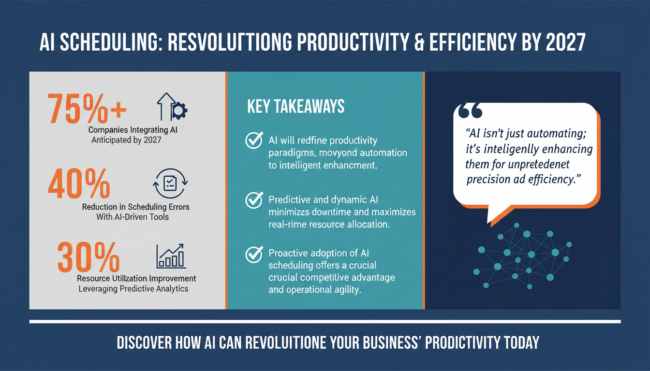
According to a recent report by Forrester's AI in Scheduling, over 75% of companies anticipate integrating AI into their scheduling processes by 2027. This trend reflects a broader movement towards automation, where AI-driven tools are expected to deliver unprecedented levels of personalization and efficiency. As such, understanding the implications of these advancements is crucial for businesses aiming to stay ahead of the curve.
In this comprehensive article, we explore how AI enhancements in scheduling will transform productivity, examining key trends, innovative technologies, and actionable strategies that organizations can implement today. From predictive analytics to intelligent task allocation, the future of scheduling is here, and it's more promising than ever. We will also delve into real-world applications, offering insights into how businesses can harness these technologies to gain a competitive edge.
How AI is Transforming Scheduling: Current Trends and Future Projections
Artificial Intelligence has already begun to reshape the way businesses approach scheduling. In 2026, we observed a significant shift towards AI-driven solutions that automate routine tasks, allowing human workers to focus on more strategic activities. This transformation is not just about replacing manual processes but enhancing them through intelligent insights and automation. The ability to analyze vast amounts of data and predict future needs positions AI as a cornerstone of modern scheduling systems.

A recent study by Gartner highlights that AI-driven scheduling tools can reduce scheduling errors by up to 40%, leading to improved operational efficiency. These tools leverage machine learning algorithms to analyze patterns and predict scheduling needs, offering a level of precision that was previously unattainable. By anticipating potential conflicts and providing optimal scheduling solutions, AI is set to minimize downtime and maximize productivity.
As we move towards 2027, we can expect AI to further refine these capabilities. Predictive scheduling, where AI anticipates future scheduling conflicts and suggests optimal solutions, will become more prevalent. Moreover, AI will facilitate dynamic scheduling that adjusts in real-time to changing conditions, ensuring that resources are always allocated efficiently. This proactive approach to scheduling enables businesses to operate with greater agility and responsiveness, critical factors in maintaining a competitive edge.
The Rise of Predictive Analytics in Scheduling
Predictive analytics is at the forefront of AI enhancements in scheduling. By analyzing historical data and current trends, predictive analytics can forecast future scheduling needs with remarkable accuracy. This capability is particularly valuable in industries with fluctuating demands, such as healthcare and retail, where scheduling needs can change rapidly.
According to McKinsey's insights on automation success, companies that leverage predictive analytics in scheduling can achieve up to 30% improvements in resource utilization. This not only optimizes workforce management but also enhances customer satisfaction by ensuring timely service delivery. Predictive analytics enables businesses to anticipate peak demand periods and allocate resources accordingly, reducing bottlenecks and improving service quality.
As predictive analytics technology continues to evolve, its integration into scheduling systems will become more sophisticated, offering businesses a powerful tool to anticipate and adapt to future needs. The ability to make data-driven decisions in real-time ensures that businesses can respond swiftly to market changes, maintaining operational efficiency and customer satisfaction.
The Role of AI in Enhancing Team Productivity
One of the most significant impacts of AI in scheduling is its ability to enhance team productivity. By automating time-consuming scheduling tasks, AI allows teams to focus on value-added activities that drive business growth. This shift is particularly important in today's fast-paced business environment, where efficiency is paramount. AI-driven scheduling tools streamline processes and improve communication, enabling teams to work more effectively and collaboratively.

A study conducted by Deloitte found that AI-powered scheduling tools can increase team productivity by up to 25%. These tools streamline communication, reduce the time spent on administrative tasks, and facilitate better collaboration across teams. By automating routine scheduling tasks, businesses can free up valuable time for employees to focus on strategic initiatives, fostering innovation and growth.
Moreover, AI enhances decision-making by providing managers with actionable insights based on real-time data. This allows for more informed scheduling decisions that align with organizational goals, ultimately leading to increased productivity and efficiency. By leveraging AI's analytical capabilities, managers can optimize workforce allocation and ensure that teams are working at peak efficiency, translating into tangible business outcomes.
Intelligent Task Allocation: Optimizing Workforce Management
AI's ability to intelligently allocate tasks is a game-changer for workforce management. By analyzing employee skills, availability, and workload, AI can assign tasks to the most suitable team members, ensuring optimal productivity and job satisfaction. This capability is particularly beneficial in environments with complex scheduling needs, such as project-based teams or multi-location operations.
Research from Accenture indicates that intelligent task allocation can lead to a 20% increase in employee engagement and retention. By aligning tasks with employee strengths and preferences, AI not only enhances productivity but also fosters a more motivated and satisfied workforce. This strategic alignment of tasks ensures that employees are not only more productive but also more engaged, reducing turnover and improving overall organizational morale.
As we look to the future, intelligent task allocation will become an integral component of AI-enhanced scheduling systems, providing businesses with a competitive edge in managing their most valuable asset: their people. By ensuring that the right people are working on the right tasks at the right time, businesses can maximize efficiency and productivity, leading to better outcomes and a stronger bottom line.
AI-Powered Personalization: Tailoring Scheduling to Individual Needs
Personalization is a key trend in the future of automated scheduling, and AI is at the forefront of this transformation. By leveraging machine learning algorithms, AI can tailor scheduling solutions to meet the unique needs of individuals and teams, enhancing user experience and satisfaction. This personalized approach to scheduling allows businesses to cater to the specific preferences and requirements of their workforce, enhancing engagement and productivity.

For instance, AI can analyze user preferences, historical behavior, and contextual data to create personalized scheduling recommendations. This level of customization is particularly valuable in industries like healthcare, where personalized scheduling can improve patient outcomes by ensuring timely access to care. By offering tailored scheduling solutions, businesses can improve service delivery and enhance customer satisfaction, leading to increased loyalty and retention.
A report by Harvard Business Review highlights that AI-powered personalization can enhance scheduling accuracy by up to 35%, leading to improved productivity and user satisfaction. As AI technology continues to advance, we can expect even greater levels of personalization in scheduling solutions. This tailored approach to scheduling ensures that businesses can meet the diverse needs of their workforce, fostering a more inclusive and productive work environment.
Adaptive Scheduling: Meeting the Needs of a Dynamic Workforce
Adaptive scheduling is another area where AI is making significant strides. In a dynamic workforce where flexibility is key, AI can adjust schedules in real-time based on changing conditions and priorities. This capability is particularly beneficial for remote and hybrid work environments, where employees need the flexibility to balance work and personal commitments.
According to BCG's research on adaptive scheduling, companies that implement adaptive scheduling solutions can achieve a 15% increase in employee satisfaction and a 10% reduction in absenteeism. By providing employees with greater control over their schedules, AI enhances work-life balance and boosts overall productivity. This flexibility is increasingly important in today's rapidly changing work landscape, where employees value autonomy and work-life integration.
As businesses continue to embrace flexible work models, adaptive scheduling will play a crucial role in meeting the evolving needs of the modern workforce. By enabling real-time schedule adjustments, businesses can respond swiftly to changes in demand and ensure that their workforce is optimally utilized, leading to improved efficiency and productivity.
Overcoming Challenges in AI-Enhanced Scheduling
While the benefits of AI-enhanced scheduling are clear, implementing these solutions is not without its challenges. Businesses must navigate issues related to data privacy, technology integration, and change management to fully realize the potential of AI in scheduling.
Data privacy is a significant concern, as AI-powered scheduling tools rely on large volumes of personal and organizational data. Companies must ensure that they have robust data protection measures in place to safeguard sensitive information. Additionally, they must navigate complex legal and regulatory frameworks related to data usage and AI deployment. Ensuring compliance with data protection regulations is critical to maintaining trust and avoiding potential legal pitfalls.
Technology integration is another challenge, as businesses must ensure that AI-enhanced scheduling solutions seamlessly integrate with existing systems and processes. This requires a strategic approach to technology adoption, including investing in the right infrastructure and training employees to use new tools effectively. Successful integration ensures that businesses can leverage the full potential of AI-driven scheduling solutions, maximizing efficiency and productivity.
Finally, change management is crucial to the successful implementation of AI-enhanced scheduling solutions. Organizations must foster a culture of innovation and adaptability, encouraging employees to embrace new technologies and ways of working. By promoting a culture of continuous improvement and learning, businesses can ensure that their workforce is prepared to leverage AI-driven scheduling tools effectively, driving long-term success.
Best Practices for Implementing AI-Enhanced Scheduling Solutions
To successfully implement AI-enhanced scheduling solutions, businesses must adopt a strategic approach that addresses the challenges outlined above. Here are some best practices to consider:
- Invest in data protection: Ensure that robust data privacy measures are in place to safeguard sensitive information.
- Foster a culture of innovation: Encourage employees to embrace new technologies and ways of working.
- Strategically integrate technology: Ensure that AI-enhanced scheduling solutions seamlessly integrate with existing systems and processes.
- Provide training and support: Equip employees with the skills and knowledge needed to use new tools effectively.
- Monitor and evaluate performance: Regularly assess the performance of AI-enhanced scheduling solutions to identify areas for improvement.
By following these best practices, businesses can successfully navigate the challenges of implementing AI-enhanced scheduling solutions and unlock the full potential of AI-driven productivity. A strategic approach to implementation ensures that businesses can leverage AI to drive efficiency and growth, positioning themselves for success in an increasingly competitive market.
Case Studies: Success Stories of AI-Enhanced Scheduling
Real-world examples of AI-enhanced scheduling solutions demonstrate the transformative impact of these technologies on productivity and efficiency. Here, we explore two case studies of organizations that have successfully implemented AI-driven scheduling tools to achieve significant business benefits.
Case Study 1: Healthcare Provider
A leading healthcare provider implemented AI-enhanced scheduling solutions to optimize patient appointment scheduling. By leveraging predictive analytics and machine learning algorithms, the organization was able to reduce appointment wait times by 20% and improve patient satisfaction by 15%. This success was driven by the ability to anticipate patient demand and allocate resources efficiently, resulting in improved operational efficiency and patient outcomes. The healthcare provider's ability to streamline scheduling processes translated into better patient care and increased operational efficiency.
Case Study 2: Retail Chain
A national retail chain adopted AI-powered scheduling tools to optimize workforce management across its stores. The solution enabled the organization to intelligently allocate tasks based on employee skills and availability, resulting in a 25% increase in employee productivity and a 10% reduction in labor costs. By enhancing workforce management, the retail chain was able to improve customer service and drive business growth. The retail chain's ability to optimize scheduling processes resulted in improved operational efficiency and increased customer satisfaction.
These case studies highlight the potential of AI-enhanced scheduling solutions to deliver tangible business benefits across industries. By leveraging AI-driven scheduling tools, businesses can optimize processes, enhance productivity, and achieve significant improvements in operational efficiency, leading to better business outcomes.
FAQ: Common Questions About AI-Enhanced Scheduling
Q: How does AI improve scheduling accuracy?
A: AI improves scheduling accuracy by leveraging machine learning algorithms to analyze patterns and predict scheduling needs. This allows for more precise scheduling decisions and reduces the likelihood of errors.
Q: What are the benefits of AI-powered scheduling tools?
A: AI-powered scheduling tools offer numerous benefits, including improved efficiency, enhanced productivity, better resource utilization, and increased user satisfaction. They also enable dynamic scheduling that adjusts in real-time to changing conditions.
Q: How can businesses overcome the challenges of implementing AI-enhanced scheduling solutions?
A: Businesses can overcome implementation challenges by investing in data protection, fostering a culture of innovation, strategically integrating technology, providing training and support, and regularly monitoring and evaluating performance.
Q: What industries can benefit most from AI-enhanced scheduling?
A: Industries with complex scheduling needs, such as healthcare, retail, and project-based teams, can benefit significantly from AI-enhanced scheduling solutions. These tools offer valuable insights and automation capabilities that optimize resource management and improve service delivery.
Q: How can AI-powered personalization improve scheduling outcomes?
A: AI-powered personalization improves scheduling outcomes by tailoring solutions to meet the unique needs of individuals and teams. This enhances user experience and satisfaction, leading to more efficient and effective scheduling.
Conclusion: Embracing the Future of AI-Enhanced Scheduling
The future of automated scheduling is bright, with AI enhancements set to revolutionize productivity and efficiency across industries. As we look towards 2027, businesses must embrace these advancements to stay competitive in an increasingly digital world. By leveraging AI-driven tools, organizations can optimize scheduling processes, enhance team productivity, and deliver superior service to their customers. The ability to leverage AI-driven scheduling tools provides businesses with a significant competitive advantage, positioning them for success in an ever-evolving market.
As you embark on this journey, consider complementing your efforts with tools like Apparatuz for workflow automation, Applicantz for recruitment, Supportly for customer support, Zatisfied for feedback management, and Zignature for document signing. Together, these approaches create a comprehensive solution for your business needs.
For further insights into the evolution of scheduling automation, visit our blog on what businesses need to know in 2026 and explore our platform features that can transform your scheduling processes today.