
Schedly resources
The Future of Seamless Scheduling: How AI and Automation Are Transforming Productivity for SMBs in 2026
In the rapidly evolving landscape of business technology, small and medium-sized businesses (SMBs) are increasingly looking toward innovative solutions to optimize operations and enhance productivity. As we stand in 2026, the integration of AI and automation into scheduling processes has emerged as a game-changer, promising to revolutionize how businesses manage their time and resources. The convergence of these technologies not only addresses traditional scheduling challenges but also opens new avenues for efficiency and growth. In this comprehensive exploration, we delve into the transformative power of AI and automation in scheduling, uncovering how these advancements are setting the stage for unprecedented productivity gains in SMBs. With the rapid pace of technological advancement, these tools have moved from being optional enhancements to essential components of a competitive business strategy, offering significant advantages in terms of cost savings, employee satisfaction, and operational efficiency.
Understanding the Role of AI in Scheduling
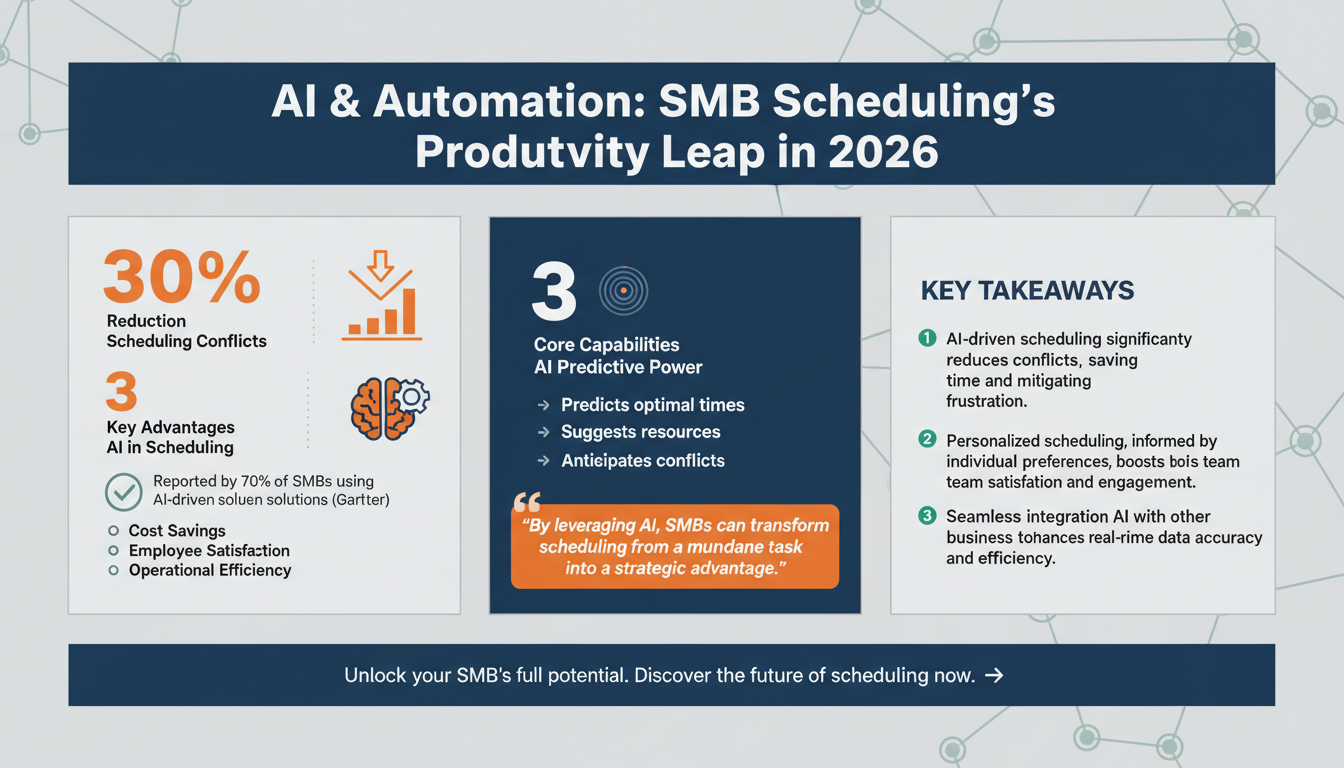
Artificial Intelligence (AI) has transcended its status as a futuristic concept to become a pivotal player in the business world. AI's ability to process large datasets and learn from patterns makes it an invaluable asset in scheduling. By analyzing historical scheduling data, AI algorithms can predict optimal meeting times, suggest resource allocations, and even anticipate scheduling conflicts before they arise. This predictive capability is particularly beneficial for SMBs that often struggle with limited resources and tight deadlines. For example, businesses can use AI to analyze trends and patterns in employee availability, thereby optimizing meeting schedules to enhance attendance and engagement.

The impact of AI in scheduling for SMBs is underscored by Gartner's recent report, which highlights that 70% of SMBs have reported a 30% reduction in scheduling conflicts after implementing AI-driven solutions. This reduction not only saves time but also mitigates the frustration associated with manual scheduling processes, which can be prone to human error and inefficiency. Additionally, AI systems can learn and adapt over time, further refining their scheduling capabilities to meet the evolving needs of the business.
Moreover, AI can enhance personalization in scheduling by considering individual preferences and past behaviors. For instance, if a team member consistently prefers afternoon meetings, the AI system will prioritize these slots, streamlining the process and increasing employee satisfaction. This level of customization is crucial for improving team dynamics and overall productivity, as it ensures that meetings are held at times when participants are most likely to be engaged and productive.
The advent of AI in scheduling also brings with it the ability to integrate seamlessly with other business tools, such as CRM systems and project management software. This integration ensures that scheduling decisions are informed by real-time data, enhancing accuracy and efficiency. By leveraging AI, SMBs can transform scheduling from a mundane task into a strategic advantage, positioning themselves to better meet customer needs and respond to market changes.
Key Takeaway:
- AI-driven scheduling reduces conflicts by 30%.
- Personalized scheduling boosts team satisfaction and productivity.
- Seamless integration with business tools enhances accuracy.
The Rise of Automation in Scheduling
Automation has long been heralded as the future of productivity, and its role in scheduling is no exception. By automating repetitive scheduling tasks, SMBs can free up valuable human resources to focus on more strategic initiatives. Automation in scheduling encompasses a range of capabilities, from automatically sending meeting reminders to dynamically adjusting schedules based on real-time changes. This ability to adapt quickly is crucial in today’s fast-paced business environment, where agility and responsiveness can be key differentiators.

According to Forrester's 2026 report, businesses leveraging automation in their scheduling processes have seen a 40% increase in overall productivity. This boost is attributed to the elimination of manual scheduling errors and the reduction of time spent on administrative tasks. Automation ensures that meetings are scheduled with minimal input from users, allowing employees to focus on their primary responsibilities without the distraction of scheduling logistics.
Automation also enhances transparency and accountability within teams. Automated scheduling tools often come equipped with dashboards that provide a bird's-eye view of team availability and project timelines. This transparency helps team leaders make informed decisions quickly, ensuring that projects stay on track and deadlines are met. Furthermore, these tools can generate reports and analytics, offering insights into how scheduling impacts productivity and resource allocation.
One of the most significant advantages of automation in scheduling is its ability to adapt to complex and changing environments. For SMBs operating in dynamic markets, automated scheduling can swiftly reallocate resources and adjust timelines, maintaining operational continuity. This adaptability is essential for businesses aiming to remain competitive and agile in 2026, as it allows them to respond rapidly to both opportunities and challenges.
Key Takeaway:
- Automation boosts productivity by 40%.
- Increased transparency aids in quick decision-making.
- Adaptability ensures operational continuity in dynamic environments.
Integrating AI and Automation: The Perfect Synergy
While AI and automation each bring unique benefits to scheduling, their true potential is realized when integrated. This synergy creates a robust scheduling system that is both intelligent and efficient, capable of anticipating needs and executing them with precision. For SMBs, this integration represents a strategic leap forward, enabling them to optimize their scheduling processes like never before by combining predictive analytics with automated execution.
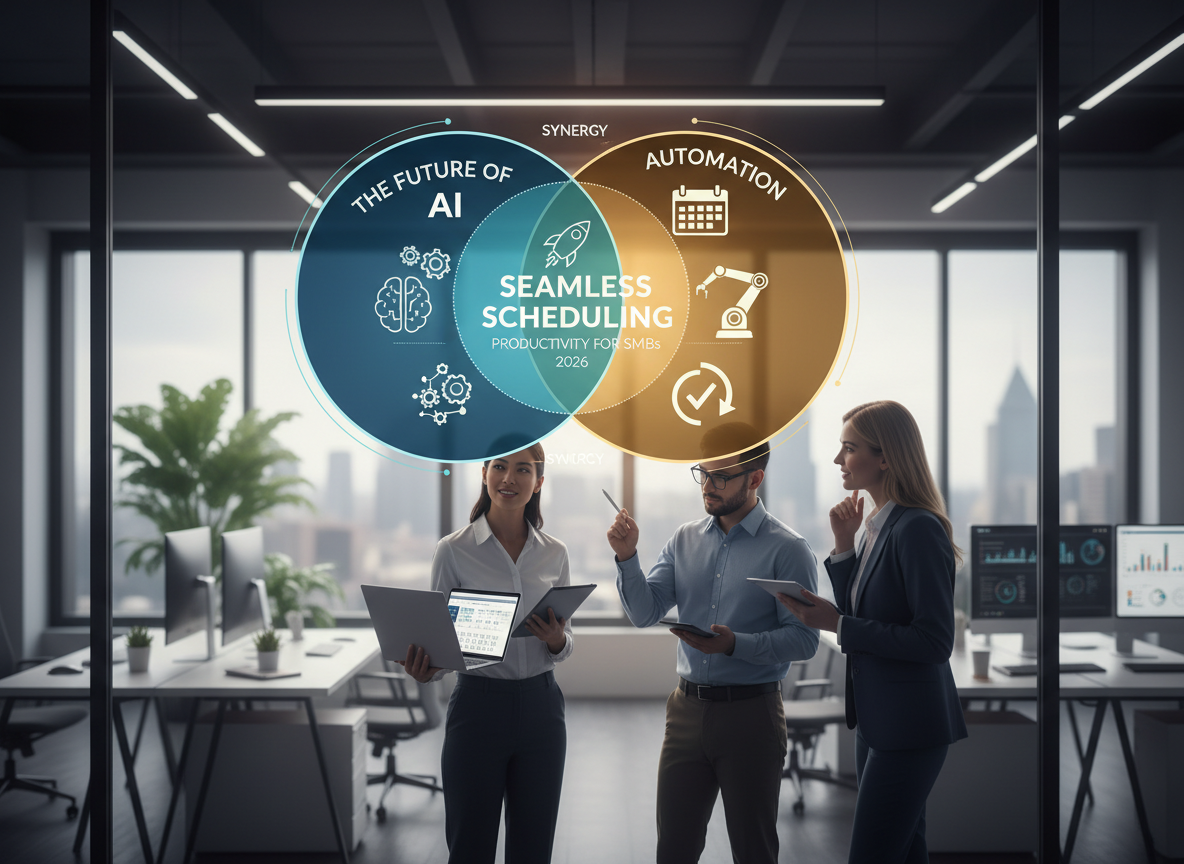
Research from McKinsey indicates that companies that have successfully integrated AI and automation into their scheduling processes have experienced a 50% improvement in meeting efficiency. This improvement stems from the ability of AI to predict and prevent scheduling conflicts, while automation ensures that the necessary adjustments are made seamlessly.
Moreover, the integration of AI and automation allows for proactive scheduling. Instead of reacting to scheduling conflicts, businesses can preemptively address potential issues, ensuring that resources are allocated optimally. This proactive approach is particularly beneficial for SMBs, where resource constraints often necessitate meticulous planning and execution. By anticipating conflicts and adjusting schedules in advance, businesses can avoid costly disruptions and maintain a smooth workflow.
The perfect synergy between AI and automation also facilitates enhanced collaboration among team members. By providing a unified platform for scheduling, team members can easily access and update schedules, fostering a culture of transparency and collaboration. This cultural shift is essential for SMBs looking to thrive in an increasingly interconnected business landscape. Effective collaboration not only improves project outcomes but also contributes to a more cohesive and motivated team environment.
Key Takeaway:
- Integration improves meeting efficiency by 50%.
- Proactive scheduling optimizes resource allocation.
- Unified platforms enhance transparency and collaboration.
The Impact on Employee Productivity and Satisfaction
The introduction of AI and automation in scheduling is not just about efficiency; it also significantly impacts employee productivity and satisfaction. By reducing the administrative burden associated with manual scheduling, employees can focus on tasks that add value to the organization. This shift not only boosts productivity but also enhances job satisfaction, as employees feel more engaged and valued. When employees are freed from the mundane task of scheduling, they can dedicate more time to creative and strategic activities that drive the business forward.
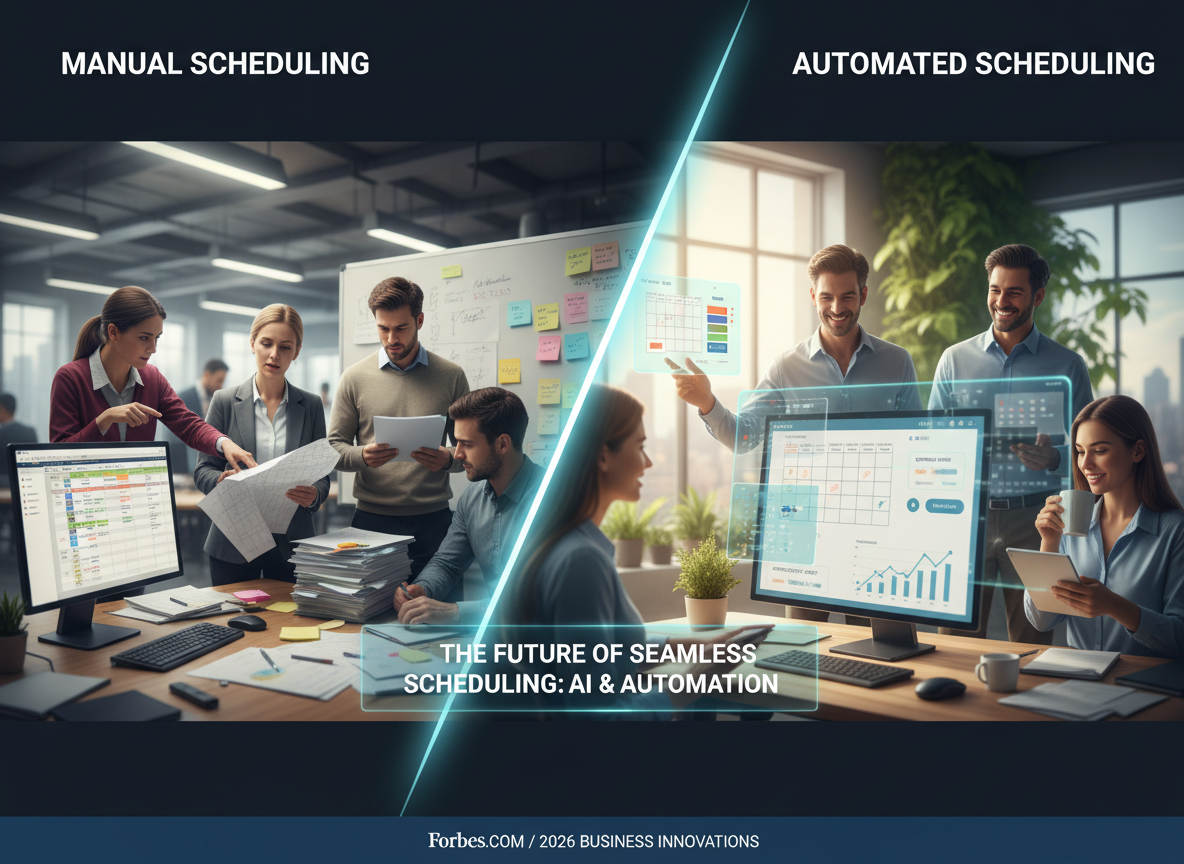
According to a Harvard Business Review study, companies that have adopted AI-driven scheduling solutions have reported a 25% increase in employee satisfaction. This increase is linked to the reduction of scheduling conflicts and the ability to customize schedules according to individual preferences. By aligning work schedules with personal preferences and natural productivity peaks, businesses can enhance employee morale and reduce burnout.
Furthermore, AI and automation empower employees to take control of their schedules. With real-time insights and automated notifications, employees can manage their time more effectively, leading to a better work-life balance. This empowerment is crucial for retaining top talent, particularly in today's competitive job market, where work-life balance is often a key factor in employee satisfaction and retention.
Additionally, the reduction in scheduling-related stress contributes to a healthier work environment. Employees are less likely to experience burnout when they have a clear and manageable schedule, ultimately reducing turnover rates and fostering a more stable workforce. A stable workforce not only strengthens team cohesion but also enhances customer service and business continuity.
Key Takeaway:
- Employee satisfaction increases by 25% with AI-driven solutions.
- Empowerment leads to better work-life balance.
- Reduced stress lowers turnover rates.
Challenges and Considerations for SMBs
While the benefits of AI and automation in scheduling are clear, SMBs must also navigate certain challenges to successfully implement these technologies. Understanding these challenges and planning accordingly is essential for maximizing the potential of AI and automation. Successful implementation requires a thorough analysis of organizational needs and a strategic approach to technology adoption.
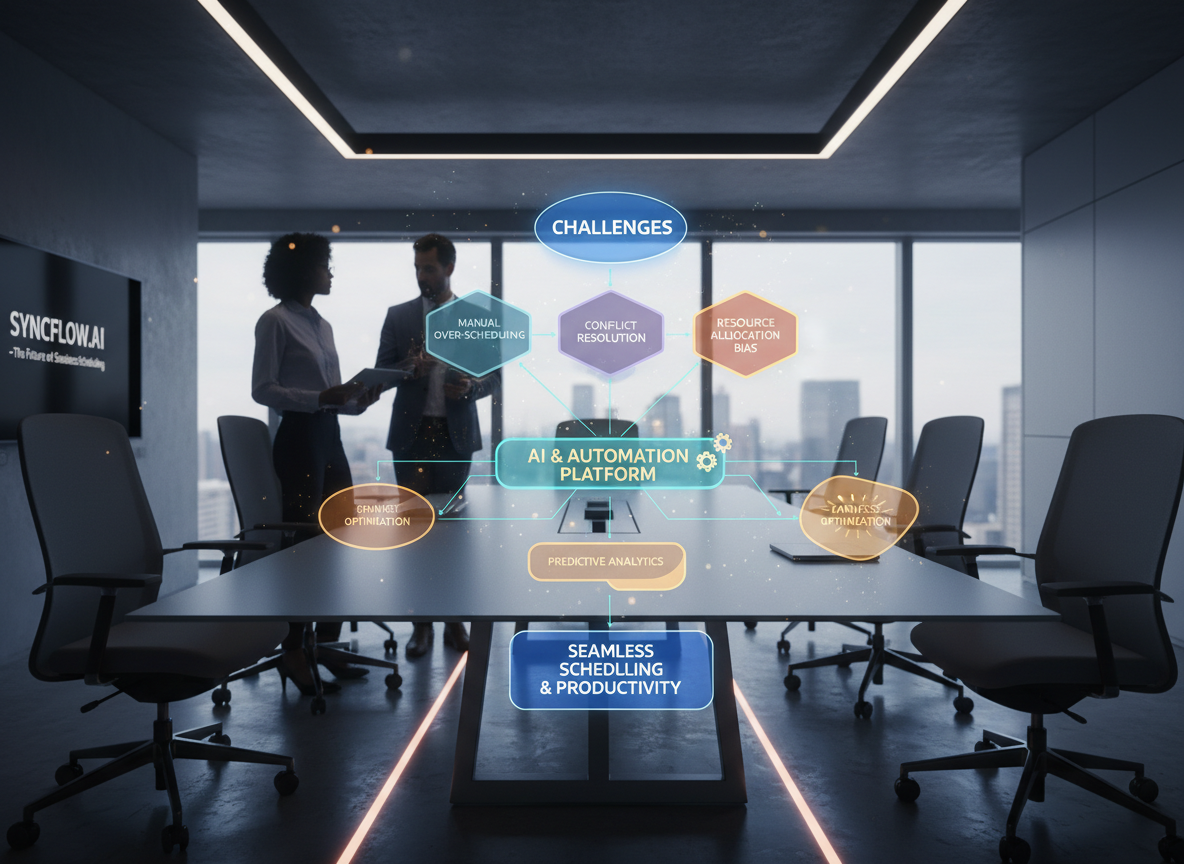
One of the primary challenges is the initial cost of implementation. While AI and automation can lead to long-term savings, the upfront investment can be significant. SMBs must carefully assess their budgets and explore scalable solutions that align with their growth trajectories. Investing in technology that can grow with the business is crucial to avoid future disruptions and additional costs.
Another consideration is the integration of new systems with existing infrastructure. SMBs may face compatibility issues when introducing AI and automation into their current tech stack. To address this, businesses should prioritize solutions that offer seamless integration capabilities and comprehensive support. Engaging with vendors who provide robust customer support can alleviate transition challenges and ensure a smooth integration process.
Data security is also a critical concern. As AI and automation rely on data to function effectively, ensuring the privacy and security of this data is paramount. SMBs must implement robust security measures and comply with relevant regulations to protect sensitive information. Failure to adequately secure data can lead to breaches that not only compromise business operations but also damage reputation and customer trust.
Key Takeaway:
- Initial cost and budget alignment are crucial for success.
- Seamless integration prevents compatibility issues.
- Data security is a top priority for AI-driven solutions.
Future Trends in Scheduling Technology
The landscape of scheduling technology is continuously evolving, and 2026 is poised to witness several groundbreaking trends. These trends will further enhance the capabilities of AI and automation, offering SMBs even more opportunities to optimize their scheduling processes. Staying ahead of these trends can provide businesses with a competitive edge and enable them to capitalize on emerging opportunities.
One emerging trend is the use of natural language processing (NLP) to facilitate scheduling. NLP enables users to interact with scheduling systems using conversational language, making the process more intuitive and user-friendly. This trend is gaining traction as businesses seek to create more accessible and inclusive scheduling solutions that accommodate a diverse workforce.
Another trend is the integration of advanced analytics and machine learning algorithms to provide deeper insights into scheduling patterns. These insights can help SMBs identify inefficiencies and make data-driven decisions to enhance productivity. By leveraging predictive analytics, businesses can forecast scheduling needs and proactively manage resources.
Furthermore, the rise of hybrid work models is driving demand for scheduling solutions that accommodate flexible work arrangements. AI and automation can support this shift by offering dynamic scheduling options that cater to both in-office and remote employees, ensuring seamless coordination. As the workplace continues to evolve, flexible scheduling solutions can enhance employee satisfaction and improve operational efficiency.
Key Takeaway:
- NLP enhances user-friendliness and accessibility.
- Advanced analytics provide deeper scheduling insights.
- Dynamic solutions support hybrid work models.
Implementing AI and Automation: A Step-by-Step Guide
For SMBs ready to embrace the future of scheduling, implementing AI and automation requires a strategic approach. This step-by-step guide outlines the key stages of successful implementation, ensuring that businesses can maximize the benefits of these technologies. Careful planning and execution are essential to avoid potential pitfalls and ensure a smooth transition.
Step 1: Assess Current Scheduling Processes Start by evaluating your existing scheduling processes to identify pain points and areas for improvement. Gather input from team members to understand their needs and preferences. This assessment will help you tailor the implementation process to address specific challenges and optimize outcomes.
Step 2: Define Objectives and Metrics Clearly define your objectives for implementing AI and automation in scheduling. Establish key performance indicators (KPIs) to measure success, such as reduction in scheduling conflicts or time saved. Setting clear goals will guide the implementation process and provide benchmarks for evaluating success.
Step 3: Select the Right Tools Choose AI and automation tools that align with your business objectives and seamlessly integrate with your existing infrastructure. Consider factors such as scalability, user-friendliness, and support. Engaging with vendors that offer comprehensive training and support can ease the transition and enhance user adoption.
Step 4: Train and Onboard Employees Provide comprehensive training to ensure that employees are comfortable using the new technology. Encourage feedback and address any concerns to facilitate a smooth transition. An inclusive training program can enhance user confidence and promote widespread adoption.
Step 5: Monitor and Optimize Continuously monitor the performance of your new scheduling system and make adjustments as needed. Use analytics to gain insights and refine your approach over time. Ongoing evaluation and optimization can ensure that the system continues to meet business needs and deliver value.
Key Takeaway:
- Assess current processes to identify pain points.
- Define objectives and KPIs for success measurement.
- Continuous monitoring and optimization are essential.
FAQs on AI and Automation in Scheduling
As SMBs consider adopting AI and automation for scheduling, common questions arise. This section addresses frequently asked questions to provide clarity and guidance. Understanding these aspects can help businesses make informed decisions and maximize the benefits of technology adoption.
1. What are the main benefits of using AI in scheduling?
AI offers predictive capabilities, reduces scheduling conflicts, and provides personalized scheduling options that enhance employee satisfaction. By leveraging historical data and learning algorithms, AI can optimize scheduling to align with business goals and employee needs.
2. How does automation improve scheduling efficiency?
Automation eliminates manual errors, increases transparency, and allows for dynamic scheduling adjustments, boosting overall productivity by up to 40%. Automated systems handle routine tasks, freeing up employees to focus on strategic priorities.
3. What challenges should SMBs consider when implementing AI and automation?
SMBs should consider initial costs, integration with existing systems, and data security concerns when implementing these technologies. Addressing these challenges requires careful planning and strategic investment in scalable solutions.
4. How can SMBs ensure data security when using AI-driven scheduling tools?
Implement robust security measures and comply with relevant regulations to protect sensitive data and maintain privacy. Engaging with vendors that prioritize data security and offer compliance support can enhance security outcomes.
5. What future trends are expected in scheduling technology?
Future trends include natural language processing for intuitive interaction, advanced analytics for deeper insights, and solutions that support hybrid work models. Staying abreast of these trends can help businesses leverage emerging technologies to optimize scheduling and enhance competitiveness.
In conclusion, the future of seamless scheduling is bright, driven by the transformative power of AI and automation. As SMBs embrace these technologies, they can look forward to enhanced productivity, improved employee satisfaction, and a competitive edge in the dynamic business landscape of 2026. For those ready to take the next step, consider exploring Schedly's platform features and integrating complementary tools like Apparatuz for workflow automation, or Applicantz for streamlined recruitment processes. Together, these solutions create a comprehensive approach to optimizing your business operations. By adopting AI and automation, SMBs can position themselves for success in an increasingly competitive marketplace, leveraging technology to drive growth, efficiency, and innovation.