
Schedly resources
The Hidden Costs of Manual Booking Systems for Service Teams

Service teams lose thousands of dollars every month to scheduling friction. Manual booking systems create bottlenecks that drain time, money, and team morale.
At Schedly, we've seen firsthand how outdated processes hold businesses back. This post breaks down the real costs of staying manual and why automation isn't optional anymore.
Where Your Team's Time Really Goes
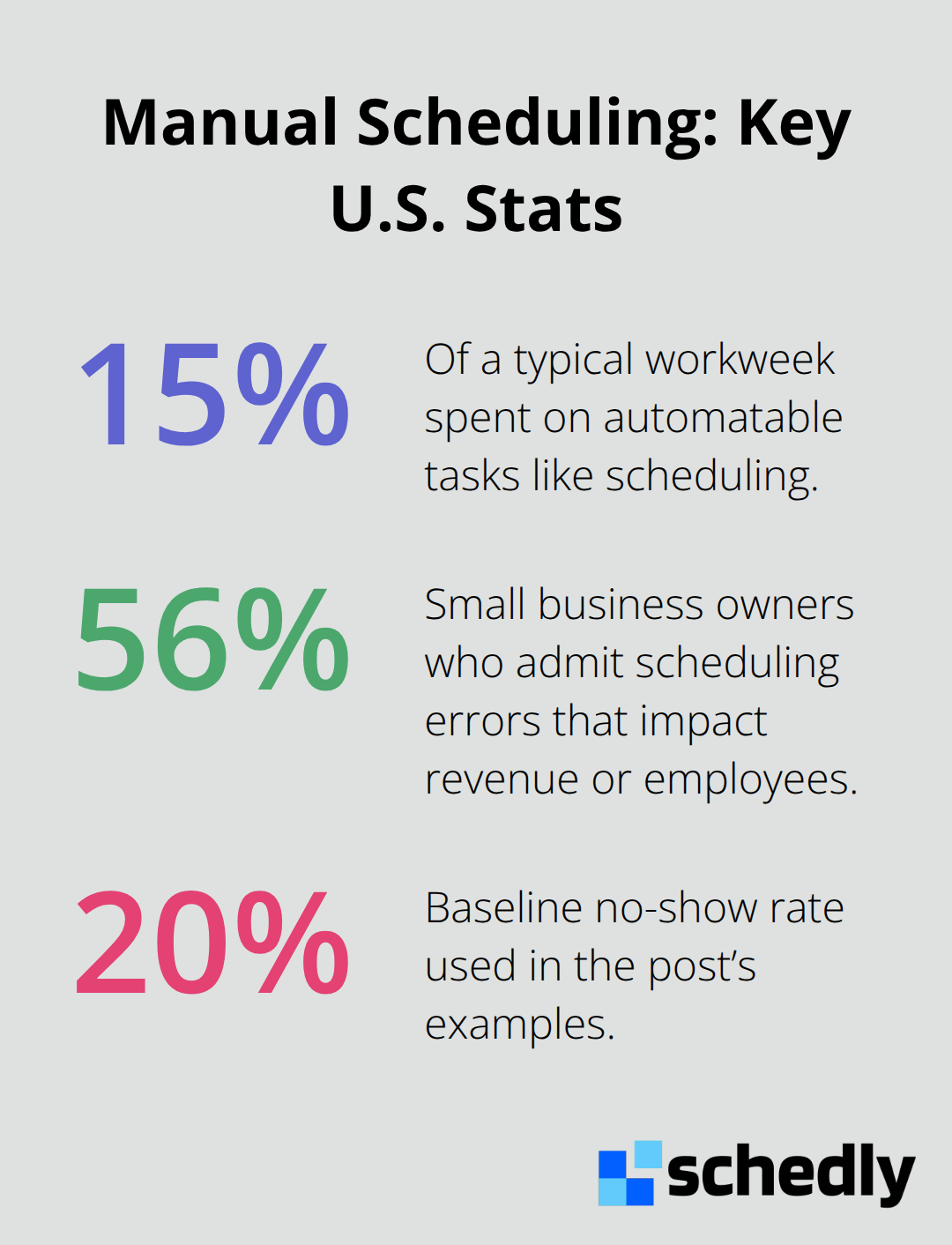
Manual booking systems trap staff in cycles of repetitive administrative work that compound throughout the day. McKinsey research shows that about 15% of a typical workweek is spent on tasks that could be automated, including scheduling. For a service team of five people, that amounts to roughly 30 hours per week spent on work that doesn't generate revenue. If those staff members earn an average of $50,000 annually, that 15% equates to about $5,000 per person per year in lost productivity.
The real damage extends beyond the calendar. When a customer calls to book an appointment, staff must manually check availability across multiple systems, confirm details via email or text, and then update calendars by hand. Each back-and-forth exchange consumes minutes that accumulate into hours. A manager who juggles ten bookings per day might spend two to three hours coordinating schedules, sending confirmations, and handling reschedules when conflicts arise. That time could instead support customer relationships, team development, or revenue-generating activities.
The Phone Tag Problem Costs More Than You Think
Phone-based booking creates a cycle of missed connections. Customers call when they have a gap in their schedule, but staff may be busy with other clients or administrative work. Voicemail sits unanswered, and callbacks happen hours later, at which point the customer has already booked elsewhere. Scheduling friction causes typical loss of potential bookings, depending on industry and customer demographics.
The friction multiplies when customers cannot reach anyone during business hours. They don't leave a message or forget to call back entirely. Response delays kill urgency, and competitors with online booking capture what should have been your revenue.
Why No-Shows Drain Revenue
No-show rates climb with manual systems because staff send reminders inconsistently or forget them altogether. Automated reminders can reduce no-shows, directly protecting revenue that manual processes leak away. Each missed appointment represents lost income plus wasted preparation time. When customers book through phone-only channels, they lack the confirmation touchpoints that online systems provide automatically. This absence of reinforcement leads customers to forget appointments or deprioritize them. The cost compounds across your entire schedule-a service business with 20 weekly appointments and a 20% no-show rate loses four bookings per week. Over a year, that represents over 200 lost revenue opportunities.
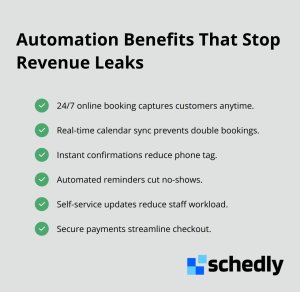
The transition from manual to automated booking systems addresses these leaks directly. Online scheduling captures bookings 24/7, eliminates phone tag entirely, and sends confirmations that stick in customers' minds. Staff reclaim hours each week, and your revenue stops disappearing into the gaps of manual processes.
The Real Price of Scheduling Chaos
Manual booking systems bleed money in ways that don't show up on a single invoice. When staff manage bookings across phone calls, email chains, and spreadsheets, conflicts happen constantly. Double bookings waste preparation time and damage customer trust. A healthcare clinic that accidentally schedules two patients in the same treatment room loses not just the appointment but credibility. The Real Price of Scheduling Chaos reports that 56% of small business owners admit scheduling errors, which can result in lost revenue or unhappy employees. That's not a minor inconvenience-it's a systemic problem affecting more than half the market. The U.S. Department of Labor documented $300 million in back wages paid in 2022 due to labor-law violations related to scheduling, showing that manual systems expose businesses to legal risk that extends beyond lost bookings.
Where Revenue Actually Disappears
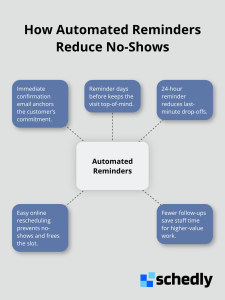
Cancellations and no-shows hit harder than most teams realize. A salon that loses four clients per week to no-shows at an average revenue of $75 per appointment loses $15,600 annually. Multiply that across a year and add the wasted staff time spent preparing for appointments that never happen, and the true cost becomes staggering. Automated reminders reduce no-show rates substantially, but manual systems depend on staff remembering to send them, which rarely happens consistently. When customers book online with automated confirmation sequences, they receive multiple touchpoints before their appointment-confirmation email, reminder text days before, and another reminder 24 hours out. Each touchpoint reinforces the commitment and keeps the appointment top-of-mind. Manual systems lack this automation layer entirely.
The Hidden Overhead of Managing Multiple Channels
Most service businesses operate across multiple booking channels simultaneously. Customers call, book through the website, message on social media, and contact you through Google Business Profile. Staff must manually track each channel, update the master calendar, and avoid overbooking across systems. Bad data costs US businesses more than $3.1 trillion annually, and much of that stems from manual data entry in workflows like booking. A single transcription error-writing down the wrong phone number or appointment time-creates a cascade of problems.
The financial damage from these operational failures sets the stage for a larger question: what if your team could reclaim all that lost time and revenue at once?
How Automation Stops the Bleeding
Automated booking systems eliminate the operational friction that drains your team's time and your company's revenue. When customers book online, they confirm their own details, select available times in real time, and receive instant confirmation. Your staff never touches a phone call, email thread, or calendar entry for that transaction. The system handles what used to require 10 to 15 minutes of manual work in seconds. For a service business handling 20 bookings per week, this automation reclaims between 3 and 5 hours of staff time weekly. Over a year, that's 150 to 250 hours your team can redirect toward customer relationships, upselling, or work that actually generates revenue. If those recovered hours belong to people earning $50,000 annually, you protect $3,600 to $6,000 in annual productivity for every 20 weekly bookings.
Real-Time Availability Prevents Double Bookings
Manual systems create double bookings because staff update calendars slowly across disconnected platforms. A customer calls and books a time slot. Minutes later, someone else messages on social media and gets the same slot because the calendar hasn't refreshed. The salon now has two clients scheduled for one treatment room, and staff waste time managing the conflict. Automated systems synchronize availability instantly across your website, Google Business Profile, social media, email, and any other booking channel. When the first customer selects a time, that slot disappears from every platform simultaneously. The second customer sees only open times and books accordingly. This real-time synchronization also prevents the manual data-entry errors that cost businesses trillions annually. Information flows directly from booking to calendar to payment processing to customer communication without human transcription. A phone number gets entered once, correctly, by the customer themselves rather than transcribed by a staff member who might mishear a digit.
Automation Cuts No-Show Losses in Half
Customers forget appointments more often when they book over the phone. Life gets busy after the call ends, and the appointment slips their mind. Automated systems send confirmation emails immediately after booking, text reminders days before the appointment, and another reminder 24 hours prior. Research shows automated reminders reduce no-show rates by 30 to 50 percent. For a business with 20 weekly appointments and a baseline 20 percent no-show rate, that's four missed appointments per week.
Self-Service Reduces Staff Workload
Online booking platforms shift routine tasks from your team to customers themselves. Clients select their preferred time, enter contact information, and confirm appointment details without staff involvement. This self-service model frees your team from phone calls, email threads, and calendar coordination that consumed hours daily. Staff can now focus on preparing for appointments, following up with customers after service, and building relationships that drive loyalty. The reduction in administrative burden also improves team morale. Staff members spend less time on repetitive tasks and more time on work that feels meaningful. Turnover costs drop as a result. Automated systems also handle payment processing securely through gateways like Stripe and PayPal, so staff never touch sensitive financial information or process transactions manually.
Final Thoughts
Manual booking systems cost your service team thousands of dollars annually through lost productivity, no-shows, scheduling conflicts, and administrative overhead. A manager earning $50,000 per year who spends 10% of their time on scheduling represents $5,000 in annual lost productivity, and that figure multiplies across your entire team when you add the revenue lost to no-shows and double bookings. More than half of small business owners admit to scheduling errors that damage revenue and employee satisfaction, while the U.S. Department of Labor documented $300 million in back wages paid in 2022 due to labor-law violations tied to scheduling.
Automated scheduling eliminates this bleeding by preventing double bookings through real-time availability, reducing no-shows by 30 to 50 percent with automated reminders, and reclaiming 3 to 5 hours of staff time weekly for every 20 bookings. Customers book 24/7 without calling, which removes the scheduling friction that kills conversions and forces your team to focus on customer relationships instead of calendar coordination. Your revenue stops disappearing into the gaps of manual processes, and staff members redirect their energy toward work that actually generates income.
The question is no longer whether you can afford automation-it's whether you can afford to stay manual. Schedly handles the administrative work that consumes your team's time through 24/7 online booking, real-time calendar synchronization, automated reminders, and secure payment processing. Your staff reclaims hours each week, your customers book instantly without friction, and the transition pays for itself through recovered productivity and reduced no-shows within months.